






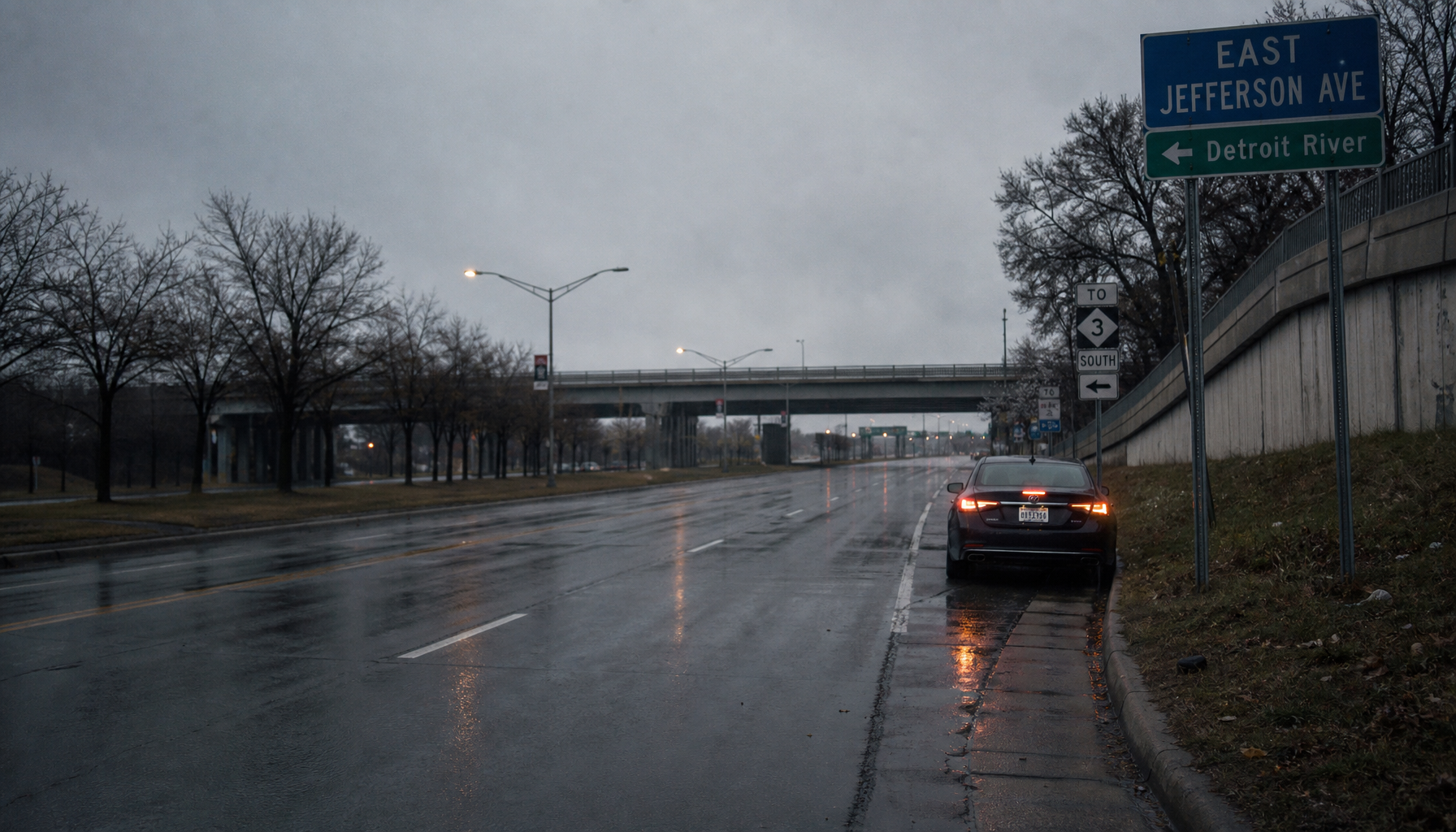
A car crash in Detroit is stressful enough on its own. When the aftermath spills into accusations, community tension, and social media, it can feel completely overwhelming. Here’s the short answer: regardless of who the other driver is, what they say, or what gets posted online, Michigan law gives you the same rights. Your job right now is to protect them.
A recent incident in Detroit — reported by Hoodline — involved a collision between two women that quickly became entangled in Arab-Black bias claims. Whatever the full story turns out to be, crashes like this are a reminder that who you are and what community you come from should never determine whether you get fair treatment from an insurance company or in court. Michigan law doesn’t allow it to.
What Michigan No-Fault Law Actually Means for You
Michigan is a no-fault insurance state. That means after a crash, you turn to your own insurance policy first — not the other driver’s — for your medical bills and lost wages. This coverage is called Personal Injury Protection, or PIP. Under MCL 500.3107, your PIP benefits cover reasonable and necessary medical expenses, up to three years of lost income, and replacement services like help around the house while you’re injured.
The important part: it doesn’t matter who caused the crash to get PIP benefits. You’re entitled to them through your own policy regardless of fault.
What does depend on fault — and on the seriousness of your injury — is your right to sue the other driver for pain and suffering. Under MCL 500.3135, you can pursue non-economic damages if your injury meets the threshold: permanent serious disfigurement, serious impairment of a body function, or death. That’s a higher bar than most people expect, which is exactly why having an attorney evaluate your case early matters.
The Steps That Protect Your Case — Starting Right Now
The decisions you make in the first 72 hours after a crash have a real impact on what happens months later. According to NHTSA crash data, crashes involving disputes over fault are among the most contested claims in the system. Here’s what to do:
- Get medical care immediately — even if you feel okay. Adrenaline masks pain. A gap in medical treatment is one of the first things an insurance adjuster will use against you.
- Call the police and get a report number. In Detroit, that report is filed through the Detroit Police Department. Ask for the incident number at the scene.
- Document everything you can. Photos of both vehicles, the intersection, any skid marks, traffic signals, and road conditions. If there are witnesses, get their contact information.
- Don’t post about the crash on social media. What you say online — even venting about a bad day — can be used to minimize your claim.
- Report the crash to your insurance company, but don’t give a recorded statement without talking to an attorney first. Insurance adjusters are trained to ask questions in ways that narrow your coverage.
- Keep a written log of your symptoms, doctor visits, medications, and anything you can’t do because of the injury.
For a deeper look at how the insurance claim process works in Detroit, that post walks through what adjusters are looking for and how to respond.
When Community Tension Gets Involved
Crashes don’t happen in a vacuum. Sometimes there’s a confrontation afterward. Sometimes video circulates. Sometimes the narrative that spreads on social media bears little resemblance to what actually happened.
None of that should affect your legal claim — but it can if you’re not careful.
If the other driver or bystanders make statements at the scene that feel discriminatory or threatening, document them. Write down the exact words as soon as you’re away from the scene. If there’s video of the confrontation, preserve it. These details may or may not be relevant to the accident claim itself, but they matter to have on record.
Your attorney’s job is to separate the noise from the facts: where the vehicles were, how fast they were going, what the road conditions were, and what injuries resulted. That’s what determines liability — not what got posted online.
The most common causes of Detroit crashes are ordinary ones: distracted driving, failure to yield, speeding, running red lights. Those facts don’t change because the aftermath got complicated.
What If the Other Driver Claims You Were at Fault?
In Michigan, comparative fault applies. If an insurance company or jury finds that you were partially responsible for the crash, your damages can be reduced by your percentage of fault. But being accused of fault by the other driver — especially in a heated post-crash situation — is not the same as being found at fault legally.
Insurance companies investigate. They pull surveillance footage, request police reports, look at phone records, and interview witnesses. A solid attorney does the same thing on your behalf — and makes sure the investigation doesn’t just reflect what the other driver’s insurance company wants to find.
If you’re worried about how fault might affect your claim, the Detroit auto injury claim process breaks down exactly how Michigan handles these disputes.
The Three-Year Clock Is Already Running
Michigan gives you three years from the date of the crash to file a personal injury lawsuit. That deadline comes from MCL 600.5805(2). Three years sounds like a lot of time. It isn’t, once you factor in the time it takes to complete medical treatment, gather records, identify all liable parties, and build a case.
For PIP benefits specifically, there’s a separate one-year window to file a claim for expenses your insurer hasn’t paid. Missing that deadline means losing those benefits permanently.
Don’t wait to find out where you stand. You can read more about how long Michigan car accident cases typically take if you want a realistic timeline.
If Language Is a Barrier, That Changes Things Too
Detroit’s Arab and Chaldean communities have seen more than their share of situations where a crash turns into something bigger — a confrontation, a misunderstanding, a claim that gets mishandled because no one in the insurance office spoke Arabic or Chaldean. That’s a real problem with real financial consequences.
At Khamo Law, PLLC, Samar S. Shadaia handles auto accident matters and is Arabic-speaking. Founder Koro Khamo is Chaldean-speaking and has handled these cases across metro Detroit for years. If you need to explain what happened in Arabic or Chaldean, you can — and what you say will be understood accurately, not filtered through a translation service.
You can read more about what it means to work with a Middle Eastern auto attorney in Michigan if that context is relevant to your situation.
Frequently Asked Questions
Do I have to prove the other driver was at fault to get my medical bills paid?
No. Under Michigan’s no-fault system, your own PIP coverage pays your medical bills and lost wages regardless of who caused the crash. Fault becomes relevant when you’re seeking pain and suffering damages from the other driver — and only if your injury meets the legal threshold under MCL 500.3135.
The other driver and I had an argument after the crash. Does that affect my claim?
The argument itself doesn’t affect your right to PIP benefits or your underlying injury claim. However, anything you said or did during that confrontation could potentially be used in a liability dispute. Document what was said and by whom — and avoid making any statements about fault at the scene.
What if the other driver’s insurance company calls me first?
You don’t have to give them a recorded statement. You’re not legally required to cooperate with the other party’s insurer the same way you are with your own. Politely decline until you’ve spoken with an attorney. The settlement process in Detroit involves exactly these kinds of early contacts, and what you say can affect your outcome.
Can bias or discrimination at the scene affect my legal case?
Discriminatory statements made at the scene don’t directly determine fault in a civil accident case — but they can be relevant in other contexts. Document everything. If a police officer’s conduct at the scene was discriminatory, that’s a separate concern your attorney should know about.
How much does it cost to hire a car accident attorney in Michigan?
Most Michigan personal injury attorneys, including Khamo Law, PLLC, work on a contingency fee basis. That means you pay nothing upfront and no legal fees unless your case results in a recovery. You can learn more about how Michigan car accident lawyer fees work before your consultation.
What if I don’t have insurance?
This is a complicated situation under Michigan’s current no-fault law. Uninsured drivers face limitations on what benefits they can recover. Read our post on being in a Detroit car accident without insurance for a full breakdown — and contact an attorney before assuming you have no options.
If you were in a crash in Detroit and the aftermath has felt confusing, unfair, or bigger than you expected, talk to us before you sign anything. Khamo Law, PLLC offers a free consultation — call 248-466-0606 or reach us through the contact form on our site. We serve Detroit and the surrounding metro area. نتكلم عربي وكلداني — Arabic and Chaldean speakers are welcome.