






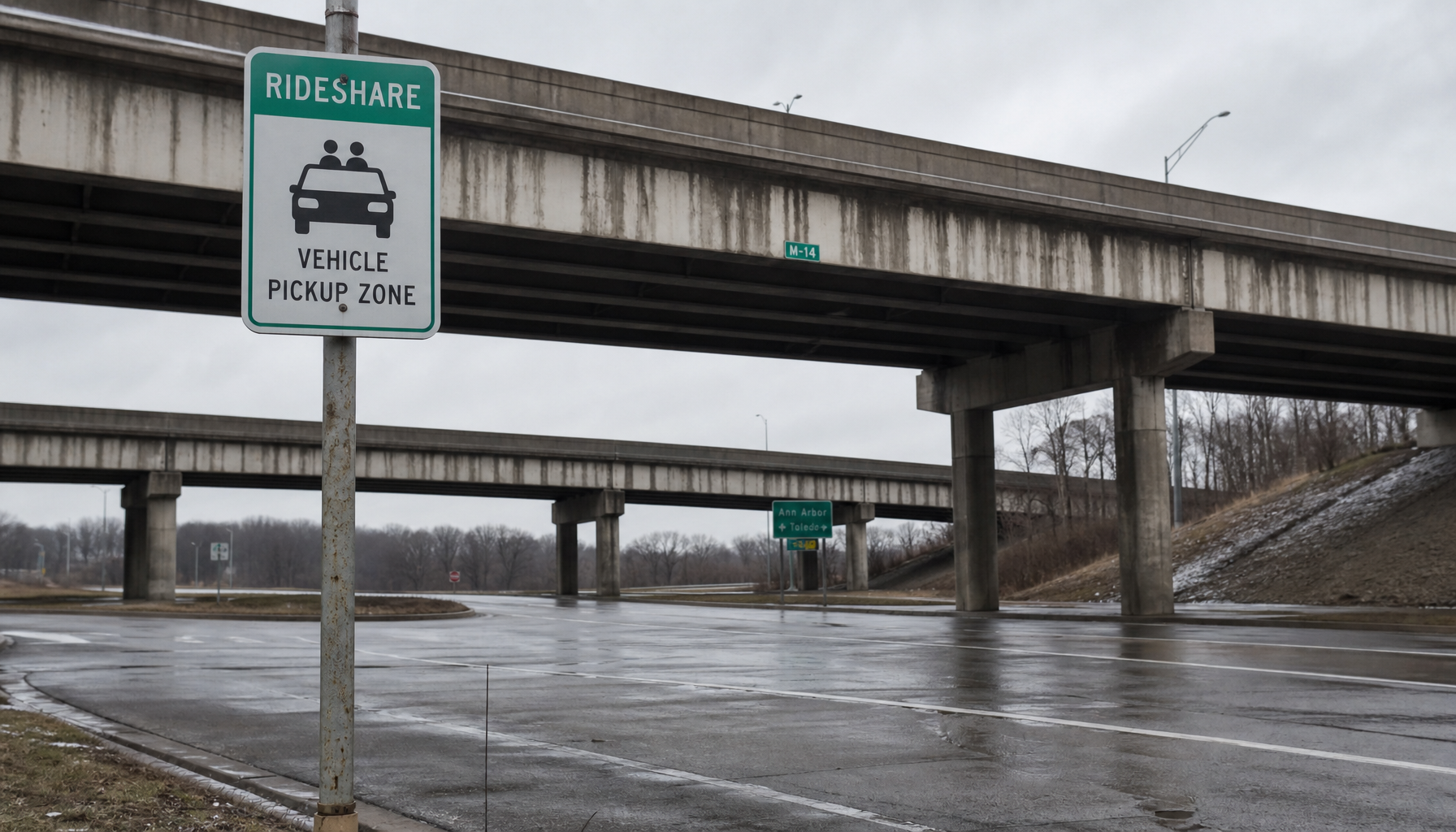
When you get into an Uber, you trust that you’ll reach your destination safely. For one Oakland County teacher, that trust was broken — fatally. As reported by Patch, a beloved teacher from Oakland County was killed in an Uber crash — a tragedy that has shaken families, students, and colleagues across the county. If you’ve lost someone in a rideshare crash, or you were seriously injured in one, here is what you need to know about your rights under Michigan law.
Rideshare accidents are more complicated than typical two-car crashes. Multiple insurance policies can apply — the driver’s personal policy, Uber’s commercial coverage, and sometimes the at-fault third party’s insurance. Knowing which policy pays, and when, is the first real challenge a grieving family or injured victim faces.
Who Is Liable When an Uber Driver Causes a Fatal Crash?
Liability in a rideshare crash depends on what the driver was doing at the exact moment of the crash. Uber’s insurance coverage shifts based on whether the app was off, the app was on but the driver hadn’t accepted a ride, or a passenger was actively in the car.
Here’s how Uber’s three coverage tiers work in practice:
- App off — The driver’s personal auto insurance applies. Uber provides nothing.
- App on, no passenger yet — Uber provides contingent liability coverage: up to $50,000 per person / $100,000 per accident / $25,000 for property damage, but only if the driver’s personal policy won’t cover it.
- Passenger in the vehicle — Uber’s $1,000,000 commercial liability policy is active. This is the tier that almost always applies when a paying rider is killed or injured.
According to Uber’s own insurance overview, that $1 million policy also includes uninsured/underinsured motorist coverage when another driver causes the crash. That matters enormously in wrongful death cases where the at-fault driver carried only minimum-limit insurance.
For the Oakland County teacher’s family, the critical questions are: was the app active, was the teacher a paying passenger, and who caused the collision? The answers shape which policies apply and what the total available coverage looks like.
Michigan No-Fault and Rideshare: How PIP Fits In
Michigan is a no-fault state. That means your own Personal Injury Protection (PIP) benefits pay your medical bills and a portion of lost wages regardless of who caused the crash — under MCL 500.3107. When a fatality occurs, those PIP benefits include funeral and burial expenses, and up to three years of survivor’s loss benefits for dependents.
For Uber passengers, PIP coverage comes from Uber’s commercial policy when the driver’s personal policy doesn’t apply — or from the passenger’s own auto insurance if they carry it. Sorting out which carrier is primary is one of the first fights that happens after a serious rideshare crash.
To pursue non-economic damages — pain and suffering, loss of companionship — the injured person or surviving family must clear Michigan’s serious-injury threshold under MCL 500.3135. A wrongful death almost always clears that threshold.
Wrongful Death Claims in Michigan Rideshare Accidents
When someone dies in a crash, Michigan law allows certain surviving family members to bring a wrongful death action. This is separate from the no-fault PIP claim.
Who Can Bring a Wrongful Death Claim?
Under the Michigan Wrongful Death Act, the personal representative of the deceased’s estate files the lawsuit on behalf of surviving family members. That typically includes:
- Spouse
- Children
- Parents
- Siblings, if they suffered a real financial or emotional loss
What Damages Are Available?
A wrongful death claim can include:
- Loss of financial support the deceased would have provided
- Loss of companionship, guidance, and society
- Conscious pain and suffering before death
- Funeral and burial costs
- Medical expenses from the crash
For a teacher — someone with a stable salary, benefits, and decades of working years ahead — the loss-of-support calculation alone can be substantial.
The Statute of Limitations
Don’t wait. Under MCL 600.5805(2), you have three years from the date of the crash to file a personal injury claim. Wrongful death cases have their own timeline under the Michigan Wrongful Death Act — generally three years from the date of death, but the clock starts running immediately. Evidence disappears. Dash cam footage gets overwritten. Uber’s internal trip data isn’t kept indefinitely.
You can read more about how Michigan’s statute of limitations works in auto cases if you’re uncertain about your timeline.
What the Insurance Company Won’t Tell You
Uber’s insurers are not on your side. Their job is to pay as little as possible — and they’re good at it. Here’s what typically happens in the days after a fatal rideshare crash:
- An adjuster contacts the family quickly, sometimes within 48 hours, offering condolences and asking for recorded statements
- A settlement offer may come before you’ve even received the full crash report or autopsy results
- The offer will not account for the full value of what was lost
Don’t give a recorded statement to any insurance company — Uber’s or anyone else’s — without speaking to an attorney first. Anything you say gets used to minimize your claim.
This pattern plays out in ordinary crashes too. Our post on what to do when an insurance company is stalling your claim covers the tactics adjusters use and how to respond.
Steps to Take After a Fatal or Serious Rideshare Crash
If you survived the crash and are reading this from a hospital or your living room with an ice pack on your neck, or if you’re a family member trying to figure out what comes next — here’s where to start:
- Get the full crash report. The Oakland County Sheriff’s Office or local police agency will have it. You’re entitled to a copy.
- Preserve the Uber trip record. Screenshot the app. Note the trip ID, driver name, and time. This is evidence.
- Don’t delete anything. Text messages, app notifications, receipts — keep all of it.
- Photograph everything you can. The scene, your injuries, the vehicle, skid marks — if it’s safe to do so.
- See a doctor immediately if you haven’t. Some injuries — especially spinal and head trauma — don’t show full symptoms for days. A gap in medical care becomes a gap in your claim.
- Contact an attorney before signing anything. Any release, any settlement offer, any authorization to share medical records — stop. Talk to a lawyer first.
For families dealing with sudden loss, understanding how wrongful death and auto cases can affect job and income claims can help frame what financial losses are actually recoverable.
Why Rideshare Cases Are Harder Than Standard Crashes
According to NHTSA crash data, tens of thousands of people die on American roads each year — and rideshare-involved fatalities are a growing share. These cases involve:
- Multiple defendants — the Uber driver, Uber Technologies as a company, potentially a third-party driver
- Commercial insurance layers — each with its own attorneys and adjusters
- Arbitration clauses — Uber’s terms of service include dispute resolution language that can affect how and where claims are filed
- Driver employment status — Uber classifies drivers as independent contractors, which it uses to limit its liability exposure
That contractor argument has been litigated across the country. It doesn’t necessarily shield Uber from liability when its driver causes a death — but it’s a fight, and it takes a lawyer who knows how to push back.
If the crash involved a commercial vehicle or another driver, you may also want to read about what happens when a commercial truck is involved in a Michigan crash.
A Note for Oakland County Families
Oakland County sees significant Uber and Lyft traffic — from Metro Airport runs down I-75, from Royal Oak and Birmingham to Detroit, from suburban neighborhoods to concerts and Tigers games. The Oakland County Personal Injury Lawyer page has more information about how we serve families in this region.
The loss of a teacher — someone who spent their career caring for other people’s children — hits a community in a specific way. Students who knew her, parents whose kids were in her classroom, colleagues who worked beside her every day — they are all affected. The legal system can’t undo that. But it can make sure the people responsible are held accountable and that surviving family members aren’t left to absorb the financial wreckage alone.
Frequently Asked Questions
Does Uber’s $1 million policy automatically pay if a passenger is killed?
Uber’s $1 million commercial liability policy is active when a passenger is in the vehicle and the crash results in injury or death. But “active” doesn’t mean “automatic.” The insurer will still investigate fault, dispute damages, and negotiate hard. The family typically needs an attorney to ensure the full value of the claim is recovered — not just what the adjuster offers in the first conversation.
Can the family sue Uber directly, not just the driver?
Yes, and often both are named in a wrongful death lawsuit. Whether Uber itself bears direct liability depends on factors like whether the driver was violating Uber’s policies, whether the platform had prior notice of dangerous driver behavior, and how Michigan courts apply vicarious liability principles to gig-economy companies. This is one of the most contested areas of rideshare litigation right now.
What if another driver — not the Uber driver — caused the crash?
If a third party caused the fatal crash, that driver’s liability insurance is the primary target. Uber’s uninsured/underinsured motorist coverage can fill the gap if the at-fault driver had no insurance or not enough. Michigan’s assigned claims plan may also apply in certain no-fault scenarios.
How long does a wrongful death case take to resolve?
There’s no single answer. Some cases settle in months; others take two or three years, especially if liability is disputed or Uber’s insurer contests the damages. The severity of the case, the clarity of fault, and whether the case goes to trial all affect the timeline. Our post on how long Michigan auto cases typically take gives a fuller picture.
What if the Uber driver was uninsured or had a lapsed personal policy?
For rideshare trips where the app was active and a passenger was aboard, Uber’s commercial policy applies regardless of the driver’s personal coverage status. The driver’s personal insurance situation matters mainly in the “app off” scenario — which is the most dangerous gap for people who get hit by an off-duty rideshare driver.
Should the family accept the first settlement offer from Uber’s insurance?
Almost certainly not. First offers in wrongful death cases rarely account for the full value of lost income, lost companionship, and other damages. Once you sign a release, the case is closed — permanently. Have an attorney review any offer before anyone in the family signs anything.
If your family has lost someone in a rideshare crash, or you were seriously injured as a passenger or another driver, talk to us before you sign anything or give any statements. Khamo Law, PLLC offers a free consultation — call 248-466-0606 or reach us through the contact form on our website. We serve families throughout Oakland County, Macomb County, Wayne County, and across Michigan. Our team includes Arabic-speaking and Chaldean-speaking attorneys who can work with you in the language you’re most comfortable in.