






When a Good Samaritan stops to help after a crash and ends up being killed on the freeway himself, Michigan law still gives his family legal options — including wrongful death claims against the driver who struck him and PIP benefits through Michigan’s no-fault system. The family does not have to prove the original crash caused the second collision; they only need to show a driver’s negligence caused the fatal strike.
A man was fatally struck on Detroit’s Lodge Freeway while trying to help victims of an earlier crash, as reported by ClickOnDetroit / WDIV Local 4. The incident is a stark reminder of how dangerous Michigan’s freeways become the moment someone steps outside a vehicle — and how complicated the legal picture gets when a second driver enters the scene. If your family is dealing with this kind of loss, a Detroit pedestrian accident attorney can walk you through what Michigan law actually provides.
This post explains the law that applies, who can be held responsible, and what a family should do right now.
What Happened on the Lodge Freeway
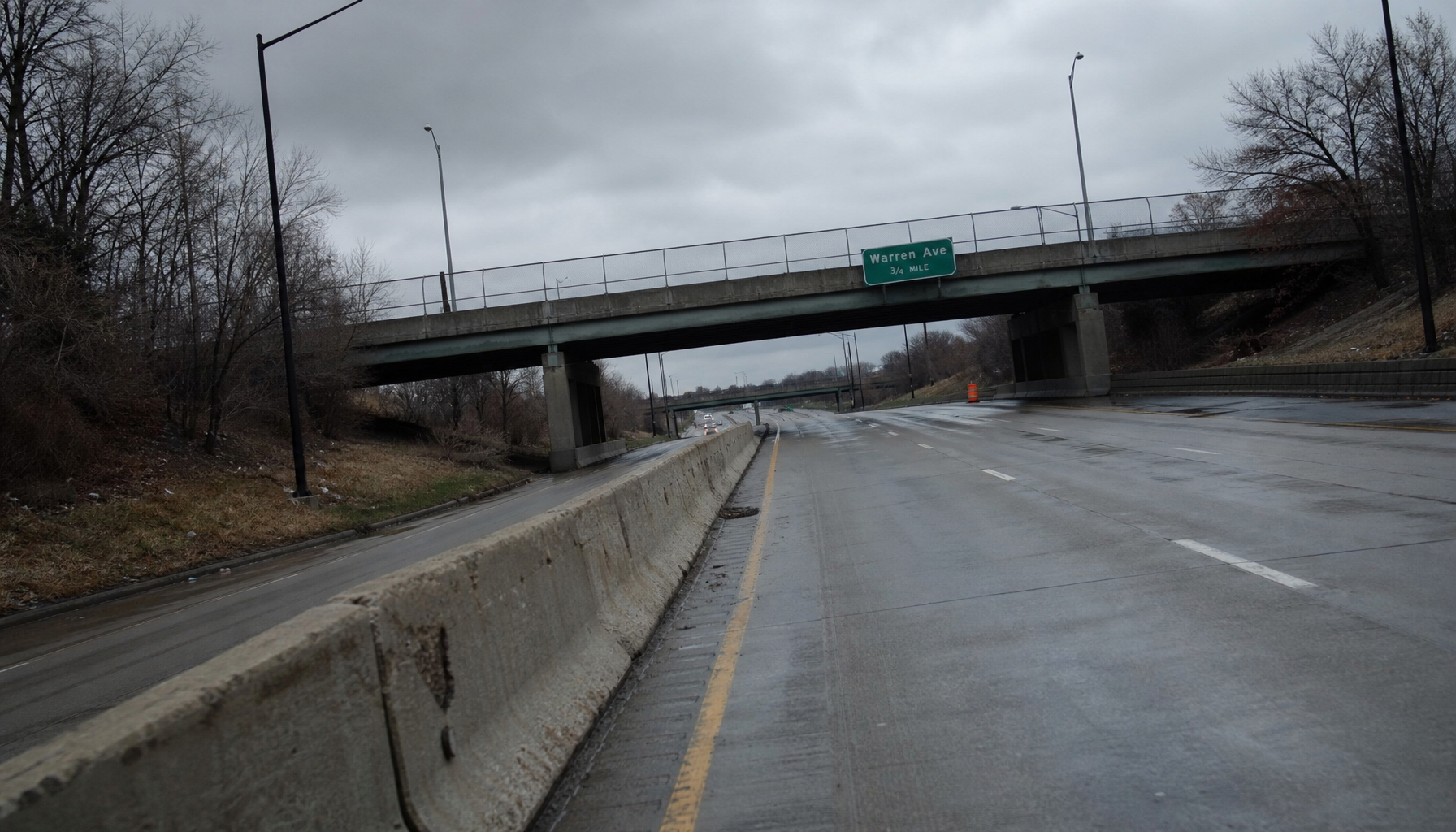
The Lodge Freeway — M-10 — cuts through the heart of Detroit. It’s one of the city’s busiest corridors, and secondary collisions at crash scenes happen there more often than most people realize. A pedestrian killed on the freeway while assisting another driver is not a freak event; NHTSA data shows that pedestrians outside their vehicles on high-speed roadways face extreme risk from passing traffic, even when they’re doing exactly what a decent person would do.
In this incident, the Good Samaritan had stopped to assist people involved in an earlier crash. Before he could get them to safety, a separate vehicle struck and killed him. The original crash victims survived. He did not.
His family is now left asking questions that have real legal answers.
Michigan Pedestrian Accident Law and the Lodge Freeway
Michigan is a no-fault state, which shapes everything about how a pedestrian accident claim works — even a fatal one on a freeway.
Personal Injury Protection (PIP) Benefits
Under MCL 500.3107, Michigan’s no-fault law requires PIP coverage to pay for medical expenses, lost wages, and replacement services regardless of who caused the crash. A pedestrian struck by a vehicle in Michigan is entitled to PIP benefits from the vehicle’s insurer — or, if the vehicle is uninsured, from the Michigan Assigned Claims Plan.
For a family dealing with a fatal accident, PIP also covers funeral and burial expenses up to the statutory limit.
Wrongful Death Claims
PIP doesn’t pay for grief. It doesn’t compensate a family for the loss of a husband, father, or son. That’s where a wrongful death claim comes in.
Under Michigan’s wrongful death statute, the personal representative of the deceased’s estate can bring a claim for:
- Loss of financial support the family would have received
- Loss of companionship, society, and guidance
- The conscious pain and suffering the victim experienced before death
- Funeral and burial costs not covered by PIP
To bring this claim, the family must clear the threshold in MCL 500.3135 — which requires showing serious impairment of a body function, permanent serious disfigurement, or death. Death clears that threshold automatically.
The Statute of Limitations
Time matters here. Under MCL 600.5805(2), the family has three years from the date of the accident to file a personal injury or wrongful death lawsuit. Three years sounds like a long time. It isn’t, once you factor in finding witnesses, preserving freeway surveillance footage, and tracking down the at-fault driver’s insurance. Evidence disappears. Don’t wait.
Our Michigan pedestrian accident attorney page explains how this timeline works in more detail.
Who Is Legally Responsible?
This is where the Lodge Freeway incident gets complicated — and where getting a lawyer early matters most.
The Driver Who Struck the Good Samaritan
The most direct defendant is the driver who hit the victim. The question is whether that driver was traveling at a safe speed for conditions, whether they were paying attention, and whether they could have avoided the collision. A crash scene with vehicles stopped on the roadway creates an obvious hazard — a driver who fails to slow down and move over may be liable for negligence.
Michigan’s Move Over Law requires drivers to slow down and change lanes when approaching stationary vehicles with flashing lights, including crash scenes. A violation of that law is direct evidence of negligence.
The Driver Who Caused the Original Crash
Depending on the facts, the driver who caused the first crash may also bear some responsibility. If their negligence set off a chain of events that foreseeably put a Good Samaritan in danger — and that’s not a stretch on a freeway at night — their insurer may be part of the picture too.
Courts have long recognized that a negligent driver can be held responsible for injuries that happen as a direct consequence of their initial crash, including secondary collisions at the scene. This is sometimes called the “chain of causation” theory.
Multiple Insurance Companies
In a situation like this, you may be dealing with:
- The Good Samaritan’s own no-fault insurer (for PIP)
- The at-fault driver’s liability insurer
- Possibly the first crash driver’s insurer
- The Michigan Assigned Claims Plan if any vehicle is uninsured
Each insurer will be working to limit what it pays. Having a Detroit pedestrian accident lawyer on your side means someone is working to make sure you’re not caught between competing insurance adjusters.
What Does “Good Samaritan” Mean Legally in Michigan?
Michigan has a Good Samaritan law — MCL 691.1502 — that protects people who voluntarily render emergency care from civil liability for injuries they accidentally cause during that assistance. The law protects the person giving help. It does not protect the driver who runs that person over.
Stopping to help someone on the freeway is exactly the kind of act the law recognizes as reasonable and decent. It does not make the victim comparatively negligent for being on the road. A skilled attorney will push back hard on any insurer who tries to argue otherwise.
Steps a Family Should Take Right Now
- Don’t give recorded statements to any insurance company — not your own, not the other driver’s. Adjusters are trained to use your words against you later.
- Preserve everything. If the victim had a dashcam, phone, or GPS data, secure it. Freeway incidents often have traffic cameras — that footage gets overwritten quickly.
- Document your losses. Keep every bill, every pay stub, every record of what your family is spending and losing because of this death.
- Get the police report number. Michigan State Police typically handle Lodge Freeway crashes. The report number is your starting point for almost everything.
- Talk to an attorney before you sign a release. Insurance companies sometimes reach out quickly with settlement offers. A fast offer is almost never the right offer.
For a fuller breakdown of the immediate steps, see what to do after a pedestrian accident in Michigan.
Why Freeway Pedestrian Deaths Are Different
A pedestrian killed on the freeway faces a different legal landscape than someone struck in a crosswalk. Speeds are higher, fault arguments are more complicated, and the physical evidence — skid marks, debris fields, surveillance footage — matters enormously.
Freeway crashes are also more likely to involve multiple parties, multiple insurance policies, and questions about whether traffic control, road conditions, or another driver’s earlier actions contributed to the fatal outcome. These cases require reconstruction experts, medical examiners’ reports, and an attorney who knows how to read a Michigan State Police crash report.
For families dealing with a hit-and-run element on top of everything else, our post on pedestrian killed in a Detroit hit-and-run covers what options remain when the at-fault driver flees.
How Long Does a Wrongful Death Case Take?
Honestly, it varies. A case that settles before filing might resolve in six to twelve months. A case that goes to trial can take two to three years. The three-year statute of limitations under MCL 600.5805(2) gives families time to pursue their claim fully — but not unlimited time. For more on the timeline, see how long you have to file a pedestrian accident lawsuit.
Frequently Asked Questions
Can the family of a Good Samaritan killed on the freeway sue the driver who hit him?
Yes. If the driver who struck him was negligent — speeding, distracted, failing to move over for a crash scene — the family can bring a wrongful death claim. Michigan’s wrongful death statute allows the victim’s estate to seek compensation for lost financial support, lost companionship, and the victim’s pain and suffering before death.
Does Michigan’s no-fault law cover a pedestrian killed on the freeway?
It does. A pedestrian struck by a motor vehicle in Michigan is entitled to PIP benefits regardless of fault. Those benefits cover medical expenses incurred before death, funeral costs up to the statutory limit, and the wages the victim would have earned during a period of disability. PIP is separate from any wrongful death lawsuit.
What if the at-fault driver was uninsured?
Michigan’s Assigned Claims Plan steps in when the at-fault vehicle carries no insurance. The plan provides PIP benefits. For liability claims — the wrongful death lawsuit — an uninsured driver may still be sued personally, and your attorney will look at whether any other party (the first crash driver, a vehicle owner) carries insurance that could apply.
Does stopping to help on the freeway make the victim partly at fault?
No. Michigan’s Good Samaritan law (MCL 691.1502) recognizes the legitimacy of stopping to render aid in an emergency. Being present on the roadway to help someone is not the same as being negligent. A driver who strikes a person at a visible crash scene has a much harder argument to make about comparative fault.
How much is a wrongful death case worth?
There’s no formula that applies to every family. The value depends on the victim’s age, income, life expectancy, the nature of the relationships involved, and the strength of the negligence case against the driver. What an attorney can tell you — once they’ve reviewed the facts — is a realistic range based on comparable Michigan verdicts and settlements.
What is the deadline to file a wrongful death claim in Michigan?
Three years from the date of the accident, under MCL 600.5805(2). Michigan courts enforce this deadline strictly. Missing it almost always means losing the right to sue, no matter how strong the case is.
If your family lost someone on the Lodge Freeway or anywhere in the Detroit area, talk to us before you sign anything. Khamo Law, PLLC offers a free consultation — call 248-466-0606 or reach us through the contact form on our site. We serve Detroit and the surrounding communities throughout Southeast Michigan. نتحدث العربية ونقدم خدماتنا لأفراد الجالية العربية والكلدانية.