










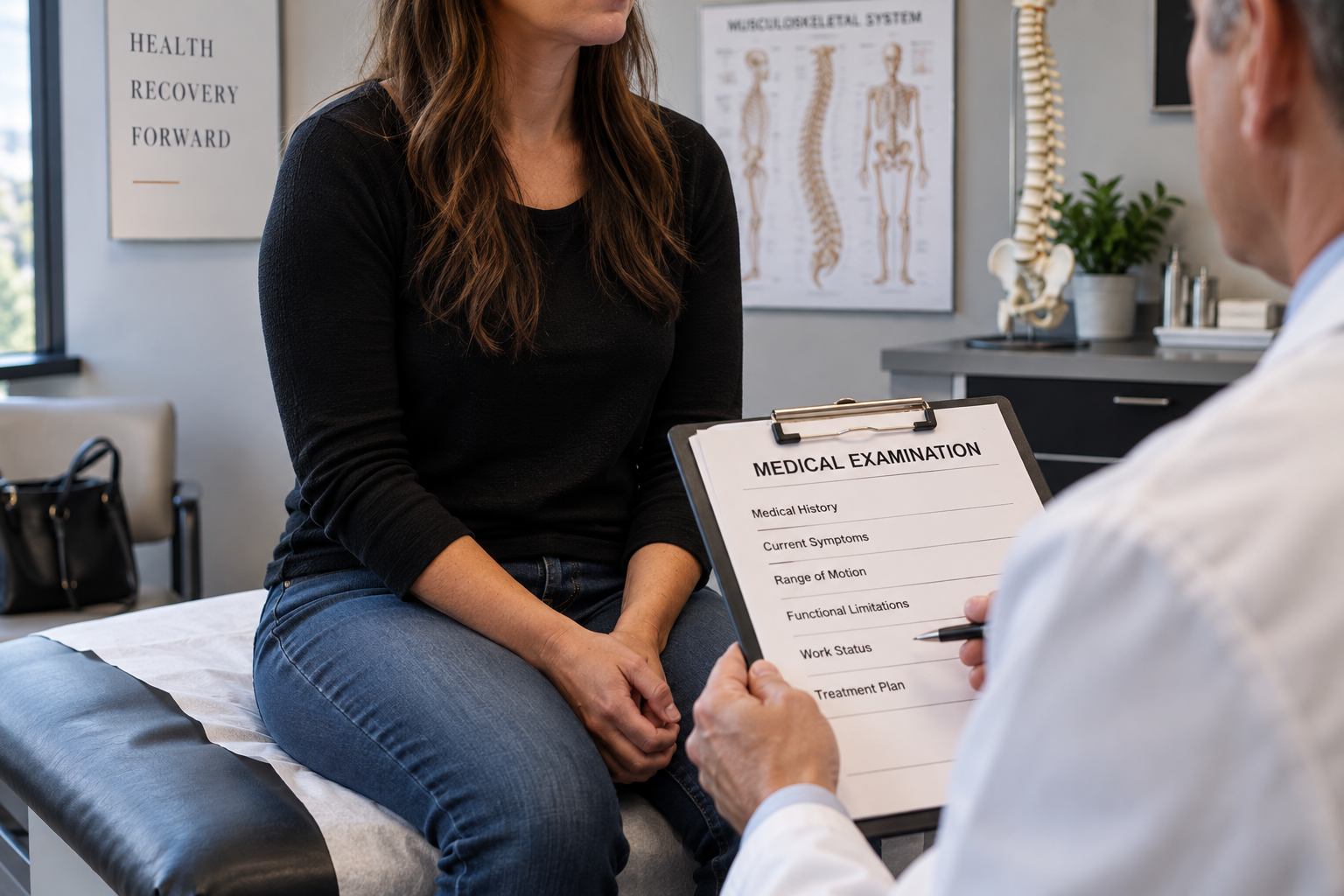
If your Michigan auto insurer has scheduled you for an independent medical examination (IME), do not assume it is simply another doctor’s appointment. The examination can become important evidence in your No-Fault claim, and the insurer may rely on the examining physician’s opinions when deciding whether to continue paying medical treatment, wage loss, attendant care, or other PIP benefits.
Michigan law permits an insurer to request a mental or physical examination when a person’s condition is material to a claim for past or future PIP benefits. Although insurers commonly call these appointments independent medical examinations, Michigan’s No-Fault statute refers to a mental or physical examination requested by the insurer. Because the insurer generally arranges the examination, Khamo Law uses the more descriptive term insurance medical examination on this page.
For a broader explanation of PIP coverage, visit our Michigan No-Fault insurance guide.
Legally reviewed by Attorney Koro E. Khamo
Attorney at Khamo Law, PLLC
Michigan Bar No. P80994
What Is an Insurance Medical Examination?
Under MCL 500.3151, when a person’s mental or physical condition is material to a claim for past or future Personal Injury Protection benefits, the person must submit to a mental or physical examination by physicians at the insurer’s request.
The examination may occur while the insurer is adjusting the claim or after litigation has begun.
The doctor conducting the examination is not your treating physician.
The examination is generally arranged in connection with the insurance claim so that the insurer can obtain another medical opinion concerning issues relevant to PIP benefits.
Those issues may include:
- Whether your current symptoms are related to the crash
- Whether additional medical treatment is necessary
- Whether you continue to have physical restrictions
- Whether you remain unable to work
- Whether rehabilitation remains necessary
- Whether attendant care remains medically necessary
- Whether your condition has improved
- Whether the insurer believes you have reached a point at which additional treatment is unnecessary
The physician typically prepares a report after the examination. That report can become important evidence in the insurer’s decision about continued benefits.
Why Is It Called an “Independent Medical Examination”?
You will frequently see these examinations called an independent medical examination, or IME.
That is the terminology commonly used by insurers and lawyers, and it is also what many injured people search for after receiving an examination notice.
But the word “independent” can create the wrong impression.
The examining physician is not the injured person’s treating doctor. The examination is being conducted at the request of the insurance company in connection with the claim.
Michigan’s statute itself does not label the examination “independent.” MCL 500.3151 describes a mental or physical examination requested by an insurer.
For that reason, we refer to it here as an insurance medical examination while also using IME because that is the term people commonly encounter.
Do I Have to Attend an IME in a Michigan No-Fault Claim?
If your mental or physical condition is material to a claim for PIP benefits and the insurer properly requests an examination under Michigan law, you generally should not simply refuse to attend.
MCL 500.3151 provides for these examinations, and MCL 500.3153 authorizes courts to impose significant consequences for noncompliance.
Depending on the circumstances, potential court sanctions can include restricting a claimant’s ability to present evidence concerning the medical condition, establishing issues against the noncompliant claimant, attorney fees and expenses, or even a judgment affecting part or all of the claim.
Michigan appellate courts have cautioned that dismissal is a drastic sanction, but failure to attend should still be taken seriously.
If there is a legitimate problem with the appointment—such as your medical condition, transportation, timing, location, or another significant issue—do not simply ignore the notice. Contact your attorney promptly so the request can be evaluated and the issue addressed appropriately.
Who Chooses the IME Doctor?
The examination is requested by the insurance company.
Michigan Supreme Court authority interpreting MCL 500.3151 recognizes an insurer’s ability, through an appropriate policy provision, to select the examining physician.
That distinction matters because this is not the same relationship you have with your own treating doctor.
Your treating physician’s job is to diagnose and treat you.
The insurance examination has a different purpose: evaluating your condition in connection with an insurance claim.
What Is the IME Doctor Evaluating?
The exact scope depends on your injuries and the benefits being claimed.
An orthopedic examination may focus heavily on:
- Range of motion
- Strength
- Pain complaints
- Gait
- Physical restrictions
- Imaging
- Prior injuries
- Surgery recommendations
- Physical therapy
- Ability to work
An examination involving a neurological injury may address different issues, including cognition, headaches, balance, memory, functional limitations, or the need for continued rehabilitation.
The physician may also review medical records and imaging supplied in connection with the examination.
The ultimate question for the insurer is often not simply:
“Were you hurt?”
It may instead be:
“Does this person still require the benefits being claimed?”
That difference is important.
What Are Michigan Insurance Medical Examinations Actually Like?
Clients are often nervous because they expect an IME to resemble a comprehensive appointment with their treating specialist.
It may not.
The length and depth of an insurance examination vary substantially depending on the physician, specialty, injury, testing involved, and issues being evaluated. There is no responsible single number we can give every Michigan claimant for how long an IME “normally” lasts.
The appointment may include:
- Questions about how the accident occurred
- Questions about your symptoms
- Questions about previous injuries or medical conditions
- Discussion of treatment you have received
- Questions about work
- Questions about everyday activities
- A physical examination
- Range-of-motion or strength testing
- Neurological or other specialty-specific testing
- Review of records or imaging
Do not judge the importance of the eventual report by how long or short the face-to-face examination felt.
A relatively brief appointment can still result in a report addressing causation, disability, treatment, work restrictions, or the need for future care.
What Conclusions Do Insurers Use to Stop PIP Benefits?
Khamo Law regularly handles PIP disputes in which an insurer relies on an examination to challenge continued benefits.
The issues commonly disputed include whether:
- Additional treatment is medically necessary
- Current symptoms remain related to the crash
- The claimant can return to work
- Physical restrictions remain necessary
- Continued therapy or rehabilitation is needed
- Attendant care remains necessary
- The claimant has recovered sufficiently that additional accident-related care is unnecessary
Khamo Law’s existing PIP-denial work also reflects that some examining physicians appear repeatedly in insurer-requested examinations and cutoff reports.
That does not automatically make a physician’s opinion wrong.
It does mean the report should be evaluated as evidence rather than treated as an unquestionable final determination of your medical condition.
What Should I Bring to an Insurance Medical Examination?
If you are represented by an attorney, ask your lawyer what you should bring before the appointment.
Depending on the circumstances and the examination instructions, useful items may include:
- Photo identification
- The examination notice
- A current medication list
- Assistive devices you actually use
- Glasses, hearing aids, braces, or other necessary equipment
- Requested medical information not already provided
- A list of current treating providers if requested
Do not arrive with a stack of records or imaging simply because you assume the physician needs them. Find out whether the insurer, examination company, or your attorney has already supplied the relevant materials.
Most importantly, follow the instructions you have been given for your particular examination.
What Should I Say During an IME?
Tell the truth.
Do not exaggerate your symptoms.
Do not minimize them either.
If you can perform an activity but only with pain, assistance, limited duration, or significant difficulty, accurately explain that distinction when relevant.
If you do not remember something, say you do not remember.
If you do not know an answer, say you do not know.
Avoid guessing about dates, diagnoses, medical terminology, or prior treatment.
You should also remember that statements made during the appointment can appear in the physician’s report.
An IME is not the place to argue your legal case with the examining physician or debate the insurance company.
Answer appropriate questions accurately and let the medical and legal evidence speak for itself.
What Should I Not Do During an IME?
Several simple mistakes can create unnecessary problems.
Do not:
- Exaggerate symptoms
- Pretend you cannot do something you actually can do
- Hide relevant prior injuries when directly asked
- Guess when you do not know an answer
- Become argumentative with the physician
- Assume an informal conversation is “off the record”
- Sign documents you do not understand without asking what they are
- Skip the appointment without addressing the issue first
Consistency matters.
Insurance companies may compare the IME history with medical records, prior statements, employment information, surveillance, and other evidence.
Can I Bring Someone With Me to a Michigan IME?
Do not assume you automatically have the right to bring a family member, friend, attorney, or recording device into every Michigan No-Fault examination.
Michigan Supreme Court precedent makes the rules governing No-Fault examinations more specific than the general discovery rule that applies to some other medical examinations.
Whether another person may attend or whether an examination may be recorded can depend on the circumstances, applicable policy language, agreements between the parties, and court involvement.
If you want someone to accompany you or want the examination recorded, discuss that with your attorney before the appointment rather than arriving and assuming it will be permitted.
Can the IME Doctor Stop My Benefits?
The physician does not personally terminate your insurance benefits.
The physician provides an opinion or report.
The insurance company may then rely on that report when deciding whether to continue, reduce, or deny benefits.
That distinction matters.
A report stating that further treatment is unnecessary does not physically prevent your treating doctor from continuing to recommend treatment. It can, however, create an insurance dispute over who will pay for that treatment.
If benefits have already been stopped, our guide to what happens after a PIP denial explains the next issues to evaluate.
What If the IME Doctor Disagrees With My Treating Doctors?
This happens.
Your treating physician may believe that you:
- Still require physical therapy
- Cannot return to work
- Need surgery
- Require ongoing rehabilitation
- Need medication
- Need attendant care
- Continue to have accident-related restrictions
The insurance examiner may reach a different conclusion.
That does not automatically erase your treating doctor’s opinion.
The competing medical evidence should be examined carefully.
Important questions may include:
- What records did the insurance examiner review?
- Did the examiner review relevant imaging?
- How does the report address objective findings?
- Does the report accurately describe your treatment history?
- Does it accurately report what you said during the examination?
- What does your treating physician say about the disputed issue?
- Is additional medical documentation needed?
- Are there factual assumptions in the report that can be challenged?
A treating physician may be able to explain why continued care remains medically necessary or why the insurance examiner’s conclusions do not reflect the patient’s actual condition.
Can I Get a Copy of the IME Report?
Michigan law addresses reports generated from examinations under the No-Fault Act.
MCL 500.3152 provides procedures concerning written reports of these examinations, and Michigan Supreme Court precedent recognizes that the report generated through the statutory process must be made available to the insured under the statute.
If an insurer relies on an examination report to stop benefits and you have not seen the report, obtain and review it with your attorney.
The exact language matters.
What If an IME Cuts Off My Attendant Care?
For a seriously injured person, an insurance examination can affect much more than office visits or physical therapy.
An examiner may question whether the person still needs supervision or assistance at home.
If an insurer uses that opinion to reduce or terminate attendant care, compare the report against:
- The treating physician’s attendant-care prescription
- Current medical restrictions
- Caregiver logs
- Rehabilitation records
- Neurological or cognitive findings
- The actual assistance being provided at home
For a full explanation of family-provided care, documentation, and Michigan’s 56-hour provision, see our Michigan attendant care benefits resource.
What Should I Do If My Benefits Were Cut Off After an IME?
First, get the report.
Then identify exactly what the physician concluded and what the insurer relied upon when terminating benefits.
Preserve:
- The IME notice
- The examining physician’s report
- The insurer’s denial or cutoff letter
- Your treating doctors’ records
- Imaging reports
- Work restrictions
- Therapy records
- Attendant-care prescriptions and logs
- Bills the insurer stopped paying
- Correspondence with the adjuster
Continue following appropriate medical advice from your treating providers.
A cutoff does not necessarily mean the insurance examiner’s opinion is the final word.
Depending on the evidence, the report may be challenged through treating-physician evidence, medical records, imaging, testimony, or litigation.
Michigan Insurance Medical Examination FAQs
Is an IME really independent?
“Independent medical examination” is commonly used terminology. Under Michigan’s No-Fault statute, however, the examination is requested by the insurer when the claimant’s condition is material to a PIP claim. The examining physician is not the claimant’s treating doctor.
Can I refuse a Michigan No-Fault IME?
Simply refusing a properly requested examination can create serious problems. Michigan law permits courts to impose sanctions for noncompliance, potentially including consequences affecting the underlying claim.
Should I be nervous about an IME?
You should take it seriously, but the best approach is straightforward: attend as required, be truthful, do not exaggerate or minimize your symptoms, and speak with your attorney beforehand if you have questions about the examination.
How long does an IME take?
There is no reliable universal duration. It varies by physician, specialty, injuries, testing, and the issues being evaluated. The significance of the eventual report should not be judged solely by the amount of time the examiner spent with you.
Can an IME stop my medical treatment?
The examiner does not personally stop treatment. The insurer may rely on the examiner’s opinion to stop paying for treatment or other PIP benefits, which can create a dispute between the claimant and insurer.
What if my own doctor disagrees with the IME?
Preserve both medical opinions. A disagreement between an insurer’s examiner and a treating physician may become a central issue in a PIP dispute and should be evaluated alongside the underlying records, imaging, treatment history, and other medical evidence.
Talk to Khamo Law About a Michigan Insurance Medical Examination
An insurance medical examination can become a turning point in a serious Michigan No-Fault claim.
If you have been scheduled for an IME, or your insurer has already relied on an examination to reduce or terminate your PIP benefits, Khamo Law can review the examination request, medical evidence, report, and insurer’s decision.
For more information about the broader insurance system, visit our Michigan No-Fault insurance resource. If the insurer has already stopped paying, see our guide to denied PIP benefits.
Khamo Law Accident & Injury Lawyers
1120 E. Long Lake Road, Suite 250
Troy, MI 48085
248-466-0606
KHAMOLAW.COM