









If you were injured on someone else’s property in Michigan, you may be able to file a premises liability claim for compensation. Property owners and managers have a duty to maintain their premises in a safe condition for visitors. When they fail to fulfill that duty and someone gets hurt, they can be held responsible for the resulting injuries and damages.
Premises liability claims cover many situations, from slip and fall accidents in grocery store aisles to accidents caused by poor lighting or broken handrails. No matter where the injury happens, the same question applies: Did the property owner act reasonably to prevent harm?
Learn more about how premises liability claims work in Michigan below. If you were injured because of an unsafe property condition, our Michigan personal injury attorneys can review the circumstances and explain the legal options that may be available. If your injury involved a fall, visit our Michigan slip and fall lawyer page for more information about slip-and-fall claims.
What Is Premises Liability Law?
Premises liability law is a type of personal injury that holds property owners and managers responsible for maintaining reasonably safe conditions. The extent of that responsibility depends on the visitor’s legal status at the time of the injury.
Invitees
Invitees are people who enter a property for the benefit of the owner. For example, shoppers at a grocery store or guests at a hotel are considered invitees. Invitees are generally owed a duty of reasonable care regarding unreasonable risks of harm caused by dangerous conditions on the property. This can include taking reasonable steps to inspect for, correct, or warn about hazardous conditions.
Licensees
A licensee enters property for their own benefit, such as a social guest visiting a friend’s home. Property owners are required to warn licensees of known dangers, but they aren’t obligated to actively inspect for hazards.
Trespassers
Trespassers are those who enter a property without permission. In most cases, property owners do not owe them a duty of care aside from refraining from intentionally injuring them. However, there are other exceptions involving children. Under Michigan’s attractive nuisance doctrine, owners must take reasonable steps to secure features that could lure children, like swimming pools or abandoned machinery.
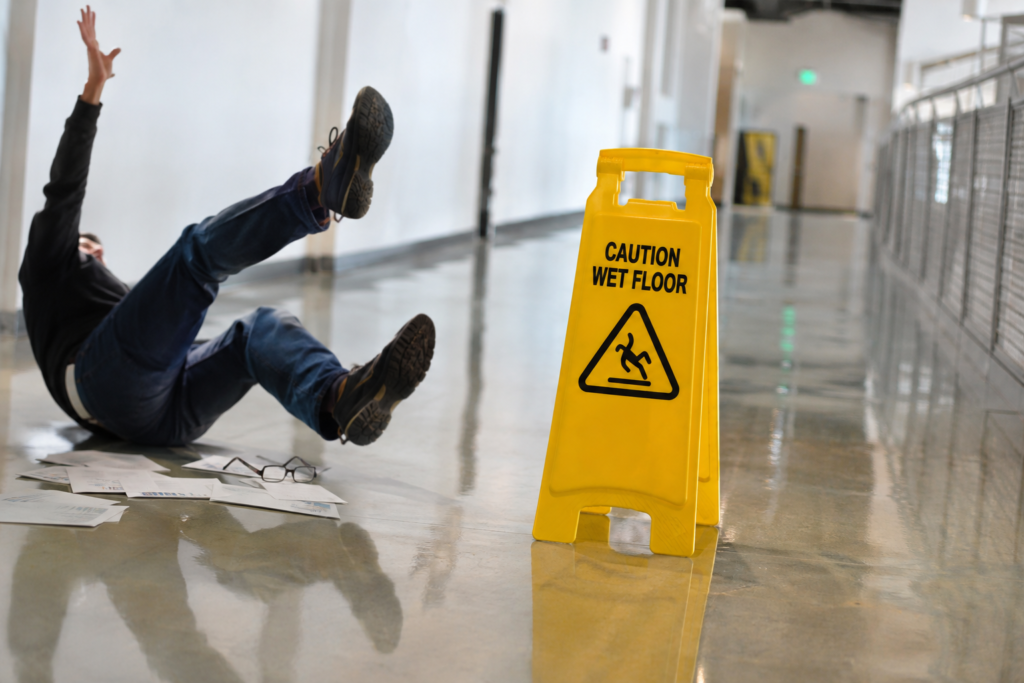
Unsafe property conditions, including wet floors, can lead to serious premises liability injuries in Michigan.
Michigan Premises Liability Lawyers Serving Metro Detroit
Khamo Law represents people injured by dangerous property conditions throughout Michigan. For more localized information, visit our Troy Premises Liability Attorney,, Sterling Heights Premises Liability Attorney, Warren Premises Liability Attorney, Detroit Premises Liability Attorney, Southfield Premises Liability Attorney, and Clinton Township Premises Liability Attorney pages.
Who Can Be Sued Under Michigan Premises Liability Law?
Several parties can be held liable for a slip and fall or other premises-related injury, depending on the circumstances:
- Property owners: Whether residential or commercial, owners are primarily responsible for ensuring safe conditions.
- Property managers: If management companies or landlords fail to maintain safe premises, they can also be sued.
- Tenants or business operators: When a business leases property and controls the area where the injury occurred, it may share liability.
- Maintenance contractors: Companies hired to maintain a property may be responsible if their negligence contributed to the hazard.
- Government entities: Cities or municipalities may face liability for unsafe sidewalks and roads, though these claims follow stricter procedural rules and shorter filing deadlines.
In many cases, multiple parties share responsibility. An experienced premises liability lawyer can investigate to determine every source of potential compensation you’re entitled to.
What Are the Legal Elements of a Michigan Premises Liability Claim?
To win a premises liability case in Michigan, the injured person must establish four key elements: duty of care, breach of duty, causation, and damages. Each one plays a vital role in proving that the property owner’s negligence led to the injuries and damages in question. A Michigan premises liability attorney can evaluate how these elements apply to the specific facts of an injury claim.
Duty of Care
Every property owner or manager has a responsibility to maintain reasonably safe conditions for lawful visitors. The exact level of care depends on whether the injured person was an invitee, licensee, or trespasser, as discussed above.
Breach of Duty
Once a duty exists, it must be shown that the owner failed to meet it. A breach can occur when they neglect to fix, inspect, or warn visitors about a dangerous condition. This could involve something like failing to clean up a spill or leaving ice untreated on a walkway, for instance. A premises liability lawyer can gather evidence to evaluate whether the property owner’s actions fell short of the applicable legal duty.
Causation
The injured party must demonstrate that the unsafe condition directly caused their injury. Proximate cause must also be established in premises liability cases.
Damages
Finally, you must show that the accident resulted in real, measurable harm. This includes financial losses and/or suffering a physical injury.
Questions About a Michigan Premises Liability Injury?
Premises liability cases can involve unsafe floors, dangerous stairs, poor lighting, snow and ice, defective walkways, inadequate maintenance, and other hazardous property conditions. Determining whether someone may be legally responsible can depend on who controlled the property, what caused the hazard, and the circumstances surrounding the injury.
If you were injured because of an unsafe property condition, Khamo Law’s Michigan personal injury attorneys can review what happened and explain the options that may be available.
If your accident involved a fall, learn more about how our Michigan slip and fall lawyers handle these claims.
Call Khamo Law at (248) 466-0606 or contact us online for a free consultation.
Frequently Asked Questions
1. What is the main goal of Michigan’s premises liability law?
The law ensures that property owners take reasonable steps to protect visitors from dangerous conditions. If they fail to do so and someone is injured, the owner can be legally responsible for damages.
2. Does it matter if the property is public or private?
Yes. Claims involving private property and government-owned property can involve different legal rules. Government entities may have statutory immunity, exceptions, notice requirements, and other special procedures that do not apply to ordinary private-property claims. An attorney can determine which rules apply based on where the injury occurred and who controlled the property.
3. How long do I have to file a claim?
Michigan generally provides a three-year limitations period for personal injury actions. However, exceptions, shorter notice requirements, or different deadlines may apply depending on the type of claim and defendant. Because these deadlines can vary, it is important to determine the applicable deadline based on the specific facts of the case.
4. What if I was partially at fault for my injury?
Michigan applies comparative-fault rules. An injured person’s percentage of fault can reduce the damages available, and additional limits can apply to noneconomic damages when the injured person’s fault exceeds the aggregate fault of others. The effect of comparative fault depends on the circumstances of the case.
5. What kinds of evidence are useful in these cases?
Photographs of the hazard, witness statements, maintenance logs, and medical records are all valuable. The sooner this evidence is gathered, the stronger your claim will be.
Legally reviewed by Attorney Koro E. Khamo
Attorney at Khamo Law, PLLC