










A traumatic brain injury can change nearly every part of a person’s life. Problems with memory, concentration, speech, balance, mood, vision, sleep, and physical functioning can make it difficult to work, maintain relationships, or complete ordinary daily activities.
At Khamo Law, a Michigan traumatic brain injury lawyer can help people who suffered a TBI because of another person’s negligence understand their legal options and pursue compensation for the harm they have experienced.
Traumatic brain injuries can result from motor vehicle crashes, falls, pedestrian accidents, bicycle accidents, dangerous property conditions, and other serious incidents. Some symptoms appear immediately, while others may develop or become more noticeable over time. Because brain injuries can result from many different types of accidents, the legal issues involved can vary considerably. Our Michigan personal injury attorneys can investigate what caused the injury, determine who may be responsible, and evaluate the insurance coverage and compensation that may be available.
If you or a loved one suffered a brain injury because of someone else’s negligence, call Khamo Law at (248) 466-0606 or contact us online for a free consultation.
Brain Injury Lawyers Serving Communities Across Metro Detroit
Khamo Law represents people with traumatic brain injuries throughout Michigan. For more localized information, visit our Troy Brain Injury Attorney, Sterling Heights Brain Injury Attorney, Southfield Brain Injury Attorney,Warren Brain Injury Attorney, Detroit Brain Injury Attorney, and Clinton Township Brain Injury Attorney resources.
What Is a Traumatic Brain Injury?
A traumatic brain injury occurs when a bump, blow, jolt, or penetrating injury disrupts the normal function of the brain.
Michigan’s Department of Health and Human Services explains that TBI severity can range from mild to severe and that brain injuries can have complex and unpredictable outcomes. Even an injury that initially appears mild may cause significant symptoms or long-term impairment.
A traumatic brain injury may result from:
- A direct blow to the head
- Rapid acceleration or deceleration
- The brain moving violently inside the skull
- A penetrating object
- A motor vehicle collision
- A fall or other impact
Not every head impact causes a TBI, but anyone who experiences neurological symptoms after an accident should seek appropriate medical evaluation.
Common Causes of Traumatic Brain Injuries in Michigan
TBIs can occur in many different types of accidents.
Common causes include:
- Car accidents
- Truck accidents
- Motorcycle crashes
- Pedestrian accidents
- Bicycle accidents
- Slip and fall accidents
- Falls from heights
- Workplace incidents
- Recreational accidents
- Assaults
- Other incidents involving blunt-force trauma
Michigan MDHHS reports that motor vehicle crashes account for a substantial share of traumatic brain injuries in the state.
If your brain injury occurred in a vehicle collision, our Michigan car accident attorneys can evaluate the insurance and liability issues involved.
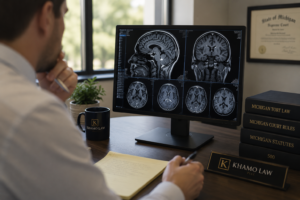
Traumatic brain injury cases may require careful review of medical records, diagnostic imaging, and the long-term effects of the injury.
Mild Traumatic Brain Injuries and Concussions
A concussion is a type of mild traumatic brain injury.
The word “mild” describes the initial classification of the injury and does not necessarily mean that the effects are insignificant. Michigan health officials note that even mild TBI can result in lasting impairment.
Symptoms can include:
- Headaches
- Dizziness
- Memory problems
- Difficulty concentrating
- Fatigue
- Sensitivity to light or noise
- Blurred or double vision
- Nausea
- Sleep disturbances
- Anxiety
- Depression
- Irritability
- Problems processing information
One challenge in TBI cases is that the injured person may look physically normal while experiencing significant cognitive or neurological difficulties.
Moderate and Severe Traumatic Brain Injuries
More severe traumatic brain injuries can result in substantial and permanent impairment.
A person may experience:
- Extended loss or alteration of consciousness
- Memory loss
- Cognitive impairment
- Difficulty speaking or understanding language
- Problems walking or maintaining balance
- Vision loss
- Changes in personality or behavior
- Paralysis
- Seizures
- Loss of independence
- Need for long-term rehabilitation
- Need for attendant or personal care
Michigan MDHHS describes TBI outcomes as complex and unpredictable and notes that serious injuries can occur without obvious physical disabilities.
Symptoms of a Traumatic Brain Injury
Brain injury symptoms vary widely from person to person.
Physical symptoms may include:
- Headaches
- Dizziness
- Balance problems
- Nausea
- Weakness
- Fatigue
- Sensitivity to light or sound
Cognitive symptoms may include:
- Memory problems
- Difficulty concentrating
- Slower thinking
- Difficulty making decisions
- Problems organizing tasks
Emotional or behavioral changes may include:
- Irritability
- Depression
- Anxiety
- Mood swings
- Changes in personality
- Impulsivity
A person does not need to lose consciousness to suffer a traumatic brain injury.
Why Some Brain Injuries Are Difficult to Diagnose
Unlike a broken bone, a TBI is not always obvious on routine imaging.
Some people may have persistent neurological or cognitive symptoms even when early scans do not show major structural damage.
As a result, a TBI case may depend on more than one piece of evidence.
Medical documentation can include:
- Emergency room records
- Neurology evaluations
- Neuropsychological testing
- CT scans
- MRI studies
- Rehabilitation records
- Occupational therapy
- Speech therapy
- Physical therapy
- Records from treating physicians
Family members, friends, and coworkers can sometimes also provide important information about changes in memory, personality, behavior, or daily functioning after an injury.
Long-Term Effects of a Traumatic Brain Injury
A serious brain injury may affect a person for months, years, or permanently.
Long-term consequences may involve:
- Loss of employment
- Reduced earning ability
- Difficulty returning to school
- Loss of independence
- Need for ongoing medical care
- Rehabilitation
- Cognitive therapy
- Assistance with daily activities
- Changes in family relationships
- Emotional and psychological difficulties
The financial consequences can also be significant when an injured person cannot return to the same work or requires long-term assistance.
A properly evaluated claim should consider future losses, not just bills that have already been incurred.
Who May Be Liable for a Traumatic Brain Injury?
Liability depends on how the injury occurred.
Potentially responsible parties may include:
- A negligent driver
- A trucking company
- A property owner
- A business
- An employer or contractor
- A manufacturer
- Another person whose negligence caused the incident
Some cases involve more than one responsible party.
For example, a truck crash could involve a driver, trucking company, maintenance contractor, or another motorist.
Evidence That Can Strengthen a TBI Claim
Brain injury cases can be evidence-intensive.
Important evidence may include:
- Police or incident reports
- Photographs and video
- Witness statements
- Medical records
- Diagnostic testing
- Neuropsychological evaluations
- Employment records
- Wage documentation
- Expert evaluations
- Testimony from family and friends
- Records showing how the injury affected daily life
Medical treatment and documentation are especially important because insurance companies may dispute whether symptoms were caused by the accident or whether the injury is as serious as claimed.
Medical Experts in Traumatic Brain Injury Cases
Serious TBI cases may involve medical professionals who can help explain the injury and its long-term consequences.
Depending on the case, these may include:
- Neurologists
- Neuropsychologists
- Neurosurgeons
- Rehabilitation physicians
- Physical therapists
- Occupational therapists
- Speech-language pathologists
- Vocational experts
- Life-care planners
The purpose is not simply to establish that an injury occurred. It may also be necessary to explain how the injury affects the person’s ability to work, live independently, communicate, and participate in normal activities.
Compensation After a Michigan Traumatic Brain Injury
The compensation available depends on the circumstances of the accident, the severity of the injury, available insurance, and the applicable law.
Potential damages may include:
- Medical expenses
- Future medical treatment
- Rehabilitation
- Lost wages
- Reduced future earning capacity
- Attendant care
- Disability
- Pain and suffering
- Emotional distress
- Loss of enjoyment of life
- Other accident-related losses
A severe TBI can create lifelong financial needs, which is why future care and future earning losses can be especially important in these cases.
Michigan No-Fault Benefits After a Brain Injury
When a TBI results from a motor vehicle accident, Michigan no-fault insurance may provide Personal Injury Protection benefits.
Michigan currently permits several levels of PIP medical coverage, including unlimited, $500,000, $250,000, certain limited or excluded options, a $50,000 option for qualifying Medicaid participants, and an opt-out for certain Medicare participants.
Depending on the applicable coverage, PIP benefits may help with:
- Medical treatment
- Rehabilitation
- Wage loss
- Replacement services
- Certain other covered expenses
The amount of available medical coverage depends on the policy and eligibility rules.
If an insurer delays or denies benefits, see our guide to denied PIP benefits in Michigan. For more information about medical benefits, wage loss, attendant care, replacement services, and other benefits after a Michigan motor vehicle accident, visit our Michigan No-Fault Insurance Lawyer resource.
Can You Sue the At-Fault Driver for a TBI?
Potentially.
Michigan law permits recovery of noneconomic damages arising from a motor vehicle accident when the injured person suffers death, permanent serious disfigurement, or a serious impairment of body function.
The statute defines serious impairment using several factors, including whether the impairment is objectively manifested, involves an important body function, and affects the person’s general ability to lead their normal life.
Michigan law also contains a specific provision addressing closed-head injuries. In certain circumstances, sworn medical testimony that there may be a serious neurological injury can create a factual question for the jury.
These issues are highly fact-specific and should be evaluated based on the medical evidence and the impact of the injury.
What If You Were Partially at Fault?
Michigan uses comparative-fault rules.
In a motor-vehicle claim for noneconomic damages, Michigan law provides that damages are assessed based on comparative fault and bars noneconomic damages when the injured person is more than 50% at fault.
The effect of comparative fault depends on the type of claim and circumstances involved.
How Long Do You Have to File a Michigan TBI Claim?
Michigan generally provides a three-year limitations period for actions involving injury to a person, although different claims can involve different deadlines or notice requirements.
Motor vehicle claims can also involve separate insurance deadlines.
Because the applicable deadline depends on how the injury happened and who is responsible, it is better to determine the deadline based on the specific case rather than relying on one general rule.
What To Do After Suffering a Brain Injury
If you may have suffered a traumatic brain injury:
- Seek medical attention.
- Tell your medical provider about all neurological and cognitive symptoms.
- Follow recommended treatment.
- Keep copies of medical records and bills.
- Document changes in memory, concentration, mood, sleep, and daily activities.
- Keep records of missed work and lost income.
- Preserve photographs, video, and accident information.
- Avoid minimizing symptoms simply because they are not visible.
- Consider speaking with a lawyer before giving detailed recorded statements to an insurance company.
Early documentation can be especially important when symptoms change or develop over time.
Why Choose Khamo Law for a Michigan TBI Case?
Traumatic brain injury cases require careful attention to medical evidence and the long-term effects of the injury.
Khamo Law can help by:
- Investigating how the injury occurred
- Identifying responsible parties
- Gathering medical and accident evidence
- Reviewing available insurance coverage
- Evaluating current and future losses
- Working with qualified professionals when appropriate
- Handling communications with insurance companies
- Pursuing litigation when necessary
We represent people with serious injuries throughout Michigan and handle personal injury cases on a contingency-fee basis.
Frequently Asked Questions About Traumatic Brain Injury Claims
Can I have a TBI if I never lost consciousness?
Yes. Loss of consciousness is not required for a traumatic brain injury. Symptoms and diagnosis depend on the nature of the injury and medical evaluation.
Can a concussion lead to a personal injury claim?
Potentially. A concussion is a mild traumatic brain injury. Whether a legal claim exists depends on what caused the injury, whether another person was negligent, and the damages that resulted.
What if my MRI or CT scan was normal?
A normal scan does not necessarily determine whether someone has suffered a TBI. Diagnosis can involve symptoms, clinical evaluation, neurological testing, and other evidence.
What if my symptoms appeared days after the accident?
Some symptoms may become more noticeable after an accident. Seek medical attention and explain when the symptoms began and how they have changed.
Can a TBI affect my ability to work?
Yes. Brain injuries may affect concentration, memory, communication, stamina, judgment, or physical functioning. Those changes may affect a person’s ability to perform the same job or work the same hours.
What if my brain injury happened in a car accident?
Michigan no-fault benefits and a potential claim against an at-fault driver may both need to be evaluated. The available claims depend on the circumstances and insurance coverage.
How much is a traumatic brain injury case worth?
There is no standard value. Important factors include injury severity, medical evidence, future treatment, lost income, long-term impairment, insurance coverage, liability, and how the injury affects the person’s life.
How much does it cost to hire Khamo Law?
Khamo Law handles personal injury claims on a contingency-fee basis, so attorney fees are tied to the recovery obtained rather than charged upfront.
Michigan Traumatic Brain Injury Lawyers Serving Clients Statewide
Khamo Law represents people with serious brain injuries throughout Michigan.
Our personal injury practice also includes Michigan car accidents, truck accidents, pedestrian accidents, bicycle accidents, slip and fall accidents, and spinal cord injuries.
Contact a Michigan Traumatic Brain Injury Lawyer
If you or a loved one suffered a traumatic brain injury because of another person’s negligence, Khamo Law can review what happened and explain the legal options that may be available.
For local brain injury information, Khamo Law also provides resources for Troy, Sterling Heights, Warren, Detroit, and Clinton Township.
Call (248) 466-0606 or contact Khamo Law online for a free consultation.
Legally reviewed by Attorney Koro E. Khamo
Attorney at Khamo Law, PLLC