






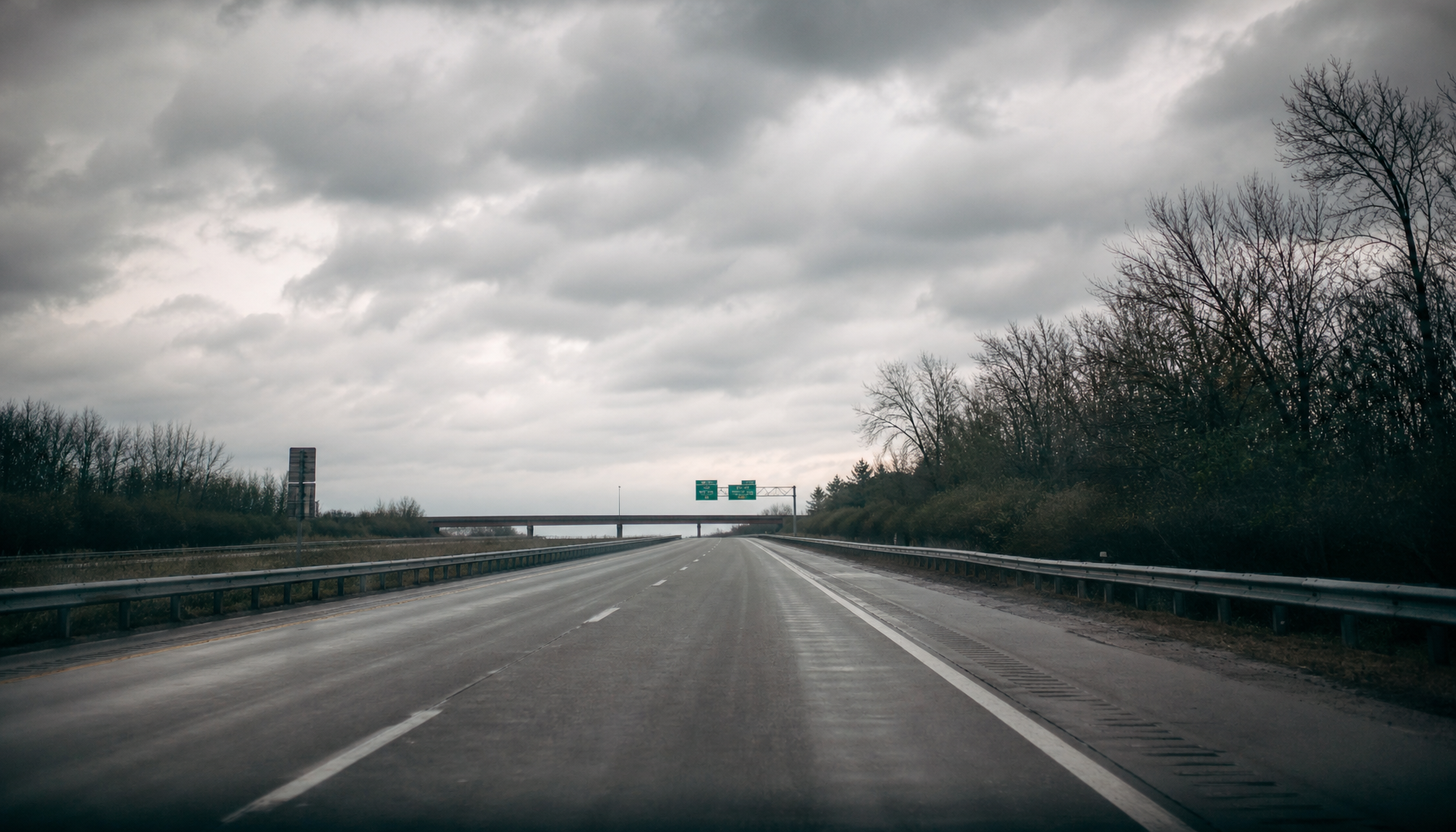
If you or someone you love was hurt in a rollover crash on I-96 — or any Michigan highway — your first moves in the hours and days after the accident will shape everything that follows. Call 911, get medical care, preserve evidence, and talk to a car accident lawyer Michigan residents trust before you speak to any insurance adjuster. The steps below walk you through exactly what that looks like.
According to MLive, five people were injured — several of them ejected from the vehicle — in a high-speed rollover on I-96. Ejections are among the most serious outcomes in any crash. When someone is thrown from a car, the injuries are typically severe: traumatic brain injury, spinal damage, broken bones, internal bleeding. The fact that five people survived is not a reason to minimize what happened.
If you were in that vehicle, or one like it, this post is for you. And if you want guidance specific to your situation, our Michigan car accident attorneys are available for a free consultation.
Why Rollover Crashes Are Different
Rollovers make up a small share of all crashes but a disproportionate share of fatalities. According to NHTSA, rollovers account for roughly 29% of all passenger vehicle occupant deaths despite being a relatively rare crash type. High speed is the most common factor — and I-96, which runs from Detroit through Howell and beyond, sees consistent speeding in both directions.
What makes rollovers legally complicated isn’t just the severity. It’s the question of who’s responsible. Speed is an obvious factor, but so are:
- Road conditions (ice, standing water, uneven pavement)
- Vehicle defects (tire blowouts, roof crush failures, seatbelt malfunctions)
- Other drivers who cut someone off or caused an evasive maneuver
- Overcrowding or improper loading of a vehicle
In a crash where multiple people were ejected, more than one of these factors may be in play. That’s why it’s worth having an attorney look at the full picture — not just the police report.
What Michigan’s No-Fault Law Covers
Michigan is a no-fault insurance state. That means your own insurance — specifically your Personal Injury Protection (PIP) coverage — pays your medical bills and a portion of your lost wages regardless of who caused the crash. Under MCL 500.3107, PIP benefits include reasonably necessary medical expenses, up to 85% of lost income, and replacement services if you can’t perform household tasks while you recover.
This sounds straightforward. In practice, insurance companies often dispute what’s “reasonably necessary” or argue that your injuries were pre-existing. That’s the first place things can go wrong if you’re handling a claim on your own.
When You Can Sue the At-Fault Driver
Michigan’s no-fault system limits when you can bring a personal injury lawsuit against another driver. Under MCL 500.3135, you can pursue non-economic damages — pain, suffering, loss of normal life — only if you’ve suffered a serious impairment of a body function or permanent serious disfigurement.
In a high-speed rollover with ejections, that threshold is almost certainly met. Spinal injuries, traumatic brain injuries, significant scarring, prolonged loss of mobility — these are exactly what the statute was designed to cover.
You also have three years from the date of the crash to file suit, per MCL 600.5805(2). Three years sounds like a long time. It isn’t. Evidence fades. Witnesses move. Surveillance footage gets overwritten. Preserving what exists matters now, not later.
What to Do After a Serious Crash on I-96 (or Any Michigan Highway)
These steps apply whether the crash happened yesterday or a week ago.
- Get medical attention — even if you feel okay. Adrenaline is real. Concussions, internal injuries, and spinal damage don’t always hurt immediately. A same-day ER visit or urgent care trip documents your injuries at their earliest point. Gaps in care are one of the first things insurance adjusters use against you.
- Don’t give a recorded statement to any insurance company yet. Not the other driver’s insurer, and sometimes not even your own. Adjusters are trained to get you to minimize your injuries or accept fault. You have no legal obligation to give a recorded statement before speaking with an attorney. For more on why this matters, read why talking to the other driver’s adjuster too soon is risky.
- Preserve everything you have. Photos of the scene, your injuries, the vehicle. The names and contact information of anyone who witnessed the crash. Any texts or calls you made right after. Even your clothing — it can document injury location and severity.
- Request the police report. In Michigan, crash reports are filed with the Michigan State Police and are typically available within a few days. The report will note whether speed was cited, whether anyone was cited, and the responding officer’s observations.
- Notify your PIP insurer promptly. Michigan law requires timely notice to your no-fault insurer. Missing that window can jeopardize your PIP benefits.
- Talk to a car accident lawyer Michigan drivers rely on before you sign anything. Insurance companies move fast after serious crashes. They may contact you with a settlement offer before you even know the full extent of your injuries. Once you sign a release, you can’t go back.
If You Were a Passenger
Passengers in a rollover crash have rights too — and in some ways, cleaner ones. If you weren’t driving, you’re generally not at risk for comparative fault. Your PIP benefits run through your own insurance first (if you have a policy), then the driver’s insurer, then the vehicle owner’s insurer. The rules for passengers injured in a Michigan car accident can get complicated when multiple insurers are involved, but you do have clear rights to medical coverage and potentially to sue the at-fault driver.
If Multiple Vehicles Were Involved
Some rollovers start with a sideswipe, a cut-off, or a chain-reaction from another crash. When more than one vehicle is involved, fault can be shared — and figuring out who owes what to whom requires sorting through multiple insurance policies and potentially multiple at-fault parties. For a deeper look at how fault gets assigned in these situations, see who’s at fault in a Michigan multi-vehicle highway accident.
Speed and Liability
When a crash is caused by excessive speed, the at-fault driver’s conduct matters for more than just the police report. Speed evidence — from the vehicle’s event data recorder (EDR), skid marks, witness accounts, and traffic camera footage — can directly support a third-party liability claim. EDR data especially can show how fast the vehicle was traveling in the seconds before impact.
An experienced attorney will work with accident reconstruction experts to build that picture. It’s not something you can piece together on your own after the fact, which is another reason why early legal involvement matters.
Frequently Asked Questions
What if I was ejected from the vehicle — does that affect my claim?
Being ejected doesn’t reduce your rights. It may actually strengthen them, because ejection typically signals that something failed — a seatbelt malfunction, a door that opened on impact, or a roof that crushed in ways it shouldn’t. If a vehicle defect contributed to your ejection, the vehicle manufacturer may be liable in addition to the at-fault driver.
Can I get PIP benefits if I don’t have my own car insurance?
You may still be covered. Michigan’s no-fault law creates a priority system — you can claim PIP through the vehicle owner’s insurer, or in some cases through the Michigan Assigned Claims Plan. The rules depend on who you are in relation to the vehicle and driver. Talk to an attorney before assuming you have no coverage.
The crash just happened. Is it too early to call a lawyer?
No. It’s the best time. Early involvement means your attorney can help you give proper notice to your PIP insurer, preserve evidence before it disappears, and protect you from early settlement pressure. You’re not committing to anything by making a call.
What if I was partly at fault for the crash?
Michigan follows a modified comparative fault rule. You can still recover damages as long as you’re not more than 50% at fault. Your recovery is reduced by your percentage of fault — so if you were 20% responsible, you recover 80% of your damages. This is a reason to have an attorney assess fault early, not accept whatever the police report or insurance company says.
How long will a Michigan car accident claim take?
It depends on the severity of your injuries and whether the case settles or goes to trial. PIP claims for medical bills can be resolved in months. Third-party liability claims — especially those involving serious injury — often take one to two years. The right timeline is one that waits until your injuries have stabilized enough to fully value your claim, not the fastest timeline the insurer can push you toward.
What if the driver who caused the crash had no insurance?
You still have options. Your own uninsured motorist (UM) coverage, if you have it, can step in. Your PIP coverage still pays your medical bills and lost wages. And Michigan’s Assigned Claims Plan provides a safety net for people who have no applicable policy of their own. An attorney can help you identify every source of coverage available.
If you were injured in the I-96 rollover — or any serious Michigan crash — talk to us before you sign anything. Khamo Law, PLLC offers a free consultation. Call 248-466-0606 or message us through the contact form. We serve clients across Michigan, including Metro Detroit, Macomb County, and Oakland County. نتحدث العربية ونقدم الخدمات للعملاء الكلدانيين والآشوريين في ميشيغان.