






If you’re a pedestrian hit by a car in Michigan, you have the right to file a claim against the driver’s insurance — and potentially sue for pain, suffering, and long-term losses if your injuries are serious enough. That protection exists even when you weren’t in a marked crosswalk. What matters most right now is acting before evidence disappears and deadlines pass.
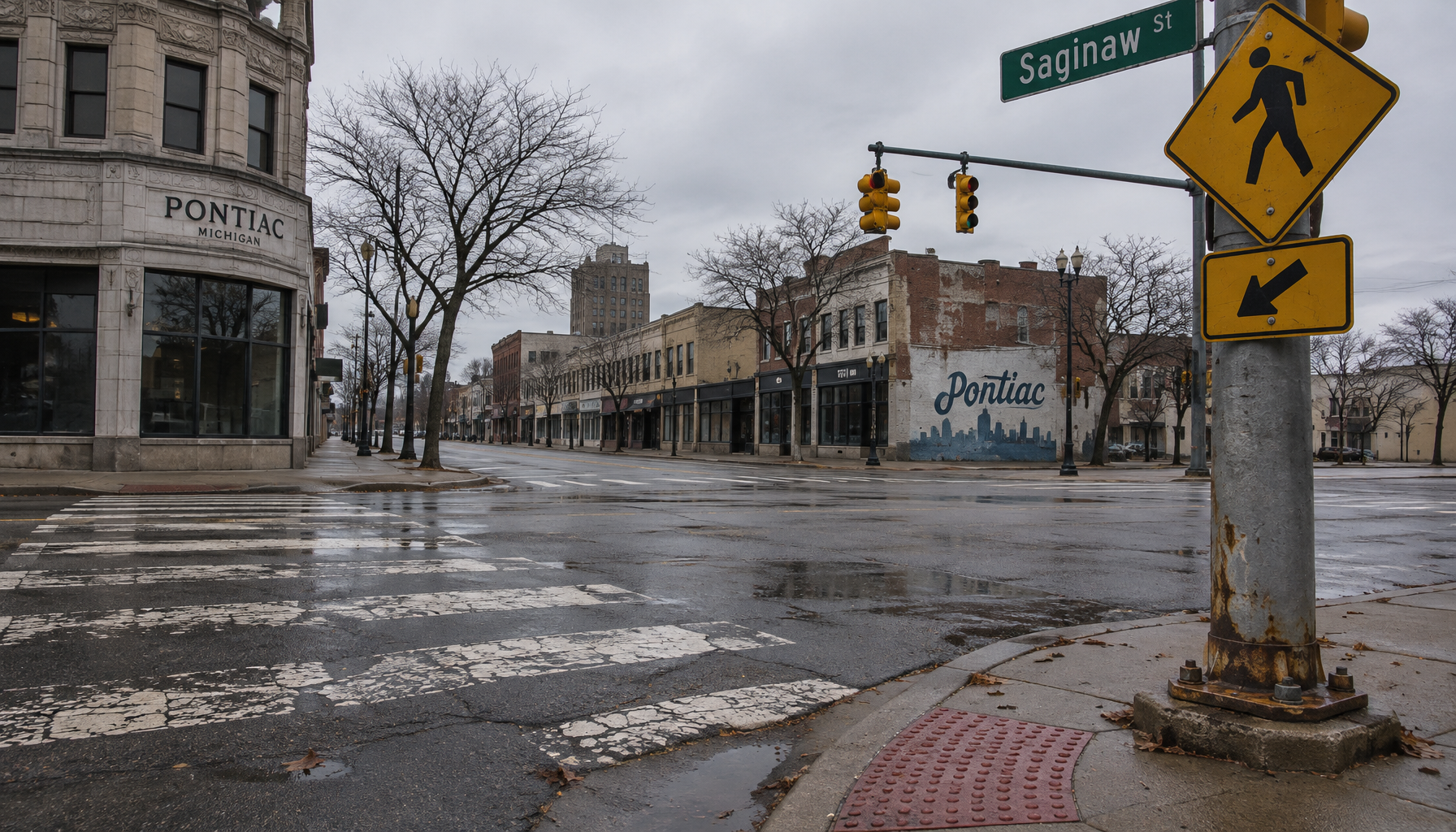
A woman was critically hurt in Pontiac earlier this week after a driver struck her while she was pushing a shopping cart down the street. As reported by The Detroit News, distracted driving is suspected. Crashes like this happen across Oakland County far more often than most people realize — and the victims are almost always the ones left trying to figure out what to do next.
This post walks through what Michigan law actually gives you, what steps protect your claim, and what to watch out for before you sign anything. If you need a Michigan pedestrian accidents lawyer, the information below applies directly to your situation.
When a Pedestrian Is Hit by a Car in Michigan, What Does the Law Say?
Michigan’s no-fault insurance system pays for medical bills and wage loss through Personal Injury Protection (PIP) benefits — regardless of who caused the crash. Under MCL 500.3107, your PIP coverage (or the driver’s insurer if you have no auto policy) covers reasonable and necessary medical expenses, 85% of lost wages, and in-home care costs. That part doesn’t require proving the driver was at fault.
But PIP doesn’t cover pain and suffering, permanent disability, or scarring. To recover those, you need to meet the threshold in MCL 500.3135 — meaning your injury must be serious: death, permanent serious disfigurement, or objectively manifested impairment of an important body function. For a woman critically injured in a Pontiac street crash, that threshold is very likely met.
That opens the door to a third-party claim directly against the driver — the person who hit her.
What “Distracted Driving” Means for the At-Fault Claim
When a driver is distracted — looking at a phone, eating, adjusting music — they’ve breached their duty of care. In Michigan, evidence of distracted driving can include:
- Phone records showing calls or texts at the time of impact
- Witness statements placing the driver’s eyes off the road
- Dashcam footage from the vehicle or nearby businesses
- The police report’s notation of distraction as a contributing factor
According to NHTSA crash data, distracted driving killed 3,308 people in the U.S. in 2022. It injures tens of thousands more. When that distraction causes a pedestrian to be critically hurt, it’s not just a tragedy — it’s negligence that the law recognizes.
Why Location Matters: Pontiac’s Roads and Pedestrian Risk
Pontiac sits at the intersection of several high-traffic corridors — M-24, Telegraph Road, and Woodward Avenue pass through or near the city, and the area around the downtown and commercial strips has seen repeated pedestrian incidents over the years. Many of the streets lack consistent sidewalk infrastructure, which means pedestrians sometimes use the roadway out of necessity — not recklessness.
That context matters legally. If a pedestrian was in the roadway because there was no safe alternative, that’s not automatically negligence on their part. Michigan follows a comparative fault system, which means even if the pedestrian shares some responsibility, they can still recover — reduced by whatever percentage of fault is assigned to them.
For more on how fault gets assigned in these cases, who’s at fault when a pedestrian is hit in a crosswalk breaks down the analysis in plain terms.
What to Do If You or a Family Member Was Hit
The first hours and days after a crash are the ones that matter most for preserving your legal options. Here’s the order of priority:
- Get emergency medical care. Don’t decline treatment because you’re not sure how bad it is. Adrenaline masks pain. And gaps in medical treatment get used against you later.
- Get the police report number. It documents the driver’s information, any citation issued, and the officer’s initial assessment of cause.
- Don’t give a recorded statement to any insurance company — not even your own — before talking to a lawyer. Adjusters are trained to get statements that limit payouts.
- Photograph everything you can: the scene, any visible injuries, your clothing, the car that hit you if it’s still there.
- Collect witness contact information. Names and phone numbers, before people leave.
- Write down what you remember about what happened, as soon as you’re able. Memory fades fast.
- Call a lawyer before you sign a release or accept any settlement offer.
For a fuller breakdown of these steps, what to do after a pedestrian accident in Michigan covers each one in detail.
The Deadline You Can’t Afford to Miss
Michigan’s statute of limitations for personal injury claims is three years from the date of the crash — MCL 600.5805(2). Three years sounds like plenty of time. It isn’t. Evidence gets lost. Witnesses move. Insurance companies use delay as a strategy.
And for the PIP claim — medical bills and wage loss — there are notice requirements that kick in much sooner. Missing those can cost you benefits you’re entitled to. For a detailed look at timing, how long you have to file a pedestrian accident lawsuit explains the Michigan deadlines specifically.
What Compensation Can a Pedestrian Accident Victim Recover?
This depends on the severity of the injuries, but in a serious case like the Pontiac crash described above, the categories of recovery typically include:
- Medical expenses — emergency care, surgery, hospitalization, rehabilitation, future care needs
- Lost wages — income lost during recovery, plus future earning capacity if the injury affects the ability to work long-term
- Pain and suffering — the physical pain and emotional toll of the injury, compensable once the MCL 500.3135 threshold is met
- Disfigurement and disability — scarring, amputation, permanent impairment
- In-home assistance — help with daily tasks during recovery
In a wrongful death case, the family of a pedestrian who doesn’t survive can pursue a separate wrongful death claim. The Macomb County pedestrian killed by SUV guide for families walks through how that process works under Michigan law.
What Insurance Companies Do After a Pedestrian Crash
This part matters as much as the legal theory does.
Within days of a serious crash, the at-fault driver’s insurance company will often reach out to the victim or their family. They may sound helpful. They may offer something early. That offer is almost always far below what a serious injury case is actually worth — and accepting it closes out your right to any future compensation.
The insurer is not on your side. Their job is to settle the claim for as little as possible, as fast as possible, before you understand what you’re entitled to.
Don’t sign anything. Don’t accept anything. Talk to a lawyer first.
Frequently Asked Questions
Does it matter that the pedestrian was pushing a cart and not in a crosswalk?
Not necessarily. Michigan law doesn’t limit pedestrian rights to marked crosswalk zones. Drivers have a duty to watch for people in the roadway, particularly in areas where sidewalks are limited or absent. A pedestrian’s location on the road affects the comparative fault analysis, but it doesn’t eliminate their right to recover.
What if the driver claims the pedestrian stepped out suddenly?
That’s a common defense. It’s also one that gets examined closely. Phone records, surveillance footage, skid marks, and witness accounts all help reconstruct what actually happened. A driver who was distracted may not have seen the pedestrian at all — which doesn’t make it the pedestrian’s fault.
My family member is critically injured and can’t speak for themselves. Can we still start a claim?
Yes. A family member or legal guardian can begin the process on behalf of a person who is incapacitated. This includes dealing with the insurer, preserving evidence, and retaining a lawyer. Getting started early is especially important in these situations.
What if the driver didn’t have insurance?
Michigan requires drivers to carry insurance, but uninsured drivers exist. If the at-fault driver had no coverage, your own uninsured motorist coverage (if you have it) may apply. PIP benefits may also be available through your household’s auto policy or, if none exists, through the Michigan Assigned Claims Plan. This is a situation where talking to a lawyer quickly makes a real difference.
How much does it cost to hire a pedestrian accident lawyer?
Khamo Law, PLLC handles pedestrian accident cases on a contingency fee basis — meaning there’s no cost to you unless we recover money on your behalf. The initial consultation is free.
What if I’m not sure whether my injuries are serious enough to file a lawsuit?
That’s exactly what the free consultation is for. The MCL 500.3135 threshold — serious impairment of a body function, permanent disfigurement, or death — covers a wide range of injuries. Many people assume their case doesn’t qualify and walk away from claims they were entitled to. Let a lawyer make that assessment, not an insurance adjuster.
If you or someone in your family was a pedestrian hit by a car in Pontiac or anywhere in Oakland County, talk to us before you sign anything or accept any offer. Khamo Law, PLLC offers a free consultation — call 248-466-0606 or reach us through the contact form on our site. We serve clients across the greater Detroit area, including Pontiac, Sterling Heights, Warren, and Troy.