






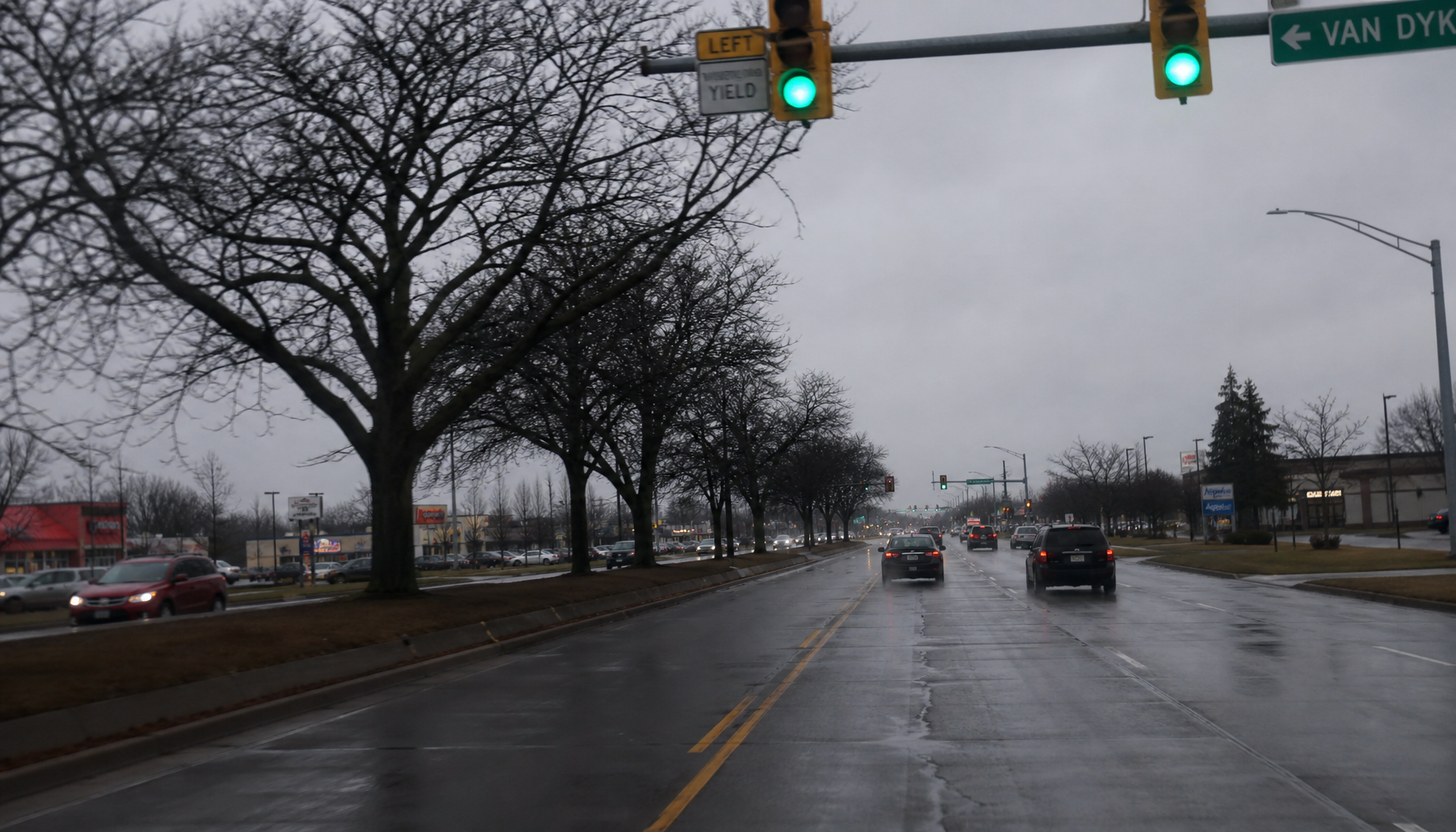
A serious crash in Sterling Heights has left one person dead and four others injured. If you or someone you love was in that crash — or if you’re a family member trying to understand what comes next — here’s what Michigan law says you’re entitled to, what steps matter most in the first 72 hours, and why talking to an attorney before you talk to an insurance adjuster can make a real difference.
According to WDIV Local 4, the crash in Sterling Heights left one person dead and four others injured. Details are still emerging, but crashes like this one — multi-victim, with at least one fatality — trigger a specific set of legal rights and deadlines under Michigan law that families need to understand right away.
What Happens Legally After a Fatal Crash in Michigan
Michigan is a no-fault state, which means your own auto insurance pays your medical bills and lost wages first — regardless of who caused the crash. But no-fault only goes so far. When a crash kills someone or causes serious injury, the law opens the door to additional claims against the at-fault driver.
Under MCL 500.3135, an injured person can sue the at-fault driver for pain and suffering if the injury meets the legal threshold — meaning it caused death, serious impairment of a body function, or permanent serious disfigurement. A fatality clears that bar automatically. So do many of the serious injuries that typically accompany a multi-vehicle crash.
For surviving injured victims, the path usually runs through two tracks at the same time:
- No-fault PIP benefits — your own insurer pays medical expenses, 85% of lost wages (up to the statutory cap), and replacement services under MCL 500.3107
- A third-party liability claim — a lawsuit or demand against the driver who caused the crash, seeking compensation for pain, suffering, and other non-economic harm
These two tracks can run at the same time. Most people don’t realize that — and insurers don’t go out of their way to explain it.
If Someone You Love Was Killed
The family of a person killed in a Michigan car crash may have a wrongful death claim under MCL 600.2922. That claim belongs to the estate — not to individual family members directly — and it must be filed within three years of the date of death under MCL 600.5805(2).
Three years sounds like a long time. It isn’t, once you account for gathering evidence, tracking down witnesses, obtaining crash reconstruction reports from law enforcement, and negotiating with insurers who are working against the clock on their end from day one.
A few things families often don’t know:
- Police crash reports in fatal accidents are sometimes held pending investigation. You may need an attorney to obtain records you’re legally entitled to.
- The at-fault driver’s insurer will likely contact the family early. That contact is not an offer to help — it’s an attempt to limit liability.
- If the at-fault driver was uninsured or underinsured, the family may still have options through the surviving family members’ own policies.
For more on what families face in situations like this one, read about what wrongful death claims look like after a Sterling Heights crash.
What the Four Injured Victims Should Do Right Now
If you were one of the four people injured in this crash, here’s what matters most in the hours and days ahead.
1. Get medical care and document everything
Some injuries — soft tissue damage, concussions, internal bruising — don’t fully show up on the day of the crash. Go to the ER or urgent care even if you feel okay. Keep every discharge paper, prescription, and follow-up appointment record. According to the CDC, traumatic brain injuries in particular are frequently underdiagnosed in the immediate aftermath of a crash.
2. File a no-fault claim with your own insurer
Do this quickly. Michigan no-fault law requires you to give written notice to your insurer within one year of the crash. Miss that window and you lose PIP benefits. Your insurer is required to pay your medical bills and a portion of your lost wages regardless of fault — but they still look for reasons to deny or reduce claims.
3. Don’t give a recorded statement to anyone yet
Neither your insurer nor the other driver’s insurer has your interests at heart. A recorded statement made before you understand the full extent of your injuries — or before you have counsel — can be used to minimize your claim later. Politely decline until you’ve spoken with an attorney.
4. Preserve evidence
If your vehicle has a dashcam, preserve that footage now. Video can be overwritten automatically within days. Dashcam footage has become one of the most useful pieces of evidence in Michigan crash cases — don’t lose it by waiting.
5. Contact a personal injury attorney
This isn’t about being litigious. It’s about having someone in your corner who knows what insurers look for and how to counter it. A good attorney will tell you honestly what your case looks like — and what it’s worth — before you commit to anything.
Why Sterling Heights Crashes Happen — and Why They’re Often Severe
Sterling Heights sits at the intersection of several high-traffic corridors: Van Dyke Avenue, Schoenherr Road, 15 Mile, and M-59. These roads carry tens of thousands of vehicles daily, with a mix of commercial trucks, passenger cars, and motorcycles moving through intersections that were not designed for current traffic volumes.
Macomb County consistently ranks among Michigan’s higher-crash counties year after year. Speeding, distracted driving, and failure to yield at busy intersections are among the most common contributing factors in Sterling Heights crashes. Some of the area’s most dangerous intersections have histories of serious crashes going back years.
According to Michigan State Police crash data, Macomb County recorded over 12,000 reported crashes in a recent reporting year, with hundreds resulting in serious injury or death. Crashes that leave multiple people injured in a single event tend to involve higher speeds, failure to stop at signals, or impaired driving — all of which affect fault analysis and the value of any claim.
How Michigan Law Determines Fault — and Why It Matters
Michigan no-fault insurance pays your bills regardless of fault. But fault still matters — a lot — for the third-party pain and suffering claim.
If the other driver ran a red light, was texting, or was impaired, those facts support a stronger liability case. Police reports, witness statements, surveillance footage, and crash reconstruction all feed into that analysis. The at-fault driver’s insurer will conduct its own investigation. You need someone doing the same on your side.
For crashes involving commercial vehicles — delivery trucks, semi-trucks, or company vehicles — there are additional federal regulations under 49 CFR Part 395 (hours of service) and 49 CFR Part 396 (vehicle maintenance) that can support a negligence claim if a commercial driver or their employer was involved.
If a commercial truck was part of this crash, the legal picture becomes more complex — and the potential defendants expand beyond just the driver.
The Clock Is Running
Michigan law gives injured victims three years from the date of the crash to file a personal injury lawsuit — MCL 600.5805(2). For wrongful death claims, that same three-year period applies from the date of death. Understanding how these deadlines work is one of the first things an attorney will walk you through.
But there are shorter internal deadlines too. No-fault insurers want notice within one year. Insurers start building their files immediately. Evidence fades. Witnesses move on. The three-year window is the outer limit — not a reason to wait.
Frequently Asked Questions
Can I sue if my family member was killed in a Sterling Heights crash?
Yes. Under Michigan’s wrongful death statute (MCL 600.2922), the estate of the deceased person can file a claim against the at-fault driver for the family’s losses — including loss of companionship, financial support, and funeral expenses. An attorney can help identify who has standing to bring that claim and how the process works.
My insurer says I’m covered — do I still need a lawyer?
Probably yes, at least for a consultation. No-fault coverage handles your medical bills and lost wages, but it doesn’t compensate you for pain, suffering, or long-term disability. Those claims require separate legal action against the at-fault driver. An attorney will tell you whether that path makes sense for your situation.
What if the at-fault driver didn’t have insurance?
You may still have options. If you have uninsured motorist coverage on your own policy, that can cover losses the at-fault driver can’t pay. If a household member has that coverage, it may extend to you as well. Michigan’s insurance rules in this area are complicated — don’t assume you have no options until you’ve talked to an attorney. See what happens when the at-fault driver has no insurance.
How long will it take to resolve my claim?
It depends on the severity of your injuries, whether liability is disputed, and how cooperative the insurers are. Straightforward cases sometimes resolve in months. Cases involving serious injuries, disputed fault, or multiple parties can take a year or more. A lawyer can give you a more realistic estimate once they’ve reviewed the specifics of your case. Read more about how long Michigan car accident cases typically take.
Will hiring a lawyer cost me anything upfront?
No. Personal injury attorneys in Michigan — including at Khamo Law — work on contingency. That means no fees unless and until you recover compensation. The initial consultation is also free. What a Michigan car accident lawyer costs is something many people are surprised by — there’s no financial risk to making the call.
What if I was a passenger in the crash?
Passengers generally have the strongest legal position of anyone involved in a crash — they’re almost never at fault. Your own PIP coverage (or the vehicle owner’s) handles initial medical bills, and you may have a direct claim against the at-fault driver. Read more about what happens when a passenger is injured in a Michigan crash.
If you or someone in your family was injured — or if you lost someone — in this Sterling Heights crash, talk to us before you sign anything or give a recorded statement. Khamo Law, PLLC offers a free consultation for crash victims and their families across Sterling Heights, Macomb County, and the surrounding metro area. Call 248-466-0606 or reach us through the contact form. Our team includes Arabic-speaking and Chaldean-speaking attorneys who can speak with you in your language. نحن هنا لمساعدتك.