






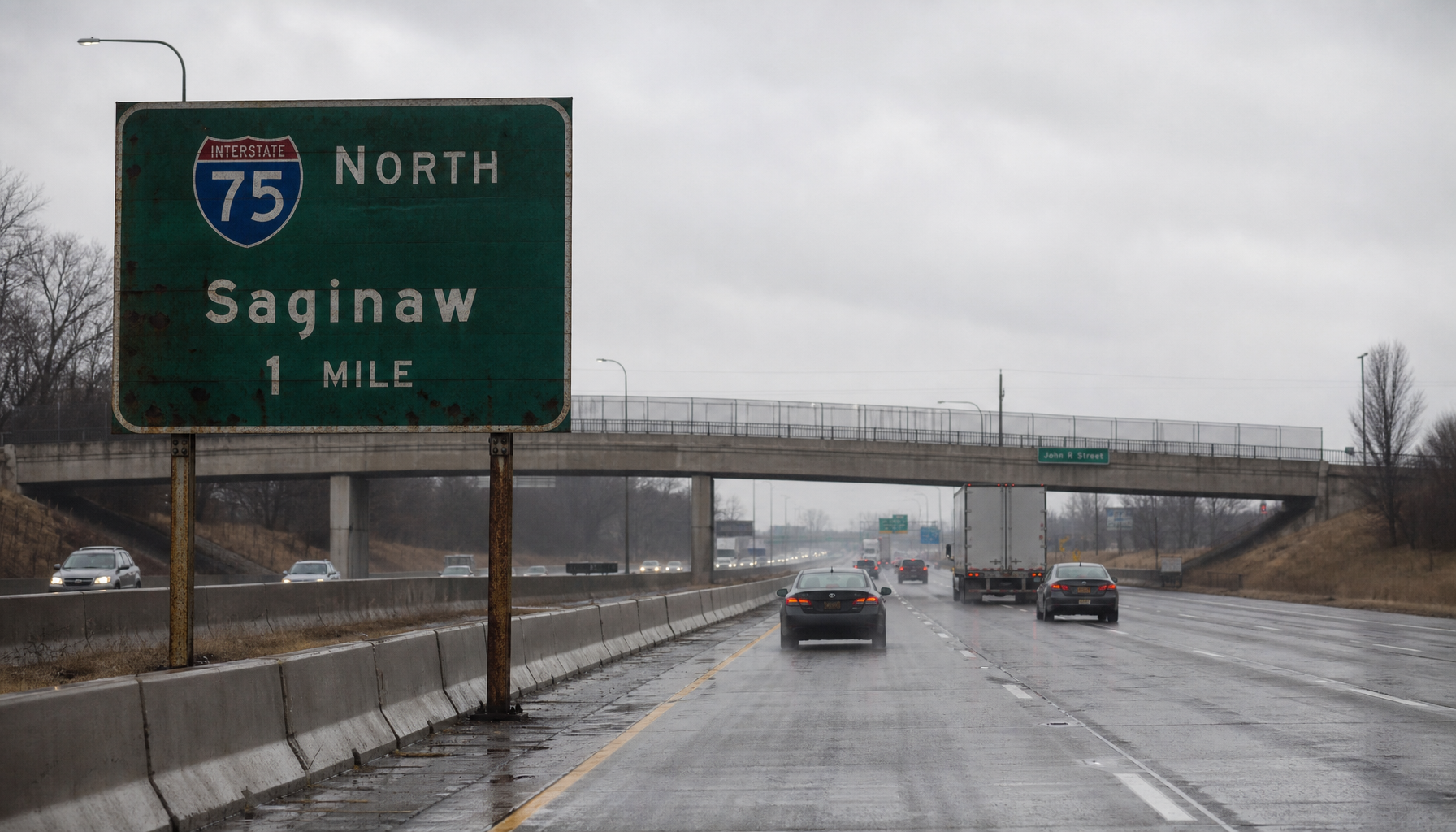
A car flying off a highway and slamming into a parked vehicle isn’t something anyone plans for — not the driver, not the owner of the parked car, and not anyone nearby when it happens. Under Michigan’s no-fault law, multiple people may have injury claims, even if they weren’t behind the wheel. Here’s what you need to know right now.
According to FOX 2 Detroit, a car flew off a highway and crashed into a parked vehicle in Madison Heights. This kind of high-speed incident — where a vehicle loses control and leaves the roadway entirely — often signals something beyond simple driver error: a medical episode, equipment failure, a road defect, or another driver who forced the car off the road. The cause matters, and finding it early matters even more.
What Happens When a Car Leaves the Roadway
When a vehicle leaves its lane and strikes something it wasn’t supposed to hit, the legal picture gets complicated fast. There may be more than one responsible party. The injured driver, the owner of the parked car, and any passengers all have separate interests — and potentially separate claims.
These crashes happen more often on high-speed corridors than most people realize. The stretch of I-696 running through Madison Heights and the John R / Dequindre area see serious incidents regularly, as we’ve covered in our analysis of accident patterns along I-696 at Coolidge Highway. Speed, sudden lane changes, and distracted driving are common threads.
Why the Cause of the Crash Changes Everything
Michigan’s no-fault system pays your medical bills and lost wages regardless of who caused the crash — through your own Personal Injury Protection (PIP) coverage under MCL 500.3107. But fault still matters if you want to pursue pain and suffering damages from the at-fault driver. Under MCL 500.3135, you have to meet Michigan’s serious-injury threshold to recover those non-economic damages.
So when investigators are piecing together why a car flew off the highway, they’re not just writing a report — they’re building (or undermining) the foundation of your claim.
Possible causes worth investigating:
- Another driver cut off or sideswiped the vehicle, forcing it off the road — that driver may bear full liability
- Brake or tire failure — if a defect caused the loss of control, a product liability claim against the manufacturer is possible
- Road conditions — potholes, missing guardrails, inadequate signage, or poor drainage can shift liability to a government entity
- Driver medical emergency — if the driver had a known condition, their insurer may dispute coverage
- Impairment — alcohol or drugs open the door to an additional negligence claim under MCL 257.625
A thorough investigation — police report, surveillance footage, witness statements, vehicle inspection — should start as soon as possible. Evidence disappears.
If You Own the Parked Vehicle
This matters more than people realize. Your car was sitting still. You did nothing wrong. Under Michigan no-fault law, damage to your parked vehicle is covered under your own collision or uninsured motorist property damage coverage, not the at-fault driver’s policy directly. That can feel backwards. It isn’t a mistake — it’s how the statute works.
But here’s what changes the calculation: if the crash caused you any physical injury — even if you weren’t in the car — you may have a personal injury claim. People who are near their parked vehicles, standing on a driveway, or walking toward the car when it’s struck have been seriously injured in exactly these scenarios.
Don’t assume that because your car was parked, your only loss is the vehicle itself.
If You Were in the Car That Left the Highway
You have rights, even if you were the driver. PIP benefits cover your medical expenses and a portion of your lost wages regardless of fault. The question of whether you can also recover pain and suffering damages depends on what caused the crash and how serious your injuries are.
According to NHTSA crash data, roadway departure crashes — where a vehicle leaves the traveled way — account for roughly half of all traffic fatalities in the United States each year. These aren’t minor fender-benders. The forces involved are severe, and injuries that feel manageable in the first 24 hours often worsen significantly within days.
The most common injuries in this type of crash include:
- Head and traumatic brain injuries
- Spinal fractures and neck injuries from the violent jolt of impact
- Broken ribs and internal bleeding
- Shoulder and knee injuries from the airbag deployment or door intrusion
Get evaluated by a doctor, even if you think you’re fine. The adrenaline after a serious crash masks a lot.
Steps to Take Right Now
- Get medical care first. If you haven’t been seen by a doctor yet, go today. Your health is the priority, and documentation of your injuries starts the clock on your claim.
- Request the police report. The Madison Heights Police Department will have a report on file. Get a copy as soon as it’s available — it names the parties, witnesses, and initial findings on cause.
- Photograph everything. Your vehicle, the scene if you can safely access it, your injuries, and any property damage. Do this before anything is repaired or moved.
- Don’t give a recorded statement to any insurance company yet. That includes your own insurer. Adjusters are trained to ask questions in ways that can limit your claim. Talk to an attorney first.
- File your PIP claim promptly. Michigan law requires you to give notice of an injury claim within one year under MCL 500.3145. Don’t let that deadline catch you off guard.
- Know your litigation deadline. Under MCL 600.5805(2), you have three years from the date of the crash to file a personal injury lawsuit. Three years sounds like a long time. Cases that aren’t investigated early are much harder to win.
What Michigan’s No-Fault System Actually Covers
Michigan operates under a no-fault insurance system, which means your own insurer pays your initial injury costs — regardless of who caused the crash. PIP benefits include:
- Medical expenses (with limits depending on your coverage level)
- 85% of your gross lost wages, up to a statutory maximum
- Replacement service expenses (help with household tasks you can’t perform while injured)
- Attendant care if your injuries require it
For a fuller breakdown of how no-fault benefits work after a serious crash, our post on Michigan no-fault accident claims walks through the process in plain language.
Beyond PIP, if the crash was caused by another driver’s negligence and your injuries meet the threshold under MCL 500.3135 — serious impairment of a body function, permanent disfigurement, or death — you can pursue a third-party claim for pain and suffering, excess medical expenses, and other non-economic losses.
If the At-Fault Driver Has No Insurance
Uninsured drivers are a real problem in Oakland County. If the driver who caused this crash was uninsured, you may still have options: your own uninsured motorist coverage, the Michigan Assigned Claims Plan, or a direct claim against the driver. None of these are simple. For a breakdown of your options when the at-fault driver has no coverage, see our post on what to do when the at-fault driver doesn’t have insurance.
How Long Will Your Case Take?
There’s no honest one-size answer, but most Michigan auto accident cases resolve in six months to two years depending on the severity of injuries, how contested liability is, and whether litigation is required. Our breakdown of how long car accident cases typically take in Michigan explains the main factors that speed things up or slow them down.
One thing that consistently delays cases: waiting too long to hire an attorney. The earlier an attorney gets involved, the more evidence is preserved, the more accurate the investigation, and the stronger the claim.
Frequently Asked Questions
The car that hit mine was parked — am I entitled to more than just the vehicle damage?
Possibly yes. If you were near the vehicle and suffered any physical injury — or if the property damage caused you documented economic losses — you may have a personal injury claim separate from the vehicle repair. Speak with an attorney before settling any part of the claim.
My car was totaled. Does no-fault cover that?
No. Michigan PIP covers bodily injury costs, not vehicle damage. Damage to your car is handled through collision coverage (your own policy) or through a mini-tort claim against the at-fault driver, which is currently capped at $3,000 for those who carry collision coverage with a deductible.
What if I was a passenger in the car that flew off the highway?
As a passenger, you’re entitled to PIP benefits through either the vehicle owner’s policy or your own household policy. You may also have a third-party claim against the driver if their negligence caused the crash. Passengers are often in the strongest legal position because they bear no fault.
I didn’t call 911 at the scene. Does that hurt my claim?
It can complicate things, but it doesn’t end your claim. You can still document your injuries through medical records, photograph the scene and damage, and gather witness contact information. Report the crash to your insurer promptly. If police were already called by someone else, you can request a copy of that report. Learn more about what to do when police don’t respond to an accident scene.
How is pain and suffering calculated in Michigan?
There’s no fixed formula. Courts and juries consider the nature and permanence of the injury, how it affects daily life and work, and the medical evidence supporting the claim. Our post on how pain and suffering is calculated after a Michigan car accident explains the main factors attorneys use to build that part of a case.
Will my case go to court?
Most Michigan auto accident cases settle before trial. But cases involving serious injuries, disputed liability, or uncooperative insurers do go to litigation. Having an attorney who is prepared to take a case to court — and whose reputation the insurer knows — changes how settlement negotiations go. See our overview of when Michigan auto cases end up in court.
If you were injured in the Madison Heights highway crash — or if your parked vehicle was damaged — talk to us before you sign anything or give a recorded statement. Khamo Law, PLLC offers a free consultation. Call 248-466-0606 or reach us through the contact form on our site. We serve Madison Heights, Sterling Heights, Warren, Troy, and the surrounding Oakland County area. Our team includes Arabic-speaking and Chaldean-speaking attorneys who are ready to help you understand your rights in the language you’re most comfortable with. يسعدنا مساعدتك بالعربية.