





If you hit a deer in Michigan, your comprehensive auto insurance — not collision — covers the damage, as long as you carry it. You don’t need to prove fault. But if another driver caused you to swerve into a deer, or if a roadway defect played a role, the situation gets more complicated fast. Here’s what you need to know.
Every fall, deer-vehicle crashes spike across the state. The Oakland Post recently ran a piece urging drivers to steer clear of deer — and for good reason. Oakland County sits in the middle of some of Michigan’s highest-risk corridors, including M-59 and Orion Road, where wooded stretches push deer onto pavement right around dusk and dawn. If you’ve just been through one of these crashes, this post is for you.
For broader context on how Michigan handles injury crashes, our Michigan car accident attorneys break down your rights in detail.
How Common Are Deer Crashes in Michigan?
Very common — and the numbers back that up. According to NHTSA, animal-vehicle collisions kill roughly 440 people in the United States every year. Michigan consistently ranks among the top states for deer-related crashes. The Michigan State Police reports tens of thousands of deer strikes annually, with the highest concentration in October and November, when the rut drives bucks to cross roads they’d otherwise avoid.
That means right now — today — is statistically the most dangerous time of year for this type of crash.
What Happens Right After You Hit a Deer
The adrenaline hits fast. Your first instinct might be to chase the deer off the road or just drive away. Don’t.
- Pull completely off the road if the vehicle is drivable. Turn on your hazard lights.
- Don’t touch the deer. An injured deer is dangerous, and a dead one may still shift in the road.
- Call 911. Even for a property-damage-only crash, a police report creates a record your insurance company will want.
- Document everything. Take photos of the deer, the vehicle damage, the road, skid marks, and your surroundings. Note the exact time and location.
- Call your insurance company to report the claim — but don’t give a recorded statement yet if you’re injured.
- Seek medical attention, even if you feel okay. Whiplash and soft-tissue injuries often surface 24 to 48 hours later.
Does Your Insurance Cover a Deer Strike?
This is where people often get caught off guard. In Michigan, a deer strike is covered under comprehensive coverage, not collision. The distinction matters because many drivers carry collision but skip comprehensive to save money.
- Comprehensive coverage — covers damage from hitting an animal, weather events, theft, and vandalism. Your comprehensive deductible applies.
- Collision coverage — covers damage when your vehicle strikes another vehicle or object. This does not apply to a direct deer strike.
- PIP (Personal Injury Protection) — under Michigan’s no-fault law (MCL 500.3107), your own PIP coverage pays for medical expenses and lost wages if you’re hurt, regardless of fault.
If you swerved to avoid a deer and hit a guardrail, a tree, or another vehicle, that’s a collision claim — and a different set of coverage rules applies.
What If You Only Have Basic No-Fault Coverage?
If you dropped comprehensive from your policy, you have no coverage for the vehicle damage from a deer strike. You’ll be paying out of pocket for repairs. This is one of the more painful lessons drivers learn after the fact. Check your declarations page now, before deer season peaks.
What About PIP and Medical Bills?
Your PIP benefits cover medical expenses, 85% of lost wages (up to the statutory cap), and replacement services if your injuries prevent you from doing household tasks. These benefits come from your own insurer. You don’t need to prove anyone was at fault. If your insurer disputes the claim or delays payment, that’s when you call a car accident lawyer in Michigan.
When Can You Sue After a Deer Crash?
Most deer strikes are exactly what they look like: a deer in the road, bad luck, and a damaged vehicle. But not all of them.
Another Driver Caused the Crash
If a vehicle cut you off, tailgated you, or forced you to swerve into a deer — and you were injured — you may have a third-party claim against that driver. Under MCL 500.3135, you can pursue non-economic damages (pain and suffering) if your injuries meet the serious impairment threshold. That means a documented, objectively manifested impairment of an important body function.
For more on how fault works in situations like this, see our post on multi-vehicle highway accidents in Michigan.
A Road Defect Contributed
Poor lighting, missing deer-crossing signage in a known high-risk area, or an overgrown median that blocks driver sightlines — these can support a claim against a government entity. These cases are harder and have shorter notice deadlines, so don’t wait.
The Deer Came from Private Property
This one is rare and fact-specific, but if a deer was being kept on private land and escaped onto the road, there may be a property owner liability angle. Talk to an attorney before assuming this doesn’t apply.
The Statute of Limitations — Don’t Wait
Under MCL 600.5805(2), you have three years from the date of the crash to file a personal injury lawsuit in Michigan. Three years sounds like a long time. It isn’t — especially when you consider that evidence disappears, witnesses move, and insurance companies are trained to wait you out.
If a government entity is involved, you may have as little as six months to file a notice of intent. Missing that window can bar your claim entirely.
What Deer Crashes Look Like on Michigan Roads
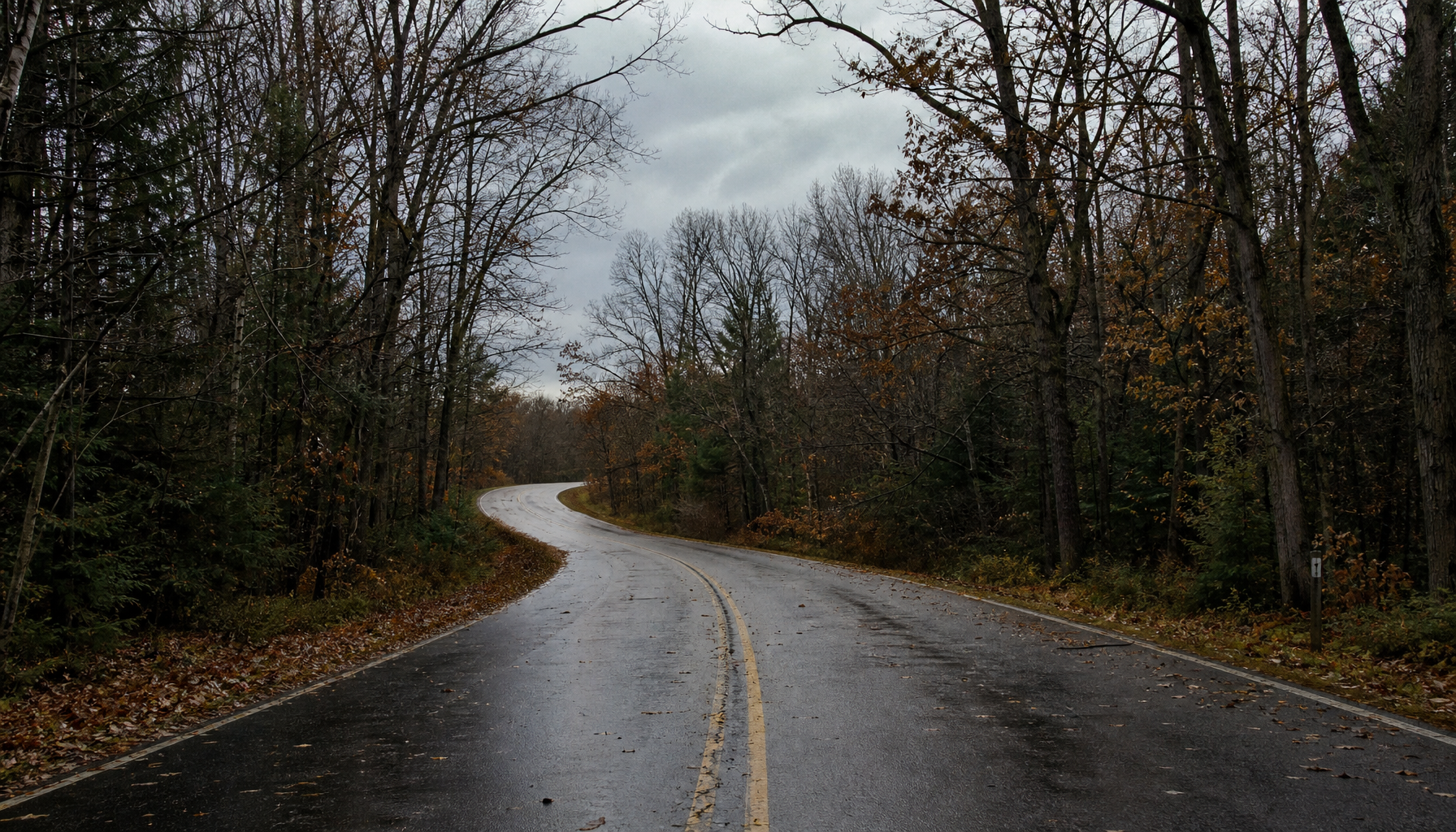
The risk isn’t evenly spread across the state. Heavily wooded corridors — M-59 in Oakland and Livingston Counties, US-23 through Washtenaw County, M-52 and M-36 in the southeast — see disproportionately high deer activity in fall. Rural stretches of I-96 and I-75 north of Flint are also high-risk.
Dawn and dusk are the most dangerous windows. Deer are crepuscular — most active at low-light hours when visibility is already reduced and high-beams aren’t always practical.
For a broader look at what causes serious vehicle crashes in this region, see main reasons for vehicle collisions in Detroit.
Tips That Can Actually Prevent a Crash
These are practical — not just filler:
- Slow down between dusk and 10 p.m., and again at dawn. This is when deer move most.
- If you see one deer, assume there are more. They travel in groups.
- Don’t swerve hard. A controlled brake is safer than swerving into oncoming traffic or a ditch.
- Use high beams on dark two-lane roads when no other cars are present. Deer eyes reflect light at a distance.
- Watch the road edges, not just the center. Deer typically enter from the shoulder.
Frequently Asked Questions
Does hitting a deer count as an at-fault accident on my Michigan insurance?
No. A deer strike is classified as a comprehensive claim in Michigan, not a collision claim. It does not count as an at-fault accident on your driving record, and it generally won’t raise your rates the same way a collision claim would. Your comprehensive deductible still applies.
What if I swerved to avoid a deer and hit something else?
That changes the claim category. Hitting a guardrail, tree, or another vehicle because you swerved is a collision claim, not comprehensive. If another driver was involved and you were injured, you may also have a third-party liability claim. The specifics depend on the facts — talk to a car accident lawyer in Michigan before settling.
Do I need to file a police report after hitting a deer in Michigan?
You’re required to report any crash that results in injury or death, or in property damage exceeding $1,000. A deer strike that causes vehicle damage over that threshold should be reported. More practically, your insurance company will ask for a police report number. Get one.
Can I collect PIP benefits if I’m injured in a deer crash?
Yes. Under Michigan’s no-fault law (MCL 500.3107), your own PIP coverage pays for medical expenses and lost wages regardless of how the crash happened. You don’t need a third party to be at fault. If your insurer denies or delays payment, contact an attorney.
What if I don’t have comprehensive coverage and I hit a deer?
You have no vehicle-damage coverage for the deer strike itself. If you were injured, your PIP benefits still apply for medical expenses — but only if you carry the required no-fault coverage. For the vehicle, you’re paying out of pocket. This is a common gap in Michigan policies, especially for older vehicles where drivers drop comprehensive to save money.
How long do I have to file a claim or lawsuit in Michigan after a deer crash?
For a personal injury lawsuit, the statute of limitations is three years under MCL 600.5805(2). For insurance PIP claims, you generally have one year to file. If a government entity (road commission, municipality) is involved, the notice deadline can be as short as six months. Don’t sit on this.
If you were hurt in a deer-vehicle crash — or if your insurer is giving you trouble over a claim — talk to us before you sign anything. Khamo Law, PLLC offers a free consultation. Call 248-466-0606 or reach out through our contact form. We serve clients across Michigan, including Oakland County, Macomb County, Wayne County, and the surrounding region.