






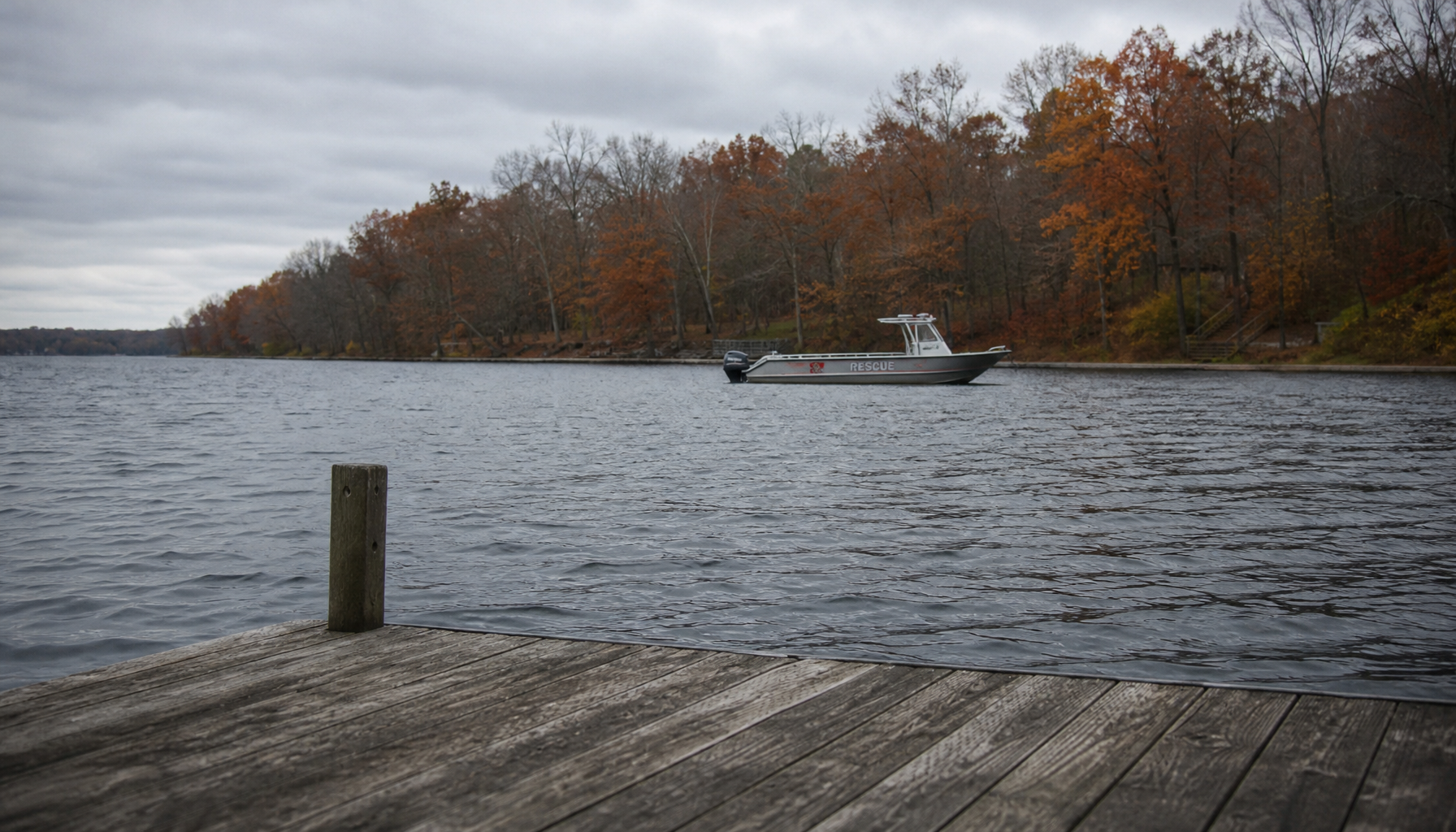
If you or someone you care about is hurt in a watercraft accident in Michigan — a capsized boat, a seaplane mishap, a jet-ski collision — you have three years to bring a personal injury claim, and your first moves in the days after the incident matter more than most people realize. A Michigan boating accident attorney can help you document liability, deal with insurers, and understand what compensation you may be owed before that window closes.
In late June 2025, two people were pulled from Orchard Lake in West Bloomfield after their seaplane tipped onto its side on the water. As reported by Audacy, no serious injuries were reported. That’s the good news. But incidents like this one — on a lake used heavily by boaters, kayakers, and now floatplane operators — are a reminder of how quickly things can go wrong on Michigan’s inland waters, and how few people know their rights when they do.
This post walks through what watercraft accident claims look like in Michigan, what insurance typically covers, who can be held liable, and what steps protect your claim from the start. If you’ve been hurt in a boat, jet-ski, or floatplane incident, the guidance below applies to you — and so does a conversation with a Michigan personal injury attorney who knows this area of law.
What Makes Watercraft Accidents Different From Car Crashes
Michigan no-fault auto insurance doesn’t cover watercraft accidents. That’s the single most important thing to understand right away. When a boat, seaplane, or personal watercraft is involved, you’re no longer in the no-fault system that most Michigan residents know from their car insurance. Liability rules shift, and so does the path to compensation.
Watercraft accidents are governed by a mix of Michigan state law, federal maritime principles, and — when a seaplane is involved — Federal Aviation Administration regulations. That layering can complicate a claim that might look simple on the surface.
According to the U.S. Coast Guard’s 2023 Recreational Boating Statistics, there were 3,841 recreational boating accidents nationwide that year, resulting in 564 deaths and over 2,000 injuries. Michigan consistently ranks among the states with the highest number of registered recreational watercraft — the state has more than 1,000 inland lakes over 500 acres, including Orchard Lake itself.
Seaplanes Add a Layer the Average Boater Never Thinks About
A seaplane sits at the intersection of aviation law and maritime law. When it’s airborne, FAA regulations apply. When it’s on the water, it’s treated as a vessel under federal and state boating statutes. If something goes wrong during takeoff, landing, or while taxiing on the water — which is exactly what happened on Orchard Lake — the question of which body of law governs, and whose insurance responds, isn’t always obvious.
Seaplane operators are required to hold a pilot certificate with a seaplane rating, and the aircraft must meet FAA airworthiness standards. Negligent operation on the water surface — going too fast for conditions, failing to yield, or operating in a posted no-wake zone — can expose the pilot to liability the same way a boat operator would face it.
Who Can Be Held Liable in a Michigan Watercraft Accident
Liability in a watercraft accident depends on the facts. Michigan follows a modified comparative fault rule, meaning you can recover damages as long as you’re not more than 50 percent responsible for what happened. Here are the most common sources of liability:
- The operator — Negligent operation is the most direct path. Speeding, inattention, operating under the influence, and ignoring weather or wake conditions all support a negligence claim.
- The owner — Under Michigan law, a boat owner who entrusts their vessel to an incompetent or unlicensed operator can be held liable even if they weren’t aboard.
- A manufacturer — If a mechanical failure caused or contributed to the accident, a product liability claim may run against the boat or aircraft manufacturer.
- A marina or launch facility — If a facility’s negligence — an unsafe dock, a failure to warn, improperly maintained equipment — contributed to the incident, the facility can be part of the claim.
MCL 324.80147 makes operating a vessel under the influence of alcohol or drugs illegal in Michigan, with blood alcohol thresholds mirroring those in the OWI statute. If alcohol was involved in a watercraft accident that hurt you, that violation strengthens your negligence claim significantly.
What Insurance Covers Watercraft Accidents
Most private boat owners in Michigan carry watercraft or inland marine insurance, but it isn’t required by state law the way auto insurance is. That gap matters.
If the operator carried watercraft liability coverage, their policy may pay for your medical bills, lost wages, and pain and suffering up to the policy limit. If they didn’t carry coverage — or if the limits are low — you may need to look to your own umbrella policy, uninsured watercraft coverage (if you purchased it), or pursue the owner directly.
For a seaplane, aviation liability insurance is the more likely coverage, and those policies can be complex. The insurer will examine the pilot’s ratings, the aircraft’s maintenance records, and exactly what the aircraft was doing at the moment of the accident.
Before you talk to any insurance adjuster — the other operator’s or your own — read our post on why speaking to the other driver’s adjuster without counsel can undercut a claim you haven’t even filed yet. The same dynamics apply in watercraft cases.
Steps to Take After a Watercraft Accident in Michigan
The hours and days after an accident shape what a claim can ultimately recover. Here’s what matters most:
- Get medical attention, even if you feel okay. Adrenaline masks pain. Some injuries — concussions, soft tissue damage, internal bruising — don’t show up immediately. A same-day medical record connects your injury to the incident.
- Report the accident to the Michigan DNR. Under MCL 324.80129, a boating accident resulting in injury, death, or property damage over $2,000 must be reported to the Michigan Department of Natural Resources. Failure to report is a misdemeanor — and the report becomes a document in your claim.
- Get the operator’s information. Name, address, boat registration number, hull identification number, and insurance carrier if they have one.
- Photograph everything. The vessel, the scene, your injuries, any visible damage. Timestamps matter.
- Write down what happened while it’s fresh. Who was doing what, what the conditions were like, what you saw and heard. Memory fades fast.
- Don’t post about it on social media. Insurance companies monitor social accounts after claims are filed. A photo that looks like you’re feeling fine can be used to minimize your injuries.
- Call a Michigan boating accident attorney before you sign anything.
If you’re wondering what your claim might be worth at this stage, our breakdown of how Michigan personal injury cases are valued gives you a realistic starting point.
The Three-Year Clock Starts the Day of the Accident
MCL 600.5805(2) gives personal injury plaintiffs three years from the date of the accident to file a lawsuit in Michigan. That sounds like plenty of time — and then it isn’t. Evidence disappears. Witnesses move. Insurance policies lapse. The earlier you involve an attorney, the more tools they have to build your case.
If your injuries have affected your mental health — anxiety around water, PTSD after a traumatic rescue — those harms are part of your claim too. Michigan courts recognize psychological injuries caused by accidents, and our post on mental health and personal injury claims in Michigan explains how that works in practice.
What About Pre-Existing Conditions
Some people hesitate to bring a claim because they have a prior back injury, an old shoulder surgery, or a history of anxiety. Don’t let that stop you. Michigan law uses an “eggshell plaintiff” standard — if the accident made a pre-existing condition worse, the at-fault party is responsible for that aggravation. You don’t need to have been in perfect health before the incident. For more on this, see our guide on how pre-existing conditions affect Michigan personal injury claims.
Orchard Lake, West Bloomfield, and Oakland County
Orchard Lake is a private, residential lake — no public boat launch — but that doesn’t mean accidents don’t happen. The lake draws seaplane traffic in part because of the West Bloomfield area’s density of private airstrips and aviation enthusiasts. Oakland County waters, including Orchard Lake, Cass Lake, and Sylvan Lake, see significant recreational use from May through September.
If you were on the water in Oakland County and something went wrong, a west bloomfield personal injury lawyer who handles watercraft claims knows the local landscape, the relevant courts, and how Michigan’s rules apply to your specific situation.
Frequently Asked Questions
Does Michigan auto insurance cover a boat or seaplane accident?
No. Michigan’s no-fault auto insurance system does not apply to watercraft accidents. If you’re injured on a boat, jet-ski, or seaplane, you need to look to watercraft liability insurance, aviation liability insurance, or the negligent party’s assets directly. Auto PIP benefits won’t pay your medical bills from a boating incident.
What if the boat operator didn’t have insurance?
This is more common than it should be, because watercraft insurance isn’t mandatory in Michigan. If the operator was uninsured, your options include pursuing the owner (who may have assets), checking whether your own homeowner’s or umbrella policy provides uninsured watercraft coverage, or filing suit directly against the responsible party. An attorney can help identify every available source of recovery before you give up.
Can I still bring a claim if I wasn’t seriously hurt?
Yes. You don’t need to be hospitalized to have a valid claim. Medical expenses, missed work, out-of-pocket costs, and pain and suffering can all be claimed even for injuries that seem moderate. What you can recover depends heavily on documentation — which is why early medical care and a written record of what happened both matter.
What if I was partly at fault for the accident?
Michigan follows modified comparative fault. You can still recover damages as long as you’re found to be 50 percent or less responsible. Your recovery is reduced proportionally — so if you were 20 percent at fault and your damages are $100,000, you’d recover $80,000. The other side’s insurer will almost always try to push your fault percentage up. That’s one of the main things an attorney manages in settlement negotiations.
Is a seaplane accident treated as an aviation claim or a maritime claim?
It depends on what phase of operation the accident occurred in. While the aircraft is on the water’s surface — taxiing, drifting, or in the process of tipping as in the Orchard Lake incident — it’s generally treated as a vessel under maritime and state boating law. FAA regulations still apply to the pilot’s certification and the aircraft’s airworthiness, but liability for the on-water incident is analyzed under negligence principles similar to a boat accident. The overlap makes these claims more complex than a typical boating case.
How long does a watercraft accident claim take to resolve?
It varies. Claims with clear liability, documented injuries, and cooperative insurers can settle in a few months. Cases that go to litigation — especially those involving disputed fault, serious injuries, or multiple parties — can take a year or more. The best way to move your case forward efficiently is to gather your evidence early, get consistent medical treatment, and work with an attorney who isn’t going to let the other side run out the clock.
If you were injured in a watercraft accident on Orchard Lake or anywhere else in Oakland County, talk to us before you sign anything. Khamo Law, PLLC offers a free consultation — call 248-466-0606 or message us through the contact form. We serve West Bloomfield, Oakland County, and the surrounding metro Detroit area.