






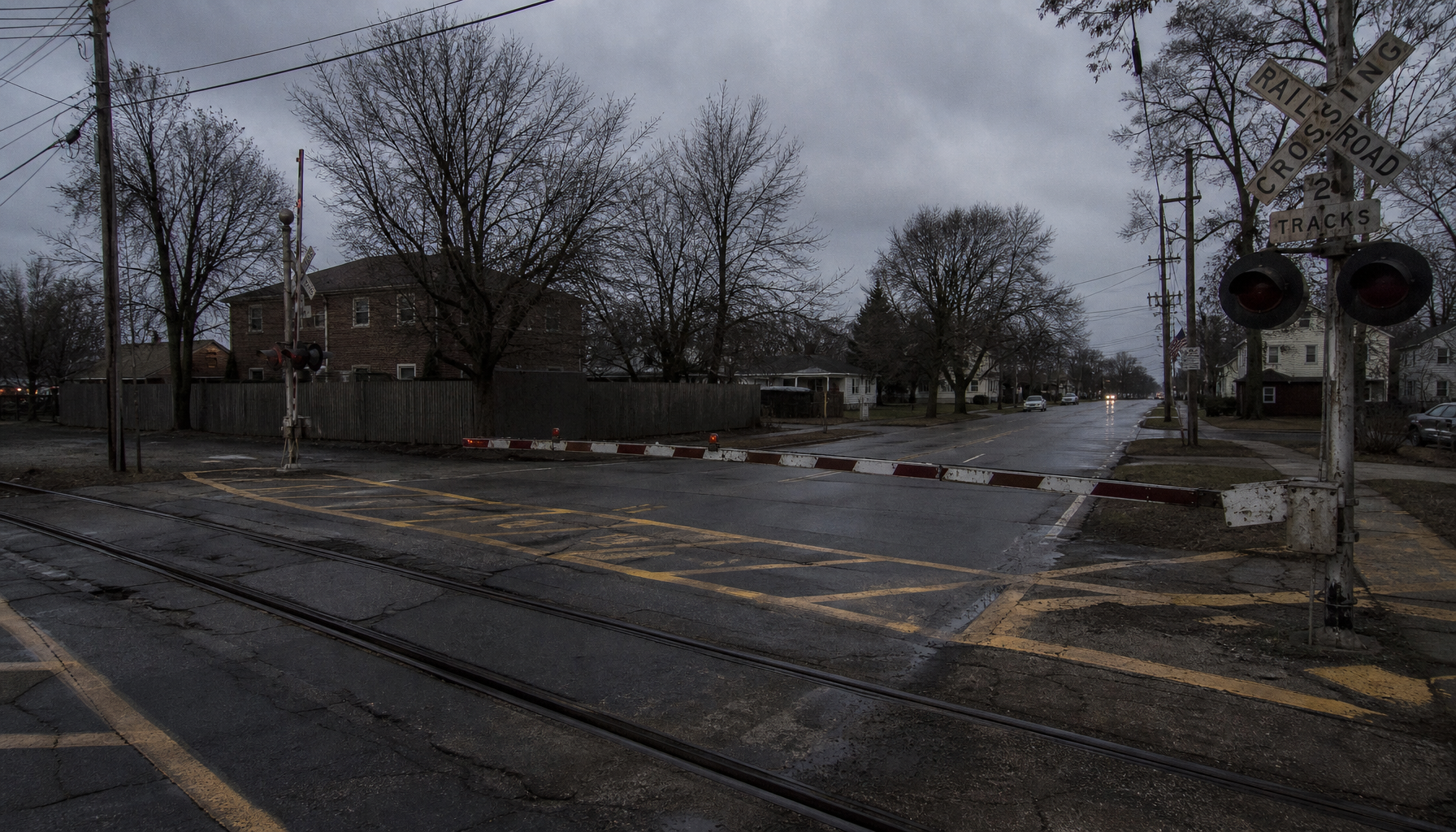
When a family member goes missing, the fear is already unbearable. When that search ends in tragedy — as it did this week in Dearborn — the grief is compounded by questions that don’t have easy answers. If you’re here because someone you love was killed in a train accident in Michigan, this post explains what your legal rights are and what steps a wrongful death claim involves.
According to WXYZ Channel 7, a woman who had been reported missing was struck and killed by a train in Dearborn. The incident is under investigation. Dearborn has multiple active freight and passenger rail corridors running through dense residential and commercial areas — tracks that cross streets, run near neighborhoods, and intersect with places where people walk every day.
This post is not about assigning blame before the facts are known. It’s about helping families in Dearborn and across Metro Detroit understand what Michigan law provides when someone dies in a train accident — and what questions to ask before any rights are lost.
What Happens When Someone Is Killed by a Train in Michigan
Train accident deaths are some of the most legally complex cases in personal injury law. A railroad company is not automatically shielded from liability just because a pedestrian was near the tracks. Michigan law and federal regulations impose real duties on railroads — and when those duties aren’t met, the railroad can be held responsible.
The key questions in any train accident death are:
- Was the crossing or track area properly marked, signed, and maintained?
- Were warning lights, gates, or signals functioning at the time of the incident?
- Did the train operator sound the required horn within the required distance?
- Was the right-of-way area fenced or otherwise secured where required?
- Were there prior complaints or known hazards at that location?
According to Federal Railroad Administration safety data, there were 2,077 highway-rail grade crossing incidents across the U.S. in 2022 alone. These are not rare events, and many of them involve preventable failures by the railroad or the entity responsible for the crossing.
Michigan Wrongful Death Law — What Families Can Recover
Michigan’s Wrongful Death Act (MCL 600.2922) allows the estate of a person killed through someone else’s negligence to bring a civil claim. This is separate from any criminal investigation and moves on its own timeline.
The family members who may recover under this law include a surviving spouse, children, parents, grandparents, siblings, and certain other dependents. The estate can seek compensation for:
- Medical expenses incurred before death
- Funeral and burial costs
- Loss of financial support the deceased would have provided
- Loss of companionship, guidance, and society
- The deceased person’s pain and suffering before death, if applicable
These claims are not automatic. A personal representative must be appointed through probate court, and the claim is brought on behalf of the estate. An attorney who handles wrongful death cases can walk you through the probate process and make sure nothing is missed.
The Statute of Limitations
Time matters here. Under MCL 600.5805(2), Michigan generally allows three years from the date of death to file a personal injury or wrongful death claim. Three years sounds like a long time, but evidence disappears fast — train data recorders get overwritten, witness memories fade, and physical evidence at the scene is often cleared within days. Starting early preserves options. Waiting can eliminate them.
Railroad Liability vs. Other Party Liability
Not every train accident claim runs against the railroad alone. Depending on the circumstances, liability might also involve:
- A municipality responsible for maintaining a grade crossing
- A contractor who last serviced the signals or gates
- A property owner whose overgrown vegetation blocked sightlines
- A vehicle driver whose actions forced a pedestrian toward the tracks
This is why a thorough investigation — including a Freedom of Information Act request for prior inspection records and any available surveillance footage — has to happen quickly. If you’ve already been contacted by a railroad’s insurance representative or legal team, do not give a recorded statement without speaking to an attorney first. That conversation can affect your claim.
Train Accidents and Michigan No-Fault Insurance
Michigan’s no-fault law is built around motor vehicles. When a train is involved rather than a car, the no-fault framework doesn’t apply the same way. That changes things for the family.
There’s no automatic PIP (Personal Injury Protection) benefit from a train accident the way there would be after a car crash — at least not unless the victim was also in or near a vehicle at the time. The path to compensation runs primarily through a negligence claim against the railroad or other responsible party, not through an insurance benefit application.
This is different from what most Michigan families expect, because the no-fault system is so well-known. If you’re used to knowing that PIP covers your medical bills after a crash, understand that the rules are different here. Getting the right legal advice quickly is especially important in train accident cases for this reason.
For context on how pedestrian accident claims work more broadly in Michigan, our overview of what to do after a pedestrian accident covers the general framework — though train-specific cases have additional layers.
What to Do If a Family Member Died in a Train Accident
- Do not speak to the railroad’s representatives or their insurance company without an attorney present.
- Preserve everything — any texts, voicemails, photographs, or documents related to your family member’s last known location and movements.
- Request the police incident report as soon as it becomes available.
- Ask about security camera footage along the route — businesses, transit stations, and traffic cameras near rail corridors often have it, but it’s typically overwritten within days.
- Contact an attorney who handles wrongful death claims before signing anything or accepting any payment.
- If probate proceedings haven’t started, ask your attorney whether opening an estate is necessary to preserve the wrongful death claim.
Our page on Michigan pedestrian accident legal options explains more about how liability is assessed when a pedestrian is killed — much of that analysis applies here.
Why Dearborn Rail Corridors Deserve Attention
Dearborn sits at the intersection of several major freight corridors. Norfolk Southern and other freight operators run significant tonnage through Southeast Michigan, and passenger rail also uses tracks that cut through urban areas where foot traffic is unavoidable. Michigan Avenue itself crosses active rail lines within the city.
The mix of pedestrian activity and active rail in Dearborn is not unusual — it’s the reality of how the city is built. But that reality puts a heavier responsibility on railroads and crossing operators to maintain safe conditions. When they don’t, people get hurt. A prior crash we covered on Michigan Avenue in Dearborn illustrates how quickly serious accidents can happen in that corridor.
For families in Dearborn who need a Dearborn personal injury attorney familiar with local conditions, Khamo Law, PLLC has handled cases in this area for years.
How Long Do Wrongful Death Investigations Take
The honest answer is: it depends. Straightforward cases can settle within a year. Complex cases involving federal railroads, multiple responsible parties, and disputed liability can take two to three years or more. What matters most in the early stages is that evidence is preserved and the claim is filed before the statute of limitations expires.
Families are often in shock during those first weeks. That’s completely understandable. But that’s also when the railroad’s team — adjusters, lawyers, investigators — is already at work. Having someone on your side during that period matters.
Frequently Asked Questions
Can a railroad company be sued if someone is killed on or near the tracks in Michigan?
Yes. A railroad has legal duties regarding the maintenance of crossings, signals, gates, and the condition of areas adjacent to the tracks. If those duties weren’t met and a death resulted, the railroad can be held liable in a wrongful death claim. Federal regulations under 49 CFR Part 234 also set standards for warning devices at highway-rail crossings.
Does Michigan no-fault insurance cover train accident deaths?
Generally, no — at least not in the same way it covers car accident injuries. Michigan’s no-fault PIP system applies to motor vehicle accidents. A train accident claim typically proceeds as a negligence lawsuit against the railroad or other responsible parties, not as a no-fault benefit claim.
Who can file a wrongful death claim in Michigan?
Under MCL 600.2922, the claim is filed by a personal representative of the deceased person’s estate. The people who can benefit from the claim include a surviving spouse, children, parents, grandparents, and siblings, among others. If no estate has been opened, an attorney can help initiate that process.
How long do we have to file a wrongful death claim in Michigan?
Three years from the date of death, under MCL 600.5805(2). But don’t wait three years. Evidence — including train event recorder data, signal maintenance logs, and surveillance footage — can be gone within days or weeks. Starting earlier gives your attorney room to build a stronger case.
What if my family member was reported missing before the accident — does that affect the claim?
Not necessarily. Whether or not the person was reported missing doesn’t change a railroad’s duty to maintain safe conditions, functioning signals, and adequate barriers. The legal question is whether negligence by the railroad or another party contributed to the death — not the circumstances that brought the person near the tracks.
Will the family have to go to court?
Many wrongful death claims resolve through settlement before trial. Whether a case settles or goes to court depends on the evidence, the parties involved, and how much the responsible party is willing to offer. An attorney can give you a realistic picture of what to expect once the investigation is further along. You can also read more about how case value is assessed in Michigan personal injury and wrongful death matters.
If someone you love was killed in a train accident in Dearborn or anywhere in Metro Detroit, talk to us before you speak to the railroad’s representatives or sign anything. Khamo Law, PLLC offers a free consultation — call 248-466-0606 or reach us through the contact form. We serve Dearborn, Detroit, Sterling Heights, Warren, and the surrounding communities. نتحدث العربية ونقدم خدماتنا للمجتمعات العربية والكلدانية والآشورية في ميشيغان.