









A Clinton Township brain injury attorney at Khamo Law can help investigate an accident that caused a traumatic brain injury, identify legally responsible parties, preserve evidence, document the medical and financial effects of the injury, and pursue compensation when supported by Michigan law and the facts.
Traumatic brain injuries can affect far more than a person’s physical health. A serious TBI may change memory, concentration, judgment, communication, personality, ability to work, independence, and relationships with family members.
Khamo Law represents people with brain injuries throughout Clinton Township, Macomb County, and Metro Detroit.
For broader injury representation in the area, visit our Clinton Township personal injury attorney page.
Call 248-466-0606 or contact Khamo Law online for a free consultation.
For broader Michigan TBI information, visit our Michigan traumatic brain injury attorney resource.
Legally reviewed by Attorney Koro E. Khamo
Attorney at Khamo Law, PLLC
Michigan Bar No. P80994
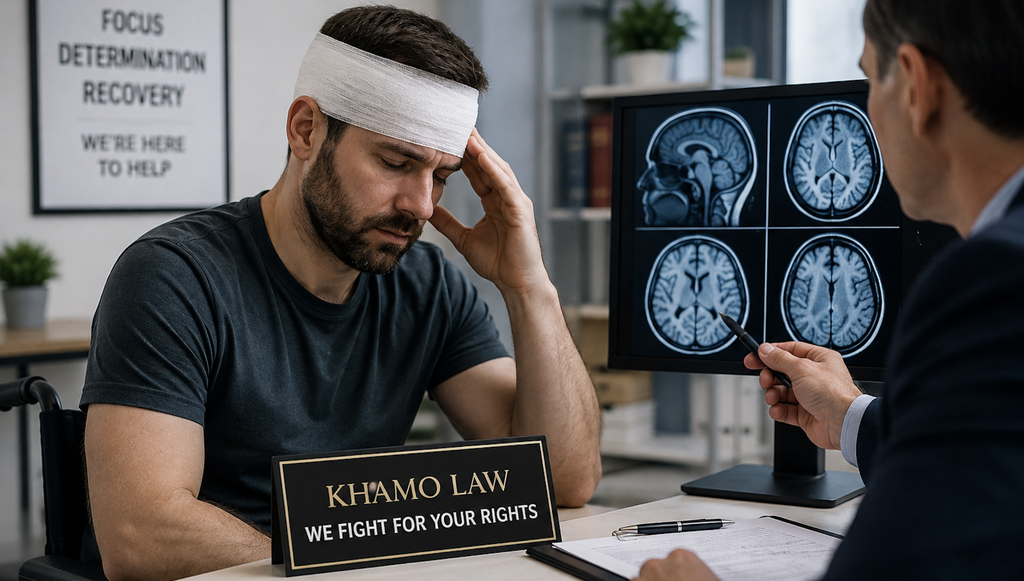
Traumatic brain injuries can affect memory, concentration, work, independence, and long-term medical needs after a serious accident in Clinton Township.
Brain Injury Cases in Clinton Township
Traumatic brain injuries can result from many different types of accidents.
Common causes include:
- Car accidents
- Truck accidents
- Motorcycle crashes
- Pedestrian collisions
- Bicycle crashes
- Slip and fall accidents
- Other dangerous property conditions
- Falls from height
- Serious impacts to the head
- Other negligence-related incidents
The legal issues depend heavily on what caused the injury.
A brain injury from a vehicle crash may involve Michigan No-Fault insurance and motor-vehicle liability rules, while a TBI caused by a fall may involve premises liability law.
How a Clinton Township Brain Injury Attorney Can Help
Brain injury claims can be medically and legally complex because some symptoms are difficult to see from the outside.
Khamo Law can help by:
- Investigating how the injury occurred
- Identifying potentially responsible parties
- Preserving accident evidence
- Obtaining police or incident reports
- Gathering photographs and video
- Interviewing witnesses
- Collecting medical records
- Reviewing imaging and diagnostic testing
- Documenting cognitive and physical limitations
- Evaluating lost income
- Evaluating reduced earning capacity
- Investigating applicable insurance coverage
- Documenting future medical and rehabilitation needs
- Communicating with insurance companies
- Working with qualified medical or vocational professionals when appropriate
- Filing a lawsuit when necessary
A strong brain injury claim should address both the diagnosis and how the injury has changed the person’s life.
What Is a Traumatic Brain Injury?
A traumatic brain injury can occur when an external force disrupts normal brain function.
Potential causes include:
- A direct blow to the head
- Rapid acceleration and deceleration
- The brain moving inside the skull
- Penetrating trauma
- Other significant physical forces
A person does not always need to lose consciousness to suffer a TBI.
Symptoms can also appear or become more noticeable after the initial accident.
Types of Traumatic Brain Injuries
Traumatic brain injuries can take several forms.
Potential diagnoses may include:
- Concussion
- Brain contusion
- Diffuse axonal injury
- Intracranial hemorrhage
- Subdural hematoma
- Epidural hematoma
- Subarachnoid hemorrhage
- Penetrating brain injury
- Other traumatic brain injuries
The medical diagnosis should come from qualified healthcare professionals rather than assumptions based only on symptoms.
Mild Traumatic Brain Injury Does Not Always Mean Minor
The word “mild” can describe the initial medical classification of a TBI, but it does not necessarily mean the person’s symptoms are insignificant.
Some people with concussions or mild TBIs experience ongoing:
- Headaches
- Dizziness
- Memory difficulties
- Concentration problems
- Fatigue
- Sensitivity to light
- Sensitivity to sound
- Sleep problems
- Irritability
- Emotional changes
Symptoms can affect employment, school, parenting, relationships, driving, and daily routines.
Symptoms of a Brain Injury
Possible TBI symptoms include:
- Headaches
- Dizziness
- Nausea
- Confusion
- Memory loss
- Difficulty concentrating
- Slowed thinking
- Balance problems
- Sensitivity to light
- Sensitivity to sound
- Vision changes
- Sleep disturbance
- Fatigue
- Mood changes
- Irritability
- Anxiety
- Depression
- Speech problems
- Loss of coordination
More serious injuries can involve loss of consciousness, seizures, paralysis, profound cognitive impairment, or coma.
Anyone with concerning symptoms after head trauma should seek appropriate medical attention.
Delayed Brain Injury Symptoms
One challenge with traumatic brain injuries is that symptoms may not always be obvious immediately after an accident.
Adrenaline, shock, other injuries, or the evolving nature of brain trauma can affect when symptoms become noticeable.
A person may initially focus on:
- Neck pain
- Broken bones
- Vehicle damage
- Emergency treatment
- Other immediate problems
and only later recognize memory problems, headaches, difficulty concentrating, mood changes, or sleep disruption.
Medical documentation can therefore become an important part of a TBI claim.
Brain Injuries From Clinton Township Car Accidents
Motor-vehicle collisions are a common cause of traumatic brain injury.
A TBI may result from:
- The head striking part of the vehicle
- Rapid acceleration and deceleration
- Airbag deployment
- The body being violently moved during impact
- Secondary impacts
For local automobile-claim information, visit our Clinton Township car accident lawyer page.
Brain Injuries From Truck Accidents
Commercial truck collisions can involve substantial forces.
A truck-related brain injury claim may also require evidence such as:
- Electronic logging data
- Truck maintenance records
- Driver qualification records
- Company records
- Electronic vehicle information
- Commercial insurance policies
For truck-specific issues, visit our Clinton Township truck accident lawyer page.
Brain Injuries From Motorcycle Accidents
Motorcyclists can suffer serious head and brain injuries even when wearing protective equipment.
A motorcycle TBI case may involve:
- Driver visibility
- Unsafe left turns
- Lane changes
- Motorcycle-specific insurance issues
- Helmet-related arguments
- Comparative-fault allegations
Visit our Clinton Township motorcycle accident attorney page for motorcycle-specific information.
Brain Injuries From Pedestrian Accidents
Pedestrians struck by vehicles may suffer a brain injury from:
- Initial vehicle impact
- Striking the windshield or hood
- Being thrown to the pavement
- Secondary impacts
Pedestrian cases may also involve Michigan No-Fault benefits and motor-vehicle tort claims.
Visit our Clinton Township pedestrian accident attorney page.
Brain Injuries From Bicycle Accidents
Bicyclists can suffer serious brain injuries when struck by motor vehicles or thrown from a bicycle.
Potential evidence may include:
- Bicycle damage
- Vehicle damage
- Helmet evidence
- Roadway markings
- Video
- Witness statements
- Traffic-signal information
Visit our Clinton Township bicycle accident attorney page.
Brain Injuries From Slip and Fall Accidents
Falls can cause traumatic brain injuries when a person’s head strikes:
- Flooring
- Concrete
- Pavement
- Stairs
- Shelving
- Other objects
The underlying legal claim may depend on whether a dangerous property condition caused the fall.
For fall-specific claims, visit our Clinton Township slip and fall attorney page.
For broader dangerous-property claims, visit our Clinton Township premises liability attorney page.
Why Brain Injury Claims Can Be Difficult to Prove
A broken bone may be visible on an X-ray.
Some brain injury symptoms are less obvious.
Insurance companies may dispute:
- Whether a TBI occurred
- Whether symptoms were caused by the accident
- Whether symptoms existed beforehand
- Whether complaints are as serious as reported
- Whether the person can return to work
- Whether future treatment is necessary
That makes medical evidence and documentation particularly important.
Medical Evidence in a Brain Injury Claim
Potential medical evidence may include:
- Emergency-room records
- Neurology records
- Primary-care records
- Imaging
- Neuropsychological testing
- Rehabilitation records
- Physical therapy records
- Occupational therapy records
- Speech therapy records
- Mental-health records when relevant
- Medication history
- Physician restrictions
Not every TBI appears clearly on routine imaging.
The medical diagnosis and functional effects should therefore be evaluated from the full clinical picture.
Neuropsychological Testing
Neuropsychological testing may sometimes be used to evaluate functions such as:
- Memory
- Attention
- Processing speed
- Executive functioning
- Language
- Problem solving
Whether that testing is appropriate is a medical decision.
When performed, it may help document cognitive changes that are difficult to demonstrate through ordinary imaging alone.
Evidence From Family Members and Coworkers
Brain injuries can change a person’s functioning in ways that people close to them notice first.
Family members, friends, coworkers, or supervisors may observe:
- Memory problems
- Repetition
- Irritability
- Personality changes
- Reduced concentration
- Difficulty completing tasks
- Fatigue
- Communication problems
- Loss of independence
Those observations may provide context alongside medical evidence.
Documenting How a TBI Changes Daily Life
A brain injury claim should not focus only on diagnostic labels.
Potential changes may involve:
- Difficulty working
- Reduced hours
- Loss of employment
- Problems driving
- Difficulty caring for children
- Loss of hobbies
- Difficulty managing finances
- Trouble remembering appointments
- Reduced independence
- Relationship changes
The individual impact of the injury can matter when evaluating damages.
Local Brain Injury Medical Resources in Clinton Township
People suffering serious injuries in Clinton Township may receive emergency or follow-up treatment through local and regional healthcare providers.
Henry Ford Macomb Hospital, located at 15855 19 Mile Road in Clinton Township, provides emergency and trauma services and inpatient rehabilitation.
The appropriate hospital, specialist, rehabilitation program, or other provider depends on the patient’s medical needs.
Khamo Law does not direct medical treatment. Medical decisions should be made by the injured person and qualified healthcare professionals.
What If the Insurance Company Says My Brain Scan Is Normal?
A normal or nondiagnostic scan does not by itself answer every question about whether a traumatic brain injury occurred.
Some TBIs, particularly concussions and other mild traumatic brain injuries, may be diagnosed based on clinical findings, symptoms, history, and other testing.
The medical opinions of qualified treating professionals are important.
An insurance company should not substitute its own interpretation for appropriate medical evaluation.
What If I Had a Prior Concussion or Brain Injury?
A previous injury does not automatically prevent a new claim.
The analysis may involve:
- The person’s condition before the new accident
- Symptoms before the accident
- New symptoms
- Worsening symptoms
- Medical records
- Treating-physician opinions
The important question is what harm the new incident caused or aggravated.
Who May Be Liable for a Brain Injury?
The responsible party depends on how the injury occurred.
Potentially responsible parties may include:
- Negligent drivers
- Truck drivers
- Trucking companies
- Property owners or possessors
- Businesses
- Landlords
- Employers in appropriate circumstances
- Other legally responsible parties
The underlying accident determines the liability analysis.
Michigan No-Fault Benefits for Crash-Related Brain Injuries
When a TBI results from a motor-vehicle crash, Michigan’s No-Fault system may become relevant.
Depending on the circumstances and available coverage, qualifying PIP benefits may involve:
- Medical treatment
- Rehabilitation
- Wage loss
- Replacement services
- Other benefits permitted by Michigan law
The applicable benefits and insurer depend on the facts and policy relationships.
Detailed Michigan No-Fault rules should remain primarily on Khamo Law’s statewide automobile resources rather than being duplicated throughout this brain injury page.
Can I Sue for Pain and Suffering After a Crash-Related TBI?
Potentially.
For noneconomic damages in Michigan motor-vehicle cases, the statutory threshold generally involves:
- Death
- Permanent serious disfigurement
- Serious impairment of body function
A traumatic brain injury may satisfy the serious-impairment standard depending on the medical evidence and the effect on the person’s general ability to lead their normal life.
The analysis is individualized.
What Compensation May Be Available?
Depending on the underlying accident, applicable insurance, and Michigan law, potentially recoverable damages or benefits may include:
- Emergency medical care
- Hospital expenses
- Rehabilitation
- Future medical care
- Medication
- Lost income
- Reduced earning capacity
- Future care needs
- Pain and suffering when legally recoverable
- Disability
- Loss of normal activities
- Other legally recoverable losses
The available categories depend on the nature of the underlying claim.
Future Care in Serious TBI Cases
A severe traumatic brain injury can create long-term needs involving:
- Neurology
- Rehabilitation
- Physical therapy
- Occupational therapy
- Speech therapy
- Cognitive therapy
- Mental-health treatment
- Medication
- Assistive services
- Home assistance
- Vocational rehabilitation
Future needs should be supported by appropriate medical and professional evidence.
Lost Income and Reduced Earning Capacity
Brain injuries may affect the ability to:
- Return to the same job
- Work full time
- Concentrate
- Remember instructions
- Multitask
- Perform physically demanding work
- Maintain previous productivity
A claim may therefore involve both wages already lost and future loss of earning capacity when supported by evidence.
What Is a Clinton Township Brain Injury Case Worth?
There is no reliable average TBI settlement.
Potential value may depend on:
- How the injury occurred
- Strength of liability evidence
- Medical diagnosis
- Symptom duration
- Cognitive impairment
- Physical impairment
- Ability to work
- Future medical needs
- Future care needs
- Comparative fault
- Available insurance coverage
A temporary concussion and a permanent disabling TBI are very different claims.
What Evidence Can Help a Brain Injury Claim?
Potential evidence includes:
- Police or incident reports
- Photographs
- Video
- Witness statements
- Medical records
- Imaging
- Neuropsychological testing
- Rehabilitation records
- Employment records
- School records when relevant
- Statements from family members
- Statements from coworkers
- Expert evaluations when appropriate
The exact evidence depends on how the injury occurred and how it affects the injured person.
What Should I Do After a Suspected Brain Injury?
Your health should come first.
When circumstances allow:
- Seek appropriate medical care.
- Tell medical providers about all symptoms.
- Follow recommended treatment.
- Attend follow-up appointments.
- Keep medical records and bills.
- Document new or changing symptoms.
- Preserve evidence from the underlying accident.
- Keep records of missed work.
- Save insurance correspondence.
- Avoid signing settlement documents you do not understand.
Seek urgent medical attention for concerning or worsening neurological symptoms.
How Long Do I Have to File a Brain Injury Claim?
Michigan generally applies a three-year limitations period to many personal-injury actions, subject to exceptions.
However, the underlying accident can create other deadlines.
For example:
- Michigan No-Fault claims involve separate requirements.
- Government-related claims can involve additional procedures.
- Insurance policies may have contractual requirements.
An injured person should not assume every part of a brain injury claim can safely wait three years.
Fatal Brain Injuries
Some traumatic brain injuries result in death.
When legally actionable conduct causes a person’s death, Michigan wrongful-death law may apply.
Families can visit our Clinton Township wrongful death attorney page for additional information.
Brain Injury vs. Spinal Cord Injury Claims
Brain and spinal cord injuries can both cause catastrophic, life-changing impairments, but they involve different medical systems and long-term care needs.
If the primary injury involves damage to the spinal cord, visit our Clinton Township spinal cord injury attorney page.
Clinton Township Brain Injury FAQs
Do I have to lose consciousness to have a traumatic brain injury?
No. A person can suffer a concussion or other TBI without losing consciousness.
Can a concussion cause long-term problems?
Potentially. Some people recover relatively quickly, while others experience persistent cognitive, physical, or emotional symptoms.
What if my CT scan or MRI was normal?
A normal scan does not automatically rule out every form of traumatic brain injury. Diagnosis should be made by qualified medical professionals based on the full clinical picture.
Can I have a claim if I had a prior concussion?
Potentially. A new accident may cause a separate injury or aggravate an existing condition.
What if the brain injury came from a car accident?
Visit our Clinton Township car accident lawyer page for local motor-vehicle claim information.
What if the TBI came from a truck crash?
Visit our Clinton Township truck accident lawyer page.
What if the TBI came from a motorcycle accident?
Visit our Clinton Township motorcycle accident attorney page.
What if the brain injury came from a fall?
Visit our Clinton Township slip and fall attorney page.
What if I also suffered a spinal cord injury?
Visit our Clinton Township spinal cord injury attorney page.
How much does Khamo Law charge for a consultation?
Khamo Law offers free consultations for potential brain injury cases.
Why Choose Khamo Law After a Clinton Township Brain Injury?
Brain injury cases require more than proving that an accident occurred.
What caused the injury?
The underlying accident determines which liability rules apply.
What medical evidence supports the TBI?
Medical records, diagnostic testing, rehabilitation records, and qualified medical opinions can be important.
How has the person’s life changed?
Employment, independence, relationships, daily activities, and future care needs should be documented.
What insurance applies?
Depending on the accident, No-Fault benefits, liability coverage, or other insurance may need to be evaluated.
What future losses exist?
Future treatment, rehabilitation, care needs, and reduced earning capacity may be significant in serious cases.
Khamo Law can investigate the underlying accident, preserve evidence, evaluate insurance coverage, document the effects of the injury, communicate with insurers, and pursue litigation when appropriate.
Services are available in English, Arabic, and Chaldean.
Call 248-466-0606 for a free consultation.
Speak With a Clinton Township Brain Injury Attorney
If you or a family member suffered a traumatic brain injury in Clinton Township because of another person’s legally actionable conduct, Khamo Law can investigate what happened, preserve evidence, evaluate insurance coverage, document the medical and financial consequences of the injury, and explain the legal options supported by Michigan law and the facts.
For broader injury representation in the area, visit our Clinton Township personal injury attorney page.
Call 248-466-0606 or contact Khamo Law online for a free consultation.