





Property owners and others who possess or control property may have legal responsibilities to people who enter that property. When dangerous conditions are not reasonably addressed, visitors can suffer serious injuries from falls, defective stairs, unsafe walkways, structural hazards, falling objects, inadequate maintenance, and other dangerous conditions.
Khamo Law represents people injured in premises-liability accidents throughout Detroit and Metro Detroit.
A Detroit premises liability attorney can investigate the property condition, identify who owned or controlled the premises, preserve evidence, examine maintenance records, locate witnesses, and determine whether a responsible party failed to use reasonable care.
For broader injury representation involving motor-vehicle crashes, dog bites, catastrophic injuries, wrongful death, and other negligence claims in the city, visit our Detroit personal injury attorney page. For broader information about dangerous-property claims, property-owner responsibilities, and premises liability law throughout the state, visit our Michigan Premises Liability Laws resource.
If you were seriously injured because of an unsafe property condition in Detroit, call 248-466-0606 or contact Khamo Law online for a free consultation.
Legally reviewed by Attorney Koro E. Khamo
Attorney at Khamo Law, PLLC
What Is Premises Liability?
Premises liability is an area of Michigan personal-injury law involving injuries caused by dangerous conditions on land or property.
Potential claims may arise from:
- Unsafe stairs
- Broken handrails
- Uneven walkways
- Ice and snow
- Wet floors
- Falling objects
- Defective flooring
- Poorly maintained common areas
- Dangerous parking lots
- Structural defects
- Unsafe entryways
- Inadequate property maintenance
- Other dangerous conditions
A premises-liability claim generally depends on the condition of the property and the legal duties owed by the person possessing or controlling it.
How Can a Detroit Premises Liability Lawyer Help?
A Detroit premises liability lawyer may help by:
- Investigating where the injury occurred
- Photographing the dangerous condition
- Determining who owned or controlled the property
- Seeking surveillance video
- Interviewing witnesses
- Obtaining incident reports
- Reviewing maintenance records
- Examining inspection procedures
- Investigating prior complaints
- Reviewing contracts between property owners and maintenance companies
- Documenting medical treatment
- Calculating lost income
- Addressing comparative-fault allegations
- Negotiating with insurers
- Filing a lawsuit when appropriate
In many premises cases, the condition that caused an injury can be repaired or removed quickly. For that reason, preserving evidence early can be important.
Where Do Premises Liability Accidents Happen in Detroit?
Dangerous property conditions can exist at many types of locations, including:
- Apartment buildings
- Grocery stores
- Restaurants
- Hotels
- Retail stores
- Shopping centers
- Office buildings
- Parking garages
- Parking lots
- Entertainment venues
- Gas stations
- Residential properties
- Common areas
- Stairways
- Sidewalks and walkways
The location matters because liability often depends on who possessed or controlled the area where the injury occurred.
Michigan Premises Liability Law
Michigan generally recognizes that a land possessor owes an invitee a duty to exercise reasonable care to protect against unreasonable risks of harm caused by dangerous conditions on the property. Michigan courts also explain that the duty owed can depend on the visitor’s legal status.
Business customers are commonly treated as invitees because they enter property for purposes connected to the possessor’s business interests. Invitees generally receive the highest level of protection under Michigan premises-liability law.
However, liability still depends on the circumstances of the particular case.
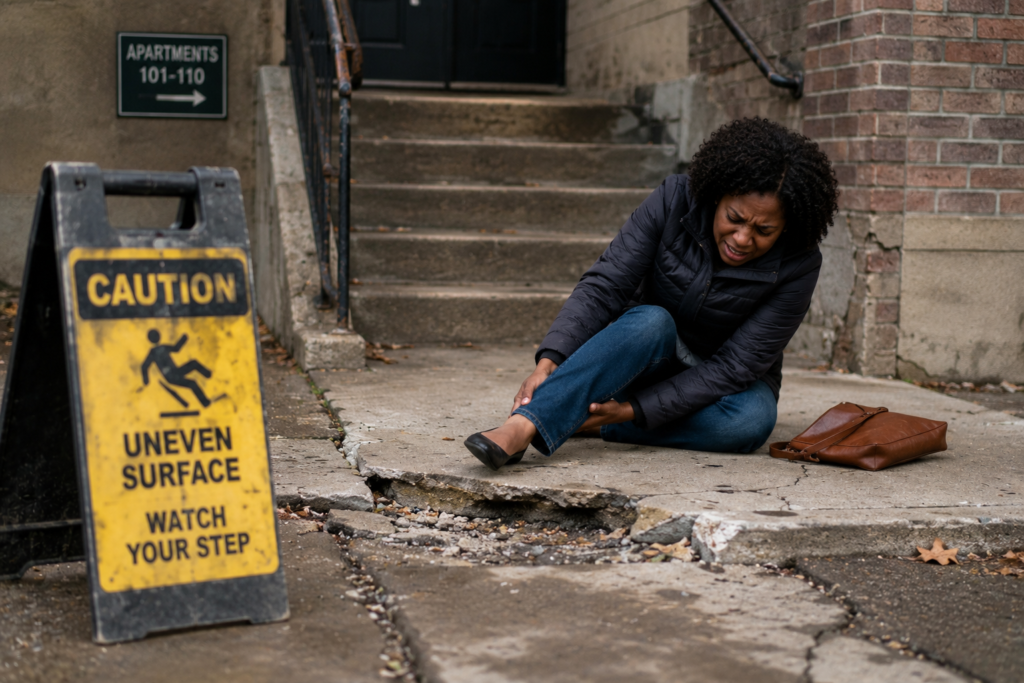
An unsafe and uneven walking surface outside an apartment building can create a serious premises-liability hazard and lead to significant injuries.
Who Can Be Responsible for a Dangerous Property Condition?
Potentially responsible parties may include:
- Property owners
- Property managers
- Commercial tenants
- Landlords
- Businesses occupying the property
- Maintenance contractors
- Snow-removal companies
- Other companies responsible for an area
Ownership alone does not always answer the liability question.
An investigation may need to determine:
- Who possessed the property
- Who controlled the dangerous area
- Who maintained it
- Whether maintenance responsibilities were contracted out
- Who created the condition
Invitees, Licensees, and Visitors
The duty owed by a land possessor can depend on why a person was on the property.
An invitee typically enters property for a purpose connected with the possessor’s business or another circumstance involving an invitation carrying an expectation that reasonable care has been used to make the property safe.
Michigan courts explain that invitees are generally entitled to the highest level of protection under premises-liability law.
Different rules can apply to other categories of visitors, so a claim should be evaluated based on the actual circumstances.
Michigan’s Open-and-Obvious Doctrine
Michigan premises-liability law changed substantially following the Michigan Supreme Court’s decision in Kandil-Elsayed v. F & E Oil, Inc.
Under the current framework, the open and obvious nature of a condition is not part of whether a land possessor owes an invitee a duty.
Instead, obviousness can be relevant to:
- Whether the land possessor breached the duty of reasonable care
- Whether the injured person’s comparative fault should reduce damages
Michigan courts explain that when a land possessor should anticipate harm despite a condition being obvious, the possessor is not automatically relieved of the duty to use reasonable care.
This means an injured person should not automatically assume there is no claim simply because the hazard could potentially be seen.
Slip and Fall Accidents
Slip-and-fall accidents are one of the most common types of premises-liability cases.
They may result from:
- Wet floors
- Ice
- Snow
- Spilled liquids
- Leaking equipment
- Poor drainage
- Defective flooring
Because we have a dedicated page for these cases, visit our Detroit slip and fall attorney page for more detailed information.
Unsafe Stairways
Stairway accidents may result from:
- Broken steps
- Uneven stair heights
- Loose flooring
- Missing handrails
- Damaged handrails
- Poor lighting
- Water or ice
- Structural deterioration
Evidence may include photographs, measurements, inspection records, maintenance records, and applicable building requirements.
Broken or Missing Handrails
Handrails can help people maintain balance and prevent serious falls.
A claim may involve allegations that a handrail was:
- Missing
- Loose
- Broken
- Improperly installed
- Unable to support normal use
The condition of the entire stairway and surrounding area should be investigated.
Uneven Floors and Walkways
Sudden elevation changes can create trip hazards.
Potential dangerous conditions include:
- Broken concrete
- Raised slabs
- Cracked flooring
- Loose carpeting
- Torn mats
- Uneven transitions
- Holes
- Potholes
Measurements and photographs taken before repairs are made can be particularly useful.
Falling Object Injuries
Premises-liability cases can also involve objects falling onto visitors.
Examples may include:
- Merchandise falling from store shelves
- Improperly stacked products
- Ceiling material
- Fixtures
- Construction materials
- Equipment
The investigation may focus on how the item was stored, secured, inspected, and maintained.
Parking Lot and Parking Garage Accidents
Parking facilities can contain hazards such as:
- Broken pavement
- Potholes
- Ice
- Snow
- Standing water
- Poor drainage
- Uneven walking surfaces
- Damaged stairs
- Poor lighting
The party responsible for maintaining the area may depend on leases, management agreements, or maintenance contracts.
Apartment Building Premises Liability
Detroit apartment buildings can present premises-liability issues involving:
- Common stairways
- Hallways
- Entryways
- Parking areas
- Walkways
- Snow and ice
- Broken lighting
- Damaged flooring
- Handrails
Michigan residential landlords also have statutory obligations under MCL 554.139.
The statute provides that in covered residential leases, landlords covenant that the premises and common areas are fit for their intended use and that the premises will be kept in reasonable repair, subject to the statute’s terms.
Those statutory obligations can create issues separate from ordinary common-law premises liability.
Common Areas at Rental Properties
Examples of common areas include:
- Apartment hallways
- Shared stairways
- Laundry facilities
- Parking areas
- Shared walkways
- Entryways
Michigan courts recognize tenants as invitees of landlords in relevant circumstances and explain that landlords can owe duties concerning common areas under their control.
Retail Store Premises Liability
Retail businesses may face premises claims involving:
- Wet floors
- Broken shelving
- Falling merchandise
- Unsafe displays
- Damaged flooring
- Entryway hazards
- Debris
Evidence may include surveillance video, employee testimony, inspection procedures, incident reports, and cleaning records.
Restaurant Premises Liability
Dangerous conditions in restaurants may include:
- Food spills
- Grease
- Wet floors
- Defective stairs
- Unsafe restrooms
- Poorly maintained entryways
- Damaged flooring
The existence of the condition is only part of the analysis. The investigation may also examine whether reasonable inspection or cleanup procedures were used.
Hotel Premises Liability
Hotel guests can encounter dangerous conditions in:
- Hallways
- Bathrooms
- Stairways
- Lobbies
- Parking areas
- Entrances
- Common facilities
The hotel’s maintenance procedures, inspection practices, and knowledge of the condition can become important.
Ice and Snow Premises Liability
Detroit’s winter weather can create dangerous conditions around:
- Walkways
- Entrances
- Parking lots
- Apartment complexes
- Exterior stairs
After Kandil-Elsayed, an icy condition is not automatically excluded from liability simply because it may have been visible or obvious. Instead, the analysis considers reasonable care, anticipated harm, and comparative fault.
Poor Lighting and Visibility
Lighting conditions can contribute to premises accidents when hazards become difficult to detect or navigate safely.
Potential locations include:
- Stairwells
- Parking garages
- Hallways
- Walkways
- Building entrances
Lighting evidence may include photographs, video, maintenance records, electrical records, and witness testimony.
Who Had Notice of the Dangerous Condition?
One important issue can be whether the responsible party knew or reasonably should have known about the condition.
Evidence may show that the party:
- Created the hazard
- Previously received complaints
- Observed the condition
- Failed to conduct reasonable inspections
- Allowed the condition to remain for a significant period
- Knew that similar problems repeatedly occurred
The available evidence depends heavily on the circumstances.
What If the Property Owner Says They Didn’t Know?
Lack of actual knowledge does not necessarily end the investigation.
The question can also involve whether reasonable inspection and maintenance practices would have discovered the condition.
Evidence may include:
- Inspection schedules
- Maintenance logs
- Surveillance footage
- Employee testimony
- Prior complaints
- Repair records
What If a Contractor Was Responsible?
Businesses and property owners often hire outside companies to perform:
- Snow removal
- Cleaning
- Repairs
- Maintenance
- Construction
Depending on the facts and contractual responsibilities, another company may need to be investigated along with the property owner or possessor.
What If the Hazard Was Obvious?
A visible hazard does not automatically eliminate a Michigan premises-liability case under current law.
After Kandil-Elsayed, obviousness is relevant to breach and comparative fault rather than operating as the former automatic duty bar.
That means the full factual context matters, including whether the property possessor should reasonably have anticipated that someone could still be harmed.
Comparative Fault in Michigan Premises Cases
A property owner or insurer may argue that an injured visitor:
- Was distracted
- Failed to watch where they were walking
- Should have avoided the condition
- Ignored a warning
- Used an unsafe route
These allegations may affect comparative fault.
They do not automatically determine the case.
Photos, video, measurements, witnesses, and other evidence can help evaluate how much responsibility each party actually bears.
What Evidence Can Help a Premises Liability Claim?
Potential evidence includes:
- Photographs
- Surveillance video
- Witness statements
- Incident reports
- Maintenance records
- Inspection logs
- Cleaning schedules
- Repair records
- Weather information
- Prior complaints
- Contracts
- Medical records
- Employment records
- Physical measurements
Evidence of the condition itself can be particularly important because the property may change after an accident.
Why Surveillance Video Matters
Commercial properties, apartment buildings, hotels, and parking areas often use surveillance systems.
Video may show:
- The accident itself
- When a condition developed
- Employees walking near the hazard
- Whether inspections occurred
- Whether warnings were present
- Whether other visitors encountered the same condition
Many systems overwrite footage automatically, which makes early preservation important.
What Should I Do After Being Injured on Someone Else’s Property?
When possible:
- Seek medical attention.
- Report the accident to the property owner or manager.
- Photograph the dangerous condition.
- Photograph the surrounding area.
- Obtain witness contact information.
- Request that an incident report be created.
- Preserve clothing and footwear when relevant.
- Keep medical records and bills.
- Document missed work.
- Save communications from insurers or property representatives.
- Avoid signing documents you do not understand.
- Consider legal advice before giving a detailed recorded statement.
Common Premises Liability Injuries
Unsafe property conditions can cause:
- Traumatic brain injuries
- Concussions
- Spinal injuries
- Herniated discs
- Broken bones
- Hip fractures
- Shoulder injuries
- Knee injuries
- Nerve damage
- Cuts
- Scarring
- Permanent disability
The severity and duration of the injury can significantly affect the damages involved.
For serious head and neurological injuries, visit our Detroit brain injury attorney page. For paralysis, loss of mobility, or other serious spinal trauma, visit our Detroit spinal cord injury attorney page.
What Compensation May Be Available?
Depending on the circumstances, recoverable damages may include:
- Medical expenses
- Future medical treatment
- Rehabilitation
- Lost income
- Reduced earning capacity
- Pain and suffering
- Disability
- Scarring
- Loss of enjoyment of life
- Other legally recoverable losses
Every claim must be evaluated individually.
What Is a Detroit Premises Liability Case Worth?
There is no standard settlement value.
Factors may include:
- Nature of the dangerous condition
- Strength of the liability evidence
- Injury severity
- Surgery
- Permanent limitations
- Medical expenses
- Future treatment
- Lost income
- Reduced earning ability
- Comparative fault
- Available insurance coverage
The seriousness of the injury alone does not determine liability, and liability alone does not determine damages.
How Long Do I Have to File a Premises Liability Lawsuit?
Michigan generally uses a three-year limitations period for many actions seeking damages for personal injury, subject to exceptions and special rules.
Claims involving governmental entities or particular types of property may involve additional notice requirements or shorter procedural deadlines.
For that reason, it is usually better to investigate promptly rather than assume every case can safely wait three years.
How Long Does a Premises Liability Case Take?
There is no universal timeline.
A case may take longer when:
- Injuries are severe
- Treatment is ongoing
- Several parties controlled the property
- Liability is disputed
- Maintenance contracts must be investigated
- Experts are needed
- Litigation becomes necessary
Serious claims should generally be evaluated with enough information to understand the injured person’s long-term medical and financial losses.
Premises Liability vs. Slip and Fall
A slip and fall is a type of premises-liability case, but premises liability is broader.
Premises liability can include:
- Slip-and-fall accidents
- Trip-and-fall accidents
- Unsafe stairways
- Falling objects
- Defective walking surfaces
- Dangerous common areas
- Other property-condition injuries
For cases involving a fall caused by ice, snow, liquid, or another walking-surface hazard, visit our Detroit slip and fall attorney page.
Premises Liability vs. Personal Injury
Premises liability is one category of personal injury law.
For broader Detroit injury claims, visit our Detroit personal injury attorney page.
For motor-vehicle cases, visit our Detroit car accident lawyer page.
Frequently Asked Questions About Detroit Premises Liability
Does the property owner automatically pay if I get hurt?
No. An injury occurring on someone’s property does not automatically establish liability. The dangerous condition, legal duty, control of the property, reasonable care, causation, and other facts must be evaluated.
Can I sue if the hazard was obvious?
Potentially. Current Michigan law does not treat an open and obvious condition as an automatic elimination of the land possessor’s duty. Obviousness can still affect breach and comparative fault.
Can I sue my landlord?
Potentially. Depending on the facts, a landlord may have duties under common-law premises liability as well as statutory obligations under MCL 554.139.
What if a maintenance company caused the problem?
A maintenance company may need to be investigated depending on its responsibilities and conduct.
What if I didn’t take photographs?
A case may still be possible. Surveillance footage, witnesses, incident reports, maintenance records, repair records, and other evidence may help establish the condition.
What if the property owner fixed the hazard afterward?
The fact that the condition changed makes early evidence particularly valuable. Other records and witnesses may still help establish what existed at the time of the accident.
Is premises liability the same as negligence?
Premises liability is a form of negligence involving dangerous property conditions, but Michigan law applies specific rules regarding duties owed by land possessors to visitors.
How much does Khamo Law charge for a consultation?
Khamo Law offers free consultations for potential premises-liability injury cases.
Why Choose Khamo Law for a Detroit Premises Liability Case?
Khamo Law represents injured people throughout Detroit and Metro Detroit.
Our attorneys can investigate dangerous property conditions, identify the parties who possessed or controlled the property, preserve evidence, examine maintenance records, document injuries and financial losses, negotiate with insurers, and pursue litigation when appropriate.
Most importantly, we evaluate Michigan premises-liability cases under current Michigan law, including the changes following Kandil-Elsayed.
Speak With a Detroit Premises Liability Lawyer
If you were seriously injured because of a dangerous condition at a store, apartment building, restaurant, hotel, parking facility, or other property in Detroit, Khamo Law can review what happened and explain your potential options.
Call 248-466-0606 or contact Khamo Law online for a free consultation.