










A spinal cord injury can change nearly every part of a person’s life.
Someone who was working, driving, caring for a family, and living independently before an accident may suddenly face paralysis, extensive rehabilitation, mobility limitations, home modifications, lost earning capacity, and a lifetime of medical needs.
Khamo Law represents people who suffer serious spinal cord injuries in accidents throughout Detroit and Metro Detroit.
A Detroit spinal cord injury attorney can investigate how the injury occurred, identify responsible parties and available insurance, document the full extent of the injury, and pursue compensation for both immediate and long-term losses.
If you or a family member suffered a spinal cord injury because of an accident in Detroit, call 248-466-0606 or contact Khamo Law online for a free consultation.
For broader injury representation involving motor-vehicle crashes, unsafe property, catastrophic injuries, wrongful death, and other negligence claims in the city, visit our Detroit personal injury attorney page. For broader information about spinal cord injuries, paralysis, rehabilitation, long-term medical needs, and compensation throughout the state, visit our Michigan Spinal Cord Injury Lawyer resource.
Legally reviewed by Attorney Koro E. Khamo
Attorney at Khamo Law, PLLC
How a Detroit Spinal Cord Injury Lawyer Can Help
Spinal cord injury cases require careful attention to both liability and future damages.
A lawyer may help by:
- Investigating the accident
- Preserving photographs and video
- Obtaining police or incident reports
- Interviewing witnesses
- Reviewing medical records
- Identifying insurance coverage
- Evaluating future treatment needs
- Documenting rehabilitation
- Calculating lost income
- Evaluating reduced earning capacity
- Documenting home and vehicle modification needs
- Working with medical, vocational, and economic experts when appropriate
- Negotiating with insurance companies
- Filing litigation when necessary
The value of a catastrophic injury claim should not be based only on the hospital bills generated immediately after the accident.
Spinal Cord Injuries After Detroit Accidents
Serious spinal trauma can result from many kinds of Detroit accidents, including:
- Car crashes
- Commercial truck collisions
- Motorcycle accidents
- Pedestrian crashes
- Bicycle accidents
- Serious falls
- Dangerous property conditions
- Other high-impact trauma
Detroit’s transportation system includes major freeways, high-volume arterial roads, busy intersections, neighborhood streets, and areas with substantial pedestrian and bicycle activity.
The City of Detroit currently targets severe crashes through its Safe Streets for Detroit program, including improvements along designated High-Injury Network corridors.
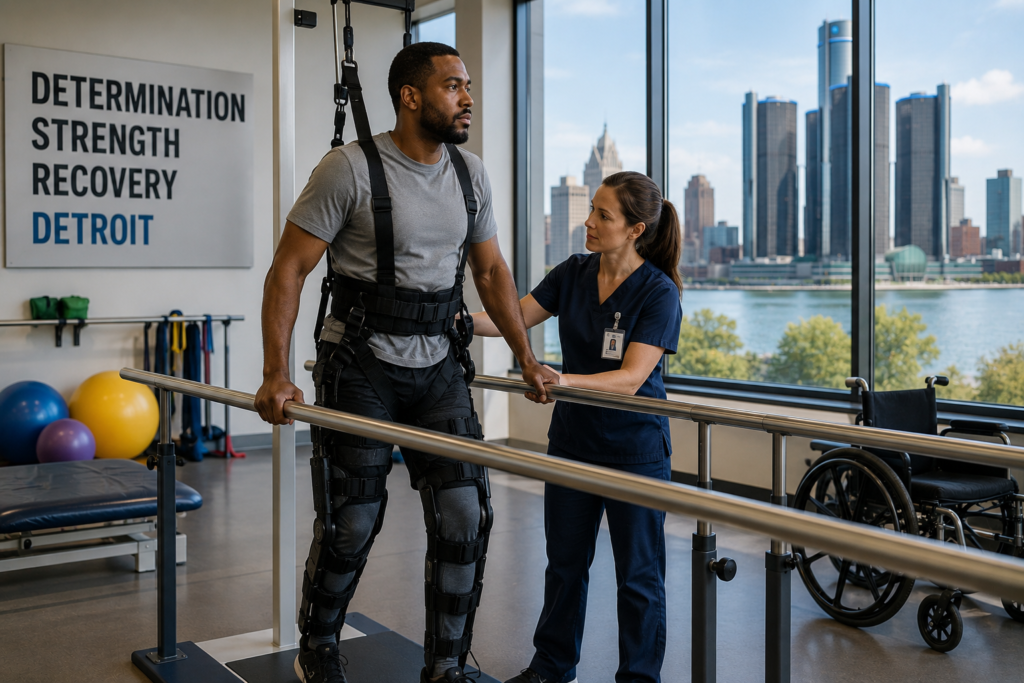
A spinal cord injury patient working with a rehabilitation therapist in Detroit after a serious accident.
Spinal Cord Injuries From Detroit Car Accidents
A serious automobile collision can place tremendous force on the neck and spine.
Spinal injuries may occur in:
- Rear-end collisions
- Head-on crashes
- Side-impact accidents
- Rollover crashes
- Multi-vehicle collisions
- High-speed impacts
The injury may result from direct trauma, compression, twisting, or movement of the spinal column during the collision.
For automobile-specific issues, visit our Detroit car accident lawyer page.
Spinal Cord Injuries From Truck Accidents
Commercial truck collisions can cause catastrophic injuries because of the size and weight differences between large trucks and passenger vehicles.
A serious Detroit truck case may also require investigation of:
- Electronic logging data
- Truck electronic data
- Maintenance records
- Inspection records
- Driver qualifications
- Dispatch information
- Cargo loading
- Commercial insurance
Visit our Detroit truck accident attorney page for truck-specific information.
Motorcycle Spinal Cord Injuries
A motorcyclist can be thrown from a motorcycle or struck directly by another vehicle.
That can produce trauma to the:
- Cervical spine
- Thoracic spine
- Lumbar spine
- Spinal cord
- Vertebrae
- Surrounding nerves
Motorcycle claims can also involve insurance rules different from ordinary passenger-vehicle cases.
For more information, visit our Detroit motorcycle accident attorney page.
Pedestrian Spinal Cord Injuries in Detroit
A pedestrian struck by a vehicle may experience multiple forces during the collision.
The person may be injured by:
- The vehicle itself
- The hood or windshield
- The pavement
- A secondary object
Detroit’s current street-safety program specifically focuses on reducing severe crashes and improving conditions for vulnerable road users along priority corridors.
For pedestrian claims, visit our Detroit pedestrian accident attorney page.
Bicycle Accidents and Spinal Trauma
Cyclists have little structural protection when struck by a motor vehicle.
Serious spinal injuries may result from:
- Intersection collisions
- Left-turn crashes
- Right-turn crashes
- Rear-end impacts
- Dooring incidents
- Being thrown onto pavement
For bicycle-specific claims, visit our Detroit bicycle accident attorney page.
Spinal Cord Injuries From Falls
A severe fall can damage the spinal column or spinal cord.
These injuries may occur on:
- Stairs
- Elevated walkways
- Parking structures
- Apartment properties
- Commercial properties
- Unsafe walking surfaces
A dangerous-property case may require evidence concerning who controlled the area, whether the condition was dangerous, and what the responsible party knew or should have known.
Visit our Detroit premises liability attorney and Detroit slip and fall attorney pages for more information.
What Is a Spinal Cord Injury?
The spinal cord carries signals between the brain and the rest of the body.
Damage to the spinal cord can interfere with movement, sensation, and other bodily functions below the level of injury.
The consequences can range from temporary neurological symptoms to permanent paralysis and loss of independence.
Complete vs. Incomplete Spinal Cord Injury
Spinal cord injuries may be described as complete or incomplete.
A complete injury generally involves loss of neurological function below the level of the injury.
An incomplete injury means some neurological function remains.
The real-world effects can vary substantially from person to person, which is why a legal claim should be based on the individual’s actual medical condition and functional limitations.
Cervical Spinal Cord Injuries
The cervical spine is located in the neck.
Damage to the spinal cord at this level can affect:
- Arms
- Hands
- Trunk
- Legs
- Mobility
- Other bodily functions
Higher-level injuries can create extensive care and assistance needs.
Thoracic Spinal Cord Injuries
The thoracic spine runs through the upper and middle back.
Injuries in this region may affect:
- Trunk control
- Lower-body movement
- Sensation
- Walking ability
The extent of impairment depends on the exact level and severity of the injury.
Lumbar and Lower-Spine Injuries
Injury to the lower spine can affect:
- Leg movement
- Sensation
- Balance
- Walking
- Bladder or bowel function
- Other neurological functions
Not every serious lower-back injury involves actual spinal cord damage, so medical diagnosis is important when distinguishing spinal cord trauma from disc, nerve, or musculoskeletal injuries.
Paraplegia
Paraplegia generally involves paralysis affecting the lower portion of the body.
A person with paraplegia may require:
- Wheelchair mobility
- Physical rehabilitation
- Accessible housing
- Vehicle modifications
- Assistance with certain daily tasks
- Continuing medical care
The extent of independence varies from person to person.
Tetraplegia or Quadriplegia
A higher spinal cord injury may affect both the arms and legs.
This may be referred to as tetraplegia or quadriplegia.
Depending on the injury level, a person may require significant assistance with:
- Mobility
- Transfers
- Personal care
- Transportation
- Household activities
- Medical needs
These cases can involve substantial lifetime costs.
Spinal Fracture vs. Spinal Cord Injury
A spinal fracture and a spinal cord injury are not necessarily the same thing.
A person may fracture a vertebra without damaging the spinal cord.
Conversely, trauma can injure the spinal cord or surrounding neurological structures even when the legal case involves additional spinal diagnoses.
Medical imaging and specialist evaluations help determine the nature of the injury.
Herniated Disc vs. Spinal Cord Injury
A herniated disc can cause serious pain, weakness, or nerve symptoms, but it is different from a spinal cord injury.
A spinal cord injury involves damage affecting the cord itself.
This distinction matters when evaluating prognosis, future care, and damages.
Signs of Serious Spinal Trauma
Symptoms after an accident may include:
- Weakness
- Numbness
- Tingling
- Loss of sensation
- Difficulty walking
- Loss of coordination
- Loss of movement
- Severe neck or back pain
- Changes in bladder or bowel function
Symptoms following major trauma require prompt medical evaluation.
Emergency Treatment After a Detroit Spinal Injury
Severe spinal trauma may require:
- Emergency stabilization
- Diagnostic imaging
- Surgery
- Intensive care
- Hospitalization
- Neurological monitoring
Detroit is part of Michigan’s Region 2 South trauma system, which includes the City of Detroit and Wayne County. The state reports that the region contains dozens of hospitals and EMS agencies involved in trauma care.
That makes serious trauma treatment and rehabilitation especially relevant to a Detroit-focused catastrophic-injury page.
Rehabilitation After a Spinal Cord Injury
Recovery may continue long after hospital discharge.
Rehabilitation can involve:
- Physical therapy
- Occupational therapy
- Mobility training
- Strength training
- Transfer training
- Adaptive-equipment training
- Vocational rehabilitation
A catastrophic-injury claim should consider whether treatment will continue into the future.
Wheelchairs and Mobility Equipment
A person with a serious spinal injury may require equipment such as:
- Manual wheelchair
- Power wheelchair
- Customized seating
- Transfer equipment
- Mobility aids
- Replacement equipment over time
These costs can extend well beyond the first year after an accident.
Home Modifications
Returning home after a spinal cord injury may require substantial changes.
Examples may include:
- Wheelchair ramps
- Wider doorways
- Accessible bathrooms
- Roll-in showers
- Modified kitchens
- Stair lifts
- First-floor living arrangements
The cost of appropriate housing modifications can become part of evaluating future losses where legally recoverable.
Vehicle and Transportation Modifications
A spinal cord injury may prevent a person from using an ordinary passenger vehicle.
Future transportation needs might include:
- Wheelchair-accessible vehicles
- Hand controls
- Lifts or ramps
- Specialized seating
- Transportation assistance
The appropriate needs depend on the person’s functional abilities.
Attendant Care and Daily Assistance
Some people with spinal cord injuries require help with daily activities.
Assistance may involve:
- Transfers
- Dressing
- Bathing
- Meal preparation
- Mobility
- Transportation
- Medication
- Household tasks
The amount of care needed depends on the injury.
Returning to Work After a Spinal Cord Injury
Some people can return to their previous occupation.
Others may need:
- Workplace accommodations
- Reduced hours
- Retraining
- A different position
- A different career
Severe injuries may prevent a person from returning to competitive employment altogether.
Loss of Future Earning Capacity
A catastrophic spinal injury can reduce a person’s ability to earn income for years or decades.
Evidence may include:
- Prior earnings
- Employment history
- Education
- Skills
- Medical restrictions
- Vocational evaluations
- Expected career progression
Future losses should be supported by evidence rather than speculation.
Future Medical Costs
A spinal cord injury can create medical expenses extending throughout a person’s life.
Potential future needs may include:
- Physician care
- Rehabilitation
- Medication
- Equipment
- Surgery
- Therapy
- Home assistance
- Mobility equipment
When appropriate, experts may help evaluate projected future care.
Life-Care Planning
Some catastrophic-injury cases use a life-care plan to evaluate expected future needs.
A life-care analysis may consider:
- Medical treatment
- Therapy
- Equipment
- Medication
- Transportation
- Home modifications
- Assistance
- Replacement of durable medical equipment
The goal is to understand what the injured person may realistically need over time.
Secondary Medical Complications
Severe spinal cord injuries may create additional health concerns over time.
Those complications can affect:
- Treatment
- Rehabilitation
- Independence
- Future medical expenses
- Quality of life
The damages evaluation should account for medically supported long-term consequences rather than treating the spinal injury as a one-time event.
Emotional and Psychological Effects
A catastrophic spinal injury can also affect emotional well-being.
Changes in:
- Independence
- Employment
- Mobility
- Relationships
- Daily activities
may create substantial psychological challenges.
When treatment is required and legally compensable, those consequences can become part of the overall damages analysis.
Family Impact of a Catastrophic Injury
A spinal cord injury may change household responsibilities and family routines.
Family members may become involved in:
- Transportation
- Medical appointments
- Physical assistance
- Household duties
- Care coordination
The legal case should focus on damages actually recognized under Michigan law rather than assuming every family consequence creates an independent claim.
How Do You Prove a Spinal Cord Injury Case?
Evidence may include:
- Emergency records
- Hospital records
- MRI or CT imaging
- Surgical records
- Neurological evaluations
- Rehabilitation records
- Therapy notes
- Employment records
- Photographs
- Witness testimony
- Expert analysis
The legal case must also establish how the accident occurred and why another party is legally responsible.
Evidence From the Detroit Accident Scene
Depending on the accident, useful evidence may include:
- Detroit police or other law-enforcement reports
- Photographs
- Dashcam recordings
- Nearby business surveillance
- Residential cameras
- Traffic-control information
- Witnesses
- Vehicle electronic data
- Physical evidence
Evidence should be preserved promptly because video can be overwritten and damaged vehicles can be repaired or destroyed.
Who May Be Responsible?
Potential defendants depend on how the spinal injury occurred.
A case might involve:
- Negligent driver
- Commercial truck driver
- Trucking company
- Business
- Property owner
- Property manager
- Contractor
- Other responsible party
Some cases involve multiple defendants and multiple insurance policies.
Michigan No-Fault Benefits for Auto-Related Spinal Injuries
When the spinal injury results from a motor vehicle accident, Michigan no-fault insurance may provide benefits depending on the applicable policy and circumstances.
Potential issues can involve qualifying medical treatment, rehabilitation, wage loss, replacement services, and other PIP benefits.
No-fault claims have rules and deadlines separate from a liability lawsuit, so they should be evaluated independently.
Can I Sue the At-Fault Driver?
Potentially.
Michigan law allows recovery of noneconomic damages from an at-fault driver when the statutory automobile threshold is satisfied.
The statute defines a serious impairment of body function using factors including an objectively manifested impairment of an important body function that affects the injured person’s general ability to lead their normal life.
A significant spinal cord injury can present substantial evidence relevant to that analysis, but the legal threshold still depends on the individual facts.
What Compensation May Be Available?
Depending on the claim, compensation may potentially include:
- Medical expenses
- Rehabilitation
- Future medical care
- Lost income
- Reduced earning capacity
- Pain and suffering
- Disability
- Accessible-equipment costs
- Other legally recoverable losses
The categories available depend on the type of claim, insurance coverage, and Michigan law.
What Is a Detroit Spinal Cord Injury Case Worth?
There is no standard settlement amount.
Potential value may depend on:
- Level of spinal injury
- Complete or incomplete injury
- Degree of paralysis
- Medical expenses
- Future treatment
- Ability to work
- Earning capacity
- Need for attendant care
- Equipment requirements
- Home modifications
- Liability
- Available insurance
Two people with the same diagnosis may have very different long-term needs.
Why Early Settlement Can Be Risky
Catastrophic injury claims can involve expenses lasting decades.
An early settlement may fail to account for:
- Future surgery
- Long-term rehabilitation
- Equipment replacement
- Housing modifications
- Transportation needs
- Reduced earnings
- Assistance needs
The long-term medical picture should be understood before resolving a major spinal injury claim whenever reasonably possible.
What If the Insurance Company Blames Me?
Insurance companies may dispute fault.
Michigan comparative-fault rules can affect recovery when the injured person shares responsibility for the accident.
The proper analysis should rely on actual evidence such as video, witness accounts, physical evidence, crash reconstruction, and other documentation rather than simply accepting an insurer’s initial position.
How Long Do I Have to File a Spinal Cord Injury Lawsuit?
Michigan generally applies a three-year limitations period to many actions seeking damages for injury to a person, subject to exceptions and claim-specific rules.
However, additional deadlines may apply to:
- Michigan no-fault benefits
- Claims involving government entities
- Particular insurance policies
- Other unusual circumstances
A person should not assume that every deadline is three years.
Why Acting Early Matters
Catastrophic injury cases can require extensive investigation.
Over time:
- Surveillance footage may disappear
- Witnesses may become difficult to locate
- Vehicles may be repaired
- Electronic data may be lost
- Property conditions may change
- Records may become more difficult to obtain
Starting early can make it easier to preserve the evidence needed to establish liability.
How Long Does a Detroit Spinal Cord Injury Case Take?
There is no standard timeline.
A case may depend on:
- Medical stabilization
- Rehabilitation progress
- Future prognosis
- Number of defendants
- Insurance coverage
- Expert analysis
- Settlement negotiations
- Whether litigation becomes necessary
Catastrophic injury cases may take longer because future needs can be a major part of the damages analysis.
Spinal Cord Injury vs. Brain Injury
Spinal cord and brain injuries are both serious neurological injuries, but they frequently produce different consequences.
A spinal injury often affects:
- Movement
- Sensation
- Mobility
- Physical independence
A traumatic brain injury may more prominently affect:
- Memory
- Cognition
- Communication
- Behavior
- Executive functioning
Some severe accidents cause both.
For traumatic brain injury information, visit our Detroit brain injury attorney page.
Spinal Cord Injury and Wrongful Death
Some catastrophic spinal injuries ultimately result in death.
When that occurs, additional Michigan wrongful-death rules may apply concerning the personal representative, eligible family members, damages, and distribution.
If a catastrophic spinal injury results in death, additional Michigan wrongful-death rules may apply concerning the personal representative, eligible family members, damages, and distribution. Visit our Detroit wrongful death attorney page for more information.
Detroit Spinal Cord Injury FAQs
Is paralysis required to have a spinal cord injury?
No. Spinal cord injuries can exist with varying degrees of neurological impairment. Some are incomplete and preserve some movement or sensation.
Can a person recover from a spinal cord injury?
The prognosis varies significantly depending on the location and severity of the injury. Medical professionals are best positioned to evaluate an individual prognosis.
What if I can still walk?
The ability to walk does not automatically mean there is no serious spinal or neurological injury.
Can I recover future medical expenses?
Potentially, when those expenses are legally recoverable and supported by appropriate medical evidence.
What about a wheelchair or accessible vehicle?
Mobility and transportation needs may be part of evaluating future damages when caused by the injury and legally recoverable.
Can lost future earnings be included?
Potentially. A serious spinal injury may reduce future earning capacity, but those losses should be supported by employment, medical, vocational, and economic evidence.
What if the injury resulted from a Detroit car crash?
Michigan automobile insurance and tort rules may apply in addition to the spinal-injury issues. See our Detroit car accident lawyer page.
Can a spinal injury case settle without trial?
Yes. Many claims resolve through negotiation, but settlement depends on liability, damages, insurance coverage, and whether the parties can agree on appropriate compensation.
How much does Khamo Law charge for a consultation?
Khamo Law offers free consultations for potential spinal cord injury cases.
Why Choose Khamo Law for a Detroit Spinal Cord Injury Case?
A catastrophic spinal injury case should look beyond the initial accident.
It may require documentation of:
- Long-term medical treatment
- Rehabilitation
- Paralysis
- Loss of mobility
- Future care
- Reduced earning capacity
- Accessible housing
- Transportation changes
- Loss of independence
Khamo Law represents people injured in Detroit and throughout Metro Detroit and can evaluate both the accident that caused the injury and the long-term consequences that follow.
The Detroit focus is meaningful here: the city is actively addressing severe crashes on its High-Injury Network, while Detroit and Wayne County are also part of Michigan’s Region 2 South trauma system for serious injuries.
Speak With a Detroit Spinal Cord Injury Lawyer
If you or a family member suffered paralysis, spinal cord damage, or another catastrophic spinal injury because of an accident in Detroit, Khamo Law can review the circumstances and explain the legal options that may be available.
Call 248-466-0606 or contact Khamo Law online for a free consultation.