










A serious spinal cord injury can change nearly every part of a person’s life. Someone who was working, driving, caring for family members, and living independently before an accident may suddenly face paralysis, extensive rehabilitation, mobility limitations, home modifications, reduced earning capacity, and long-term medical needs.
A Southfield spinal cord injury lawyer at Khamo Law can investigate how the injury occurred, identify potentially responsible parties and insurance coverage, preserve evidence, document current and future losses, evaluate long-term care needs, and pursue compensation when Michigan law and the evidence support a claim.
Khamo Law represents people with serious spinal injuries throughout Southfield, Oakland County, Metro Detroit, and Michigan.
For broader injury representation in the city, visit our Southfield Personal Injury Attorney page.
For statewide information about spinal cord injuries, paralysis, rehabilitation, future care, and Michigan injury claims, visit our Michigan Spinal Cord Injury Lawyer resource.
Call 248-466-0606 or contact Khamo Law online for a free consultation.
Legally reviewed by Koro E. Khamo, Founder & Managing Attorney at Khamo Law.
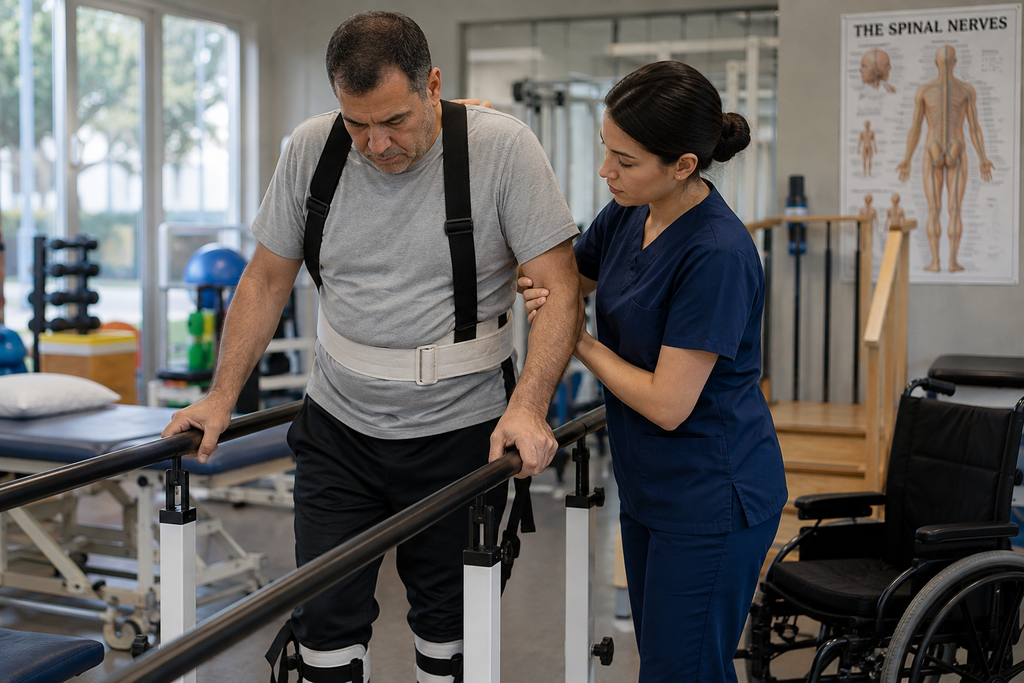
Spinal Cord Injuries in Southfield, Michigan
Spinal cord injuries can result from many different accidents.
Potential causes include:
- Car crashes
- Commercial truck accidents
- Motorcycle collisions
- Pedestrian accidents
- Bicycle crashes
- Slip and fall accidents
- Dangerous property conditions
- Falls from height
- Other serious traumatic incidents
Southfield has an extensive transportation network that includes major freeways, high-volume arterial roads, commercial corridors, office districts, and residential streets.
Major routes include:
- I-696
- M-39 / Southfield Freeway
- US-10 / Lodge Freeway
- US-24 / Telegraph Road
- M-102 / Eight Mile Road
- Northwestern Highway
A serious injury on a high-speed freeway may involve very different evidence from a fall inside a business or an accident at an apartment complex.
The underlying accident determines which legal rules, insurance policies, evidence, and potentially responsible parties must be investigated.
How Can a Southfield Spinal Cord Injury Lawyer Help?
Spinal cord injury cases can involve extensive medical treatment, complicated insurance questions, lost earning ability, future-care needs, and disputes about who caused the underlying accident.
Khamo Law can help by:
- Investigating the accident
- Identifying potentially responsible people or companies
- Preserving photographs, video, and physical evidence
- Obtaining police or incident reports
- Reviewing available insurance coverage
- Gathering medical records
- Documenting surgery and hospitalization
- Documenting rehabilitation and therapy
- Evaluating lost income
- Evaluating reduced earning capacity
- Documenting future medical needs
- Evaluating attendant-care needs
- Evaluating accessibility and mobility expenses
- Communicating with insurance companies
- Working with qualified medical, vocational, rehabilitation, or economic professionals when appropriate
- Filing a lawsuit and preparing the case for trial when necessary
A catastrophic spinal-cord claim should account for more than the initial hospitalization.
The medical, financial, and personal effects may continue for years or permanently.
What Is a Spinal Cord Injury?
The spinal cord carries signals between the brain and the rest of the body.
Trauma can interfere with:
- Movement
- Sensation
- Strength
- Balance
- Reflexes
- Bowel and bladder function
- Other neurological functions
The effects depend heavily on where the spinal cord was injured and how severe the damage is.
Qualified medical professionals should determine the actual diagnosis, level of injury, and prognosis.
Complete and Incomplete Spinal Cord Injuries
Doctors may classify spinal cord injuries as complete or incomplete.
A complete spinal cord injury generally involves an absence of motor and sensory function below the level of injury.
An incomplete spinal cord injury means some motor or sensory function remains below the injury level.
Two people with injuries at similar spinal levels may still experience very different outcomes.
The medical classification, rehabilitation progress, and long-term prognosis can substantially affect future treatment and care needs.
Paralysis After a Spinal Cord Injury
Paralysis is one of the most serious potential consequences of spinal cord trauma.
Depending on the location and severity of the injury, a person may experience:
- Paraplegia
- Tetraplegia or quadriplegia
- Muscle weakness
- Loss of sensation
- Reduced mobility
- Difficulty with balance
- Bowel or bladder changes
- Respiratory complications
- Need for a wheelchair
- Need for assistance with daily activities
The long-term consequences vary from person to person.
Cervical Spinal Cord Injuries
The cervical spinal cord is located in the neck.
Higher-level spinal cord damage can affect a larger portion of the body.
Depending on the injury, cervical spinal-cord trauma may affect:
- Arms
- Hands
- Trunk
- Legs
- Breathing
- Mobility
- Independence
A cervical injury may therefore create extensive long-term medical and personal-care needs.
Thoracic Spinal Cord Injuries
The thoracic spine runs through the upper and middle back.
A serious thoracic spinal-cord injury can affect:
- Trunk control
- Balance
- Lower-body movement
- Sensation
- Bowel and bladder function
- Mobility
Some people with thoracic injuries may experience paraplegia and require mobility equipment or other assistance.
Lumbar and Lower Spinal Injuries
Injuries involving the lower spinal region can affect:
- Legs
- Hips
- Feet
- Mobility
- Sensation
- Bowel or bladder function
The severity and long-term consequences depend on the exact structures and nerves involved.
A serious back injury is not automatically a spinal cord injury, so the medical diagnosis should be established from appropriate clinical evidence.
Southfield Car Accidents and Spinal Cord Injuries
Motor-vehicle crashes can expose the neck and spine to significant forces.
A serious collision may cause:
- Vertebral fractures
- Dislocations
- Compression injuries
- Damage to spinal structures
- Direct spinal-cord trauma
- Other neurological injuries
Potential evidence may include:
- Police reports
- Scene photographs
- Vehicle damage
- Dashcam footage
- Surveillance video
- Witness statements
- Electronic vehicle data
- Emergency medical records
For local motor-vehicle claim information, visit our Southfield Car Accident Attorney page.
Truck Accidents and Catastrophic Spinal Injuries
Commercial truck collisions may involve substantial forces and additional evidence beyond an ordinary car crash.
Potential evidence can include:
- Driver qualification records
- Electronic logging information
- Truck electronic data
- Maintenance records
- Dispatch records
- Company documents
- Commercial insurance
- Multiple potentially responsible companies
For truck-specific liability and evidence issues, visit our Southfield Truck Accident Lawyer page.
Motorcycle Spinal Cord Injuries
Motorcyclists have little physical protection when struck by another vehicle or thrown from a motorcycle.
A motorcycle collision can cause serious trauma to the:
- Neck
- Back
- Vertebrae
- Spinal cord
- Related nerve structures
These cases may also involve motorcycle-specific insurance issues, visibility disputes, unsafe turns, lane-change allegations, and comparative fault.
Visit our Southfield Motorcycle Accident Attorney page.
Pedestrian Spinal Cord Injuries
Pedestrians struck by vehicles can sustain spinal injuries during the initial impact or when they subsequently strike the pavement, another vehicle, or another object.
Evidence may include:
- Surveillance footage
- Witness statements
- Traffic signals
- Vehicle damage
- Roadway photographs
- Police investigation
For pedestrian-specific information, visit our Southfield Pedestrian Accident Attorney page.
Bicycle Spinal Cord Injuries
Bicyclists also have little protection against motor-vehicle impacts.
A bicycle collision may cause:
- Neck trauma
- Back trauma
- Vertebral fractures
- Spinal-cord damage
- Additional head or orthopedic injuries
For bicycle-specific information, visit our Southfield Bicycle Accident Attorney page.
Spinal Cord Injuries From Falls
Falls can cause severe spinal trauma, particularly when someone:
- Falls down stairs
- Falls on ice
- Falls on a dangerous walking surface
- Falls from an elevated location
- Strikes the neck or back during the fall
When a dangerous property condition caused the incident, visit our Southfield Premises Liability Attorney page.
For falls caused by slippery or unsafe walking surfaces, visit our Southfield Slip and Fall Lawyer page.
Who May Be Responsible for a Southfield Spinal Cord Injury?
The seriousness of an injury does not by itself establish legal responsibility.
Liability depends on what caused the underlying accident.
Potentially responsible parties may include:
- A negligent driver
- A commercial driver
- A trucking company
- A vehicle owner
- A property owner or possessor
- A business
- A landlord
- A maintenance contractor
- Another company
- Another person whose conduct contributed to the accident
The investigation should identify the actual people, companies, insurance policies, and legal theories connected to the injury.
Evidence That May Matter in a Spinal Cord Injury Case
A spinal cord injury claim can require evidence about both the accident and the person’s future losses.
Potential evidence includes:
- Police reports
- Incident reports
- Accident-scene photographs
- Surveillance footage
- Dashcam footage
- Witness statements
- Vehicle damage
- Property-condition photographs
- Medical records
- Diagnostic imaging
- Surgical records
- Hospital records
- Rehabilitation records
- Therapy records
- Employment records
- Wage documentation
- Insurance policies
- Appropriate expert analysis
The exact evidence needed depends on how the injury happened.
Why Preserving Accident Evidence Matters
Evidence can disappear long before a lawsuit deadline expires.
Depending on the accident:
- Surveillance footage may be overwritten
- Vehicles may be repaired
- Property conditions may change
- Commercial records may become harder to obtain
- Witnesses may become difficult to locate
- Electronic evidence may be lost
Early investigation can help preserve information that later becomes important to proving liability.
Medical Documentation and the Injury Timeline
A serious spinal cord injury may involve emergency care followed by months or years of additional treatment.
Medical records may document:
- Initial diagnosis
- Imaging
- Surgery
- Hospitalization
- Inpatient rehabilitation
- Physical therapy
- Occupational therapy
- Assistive equipment
- Follow-up treatment
- Home care
- Long-term restrictions
A clear medical timeline can help document both the initial trauma and the ongoing consequences of the injury.
Rehabilitation After a Spinal Cord Injury
Rehabilitation can be a major part of life after spinal cord trauma.
Depending on the injury, treatment may involve:
- Inpatient rehabilitation
- Physical therapy
- Occupational therapy
- Mobility training
- Wheelchair training
- Assistive technology
- Vocational rehabilitation
- Ongoing specialist care
Future rehabilitation needs should be supported by appropriate medical and professional evidence.
Long-Term Care and Attendant Assistance
Some spinal cord injury survivors require assistance with daily activities.
Potential needs may include help with:
- Bathing
- Dressing
- Transfers
- Mobility
- Transportation
- Meal preparation
- Household tasks
- Medication management
- Other daily activities
The amount and duration of care depend on the person’s actual limitations and medical needs.
Wheelchairs and Assistive Equipment
A spinal cord injury may require mobility or adaptive equipment such as:
- Manual wheelchairs
- Power wheelchairs
- Walkers
- Braces
- Transfer equipment
- Specialized beds
- Other adaptive devices
Equipment may need maintenance, repair, or replacement over time.
A serious injury claim may therefore need to consider reasonably anticipated future equipment needs.
Home Modifications
Some people with spinal cord injuries need changes to their homes to remain as independent as possible.
Potential modifications may include:
- Ramps
- Wider doorways
- Accessible bathrooms
- Modified kitchens
- Stair lifts
- Accessible entrances
- Other structural changes
When reasonably necessary because of the injury, these costs may become part of the damages analysis.
Vehicle and Transportation Modifications
Transportation needs may also change after a serious spinal injury.
Potential needs include:
- Wheelchair-accessible vehicles
- Vehicle lifts
- Hand controls
- Modified seating
- Alternative transportation
- Other accessibility equipment
These expenses can continue long after the original accident.
Lost Income After a Spinal Cord Injury
A spinal cord injury may prevent someone from working temporarily or permanently.
Potential employment losses include:
- Missed work
- Reduced hours
- Physical restrictions
- Inability to perform previous duties
- Need for workplace accommodations
- Need for retraining
- Inability to return to the same occupation
Employment records, medical restrictions, wage statements, and work history may help document those losses.
Reduced Future Earning Capacity
A person who cannot return to the same occupation may suffer reduced future earning capacity even if they eventually return to some form of work.
Relevant considerations may include:
- Education
- Previous occupation
- Work history
- Prior earnings
- Physical limitations
- Future work capacity
- Need for retraining
- Expected career progression
Future earning losses should be supported by evidence rather than estimated arbitrarily.
Michigan No-Fault Insurance and Spinal Cord Injuries
When a spinal cord injury results from a motor-vehicle accident, Michigan No-Fault insurance may become an important part of the case.
Depending on the policy and circumstances, PIP issues may involve:
- Medical treatment
- Rehabilitation
- Wage loss
- Replacement services
- Attendant care
- Applicable medical coverage
- Disputes with insurers
The amount of PIP medical coverage can vary depending on the policy and applicable eligibility rules.
For a deeper insurance explanation, visit our Michigan No-Fault Insurance Lawyer resource.
Can I Sue for Pain and Suffering After a Crash-Related Spinal Injury?
Potentially.
For noneconomic damages arising from a Michigan motor-vehicle collision, the statutory threshold generally involves:
- Death
- Permanent serious disfigurement
- Serious impairment of body function
A serious spinal cord injury may satisfy the applicable standard depending on the medical evidence and how the injury affects the person’s general ability to lead their normal life.
The analysis is individualized.
What Compensation May Be Available?
Depending on the accident, Michigan law, and available insurance coverage, compensation may include:
- Medical expenses
- Future medical treatment
- Rehabilitation
- Therapy
- Assistive equipment
- Attendant care
- Home modifications
- Vehicle modifications
- Lost income
- Reduced earning capacity
- Pain and suffering when legally recoverable
- Disability
- Loss of normal activities
- Other legally recoverable losses
There is no standard compensation amount.
Why Future Losses Matter
The consequences of a catastrophic spinal injury may continue for decades.
Potential future expenses can include:
- Medical treatment
- Rehabilitation
- Medication
- Mobility equipment
- Replacement equipment
- Personal care
- Transportation
- Home modifications
- Vehicle modifications
- Reduced future income
A settlement should not be evaluated solely from the bills that have already accumulated when evidence shows significant future needs.
What Is a Southfield Spinal Cord Injury Case Worth?
There is no reliable average settlement value.
Potential value may depend on:
- How the injury occurred
- Strength of the liability evidence
- Level of spinal injury
- Complete or incomplete classification
- Permanent paralysis
- Medical treatment
- Future rehabilitation
- Attendant-care needs
- Accessibility expenses
- Lost income
- Reduced earning ability
- Comparative fault
- Available insurance coverage
A temporary neurological impairment and permanent quadriplegia are fundamentally different claims.
What If the Insurance Company Minimizes the Injury?
An insurer may dispute:
- How the accident happened
- Whether the spinal cord itself was injured
- Whether treatment is necessary
- Whether symptoms resulted from the accident
- The cost of future care
- Whether the person can return to work
- Whether certain limitations are permanent
Those arguments should be compared with medical records, rehabilitation documentation, accident evidence, and appropriate professional opinions.
What Should I Do After a Serious Spinal Injury?
Your health and safety come first.
When circumstances allow:
- Seek appropriate emergency and medical care.
- Follow medical recommendations.
- Preserve photographs and video from the accident.
- Obtain witness information when possible.
- Keep medical and rehabilitation records.
- Save bills and insurance correspondence.
- Document missed work.
- Preserve damaged vehicles or property when relevant.
- Keep records concerning mobility equipment and accessibility costs.
- Avoid signing settlement documents you do not understand.
Medical decisions should be based on your healthcare needs and guidance from qualified professionals.
Spinal Cord Injury and Traumatic Brain Injury
Serious accidents can cause more than one catastrophic injury.
A person with spinal trauma may also suffer a traumatic brain injury involving:
- Memory difficulties
- Headaches
- Concentration problems
- Balance issues
- Cognitive changes
- Mood changes
If the same accident caused neurological or cognitive symptoms, visit our Southfield Brain Injury Attorney page.
The two pages remain separate because spinal-cord and brain injuries involve different medical, evidentiary, and future-care issues.
How Long Do I Have to File a Spinal Cord Injury Lawsuit?
Michigan generally provides a three-year limitations period for many personal injury actions, subject to exceptions.
That general period is not the only deadline that can matter.
Depending on the case:
- Michigan No-Fault claims may involve separate requirements
- Government-related claims can involve special procedures
- Insurance policies may impose contractual requirements
- Other claims may have different rules
A seriously injured person should not assume every required action can safely wait three years.
Fatal Spinal Cord Injuries
Some spinal injuries ultimately result in death.
When legally actionable conduct causes a person’s death, Michigan wrongful-death law may apply.
Families can visit our Southfield Wrongful Death Attorney page for additional information.
Why Choose Khamo Law After a Southfield Spinal Cord Injury?
Spinal cord injury claims can involve several major questions at the same time.
What caused the injury?
The underlying accident determines which liability rules apply.
Who may be responsible?
Drivers, trucking companies, property owners, businesses, contractors, or other parties may need to be investigated depending on the facts.
What medical evidence exists?
Imaging, hospital records, surgical records, rehabilitation records, and medical opinions can help establish the severity and prognosis.
What insurance applies?
No-Fault coverage, liability insurance, commercial policies, or other coverage may need to be evaluated.
What will the injury cost in the future?
Future treatment, attendant care, mobility equipment, accessibility modifications, transportation, and lost earning capacity can become major parts of a catastrophic-injury claim.
Khamo Law can investigate the accident, preserve evidence, evaluate insurance coverage, document the current and future consequences of the injury, communicate with insurers, and pursue litigation when appropriate.
Khamo Law has 40+ years of combined attorney experience.
Services are available in English, Arabic, and Chaldean.
Call 248-466-0606 for a free consultation.
Southfield Spinal Cord Injury FAQs
What is the difference between a complete and incomplete spinal cord injury?
A complete injury generally involves the absence of motor and sensory function below the injury level. An incomplete injury means some function remains. Medical professionals determine the classification.
Does every back injury qualify as a spinal cord injury?
No. A person can have a serious back or spinal-column injury without damage to the spinal cord itself.
Can spinal cord injuries cause paralysis?
Yes. Depending on the level and severity, spinal trauma may cause paraplegia, quadriplegia, weakness, loss of sensation, or other serious neurological problems.
Can compensation include future medical care?
Potentially. Future medical, rehabilitation, attendant-care, equipment, and accessibility expenses may be part of a claim when supported by appropriate evidence.
What if the spinal injury came from a car accident?
Visit our Southfield Car Accident Attorney page.
What if it came from a commercial truck crash?
Visit our Southfield Truck Accident Lawyer page.
What if it came from a motorcycle accident?
Visit our Southfield Motorcycle Accident Attorney page.
What if it came from a fall?
Visit our Southfield Slip and Fall Lawyer page.
What if I also suffered a traumatic brain injury?
Visit our Southfield Brain Injury Attorney page.
What if a family member died?
Visit our Southfield Wrongful Death Attorney page.
How much does Khamo Law charge for a consultation?
Khamo Law offers free consultations for potential spinal cord injury cases.
Speak With a Southfield Spinal Cord Injury Attorney
If you or a family member suffered a serious spinal cord injury in Southfield because of another person’s or company’s legally actionable conduct, Khamo Law can investigate the underlying accident, identify potentially responsible parties, preserve evidence, evaluate insurance coverage, document current and future losses, and explain the legal options supported by Michigan law and the facts.
For broader injury representation in Southfield, visit our Southfield Personal Injury Attorney page.
For statewide spinal cord injury information, visit our Michigan Spinal Cord Injury Lawyer resource.
Call 248-466-0606 or contact Khamo Law online for a free consultation.