









A traumatic brain injury can affect much more than memory or concentration. A serious TBI may change a person’s ability to work, communicate, drive, manage finances, care for family members, or live independently.
A Southfield traumatic brain injury lawyer at Khamo Law can investigate how the injury occurred, identify potentially responsible parties and insurance coverage, preserve evidence, document neurological and cognitive symptoms, evaluate future medical and rehabilitation needs, and pursue compensation when Michigan law and the evidence support a claim.
Khamo Law represents people who suffer traumatic brain injuries in accidents throughout Southfield, Oakland County, Metro Detroit, and Michigan.
For broader injury representation in the city, visit our Southfield Personal Injury Attorney page.
For statewide information about traumatic brain injuries, symptoms, treatment, rehabilitation, and Michigan injury claims, visit our Michigan Traumatic Brain Injury Attorney resource.
Call 248-466-0606 or contact Khamo Law online for a free consultation.
Legally reviewed by Koro E. Khamo, Founder & Managing Attorney at Khamo Law.
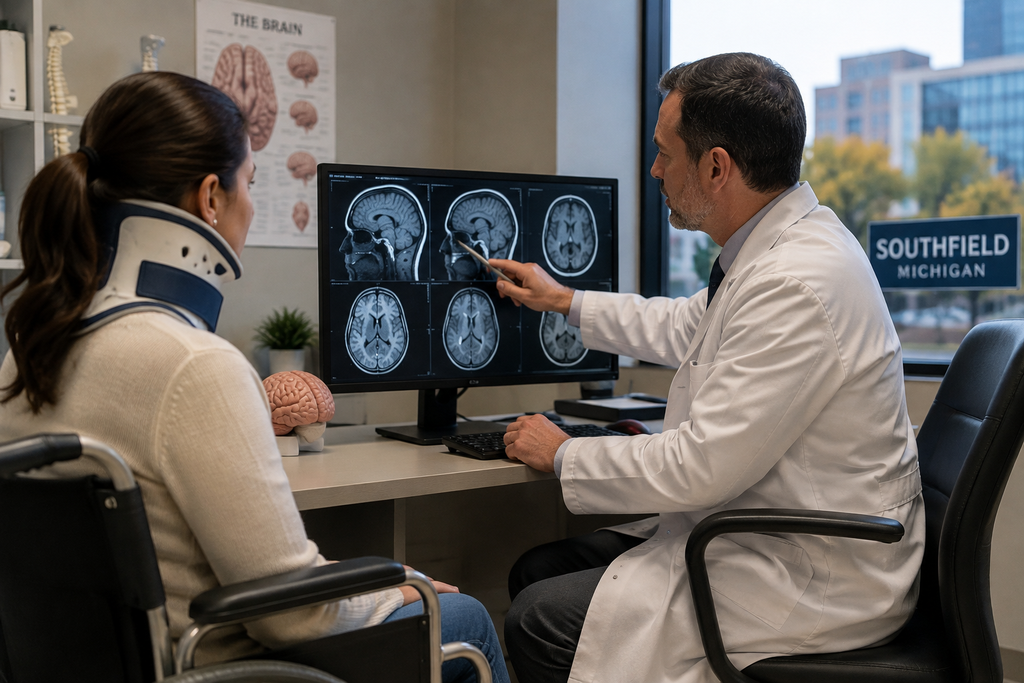
Traumatic Brain Injuries in Southfield, Michigan
Traumatic brain injuries can result from many different accidents.
Potential causes include:
- Car crashes
- Commercial truck accidents
- Motorcycle collisions
- Pedestrian accidents
- Bicycle crashes
- Slip and fall accidents
- Dangerous property conditions
- Other significant trauma
Southfield has an extensive transportation network with major freeways, arterial roads, commercial corridors, intersections, office districts, and residential streets.
Major routes include I-696, M-39/Southfield Freeway, US-10/Lodge Freeway, Telegraph Road/US-24, Eight Mile Road/M-102, and Northwestern Highway.
A serious collision on one of Southfield’s major roadways may present very different evidence from a fall inside a store or an accident at an apartment complex.
A brain injury claim therefore requires investigation of both what caused the trauma and how the injury has affected the person’s life.
How Can a Southfield Brain Injury Lawyer Help?
Brain injury cases can be medically and legally complex.
Khamo Law can help by:
- Investigating the underlying accident
- Obtaining police or incident reports
- Preserving photographs and video
- Interviewing witnesses
- Reviewing medical records
- Documenting neurological symptoms
- Documenting cognitive and behavioral changes
- Evaluating applicable insurance coverage
- Calculating lost income
- Evaluating reduced earning capacity
- Documenting rehabilitation needs
- Evaluating future medical and care needs
- Working with qualified medical, vocational, economic, or rehabilitation professionals when appropriate
- Addressing insurance-company disputes
- Negotiating a settlement
- Filing a lawsuit when necessary
The long-term consequences of a brain injury may take time to become fully understood.
A claim should account for the documented effects of the injury rather than focusing only on the initial emergency-room visit.
What Is a Traumatic Brain Injury?
A traumatic brain injury occurs when an external force disrupts normal brain function.
The injury may result from:
- A direct blow to the head
- The head striking another object
- Rapid acceleration and deceleration
- Penetrating trauma
- Other significant forces affecting the brain
A person does not necessarily have to lose consciousness to suffer a traumatic brain injury.
Symptoms and severity can vary substantially from one person to another.
Types of Traumatic Brain Injuries
Brain injuries can take different forms.
Potential diagnoses include:
- Concussions
- Cerebral contusions
- Diffuse axonal injuries
- Intracranial hemorrhages
- Hematomas
- Penetrating brain injuries
- Other traumatic neurological injuries
The diagnosis, severity, prognosis, and required treatment should come from qualified medical professionals.
Concussions and Mild Traumatic Brain Injuries
The word “mild” in mild traumatic brain injury does not necessarily mean the symptoms are insignificant.
A concussion may involve:
- Headaches
- Dizziness
- Memory problems
- Difficulty concentrating
- Sensitivity to light
- Sensitivity to sound
- Sleep changes
- Fatigue
- Balance problems
- Mood changes
Some people recover relatively quickly.
Others experience symptoms that persist and interfere with work, school, relationships, or ordinary daily activities.
Moderate and Severe Brain Injuries
More serious brain injuries can cause substantial neurological impairment.
Potential effects may include:
- Extended loss of consciousness
- Significant memory impairment
- Cognitive deficits
- Speech or language difficulties
- Weakness
- Balance problems
- Behavioral changes
- Emotional changes
- Seizures
- Loss of independence
- Permanent disability
Treatment may involve hospitalization, neurological care, rehabilitation, therapy, and long-term assistance.
Brain Injuries Without Loss of Consciousness
A person does not necessarily need to be knocked unconscious to sustain a traumatic brain injury.
Someone may remain awake after an accident and later experience:
- Headaches
- Confusion
- Memory problems
- Dizziness
- Concentration difficulties
- Nausea
- Fatigue
- Sensory sensitivity
- Mood changes
Medical evaluation is important when symptoms develop after significant head trauma.
Delayed Brain Injury Symptoms
Some symptoms may not be obvious immediately after an accident.
A person may initially focus on other injuries or feel overwhelmed by the collision itself.
Symptoms that emerge or become more noticeable later may include:
- Headaches
- Memory difficulties
- Concentration problems
- Sleep disturbances
- Irritability
- Fatigue
- Dizziness
- Changes in mood
- Difficulty completing familiar tasks
The timing and progression of symptoms should be documented accurately in medical records.
Brain Injuries After Southfield Car Accidents
Motor-vehicle collisions are one potential cause of traumatic brain injuries.
A driver’s or passenger’s head may strike:
- A window
- Steering wheel
- Dashboard
- Headrest
- Airbag
- Another part of the vehicle
A TBI can also result from rapid movement of the brain inside the skull even without a direct head strike.
For automobile-specific information, visit our Southfield Car Accident Attorney page.
Brain Injuries After Southfield Truck Accidents
Commercial truck collisions can expose vehicle occupants, pedestrians, bicyclists, and motorcyclists to substantial forces.
Truck cases may also involve specialized evidence such as:
- Electronic logging information
- Truck electronic data
- Driver qualification records
- Maintenance records
- Company records
- Commercial insurance policies
For additional information, visit our Southfield Truck Accident Lawyer page.
Brain Injuries After Motorcycle Accidents
Motorcyclists can suffer serious head trauma during collisions or when they are thrown from a motorcycle.
A helmet can reduce certain risks, but helmet use does not eliminate the possibility of traumatic brain injury.
Motorcycle cases can also involve Michigan-specific insurance and fault issues.
Visit our Southfield Motorcycle Accident Attorney page for additional information.
Brain Injuries After Pedestrian Accidents
Pedestrians have little physical protection when struck by a motor vehicle.
Head trauma can occur from the initial impact, contact with the hood or windshield, or a secondary impact with the roadway.
Pedestrian cases may also involve Michigan No-Fault insurance issues.
Visit our Southfield Pedestrian Accident Attorney page.
Brain Injuries After Bicycle Accidents
A bicyclist may suffer head trauma when struck by a vehicle or thrown onto the roadway.
Evidence can include:
- Police reports
- Vehicle damage
- Bicycle damage
- Helmet condition
- Surveillance footage
- Dashcam video
- Witness statements
- Crash-scene photographs
For bicycle-specific information, visit our Southfield Bicycle Accident Attorney page.
Brain Injuries After Slip and Fall Accidents
A fall can cause serious head trauma when a person’s head strikes:
- Flooring
- Concrete
- Pavement
- Stairs
- A wall
- Another hard surface
These cases may require investigation of both the neurological injury and the dangerous property condition that caused the fall.
Visit our Southfield Slip and Fall Lawyer page for additional information.
Brain Injuries Caused by Dangerous Property Conditions
A traumatic brain injury may also result from other property-related incidents.
Potential causes include:
- Unsafe stairs
- Falling objects
- Dangerous walking surfaces
- Poorly maintained property
- Other hazardous conditions
For the broader property-liability framework, visit our Southfield Premises Liability Attorney page.
Common Symptoms of a Traumatic Brain Injury
Brain injury symptoms can affect several areas of functioning.
Physical Symptoms
Potential physical symptoms include:
- Headaches
- Dizziness
- Balance problems
- Nausea
- Fatigue
- Sensitivity to light
- Sensitivity to sound
- Sleep disturbances
Cognitive Symptoms
Potential cognitive effects include:
- Memory problems
- Difficulty concentrating
- Slower processing
- Difficulty organizing tasks
- Problems making decisions
- Difficulty multitasking
Emotional and Behavioral Symptoms
Potential changes may include:
- Irritability
- Anxiety
- Depression
- Mood swings
- Impulsivity
- Changes in personality
Family members may sometimes notice behavioral or cognitive changes before the injured person fully recognizes them.
Diagnosing a Traumatic Brain Injury
Medical evaluation may involve:
- Clinical examination
- Neurological assessment
- CT imaging
- MRI imaging
- Cognitive testing
- Neuropsychological evaluation
- Other testing when medically appropriate
Not every traumatic brain injury appears the same way on imaging.
The diagnosis should be based on qualified medical evaluation rather than assumptions based solely on one test.
Why Medical Documentation Matters
Brain injuries can involve symptoms that are difficult for other people to see.
Unlike a cast or visible wound, problems involving memory, concentration, processing speed, headaches, or personality may not be obvious to an insurance adjuster or jury.
Medical documentation can help establish:
- Symptoms
- Diagnoses
- Treatment
- Functional limitations
- Rehabilitation needs
- Prognosis
Consistent medical records can therefore become an important part of a TBI claim.
Rehabilitation After a Brain Injury
Depending on the injury, rehabilitation may involve:
- Physical therapy
- Occupational therapy
- Speech-language therapy
- Cognitive rehabilitation
- Neuropsychological treatment
- Psychological counseling
- Vocational rehabilitation
- Other specialized services
A serious claim may need to consider not only past treatment but also reasonably supported future rehabilitation needs.
How a TBI Can Affect Employment
A person may physically appear capable of returning to work while still experiencing cognitive limitations.
Potential work-related problems include:
- Difficulty concentrating
- Memory problems
- Reduced processing speed
- Fatigue
- Difficulty multitasking
- Problems communicating
- Reduced tolerance for noise or light
- Behavioral changes
These issues may affect both current wages and future earning ability.
Employment records and qualified vocational or economic analysis may become relevant in serious cases.
How a Brain Injury Can Affect Daily Life
A TBI may interfere with:
- Driving
- Cooking
- Managing finances
- Parenting
- Household responsibilities
- Social activities
- Exercise
- Reading
- Using technology
- Maintaining relationships
- Independent living
Documenting these changes can help show how the injury affects life outside of a medical office.
Keeping a Record of Brain Injury Symptoms
When appropriate, an injured person may find it useful to keep a simple record of symptoms and functional difficulties.
Examples might include:
- Headache frequency
- Memory problems
- Sleep disturbances
- Missed activities
- Difficulty completing tasks
- Work limitations
The record should be accurate and should not exaggerate symptoms.
Medical concerns should still be discussed with qualified healthcare professionals.
Michigan No-Fault Benefits After a TBI
When a traumatic brain injury results from a motor-vehicle accident, Michigan’s No-Fault system may become important.
Depending on the circumstances and applicable insurance, Personal Injury Protection benefits may address qualifying:
- Medical expenses
- Rehabilitation
- Wage loss
- Replacement services
- Attendant care
- Other benefits permitted by Michigan law
For broader insurance information, visit our Michigan No-Fault Insurance Lawyer resource.
Who May Be Responsible for a Brain Injury?
Responsibility depends on how the injury occurred.
Potentially responsible parties may include:
- Negligent drivers
- Commercial motor carriers
- Property possessors
- Businesses
- Employers in appropriate circumstances
- Contractors
- Other persons or entities whose legally actionable conduct caused the injury
The investigation should identify the parties connected to the actual accident rather than assuming responsibility based only on the injury itself.
What Evidence Can Help a Brain Injury Claim?
Potential evidence includes:
- Police or incident reports
- Crash-scene photographs
- Surveillance footage
- Dashcam recordings
- Witness statements
- Medical records
- Diagnostic imaging
- Neuropsychological evaluations
- Rehabilitation records
- Employment records
- School records when relevant
- Statements from family members
- Insurance policies
- Expert analysis when appropriate
The evidence should document both causation and the consequences of the injury.
Why Family Observations Can Matter
Family members may notice changes that are difficult to capture during a short medical appointment.
Examples include changes in:
- Memory
- Personality
- Mood
- Sleep
- Communication
- Independence
- Daily routines
Those observations do not replace medical evidence, but they may provide useful context about changes following the injury.
What Compensation May Be Available?
Depending on the facts, liability, insurance coverage, and Michigan law, potentially recoverable damages or benefits may include:
- Medical expenses
- Rehabilitation
- Future medical treatment
- Lost income
- Reduced earning capacity
- Future care needs
- Pain and suffering when legally recoverable
- Disability
- Loss of normal activities
- Other legally recoverable damages or benefits
No particular result or amount is guaranteed.
What Is a Southfield Brain Injury Case Worth?
There is no reliable average settlement for a traumatic brain injury.
Potential case value may depend on:
- How the injury occurred
- Strength of the liability evidence
- Diagnosis
- Severity of symptoms
- Duration of symptoms
- Medical treatment
- Rehabilitation
- Permanent cognitive impairment
- Ability to work
- Future earning limitations
- Future medical and care needs
- Comparative fault
- Available insurance coverage
A concussion that resolves and a catastrophic brain injury requiring lifelong assistance are fundamentally different cases.
Each claim should be evaluated using its own evidence.
How Long Do I Have to File a Brain Injury Claim?
The applicable deadline depends partly on how the brain injury occurred and which claims are being pursued.
Michigan generally applies a three-year limitations period to many personal injury actions, subject to exceptions.
Motor-vehicle No-Fault claims, insurance-policy claims, governmental claims, claims involving minors, and other circumstances can involve different rules or deadlines.
An injured person should not assume every aspect of a TBI claim can safely wait until the general personal-injury limitations period approaches.
Fatal Traumatic Brain Injuries
Some traumatic brain injuries are fatal.
When legally actionable conduct causes a person’s death, Michigan wrongful-death law may apply along with the law governing the underlying accident.
The investigation may involve:
- Accident evidence
- Medical records
- Insurance coverage
- Estate procedures
- Financial losses
- Other damages permitted under Michigan law
Families can visit our Southfield Wrongful Death Attorney page for additional information.
Why Choose Khamo Law for a Southfield Brain Injury Case?
A serious brain injury claim is not simply about collecting an emergency-room bill.
The case may require documentation of:
How the injury occurred
The underlying car crash, truck accident, motorcycle collision, pedestrian accident, fall, or other incident must be investigated.
Neurological and cognitive effects
Memory, concentration, behavior, headaches, communication, and other symptoms may need to be documented.
Long-term rehabilitation
Future therapy and rehabilitation needs can become important in serious cases.
Ability to work
A TBI may affect employment even when the injured person appears physically capable of working.
Independence and daily life
Serious brain injuries can affect driving, parenting, household responsibilities, finances, relationships, and independent living.
Khamo Law can investigate the accident, preserve evidence, evaluate insurance coverage, document medical and financial losses, and pursue litigation when appropriate.
Khamo Law has 40+ years of combined attorney experience.
Services are available in English, Arabic, and Chaldean.
Call 248-466-0606 for a free consultation.
Southfield Brain Injury FAQs
Do I need to lose consciousness to have a traumatic brain injury?
No. A person can suffer a TBI without losing consciousness.
Can a concussion be a traumatic brain injury?
Yes. A concussion is a form of traumatic brain injury.
Can brain injury symptoms appear later?
Some symptoms may become noticeable or more significant after the initial accident. New or worsening symptoms should be medically evaluated.
Does a normal scan mean there is no brain injury?
Not necessarily. Brain injuries are diagnosed by qualified medical professionals using the appropriate clinical information and testing. Not every TBI presents identically on imaging.
Can a TBI affect my ability to work?
Yes. Memory, concentration, processing speed, fatigue, communication problems, and other symptoms may interfere with employment.
Can family members help document changes after a TBI?
Family observations can provide useful context regarding changes in behavior, memory, communication, independence, and daily activities, although they do not replace medical evidence.
What if my brain injury happened in a car accident?
Visit our Southfield Car Accident Attorney page.
What if my brain injury happened in a slip and fall?
Visit our Southfield Slip and Fall Lawyer page.
What if I also suffered a spinal cord injury?
Visit our Southfield Spinal Cord Injury Attorney page.
What if a family member suffered a fatal brain injury?
Visit our Southfield Wrongful Death Attorney page.
How much does Khamo Law charge for a consultation?
Khamo Law offers free consultations for potential traumatic brain injury cases.
Speak With a Southfield Brain Injury Attorney
If you or a family member suffered a concussion, traumatic brain injury, brain bleed, or other serious neurological injury because of an accident in Southfield, Khamo Law can investigate how the injury occurred, preserve important evidence, evaluate insurance coverage, document neurological and cognitive effects, assess long-term medical and rehabilitation needs, and explain the legal options supported by Michigan law and the facts.
For broader injury representation in Southfield, visit our Southfield Personal Injury Attorney page.
For statewide traumatic brain injury information, visit our Michigan Traumatic Brain Injury Attorney resource.
Call 248-466-0606 or contact Khamo Law online for a free consultation.