










A spinal cord injury can affect far more than the ability to walk. Depending on where and how severely the spinal cord is damaged, an injured person may experience changes in strength, sensation, bladder or bowel function, mobility, independence, employment, and the ability to perform ordinary activities without assistance.
For someone living with a serious spinal injury, the financial consequences may also continue long after the initial hospital stay. Rehabilitation, mobility equipment, home modifications, attendant care, lost earning capacity, and future medical needs can become major parts of the person’s life.
If someone else’s negligence caused your injury, a Warren spinal cord injury lawyer at Khamo Law can investigate how the accident happened, document the long-term consequences, identify available insurance coverage, and pursue compensation from the responsible parties.
Our Warren personal injury lawyers represent people with serious injuries throughout Warren, Macomb County, and Metro Detroit. For broader information about spinal cord injuries, long-term medical needs, rehabilitation, and compensation throughout the state, visit our Michigan Spinal Cord Injury Lawyer resource.
Call 248-466-0606 for a complimentary consultation.
Legally reviewed by Attorney Koro E. Khamo
Attorney at Khamo Law, PLLC
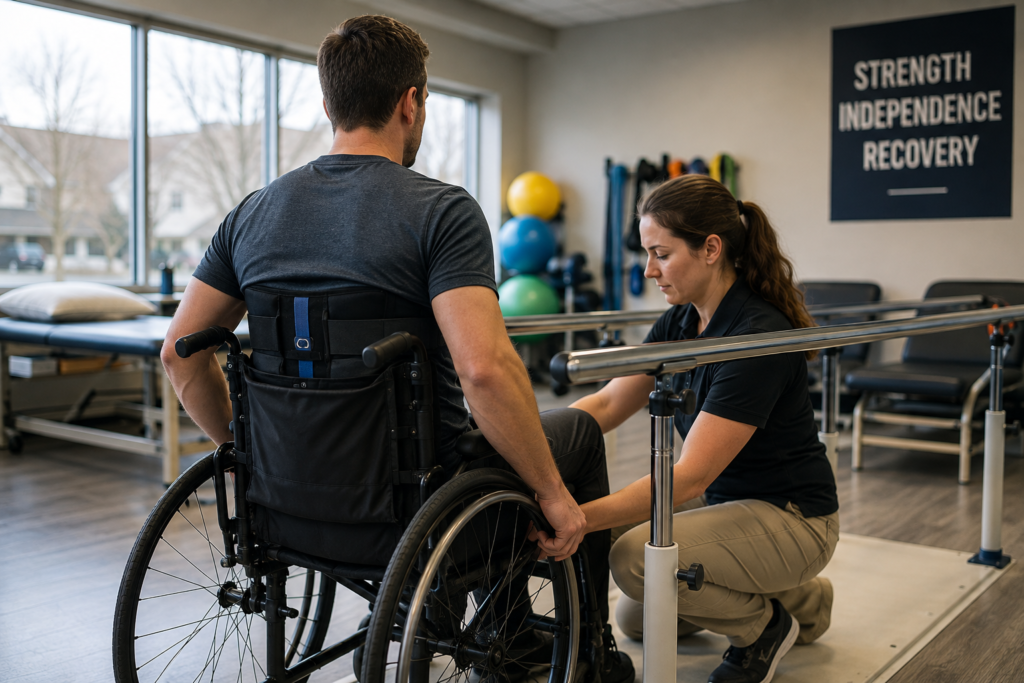
Spinal cord injuries can require extensive rehabilitation, mobility equipment, home modifications, and long-term medical care.
Spinal Cord Injury Cases Require a Long-Term View
A serious spinal cord injury claim should not be evaluated only by looking at the medical expenses incurred during the first weeks after an accident.
The full consequences may not be understood until physicians and rehabilitation professionals have had time to evaluate:
- Level of spinal cord damage
- Degree of neurological impairment
- Muscle strength
- Sensation
- Mobility
- Ability to transfer independently
- Need for a wheelchair or other equipment
- Ability to perform activities of daily living
- Need for ongoing rehabilitation
- Ability to return to work
- Need for home modifications
- Future medical complications
- Need for assistance or attendant care
The National Institute of Neurological Disorders and Stroke explains that spinal cord injuries can affect movement, sensation, and bodily functions below the level of injury.
For a legal claim, the challenge is documenting how those medical consequences translate into actual losses over the injured person’s lifetime.
Why the Level of a Spinal Cord Injury Matters
The spinal cord carries signals between the brain and the rest of the body.
The effects of an injury can vary significantly depending on where the damage occurs.
Injuries may involve the:
- Cervical spine
- Thoracic spine
- Lumbar spine
- Sacral region
Generally, damage higher in the spinal cord can affect a greater portion of the body.
A cervical spinal cord injury, for example, can potentially affect both the arms and legs. Lower injuries may primarily affect the lower body.
But the diagnosis alone does not establish the full consequences.
Two people with injuries at similar spinal levels may have different functional abilities, rehabilitation needs, and long-term outcomes.
That is why a serious injury claim should be based on the individual rather than a generic description of paralysis.
Complete and Incomplete Spinal Cord Injuries
Spinal cord injuries are often described as complete or incomplete.
A complete spinal cord injury generally involves no preserved sensory or motor function in specified areas below the injury.
An incomplete spinal cord injury means some neurological function remains.
The Model Systems Knowledge Translation Center provides research-based information about how spinal cord injury severity and level can affect function.
An incomplete injury should not be assumed to be minor.
A person may retain some movement or sensation while still experiencing:
- Significant weakness
- Difficulty walking
- Poor balance
- Chronic pain
- Limited hand function
- Need for mobility assistance
- Reduced endurance
- Difficulty with transfers
- Inability to return to previous employment
The legal claim should reflect actual functional loss rather than relying solely on the words “complete” or “incomplete.”
Rehabilitation After a Warren Spinal Cord Injury
Rehabilitation can become one of the most important parts of life after a spinal cord injury.
Depending on the person’s condition, treatment may involve:
- Inpatient rehabilitation
- Physical therapy
- Occupational therapy
- Rehabilitation medicine
- Strength and mobility training
- Wheelchair training
- Transfer training
- Activities-of-daily-living training
- Speech or respiratory services when necessary
- Psychological support
- Vocational rehabilitation
- Home-based therapy
The Model Systems Knowledge Translation Center’s spinal cord injury rehabilitation resources explain how inpatient rehabilitation can help people develop skills and maximize independence after a spinal cord injury.
Rehabilitation records can also provide important evidence in an injury case because therapists frequently document what the person can and cannot do independently.
How Functional Limitations Can Affect Everyday Life
The effect of a spinal cord injury is often best understood through ordinary daily activities.
Before the accident, a person may have been able to:
- Get out of bed independently
- Shower and dress without help
- Drive
- Prepare meals
- Work full time
- Shop for groceries
- Care for children
- Maintain a home
- Exercise
- Travel
- Participate in hobbies
After the injury, some of those activities may require equipment, additional time, assistance, or may no longer be possible.
Documenting this before-and-after difference can help demonstrate the true effect of the injury.
Family members and caregivers may also have important information about changes in independence and daily functioning.
Wheelchairs, Mobility Equipment, and Assistive Technology
A spinal cord injury may create the need for specialized equipment.
Depending on the person’s condition, that could include:
- Manual wheelchairs
- Power wheelchairs
- Walkers
- Braces
- Transfer boards
- Shower equipment
- Hospital beds
- Pressure-relief equipment
- Vehicle modifications
- Communication or environmental-control technology
- Other assistive devices
Equipment may also require maintenance and replacement over time.
A serious claim should therefore consider not only the cost of the first wheelchair or device but also whether similar expenses are reasonably expected in the future.
Home Modifications After a Spinal Cord Injury
Returning home after rehabilitation can reveal obstacles that did not matter before the injury.
A person using a wheelchair or experiencing significant mobility limitations may need modifications such as:
- Entrance ramps
- Wider doorways
- Accessible bathrooms
- Roll-in showers
- Grab bars
- Lowered counters
- Stair lifts
- Flooring changes
- Accessible bedroom arrangements
- Modified entrances
- Other accessibility improvements
Warren has itself been evaluating accessibility throughout city facilities and infrastructure through its ADA Transition Plan, reflecting the broader importance of accessible environments for people with mobility limitations.
For an injured individual, necessary home modifications may become part of the long-term economic consequences of a spinal cord injury.
Secondary Medical Complications Can Continue After Rehabilitation
A spinal cord injury can create health concerns beyond the initial neurological damage.
The National Institute of Child Health and Human Development identifies numerous secondary conditions associated with spinal cord injury.
Depending on the individual, medical providers may monitor for issues involving:
- Pressure injuries
- Urinary complications
- Respiratory problems
- Chronic pain
- Muscle spasticity
- Changes in bone health
- Cardiovascular issues
- Autonomic complications
- Other secondary conditions
Not every injured person will develop every complication.
However, when physicians anticipate ongoing monitoring or treatment, those future needs may be relevant to evaluating damages.
Attendant Care and Assistance With Daily Activities
Some spinal cord injuries leave people needing assistance with ordinary personal tasks.
Depending on the severity of the injury, help may be required with:
- Bathing
- Dressing
- Transfers
- Toileting
- Meal preparation
- Transportation
- Medication
- Household activities
- Mobility
- Skin care
- Other personal needs
Family members sometimes provide substantial amounts of this care.
Other cases may require professional caregivers.
The amount and type of assistance should be documented carefully rather than treated as an informal family obligation with no economic significance.
Returning to Work After a Spinal Cord Injury
The ability to return to employment depends on much more than whether an injured person can technically perform some form of work.
The analysis may consider:
- Previous occupation
- Physical demands
- Education
- Training
- Mobility limitations
- Hand function
- Ability to drive
- Workplace accessibility
- Endurance
- Pain
- Need for medical appointments
- Need for personal assistance
- Availability of reasonable accommodations
Someone who worked in construction, manufacturing, transportation, skilled trades, warehouse operations, or another physically demanding occupation may face very different employment consequences from someone working in an accessible office environment.
A serious case may require vocational and economic analysis to determine how the injury affects future earning capacity.
Spinal Cord Injuries After Warren Car Accidents
Motor-vehicle crashes can cause spinal cord trauma through fractures, compression, violent movement, and direct impact.
When a Warren automobile collision causes a spinal injury, the case may involve two major investigations at the same time:
How did the collision happen?
and
How will the injury affect the person in the future?
Crash evidence may include:
- Police reports
- Vehicle damage
- Dashcam footage
- Surveillance video
- Witness statements
- Electronic vehicle information
- Crash reconstruction evidence
Our Warren car accident attorney page explains additional issues involved in serious Warren automobile claims.
Spinal Cord Injuries From Serious Vehicle Crashes
Collisions involving commercial trucks and motorcycles can produce catastrophic spinal trauma.
Truck cases may involve evidence such as:
- Electronic logging information
- Driver qualification records
- Company policies
- Maintenance records
- Electronic vehicle data
- Dispatch records
- Dashcam footage
Learn more on our Warren truck accident attorney page.
Motorcycle crashes can also cause severe spinal cord trauma because riders have little structural protection from impact.
For motorcycle-specific liability, insurance, and crash-investigation issues, visit our Warren motorcycle accident lawyer page.
The type of accident matters because it determines which parties, insurance policies, and evidence may be involved.
Pedestrian Accidents and Spinal Cord Trauma
A pedestrian struck by a motor vehicle may suffer multiple serious injuries at once.
The initial vehicle impact can cause trauma, and the pedestrian may then strike the pavement or another object.
A severe pedestrian crash may result in:
- Spinal cord injury
- Traumatic brain injury
- Pelvic fractures
- Leg injuries
- Internal injuries
- Multiple fractures
Khamo Law’s Warren pedestrian accident attorney page addresses Warren-specific issues such as crosswalks, major roads, visibility, hit-and-run collisions, and surveillance evidence.
When both brain and spinal injuries occur, each condition should be evaluated separately because the combination can substantially affect rehabilitation and independence.
Our Warren brain injury attorney resource provides additional information about documenting cognitive injuries.
Falls and Dangerous Property Conditions
A serious fall can cause spinal cord trauma, particularly when someone falls from an elevated surface, stairway, or onto a hard surface.
Potential cases may involve:
- Icy walkways
- Broken stairs
- Defective railings
- Unsafe elevated areas
- Wet floors
- Poorly maintained property
- Other hazardous conditions
For falls, see our Warren slip and fall lawyer page.
For other dangerous-property conditions, visit our Warren premises liability attorney resource.
These cases can require preservation of photographs, surveillance footage, maintenance records, incident reports, and evidence identifying who controlled the dangerous area.
Future Medical Care and Life-Care Evidence
One of the largest differences between a routine injury claim and a catastrophic spinal cord injury case is the importance of future damages.
A person may need care long after the lawsuit or insurance claim is resolved.
Potential future costs can include:
- Physician care
- Rehabilitation
- Medication
- Medical supplies
- Mobility equipment
- Equipment replacement
- Home modifications
- Vehicle modifications
- Attendant care
- Additional procedures
- Treatment of secondary complications
When appropriate, professionals may be asked to evaluate future medical and support needs.
Economic analysis may then help estimate the financial consequences over time.
A settlement that addresses only current medical bills can substantially understate the effect of a permanent spinal cord injury.
Michigan No-Fault Benefits After a Spinal Cord Injury
When the spinal cord injury results from a motor-vehicle accident, Michigan’s no-fault system may become an important part of the case.
Depending on the circumstances and applicable coverage, accident-related benefits may involve medical care and other legally available benefits.
There may also be a separate claim against an at-fault driver for legally recoverable damages.
Khamo Law’s Michigan auto accident resource explains broader Michigan motor-vehicle insurance issues.
Because catastrophic injuries may involve significant ongoing expenses, identifying all applicable insurance coverage can be particularly important.
What Compensation May Be Available After a Warren Spinal Cord Injury?
The value of a spinal cord injury case depends on the individual circumstances.
Potential damages may include:
- Past medical expenses
- Future medical care
- Rehabilitation
- Mobility equipment
- Home modifications
- Attendant care
- Lost income
- Reduced future earning capacity
- Pain and suffering
- Disability
- Loss of independence
- Loss of enjoyment of life
- Other legally recoverable damages
The long-term nature of the injury means future losses may represent a substantial portion of the overall claim.
No spinal cord injury claim should be valued solely by looking at the person’s current bills.
How Khamo Law Builds a Warren Spinal Cord Injury Case
A catastrophic injury case requires both liability evidence and detailed proof of long-term damages.
Depending on the circumstances, Khamo Law may:
- Investigate how the accident happened
- Preserve physical and electronic evidence
- Obtain police or incident records
- Identify witnesses
- Review applicable insurance policies
- Gather hospital and rehabilitation records
- Document functional limitations
- Evaluate future medical needs
- Document attendant-care requirements
- Examine home and mobility needs
- Calculate lost income
- Evaluate reduced earning capacity
- Work with qualified medical and other experts when appropriate
- Negotiate with insurance carriers
- Prepare the case for litigation when necessary
Our Warren personal injury lawyers handle serious and catastrophic injury cases throughout Warren and Macomb County.
You can also learn more about Khamo Law’s attorneys and review the firm’s case results.
Warren Spinal Cord Injury FAQ
Is Every Spinal Cord Injury Permanent?
Spinal cord injuries vary significantly. Prognosis depends on factors including the location and severity of the injury. Medical professionals and rehabilitation specialists are the appropriate sources for an individual’s prognosis.
What Is the Difference Between Paraplegia and Tetraplegia?
Paraplegia generally affects the lower body, while tetraplegia or quadriplegia can affect both the upper and lower body. The specific effects depend on the neurological level and completeness of the injury.
Can an Incomplete Spinal Cord Injury Still Be Serious?
Yes. A person may retain some movement or sensation while still experiencing substantial mobility limitations, weakness, pain, reduced independence, and inability to return to previous employment.
Why Are Rehabilitation Records Important?
Rehabilitation professionals regularly document mobility, transfers, strength, independence, equipment needs, and activities of daily living. Those records can provide detailed evidence of how an injury affects everyday functioning.
Can Future Wheelchair Costs Be Part of a Claim?
Potentially. When medical evidence establishes a continuing need for mobility equipment, future replacement and related expenses may be relevant to evaluating damages.
What About Home Modifications?
Necessary accessibility modifications can potentially become part of the economic consequences of a serious spinal cord injury when supported by appropriate evidence.
Can Family Caregiving Matter in a Spinal Cord Injury Case?
Potentially. If family members provide substantial assistance because of accident-related limitations, the amount and nature of that care should be documented.
What if I Can Return to Work but Cannot Do My Old Job?
Reduced earning capacity can involve more than complete unemployment. A person who must change careers, reduce hours, or accept lower-paying work because of permanent limitations may have future economic losses.
Can a Spinal Cord Injury and Brain Injury Occur Together?
Yes. Serious crashes and falls can cause multiple traumatic injuries. Each condition should be evaluated and documented based on its own medical evidence and functional consequences.
What if a Spinal Cord Injury Results in Death?
A catastrophic spinal injury can sometimes lead to fatal complications or occur as part of an accident that causes death. Families may have rights under Michigan wrongful-death law. See our Warren wrongful death lawyer page for more information.
Contact a Warren Spinal Cord Injury Lawyer at Khamo Law
A serious spinal cord injury can affect movement, work, independence, housing, transportation, family responsibilities, and medical needs for years to come.
That is why a claim should be evaluated based on the injured person’s future—not simply the hospital expenses accumulated immediately after the accident.
If someone else’s negligence caused your injury, a Warren spinal cord injury attorney at Khamo Law can investigate the accident, identify responsible parties and insurance coverage, document the long-term consequences, and explain your legal options.
Our Warren personal injury attorneys represent people with serious injuries throughout Warren and Macomb County.
Learn more about our attorneys, review Khamo Law’s results, or contact Khamo Law for a complimentary consultation.
Call 248-466-0606 today.