










A traumatic brain injury can be difficult to understand because the damage is not always visible from the outside. A person may walk away from a crash, fall, or other accident and later experience memory problems, headaches, difficulty concentrating, personality changes, dizziness, disrupted sleep, or an inability to perform work they handled easily before.
When that happens, proving the full effect of the injury can require much more than showing an emergency-room bill.
A Warren traumatic brain injury lawyer at Khamo Law can investigate how the injury occurred, gather medical and diagnostic evidence, document how the condition has changed the injured person’s daily life, and pursue compensation from the parties responsible.
Khamo Law represents people with serious injuries throughout Warren, Macomb County, and Metro Detroit. Call 248-466-0606 for a complimentary consultation.
For information about other serious injury claims in Warren, visit our Warren Personal Injury Attorney page. For broader information about traumatic brain injuries, medical evidence, long-term effects, and compensation throughout Michigan, visit our Michigan Traumatic Brain Injury Attorney resource.
Legally reviewed by Attorney Koro E. Khamo
Attorney at Khamo Law, PLLC
Traumatic Brain Injury Claims in Warren, MI
Traumatic brain injury claims in Warren can become more complicated when symptoms develop gradually, early imaging appears normal, or cognitive changes are not immediately recognized.
The initial diagnosis may have been a concussion. Imaging may have been normal. Symptoms may have become more noticeable days or weeks later. Family members may recognize changes before the injured person fully understands them.
These cases require careful attention to both the accident itself and the medical evidence that follows.
A brain injury claim may involve:
- Emergency-room records
- CT scans
- MRI studies
- Neurology evaluations
- Neuropsychological testing
- Vestibular testing
- Occupational therapy
- Speech therapy
- Physical therapy
- Cognitive rehabilitation
- Work restrictions
- School limitations
- Testimony from family members
- Evidence of changes in daily activities
The purpose is not simply to prove that an accident occurred. It is to show what changed because of the brain injury.
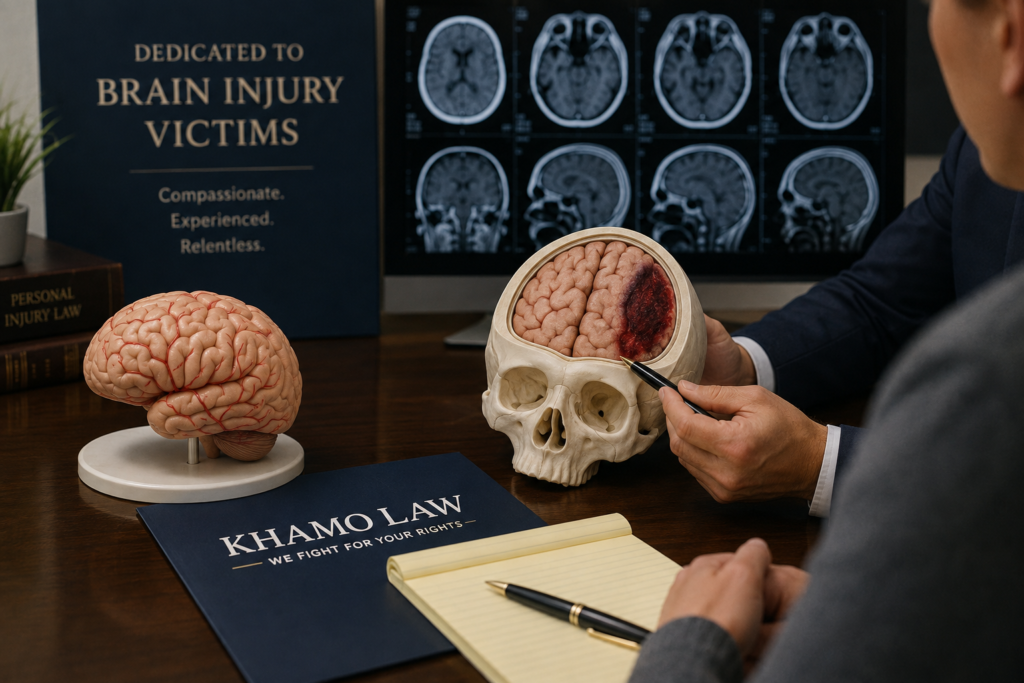
Traumatic brain injury cases may require detailed medical records, imaging, and expert evaluation to document the full impact of an injury.
Why Brain Injuries Can Be Harder to Prove Than Broken Bones
A fracture can often be seen clearly on an X-ray.
A traumatic brain injury may not be as straightforward.
The National Institute of Neurological Disorders and Stroke explains that traumatic brain injuries can affect thinking, memory, movement, sensation, emotional functioning, and other areas of life.
Some people experience symptoms even when early structural imaging does not show dramatic abnormalities.
That can create disputes with insurance companies.
An insurer may argue that:
- The injury was minor
- The person should have recovered already
- Symptoms are unrelated to the accident
- Complaints are subjective
- Normal imaging means there is no significant injury
- Preexisting conditions explain the symptoms
A strong brain injury case therefore requires documentation that connects the injury, symptoms, medical treatment, and resulting limitations.
Delayed Symptoms After a Warren Accident
Not every traumatic brain injury produces immediate, obvious symptoms.
Someone injured in a Warren car accident may initially focus on neck pain, back pain, broken bones, or other visible injuries.
Later, they may begin experiencing:
- Persistent headaches
- Problems concentrating
- Memory lapses
- Irritability
- Light sensitivity
- Noise sensitivity
- Dizziness
- Balance problems
- Fatigue
- Sleep disruption
- Depression or anxiety
- Difficulty multitasking
- Slower thinking
Delayed symptoms can make documentation especially important.
Medical providers need an accurate history of when symptoms began and how they progressed.
Waiting too long to report significant symptoms can also give an insurance company an opportunity to argue that the problems are unrelated to the accident.
Brain Injuries After Warren Car Accidents
Motor-vehicle crashes are an important source of traumatic brain injury claims.
A person does not necessarily need to strike their head on a steering wheel or window to suffer a brain injury.
Rapid acceleration and deceleration can cause the brain to move inside the skull.
People injured in a collision can learn more about the broader insurance and liability issues involved through our Warren car accident attorney resource.
When a Warren crash causes cognitive symptoms, the investigation may examine:
- Vehicle damage
- Direction of impact
- Crash severity
- Airbag deployment
- Seat position
- Loss of consciousness
- Immediate confusion
- Emergency medical observations
- Later neurological complaints
The accident evidence and the medical evidence should be evaluated together.
Brain Injuries After Warren Truck Accidents
Commercial truck crashes can expose vehicle occupants, pedestrians, motorcyclists, and cyclists to substantial forces.
A serious truck collision may involve both a complex liability investigation and a complicated neurological injury.
Potential evidence can include:
- Electronic logging information
- Vehicle inspection records
- Truck electronic data
- Driver qualification records
- Company policies
- Dashcam footage
- Witnesses
- Accident reconstruction evidence
Khamo Law handles these cases through its Warren truck accident attorney practice.
When a traumatic brain injury results from a commercial-vehicle collision, attorneys may need to develop the liability and medical sides of the case simultaneously.
Motorcycle and Pedestrian Brain Injuries in Warren
Motorcyclists and pedestrians have far less physical protection than occupants of passenger vehicles.
A rider thrown from a motorcycle or a pedestrian struck by a vehicle may suffer a traumatic brain injury along with orthopedic, spinal, or internal injuries.
Khamo Law maintains separate Warren resources for motorcycle accident claims and pedestrian accident claims.
In these cases, evidence may include:
- Helmet damage
- Clothing
- Vehicle impact points
- Roadway debris
- Surveillance footage
- Witness statements
- Police photographs
- Reconstruction findings
Preserving physical evidence can be particularly important after a severe impact.
What Medical Evidence Can Support a Brain Injury Claim?
A brain injury case is usually built from multiple forms of evidence rather than a single test.
Emergency Medical Records
Emergency records may document loss of consciousness, confusion, vomiting, headaches, disorientation, or other immediate symptoms.
CT Scans
CT imaging can help detect certain acute injuries such as bleeding or fractures.
A normal CT scan does not necessarily resolve every question involving a concussion or mild traumatic brain injury.
MRI Studies
MRI imaging may provide additional information depending on the suspected injury and the treating physician’s judgment.
Neurology Evaluations
Neurologists may evaluate headaches, dizziness, cognitive complaints, seizures, weakness, sensory changes, and other neurological symptoms.
Neuropsychological Testing
Neuropsychological testing can examine areas such as:
- Memory
- Attention
- Processing speed
- Executive function
- Language
- Problem-solving
This testing may become important when cognitive changes interfere with work, school, finances, or everyday activities.
Why Neuropsychological Testing Can Matter
Some traumatic brain injury claims involve symptoms that are difficult to measure through ordinary imaging.
A neuropsychological evaluation can provide structured information about how a person performs on cognitive tasks.
The results may help medical professionals evaluate whether the person has difficulty with:
- Short-term memory
- Working memory
- Attention
- Mental processing
- Decision-making
- Executive functioning
- Language
- Visual-spatial skills
Testing is not automatically necessary in every brain injury case.
When appropriate, however, it can provide important evidence regarding the functional consequences of the injury.
Proving How a Brain Injury Changed Your Normal Life
One of the strongest ways to understand a brain injury is to compare life before and after the accident.
A person may still be able to walk, drive, and speak but have substantial difficulty performing the activities that once defined their normal routine.
Examples can include:
- Needing extra time to complete work
- Forgetting appointments
- Losing track of conversations
- Becoming overwhelmed in noisy environments
- Struggling to read for long periods
- Becoming exhausted after mental activity
- Giving up hobbies
- Avoiding social events
- Relying on family members for reminders
- Having difficulty managing finances
- Becoming unable to return to the same occupation
For motor-vehicle cases, Michigan’s serious-impairment law can make evidence of changes to a person’s normal life particularly important.
Khamo Law has a separate resource explaining the Michigan serious impairment threshold.
Rather than duplicating that statewide legal discussion here, the Warren brain injury case should focus on documenting the actual before-and-after differences in the injured person’s life.
Family Members Can Become Important Witnesses
Brain injury symptoms are not always obvious to the injured person.
Family members may be among the first people to notice that something has changed.
They may observe:
- Repeated questions
- Forgetfulness
- Mood changes
- Irritability
- Reduced patience
- Difficulty following conversations
- Changes in sleep
- Loss of independence
- Trouble completing household tasks
- Changes in personality
These observations can help establish how the injury affects everyday functioning outside the doctor’s office.
Coworkers, friends, supervisors, teachers, and others may also have relevant information.
Lost Income and Reduced Earning Capacity After a TBI
A traumatic brain injury can affect employment even when the injured person appears physically capable of returning to work.
Some occupations require:
- Constant concentration
- Fast decision-making
- Multitasking
- Memory
- Communication
- Driving
- Safety-sensitive judgment
- Managing employees
- Working around machinery
A person may return to work but struggle to perform at the same level.
Others may need reduced hours, a different position, workplace accommodations, or a complete career change.
A brain injury claim may therefore require examination of both past lost income and the effect of the injury on future earning capacity.
Long-Term Treatment and Rehabilitation
Serious brain injuries can require months or years of treatment.
Depending on the individual, care may involve:
- Neurology
- Physical medicine and rehabilitation
- Cognitive rehabilitation
- Speech-language therapy
- Occupational therapy
- Physical therapy
- Vestibular rehabilitation
- Psychological treatment
- Medication management
- Home assistance
- Vocational rehabilitation
Future care can become a significant component of damages when medical professionals believe treatment or assistance will continue.
The cost of future care should be evaluated based on medical evidence rather than guessed from current expenses.
Brain Injuries Caused by Falls and Unsafe Property
Not every Warren brain injury comes from a motor-vehicle collision.
Falls can cause significant head trauma, particularly when a person strikes a hard surface, stair, fixture, or other object.
Examples can include falls involving:
- Ice or snow
- Wet floors
- Damaged stairs
- Uneven walking surfaces
- Poorly maintained entrances
- Defective railings
- Unsafe common areas
Khamo Law handles property-related injury cases through its Warren premises liability attorney and Warren slip and fall lawyer pages.
Evidence preservation may include photographs, surveillance video, incident reports, maintenance records, and witness information.
What Compensation May Be Available After a Warren Brain Injury?
Compensation depends on the cause of the injury, applicable insurance, liability, and the severity of the resulting harm.
Potential damages may include:
- Past medical expenses
- Future medical care
- Rehabilitation costs
- Lost income
- Reduced earning capacity
- Pain and suffering
- Cognitive limitations
- Emotional consequences
- Loss of enjoyment of life
- Disability
- Assistance with daily activities
- Other legally recoverable losses
A mild traumatic brain injury can still produce substantial consequences if symptoms persist.
Conversely, the seriousness of a claim should not be determined solely by the diagnostic label.
The central question is how the injury actually affected the person.
How Khamo Law Builds a Warren Traumatic Brain Injury Case
A strong traumatic brain injury case requires more than gathering medical bills.
Depending on the circumstances, Khamo Law may:
- Investigate how the accident happened
- Obtain police and incident records
- Identify witnesses
- Preserve video and physical evidence
- Review medical records
- Track neurological symptoms
- Examine diagnostic testing
- Document changes in work and daily life
- Review applicable insurance coverage
- Evaluate future medical needs
- Consult appropriate experts when necessary
- Calculate economic losses
- Negotiate with insurers
- Prepare the claim for litigation when necessary
Our attorneys represent injured people throughout Warren and the surrounding Metro Detroit area.
Warren Brain Injury FAQ
Can I Have a Traumatic Brain Injury if My CT Scan Was Normal?
Potentially. Different tests are designed to identify different conditions, and some traumatic brain injuries may not produce obvious findings on an initial CT scan. Continued symptoms should be discussed with an appropriate medical professional.
What if I Never Lost Consciousness?
Loss of consciousness is not required for every traumatic brain injury.
Symptoms, medical findings, the mechanism of injury, and the overall clinical picture may all be relevant.
Can a Concussion Support a Personal Injury Claim?
Potentially. A concussion is a type of traumatic brain injury. The legal significance depends on the circumstances of the accident, medical documentation, duration of symptoms, and effect on the person’s life.
Why Do My Family Members Notice Changes That I Do Not?
Brain injuries can affect awareness, memory, emotional regulation, and judgment. Family observations may therefore become important when documenting changes after an accident.
What if My Symptoms Became Worse Several Days After the Accident?
Report new or worsening symptoms to an appropriate medical provider. Delayed symptoms can occur following head trauma, and significant or worsening neurological symptoms require medical attention.
Can a Brain Injury Affect My Ability to Work Even if I Can Physically Do My Job?
Yes. Many jobs depend heavily on concentration, memory, judgment, processing speed, communication, and multitasking.
A cognitive impairment can therefore affect employment even when physical mobility is relatively intact.
What Evidence Should I Preserve?
Depending on the accident, preserve photographs, video, damaged property, medical records, employment documentation, witness information, and anything else that helps establish what happened and how your life changed afterward.
Speak With a Warren Traumatic Brain Injury Lawyer
A traumatic brain injury can affect far more than medical expenses.
It can alter memory, work, relationships, independence, judgment, and the ability to participate in everyday life.
If someone else caused your injury, a traumatic brain injury lawyer in Warren, MI at Khamo Law can investigate what happened, document the consequences of the injury, and explain the compensation that may be available.
Call Khamo Law at 248-466-0606 or contact us online for a complimentary consultation.