




An injury on someone else’s property can raise questions that are not obvious at first. Who controlled the area where the accident happened? How long had the dangerous condition existed? Was a business aware of the problem? Did a property manager, maintenance company, snow-removal contractor, landlord, or tenant have responsibility for fixing it?
If you were seriously injured because of a dangerous property condition in Warren, a Warren premises liability attorney at Khamo Law can investigate what happened, identify potentially responsible parties, preserve important evidence, and explain your options for pursuing compensation.
Our Warren personal injury lawyers represent people injured throughout Warren, Macomb County, and Metro Detroit.
Call 248-466-0606 for a complimentary consultation.
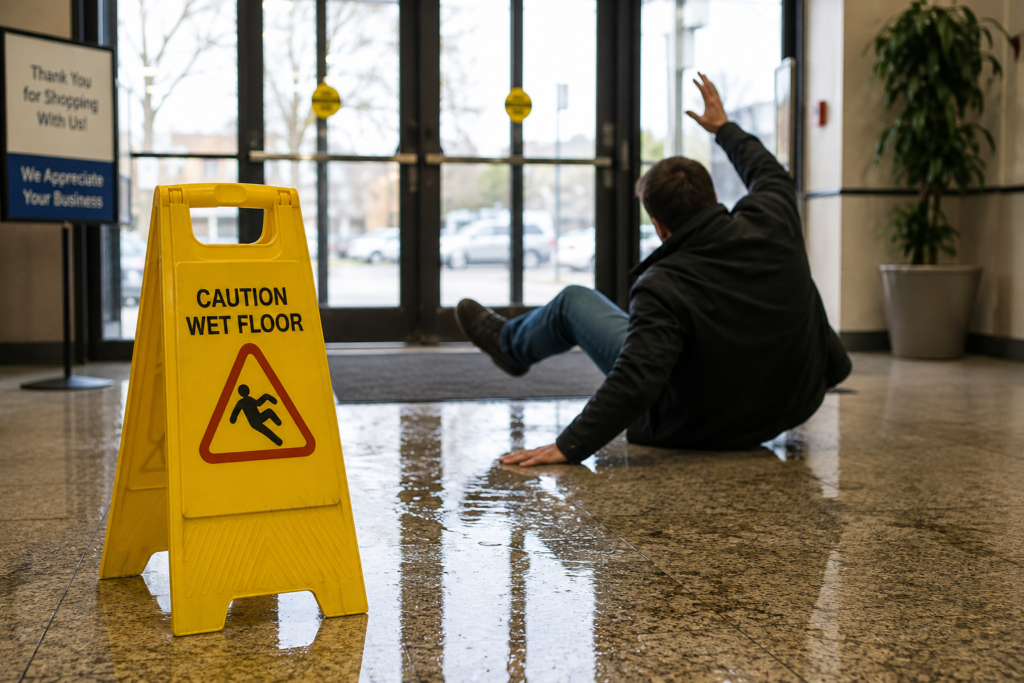
Unsafe property conditions such as wet floors, poor maintenance, ice, or damaged walking surfaces can lead to serious injuries in Warren.
Premises Liability Claims in Warren Depend on the Property and the Hazard
Premises liability is not limited to someone slipping on a grocery-store floor.
Serious injuries can arise from dangerous conditions at:
- Grocery stores
- Restaurants
- Shopping centers
- Apartment complexes
- Office buildings
- Parking lots
- Gas stations
- Hotels
- Rental homes
- Warehouses
- Industrial properties
- Sidewalks and entrances
- Stairways
- Common areas
The investigation should begin with the specific property and the condition that caused the injury.
Relevant questions may include who possessed or controlled the area, who was responsible for inspections, whether anyone previously reported the hazard, whether maintenance work had been performed, and whether video or records exist.
For broader information about Michigan property-injury law, see Khamo Law’s Michigan Premises Liability Laws resource.
Dangerous Conditions at Warren Stores and Businesses
Warren has extensive commercial development along roads such as Van Dyke Avenue, Mound Road, Hoover Road, Dequindre Road, Schoenherr Road, and the Mile Roads.
Customers entering businesses may encounter hazards such as:
- Spilled liquids
- Tracked-in rain or snow
- Damaged flooring
- Loose mats
- Merchandise in walkways
- Uneven entrances
- Broken pavement
- Poorly maintained stairs
- Inadequate lighting
- Ice near entrances
A customer injured on commercial property may be considered an invitee under Michigan premises-liability law.
One significant issue in an invitee case is whether the person or entity controlling the premises knew or should have known about an unreasonable risk of harm and failed to respond reasonably.
That means evidence about inspections, maintenance practices, employee observations, complaints, and the amount of time the condition existed can become important.
Warren Snow and Ice Accidents
Michigan winters create property hazards that deserve a Warren-specific analysis.
The City of Warren’s snow-removal policy states that occupants of premises, or owners of unoccupied premises, must keep adjacent sidewalks reasonably clear of snow and ice.
The city states that accumulated snow and ice must generally be cleared within 12 hours after it has fallen or accumulated.
That local ordinance does not automatically determine whether someone wins a civil premises-liability case. Civil liability requires its own legal analysis.
However, local maintenance requirements can be relevant when investigating:
- Who had responsibility for the area
- Whether snow removal occurred
- When a storm ended
- Whether salt was applied
- Whether ice repeatedly formed
- Whether a contractor was responsible
- What maintenance records exist
Photographs taken shortly after a fall can become particularly valuable because weather and property conditions can change quickly.
Falls in Warren Parking Lots
Parking lots can contain hazards that are easy to alter before an injured person has an opportunity to investigate them.
Potential conditions include:
- Potholes
- Uneven pavement
- Broken concrete
- Ice
- Snow piles
- Poor drainage
- Crumbling curbs
- Damaged wheel stops
- Inadequate lighting
- Debris
- Unmarked elevation changes
After a parking-lot injury, determining who controlled the area may require examining agreements between the property owner, business tenant, management company, and maintenance contractors.
The business whose name appears on the building is not necessarily the only potentially relevant party.
Apartment Complex and Rental Property Injuries in Warren
Premises-liability accidents can also occur at apartment complexes, rental homes, and multi-unit residential properties.
Potential problem areas include:
- Common stairways
- Hallways
- Parking areas
- Entryways
- Sidewalks
- Exterior stairs
- Railings
- Laundry areas
- Shared recreational areas
- Lighting systems
A tenant or visitor injured in a common area may need to determine whether responsibility rested with a landlord, property owner, management company, maintenance company, contractor, or another party.
Evidence may include:
- Lease documents
- Maintenance requests
- Tenant complaints
- Work orders
- Inspection records
- Photographs
- Surveillance video
- Emails or text messages
- Witness statements
Repeated maintenance requests can be especially important when they show that a dangerous condition was reported before someone was injured.
Broken Stairs, Handrails, and Walking Surfaces
A fall involving stairs can cause severe injuries because the person may fall farther or strike multiple surfaces.
Potential defects include:
- Broken steps
- Loose handrails
- Missing handrails
- Uneven riser heights
- Damaged carpeting
- Loose flooring
- Poor lighting
- Debris
- Deteriorated concrete
- Unexpected elevation changes
After a stairway accident, photographs should document more than the immediate spot where the person fell.
Useful images may show the entire staircase, handrails, lighting, surrounding walls, step dimensions, flooring, and approach to the area.
In some cases, an engineer or other qualified professional may be needed to evaluate the condition.
Poor Lighting and Visibility on Warren Properties
Not every premises-liability case involves a physical object on the ground.
Poor lighting can make stairs, elevation changes, potholes, curbs, obstacles, and other conditions harder to detect.
A lighting-related investigation may examine:
- Whether fixtures were operating
- When bulbs were last replaced
- Whether complaints had been made
- Whether timers or sensors worked
- Whether vegetation blocked lighting
- Whether photographs show actual nighttime conditions
- Whether surveillance footage exists
When possible, the condition should be documented at approximately the same time of day that the accident occurred.
A daytime photograph may not accurately demonstrate visibility conditions during a nighttime accident.
Injuries Caused by Falling Objects or Unsafe Displays
Premises-liability accidents can involve objects falling from shelves, displays, storage areas, or building components.
A customer or visitor may be injured by:
- Improperly stacked merchandise
- Falling boxes
- Unsecured shelving
- Signs
- Ceiling materials
- Building components
- Stored equipment
- Other unstable objects
These cases may require examination of store policies, photographs, employee statements, surveillance footage, inspection practices, and how the merchandise or object was arranged before the accident.
Businesses may change a display immediately after an injury, which makes early evidence preservation important.
How a Warren Premises Liability Lawyer Identifies Who Is Responsible
One of the most important premises-liability questions is who actually possessed or controlled the part of the property where the injury happened.
Several entities may be involved in operating one property.
Depending on the facts, they may include:
- Property owners
- Commercial tenants
- Landlords
- Property-management companies
- Maintenance contractors
- Snow-removal companies
- Cleaning companies
- Landscaping companies
- Construction contractors
Contracts and leases may divide responsibilities for different areas.
For example, a store may control its interior while a shopping-center owner or management company controls the parking lot.
A snow-removal contractor may separately have responsibility for plowing or salting certain areas.
A proper investigation should identify the relevant parties before assuming that only the property owner can be involved.
Surveillance Video Can Be Critical Evidence
Many Warren premises-liability accidents occur at businesses, apartment complexes, stores, gas stations, and other properties equipped with surveillance systems.
Video may show:
- How the accident happened
- How long a dangerous condition existed
- Whether employees passed the hazard
- Whether another customer created the condition
- Whether an inspection occurred
- Whether warning signs were present
- What the injured person was doing before the accident
Surveillance evidence can disappear quickly because businesses may automatically overwrite recordings.
That is one reason serious property injuries should be investigated promptly.
An attorney may send a preservation request asking the relevant party to retain potentially important footage and records.
Maintenance and Inspection Records Can Help Establish Notice
One major issue in a premises-liability case is whether the responsible party knew or should have known about the dangerous condition.
Evidence concerning notice may include:
- Inspection logs
- Cleaning schedules
- Work orders
- Maintenance requests
- Prior complaints
- Employee communications
- Incident reports
- Repair invoices
- Snow-removal logs
- Salting records
- Photographs
- Surveillance footage
For example, evidence that a leaking refrigeration unit repeatedly created water on a floor could be significantly different from a spill that occurred only moments before an accident.
The history of the condition matters.
Michigan’s Open-and-Obvious Premises Liability Law
Michigan premises-liability law underwent an important change in 2023.
In Kandil-Elsayed v. F & E Oil, Inc., the Michigan Supreme Court changed how the open-and-obvious doctrine operates in cases involving invitees.
The fact that a dangerous condition could be seen does not necessarily mean the property possessor automatically owed no duty.
Instead, whether the condition was open and obvious may be considered as part of the analysis concerning breach and comparative fault.
Michigan premises-liability law continues to develop, so a claim should be evaluated under the law in effect when the case is being handled rather than based on an outdated description of the open-and-obvious doctrine.
Khamo Law also discusses current statewide property-injury issues on its Michigan slip and fall lawyer page.
What If the Property Owner Blames You?
A business or insurance company may argue that an injured person should have noticed the hazard.
They may claim that the person:
- Was looking at a phone
- Was not watching where they were walking
- Ignored a warning sign
- Chose an unsafe route
- Wore inappropriate footwear
- Should have seen the condition
Those allegations do not necessarily end the claim.
The circumstances should be evaluated using objective evidence whenever possible.
That may include:
- Video
- Photographs
- Lighting
- Warning signs
- Foot traffic
- Location of the hazard
- Witness statements
- Inspection records
- The injured person’s conduct
Michigan’s comparative-fault rules can affect damages when an injured person shares responsibility, making accurate evidence particularly important.
Injuries Caused by Dangerous Warren Properties
Premises-liability accidents can cause injuries far more serious than temporary soreness.
Potential injuries include:
- Broken wrists
- Broken ankles
- Hip fractures
- Knee injuries
- Shoulder injuries
- Head injuries
- Concussions
- Traumatic brain injuries
- Back injuries
- Spinal cord injuries
- Nerve damage
- Cuts and scarring
A person who strikes their head during a fall may develop neurological symptoms even when the initial injury appears minor.
Khamo Law’s Warren brain injury attorney page discusses medical documentation and evidence involved in traumatic brain injury claims.
Serious falls can also cause spinal trauma. Learn more from our Warren spinal cord injury attorney resource.
Premises Liability Versus a Warren Slip and Fall Claim
Slip-and-fall cases are one form of premises liability, but premises liability covers a broader range of dangerous-property accidents.
A slip-and-fall claim may involve:
- Water
- Ice
- Snow
- Spills
- Slippery surfaces
A broader premises-liability claim may involve:
- Broken stairs
- Falling objects
- Defective railings
- Poor lighting
- Unsafe common areas
- Dangerous pavement
- Negligently maintained property
- Other hazardous property conditions
Khamo Law maintains a dedicated Warren slip and fall lawyer page for people specifically injured in falls.
This premises-liability page addresses the wider category of property-related injury claims.
What Compensation May Be Available?
The value of a Warren premises-liability case depends on the injuries, liability, available insurance, medical treatment, lost income, and long-term consequences.
Potential damages can include:
- Medical expenses
- Future medical care
- Lost income
- Reduced earning capacity
- Rehabilitation costs
- Pain and suffering
- Disability
- Scarring or disfigurement
- Loss of enjoyment of life
- Assistance with daily activities
- Other legally recoverable losses
A claim involving a permanent injury should be evaluated with future consequences in mind rather than only the medical bills that have already accumulated.
How Khamo Law Investigates a Warren Premises Liability Claim
A property-injury claim should be developed around evidence rather than assumptions.
Depending on the circumstances, Khamo Law may:
- Investigate the accident location
- Photograph and document the dangerous condition
- Determine who controlled the property
- Identify property owners and business operators
- Review leases and management arrangements when relevant
- Identify maintenance and snow-removal contractors
- Obtain incident reports
- Seek surveillance footage
- Interview witnesses
- Review inspection and maintenance records
- Document medical injuries
- Evaluate lost income
- Investigate insurance coverage
- Consult qualified experts when appropriate
- Negotiate with insurers
- Prepare the case for litigation when necessary
Our Warren personal injury attorneys handle serious accident and injury claims throughout Warren.
You can also learn more about Khamo Law’s attorneys and review the firm’s case results.
Warren Premises Liability FAQ
What Should I Do After Being Injured at a Warren Business?
Report the accident, seek appropriate medical treatment, photograph the exact condition and surrounding area if possible, identify witnesses, preserve the shoes and clothing you were wearing, and obtain the business’s incident information.
Should I Fill Out an Incident Report?
Reporting an injury can create an important record of when and where the accident occurred. Keep a copy or photograph of anything you complete if possible.
What if the Business Has Surveillance Cameras?
Video may become important evidence. Because surveillance footage can be overwritten, efforts to preserve it should begin promptly.
What if I Fell on Ice Outside a Warren Business?
Photograph the ice, surrounding walkway, snow accumulation, drainage, nearby downspouts, salt or lack of salt, and overall area when possible. Warren also has local snow- and ice-removal requirements that may be relevant to the investigation.
What if the Hazard Was Easy to See?
Michigan’s current premises-liability law does not necessarily make the visibility of a hazard an automatic bar to an invitee’s claim. The circumstances, property possessor’s conduct, and comparative fault may all require evaluation.
Can a Property Manager Be Responsible Instead of the Owner?
Potentially. Responsibility can depend on who possessed or controlled the area and what obligations different parties had under leases, contracts, or management arrangements.
Can a Snow-Removal Contractor Be Involved in a Claim?
Potentially. A contractor’s role depends on its contractual responsibilities and conduct. The contract, service logs, invoices, and other records may be important.
What if I Was Injured at an Apartment Complex?
Common-area accidents may involve landlords, owners, management companies, maintenance providers, or other entities depending on who controlled and maintained the area.
What if My Fall Caused a Brain or Spinal Injury?
Serious head and spinal injuries can substantially increase the medical and long-term consequences of a premises-liability claim. These injuries should be documented carefully through appropriate medical treatment and supporting evidence.
Is a Dog Bite a Premises Liability Case?
Dog attacks can sometimes raise property-related issues, but Michigan also has a specific dog-bite statute. Khamo Law maintains a separate Warren dog bite attorney resource addressing those claims.
How Long Do I Have to Bring a Warren Premises Liability Claim?
Different deadlines can apply depending on the defendant, location, and type of claim. Claims involving governmental property can involve special rules and notice requirements. It is safer to determine the applicable deadline promptly rather than assuming that one general deadline applies to every property accident.
Contact a Warren Premises Liability Attorney at Khamo Law
A serious injury on unsafe property can involve much more than proving that an accident occurred.
The investigation may require determining who controlled the property, how long the hazard existed, whether inspections occurred, what maintenance records show, whether contractors were involved, and whether surveillance video captured the incident.
If a dangerous property condition injured you in Warren, a Warren premises liability attorney at Khamo Law can investigate what happened and explain your legal options.
Our Warren personal injury lawyers represent people with serious injuries throughout Warren and Macomb County.
Learn more about our attorneys, review Khamo Law’s results, or contact Khamo Law for a complimentary consultation.
Call 248-466-0606 today.