



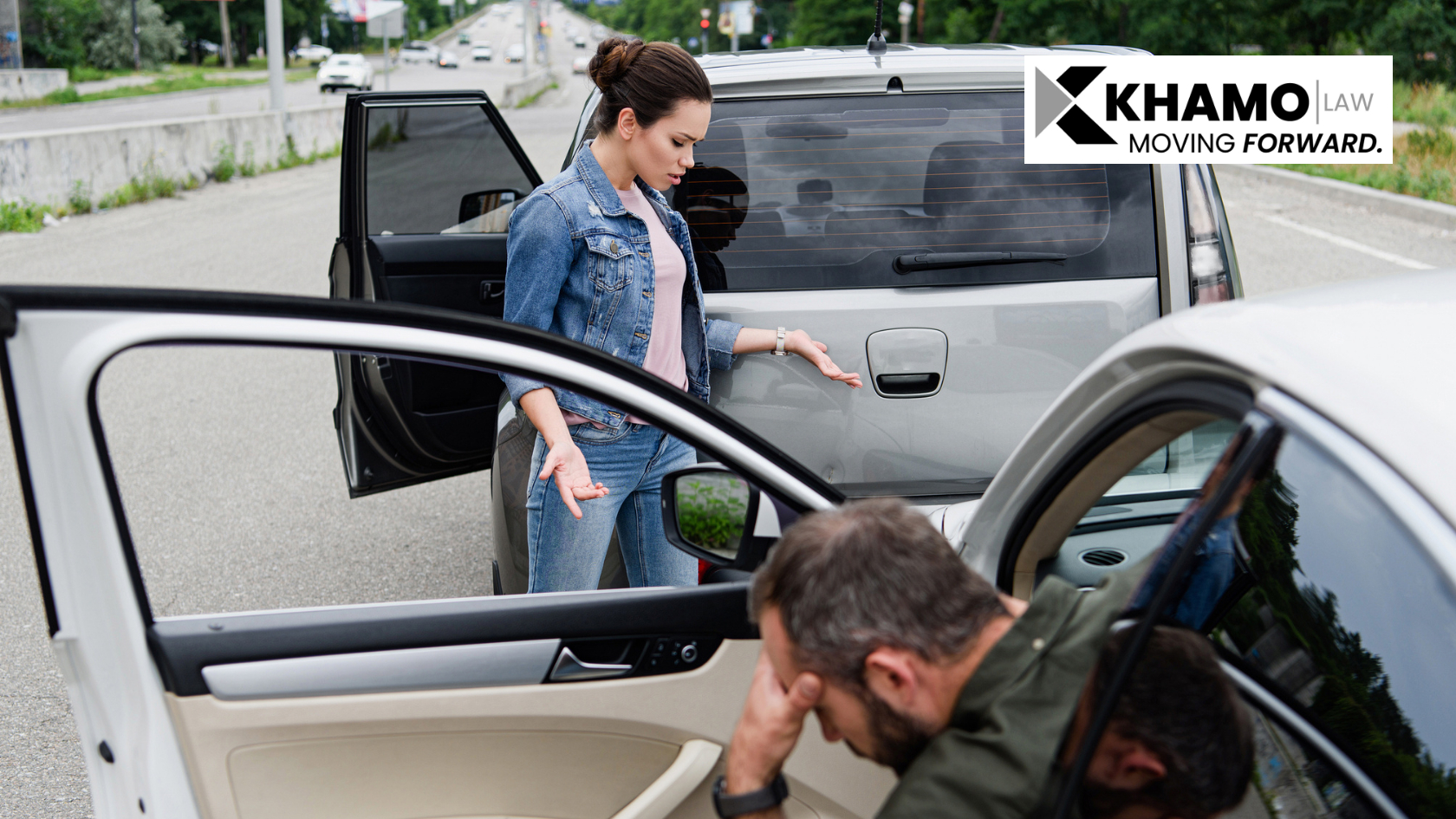
After a car accident, the drivers involved do not always agree about what happened. One driver may say you caused the crash even when you believe the evidence shows otherwise.
The other driver’s accusation does not automatically determine who was legally at fault.
Fault may ultimately depend on evidence such as photographs, video, witness statements, vehicle damage, police documentation, electronic vehicle data, traffic-control information, and the circumstances surrounding the collision.
If you were injured in a crash and another driver is blaming you, preserve the evidence you have and be careful about making assumptions or statements about fault before the accident has been investigated.
Khamo Law represents people injured in disputed-fault crashes throughout Michigan. For a broader explanation of Michigan accident claims, insurance issues, and compensation, visit our Michigan Car Accident Attorney resource.
Legally reviewed by Attorney Koro E. Khamo
Founder & Managing Attorney at Khamo Law
Michigan Bar No. P80994
Does the Other Driver Get to Decide Who Was at Fault?
No.
A driver can give their version of what happened, but saying that you caused the accident does not make that version correct.
Drivers involved in the same collision may remember events differently. In other cases, one driver may simply deny responsibility.
The available evidence may provide a much clearer picture of what occurred.
Depending on the crash, investigators may consider:
- Photographs of the vehicles and scene
- Dashcam footage
- Traffic or surveillance video
- Witness statements
- Vehicle damage
- Final resting positions of the vehicles
- Skid marks or debris
- Police documentation
- Traffic signals and signs
- Electronic vehicle data
- Cellphone evidence when legally obtainable
- Accident reconstruction in appropriate cases
The more seriously fault is disputed, the more important preserving objective evidence can become.
What Should I Do If the Other Driver Blames Me?
Try not to turn the accident scene into an argument about responsibility.
Instead, concentrate on safety, medical care, reporting the crash when appropriate, and documenting what happened.
When circumstances allow:
- Photograph the vehicles before they are moved.
- Take wider photographs showing the roadway and surrounding area.
- Photograph traffic signals, signs, lane markings, debris, and visible damage.
- Obtain names and contact information from witnesses.
- Preserve dashcam footage.
- Note nearby homes or businesses that may have cameras.
- Keep copies of insurance communications.
- Seek appropriate medical evaluation if you were injured.
- Write down what you remember while the events are still fresh.
Evidence can disappear quickly. Vehicles are repaired, video recordings can be overwritten, and witnesses may become difficult to locate.
What If Both Drivers Say the Other Person Caused the Accident?
This is common in disputed car accident claims.
Consider a collision in which one driver says:
“I had the green light.”
and the other driver says the same thing.
Simply comparing the two statements may not resolve the dispute.
Additional evidence could become important, including surveillance video, witnesses, traffic-signal information, photographs, vehicle damage patterns, or electronic data.
The same problem frequently arises in:
- Lane-change accidents
- Left-turn collisions
- Intersection crashes
- Freeway merging accidents
- Parking-lot collisions
- Multi-vehicle crashes
- Rear-end crashes involving disputed circumstances
A proper investigation looks beyond the drivers’ competing accounts.
What Evidence Can Help Prove Who Caused a Car Accident?
Different accidents produce different evidence.
Photographs
Pictures can document vehicle damage, road conditions, lane markings, debris, traffic signs, weather conditions, and vehicle positions.
Take both close-up and wide-angle photographs when it is safe to do so.
Dashcam Footage
Dashcam video may provide direct evidence of what occurred immediately before a collision.
If you have footage, preserve the original recording rather than editing or overwriting it.
Our guide to preserving dashcam footage after a Michigan car accident explains why these recordings can become important.
Surveillance Video
Businesses, homes, parking structures, gas stations, restaurants, hotels, and other properties near an accident may have cameras.
Video is not guaranteed to exist, and retention periods vary. Identifying possible sources promptly can therefore matter.
Witnesses
An independent witness who saw the collision may help resolve conflicting accounts.
Obtain contact information when possible rather than assuming the police report will contain every witness.
Vehicle Damage
The location and pattern of vehicle damage may help investigators evaluate the direction and nature of an impact.
Electronic Vehicle Information
Depending on the vehicle and circumstances, electronic information may provide evidence relevant to speed, braking, vehicle movement, or other aspects of a collision.
Accident Reconstruction
Not every crash requires an accident reconstruction professional.
Reconstruction may become useful in serious cases involving disputed speeds, multiple vehicles, catastrophic injuries, fatalities, or significant disagreements about how the collision occurred.
What If the Police Report Says I Was at Fault?
A police report can be an important piece of evidence, but the report should be reviewed together with the rest of the available evidence.
The investigating officer may document driver statements, witness information, observations from the scene, vehicle positions, citations, diagrams, or other information.
However, an officer may not have personally witnessed the collision.
If you believe information in a crash report is inaccurate, preserve the evidence supporting your version of events and discuss the circumstances with an attorney when appropriate.
Do not assume that an unfavorable statement or conclusion in a police report automatically ends your ability to pursue a claim.
What If the Other Driver’s Insurance Company Says I Was at Fault?
An insurance company’s fault determination is not necessarily the final word on what happened.
An insurer may investigate:
- Statements from the drivers
- Police documentation
- Photographs
- Vehicle damage
- Witness accounts
- Video
- Applicable traffic laws
- Other available evidence
If the other driver’s insurer denies responsibility, the evidence supporting that determination should be examined.
A liability dispute may sometimes change when additional evidence becomes available.
Should I Give the Other Driver’s Insurance Company a Recorded Statement?
Be careful about providing detailed recorded statements before understanding who is requesting the statement and why.
The other driver’s insurance company may ask questions about:
- How the crash happened
- Your speed
- Where you were looking
- When you first saw the other vehicle
- Whether you braked
- Your injuries
- Previous injuries or medical conditions
Small inconsistencies can later become points of dispute.
Our guide explaining why an insurance company may ask for a recorded statement discusses this issue in more detail.
Your obligations can also differ depending on whether the request comes from your own insurer or another driver’s insurer.
Can Both Drivers Be Partially at Fault in Michigan?
Yes.
Michigan law recognizes comparative fault in motor-vehicle injury cases.
That means responsibility does not necessarily have to be assigned entirely to one driver.
For example, evidence might show that one driver made an unsafe lane change while another driver was speeding. The specific facts would need to be evaluated to determine whether and how each driver’s conduct contributed to the collision.
Under Michigan’s motor-vehicle liability statute, damages subject to comparative fault are assessed according to the injured person’s percentage of fault. The statute also provides that a person who is more than 50% at fault may not recover noneconomic damages.
Because different categories of benefits and damages can involve different legal rules, a disputed-fault accident should be evaluated based on the particular claim involved.
Can I Still Recover If I Was Partially Responsible?
Potentially.
Being partially responsible for an accident does not automatically mean there is no claim.
The effect of comparative fault depends on the percentage of responsibility attributed to the injured person and the type of damages being pursued.
This is another reason not to assume that an insurance company’s initial statement such as “you were partially at fault” resolves the matter.
The evidence should determine the appropriate analysis.
Does Michigan No-Fault Insurance Still Apply When Fault Is Disputed?
Michigan’s No-Fault system is separate from the question of whether an injured person may also have a liability claim against another driver.
Personal Injury Protection coverage can provide qualifying benefits for medical care, recovery, rehabilitation, wage loss, replacement services, and other covered losses, depending on the applicable policy and eligibility rules. Michigan drivers can choose among different PIP medical coverage levels.
For a detailed explanation, visit our Michigan No-Fault Insurance Lawyer resource.
What If the Accident Happened While Changing Lanes?
Lane-change accidents frequently produce conflicting stories.
One driver may claim the other vehicle entered their lane. The other driver may say exactly the opposite.
Evidence that may become particularly important includes:
- Dashcam footage
- Side-impact damage
- Vehicle positions
- Witness statements
- Lane markings
- Nearby surveillance footage
- Electronic vehicle information
Freeway lane-change disputes can be especially complicated because vehicles may be traveling at highway speeds and multiple vehicles may be involved.
If the collision occurred on Interstate 75, our I-75 accident guide discusses freeway crashes and the evidence that may become important after them.
What If the Accident Happened at an Intersection?
Intersection accidents frequently involve disputes over traffic signals and right of way.
Questions may include:
- Which vehicle had the green light?
- Was someone turning left?
- Did a driver fail to yield?
- Did someone enter the intersection after the light changed?
- Was either vehicle speeding?
- Did a driver fail to stop?
Traffic cameras, business surveillance, witnesses, vehicle damage, and photographs may help clarify what occurred.
What If the Other Driver Says I Stopped Suddenly?
Rear-end collisions can also produce fault disputes.
A following driver may claim the vehicle ahead stopped unexpectedly, while the driver in front may say traffic conditions required the stop.
Investigators may consider traffic conditions, following distance, speed, distraction, roadway conditions, video, witnesses, and vehicle damage.
For more information about these collisions, see our Michigan Rear-End Collision Lawyer resource.
What If the Other Driver Lies About What Happened?
You do not necessarily need to prove that another driver intentionally lied in order to challenge their account of the collision.
The more important question is often whether the objective evidence supports their version.
If someone’s account conflicts with video, physical evidence, independent witnesses, or other reliable information, those inconsistencies may become important when liability is evaluated.
Focus on preserving evidence rather than trying to prove someone’s motive.
What If There Were No Witnesses?
A lack of independent witnesses does not necessarily make a claim impossible.
Other evidence may still exist.
Depending on the accident, investigators may examine:
- Vehicle damage
- Scene photographs
- Dashcam footage
- Nearby surveillance cameras
- Electronic vehicle data
- Roadway evidence
- Police observations
- Driver statements
- Accident reconstruction
Sometimes evidence that initially appears unavailable can be identified only after the surrounding area is investigated.
What If the Other Driver Changes Their Story?
Changing accounts can become relevant when determining the reliability of a person’s version of events.
Preserve any available documentation showing what was said, including information contained in police reports, insurance communications, witness statements, or other records.
The significance of an inconsistency depends on what changed and whether the change concerns an important issue in the accident.
What If the Other Driver Says I Was Speeding?
An allegation of speeding should be evaluated against the available evidence.
Depending on the circumstances, relevant information could include:
- Video
- Witness observations
- Vehicle electronic information
- Physical roadway evidence
- Vehicle damage
- Accident reconstruction
- Statements made after the collision
A driver’s accusation by itself does not establish the vehicle’s speed.
What If the Other Driver Says I Was Distracted?
The same principle applies.
If distraction becomes an important liability issue, evidence may include witness observations, video, cellphone information when legally obtainable, vehicle data, and the circumstances immediately before the crash.
Both sides of a disputed-fault accident may be investigated.
What Happens If Someone Sues Me After the Accident?
If you receive lawsuit papers arising from a car accident, do not ignore them.
Notify the appropriate insurance carrier promptly and follow applicable policy requirements.
Michigan auto policies include residual bodily injury and property damage liability coverage, which can provide coverage for defense costs and damages up to applicable policy limits in covered circumstances.
Because deadlines apply after a lawsuit is filed, obtaining appropriate legal guidance promptly is important.
What If I Was Injured Even Though the Other Driver Blames Me?
Do not let a fault dispute prevent you from addressing your health.
Seek appropriate medical evaluation and accurately describe your symptoms and how they developed.
Medical records can document:
- The injuries diagnosed
- Symptoms reported
- Treatment provided
- Work restrictions
- Physical limitations
- Future medical recommendations
Liability and injury are separate issues, and both may require supporting evidence.
How Khamo Law Investigates Disputed-Fault Accidents
When responsibility for a collision is contested, Khamo Law may investigate evidence beyond the competing statements of the drivers.
Depending on the circumstances, that can include:
- Reviewing police documentation
- Examining photographs and video
- Locating witnesses
- Investigating surveillance footage
- Preserving dashcam recordings
- Reviewing vehicle damage
- Evaluating electronic vehicle information
- Investigating insurance coverage
- Reviewing medical documentation
- Examining allegations of comparative fault
- Working with reconstruction professionals when appropriate
The objective is to determine what the available evidence actually shows about how the collision occurred.
Khamo Law represents people injured in disputed-fault accidents throughout Michigan, including crashes in Troy, Sterling Heights, Detroit, Warren, Southfield, Clinton Township, and other communities.
Frequently Asked Questions About Disputed Car Accident Fault
Does the other driver’s accusation make me legally responsible?
No. A driver’s statement is evidence of their version of events, but responsibility should be evaluated using all available evidence.
Can an insurance company decide I was at fault?
An insurance company can make a liability determination for purposes of handling a claim, but that determination can be disputed and does not necessarily resolve legal responsibility.
What if both insurance companies disagree about fault?
That can happen. Additional investigation, evidence, negotiations, or litigation may be necessary depending on the circumstances.
Can dashcam footage prove who caused the crash?
It can sometimes provide extremely useful evidence, but its significance depends on what the recording actually shows.
What if there is no video?
Photographs, witnesses, vehicle damage, police documentation, electronic data, roadway evidence, and other information may still help determine what occurred.
Should I admit that I might have been partially at fault?
Do not speculate about responsibility. Provide accurate factual information about what happened and allow the evidence to be evaluated.
Can I have a case if the police officer blamed me?
Potentially. Police documentation can be important, but it is not the only evidence that may be relevant to a liability determination.
Does Michigan No-Fault still apply if the other driver says I caused the accident?
Potentially. Michigan PIP benefits and a liability claim against another driver involve different legal issues. Eligibility and available benefits depend on the applicable policies and circumstances.
What if my crash happened in Troy?
Khamo Law maintains an office in Troy and represents people injured in accidents throughout the area. Our Troy Car Accident Lawyer page provides information specific to Troy crashes.
Talk With Khamo Law About a Disputed-Fault Accident
If another driver or insurance company is blaming you for a Michigan car accident, the available evidence should be reviewed before conclusions are drawn about responsibility.
Khamo Law can investigate the collision, evaluate available insurance coverage, preserve relevant evidence, document injuries and losses, and explain the legal options that may apply.
Call 248-466-0606 or contact Khamo Law online for a free consultation.
Khamo Law handles personal injury cases on a contingency-fee basis, meaning attorney fees are generally tied to obtaining a recovery rather than charged upfront.