







A slip and fall accident in Sterling Heights can cause serious injuries, including fractures, head injuries, spinal injuries, and other conditions that may require surgery, rehabilitation, and time away from work. These accidents can happen because of ice or snow, wet floors, broken pavement, unsafe stairs, damaged flooring, poor lighting, or other dangerous property conditions.
A Sterling Heights slip and fall lawyer at Khamo Law can investigate the accident, determine who owned or controlled the property, preserve surveillance footage and photographs, review maintenance and inspection records, identify witnesses, evaluate available insurance coverage, and pursue compensation when Michigan law allows.
Khamo Law has an office in Sterling Heights at:
36250 Dequindre Road
Suite 110
Sterling Heights, MI 48310
Call 248-466-0606 for a free consultation.
Slip-and-fall cases are one category of premises liability. For broader unsafe-property claims, visit our Sterling Heights Premises Liability Attorney page. For broader injury representation, visit Khamo Law’s Sterling Heights Personal Injury Lawyers page. For statewide information about slip-and-fall claims, dangerous property conditions, premises liability, and compensation under Michigan law, visit our Michigan Slip and Fall Lawyer resource.
Legally reviewed by Attorney Koro E. Khamo
Founder & Managing Attorney at Khamo Law
Michigan Bar No. P80994
How Can a Sterling Heights Slip and Fall Attorney Help?
Slip-and-fall claims often depend on evidence that can disappear quickly.
Khamo Law can help by:
- Investigating where and how the fall occurred
- Photographing or documenting the dangerous condition
- Determining who owned or controlled the area
- Seeking surveillance footage
- Identifying witnesses
- Obtaining incident reports
- Reviewing maintenance and inspection records
- Investigating snow-removal or cleaning responsibilities
- Reviewing contracts between property owners and contractors
- Evaluating available insurance
- Documenting medical treatment
- Calculating lost income and other losses
- Responding to comparative-fault arguments
- Negotiating with insurance companies
- Filing a lawsuit when appropriate
The existence of a fall alone does not establish liability. The surrounding condition, property-control relationships, and evidence matter.
Where Slip and Fall Accidents Can Happen in Sterling Heights
Falls can occur at many types of properties, including:
- Grocery stores
- Retail stores
- Shopping centers
- Restaurants
- Apartment complexes
- Office buildings
- Parking lots
- Parking structures
- Private homes
- Sidewalks
- Entryways
- Stairwells
- Other commercial or residential properties
Sterling Heights has extensive commercial and residential development, so slip-and-fall cases may involve businesses, landlords, property-management companies, maintenance contractors, or other parties depending on who controlled the area.
Common Causes of Slip and Fall Accidents in Sterling Heights
Potential hazards include:
- Ice
- Snow
- Wet floors
- Spilled liquids
- Leaking refrigeration equipment
- Broken concrete
- Uneven pavement
- Loose carpeting
- Torn flooring
- Defective stairs
- Missing handrails
- Unstable handrails
- Poor lighting
- Debris
- Cords in walking areas
- Unexpected floor-elevation changes
- Potholes or damaged parking surfaces
The presence of a hazard does not automatically prove negligence. The investigation must consider how the condition developed and what reasonable steps were taken or should have been taken.
Snow and Ice Falls in Sterling Heights
Winter slip-and-fall claims deserve particular attention in Sterling Heights.
The City of Sterling Heights currently requires property owners to remove snow and ice from sidewalks within 24 hours after a snowfall ends, including sidewalks along homes, businesses, major roads, and connector roads.
The City’s current sidewalk policy also states that property owners remain responsible for removing snow, ice, grass, debris, and other obstructions from sidewalks adjacent to their property.
Those local requirements provide useful evidence about local maintenance expectations, but a city ordinance violation does not automatically establish civil liability in every premises case. The actual property-control relationship, Michigan law, causation, comparative fault, and surrounding circumstances still matter.
For the broader statewide legal discussion, visit Khamo Law’s Michigan winter slip-and-fall liability guide.
Sterling Heights Sidewalk Conditions
Sterling Heights maintains a formal sidewalk policy addressing repair and replacement standards.
The City’s May 2025 sidewalk policy identifies conditions that may warrant repair or replacement, including certain vertical separations, cracking, deterioration, puddling, and other defects.
That does not mean every sidewalk defect creates a viable injury claim.
In a sidewalk case, questions may include:
- Who controlled the sidewalk
- Whether the defect existed at the time
- Whether photographs or measurements exist
- Whether the City had inspected the condition
- Whether another property owner or entity had maintenance responsibilities
- Whether special governmental rules or notice requirements apply
Claims involving public property can require a different legal analysis from ordinary private-property slip-and-fall claims.
Wet Floor Accidents
Falls inside stores, restaurants, and other businesses can involve:
- Spilled liquids
- Recently mopped floors
- Leaking equipment
- Tracked-in water
- Snow or slush near entrances
- Cleaning products
- Other slippery substances
Potential evidence may include:
- Surveillance footage
- Cleaning logs
- Employee testimony
- Incident reports
- Photographs
- Witness statements
- Inspection procedures
One important question may be how the condition arose and what the property possessor reasonably did about it.
Falls on Broken or Uneven Pavement
Outdoor falls may involve:
- Cracked sidewalks
- Uneven slabs
- Parking-lot defects
- Potholes
- Damaged curbs
- Unexpected height changes
When it is safe to do so, photographs showing the condition from multiple angles can be useful.
Measurements may also become relevant in some cases.
Stair and Handrail Falls
Stair accidents can involve:
- Broken steps
- Loose steps
- Uneven stair dimensions
- Missing handrails
- Loose handrails
- Poor lighting
- Debris
- Snow or ice
- Damaged flooring
Evidence can include photographs, video, measurements, maintenance records, inspection information, and witness statements.
Michigan Slip and Fall Law Changed in 2023
Michigan’s premises-liability framework changed substantially after the Michigan Supreme Court’s decision in Kandil-Elsayed v F & E Oil, Inc.
Before that decision, the open-and-obvious doctrine was frequently treated as a threshold duty rule that could end many cases early.
The Michigan Supreme Court rejected that framework. Whether a condition is open and obvious no longer automatically eliminates the land possessor’s duty. Obviousness can still matter when evaluating breach and comparative fault.
For the deeper statewide explanation, visit our Michigan Slip and Fall Lawyer and Michigan Premises Liability Laws resources.
What If the Hazard Was Open and Obvious?
An obvious hazard does not automatically mean there is no potential claim under Michigan’s current premises-liability framework.
The analysis can include:
- The nature of the condition
- What the property possessor knew or should reasonably have done
- Whether reasonable care was used
- Whether the injured person noticed or should have noticed the condition
- Whether the injured person’s conduct contributed to the fall
These issues should be evaluated from the complete facts rather than relying on outdated statements that an obvious condition automatically defeats a case.
Who May Be Responsible for a Slip and Fall?
Depending on the property and condition, potentially responsible parties may include:
- A property owner
- A property possessor
- A commercial tenant
- A landlord
- A property-management company
- A maintenance contractor
- A cleaning contractor
- A snow-removal contractor
- Another party with legally relevant control over the condition
Ownership does not necessarily answer the entire question.
The investigation should determine who possessed, controlled, inspected, maintained, or created the condition.
Why Property Control Matters
Different companies may control different portions of the same property.
For example:
- A retailer may control the inside of a leased store
- A landlord may control common hallways
- A property manager may oversee the parking lot
- A snow-removal contractor may maintain exterior walkways
- A separate company may provide janitorial services
Contracts, leases, maintenance agreements, and business records may help clarify these relationships.
Evidence That May Matter After a Fall
Useful evidence can include:
- Photographs of the hazard
- Photographs of the surrounding area
- Surveillance footage
- Witness contact information
- Incident reports
- Maintenance records
- Inspection logs
- Cleaning records
- Snow-removal records
- Weather records
- Contracts
- Lease documents
- Medical records
- Medical bills
- Employment and wage records
- Insurance correspondence
The most important evidence depends on how and where the fall happened.
Why You Should Photograph the Condition
Many slip-and-fall hazards are temporary.
A wet floor can be cleaned.
Ice can melt.
Snow can be removed.
A broken slab can be repaired.
A warning sign can be moved.
Photographs taken close in time to the fall may help establish what existed before the condition changed.
Medical treatment should never be delayed solely for the purpose of taking photographs.
Surveillance Video
Video can be especially important at:
- Retail stores
- Grocery stores
- Apartment buildings
- Restaurants
- Parking structures
- Office properties
- Commercial entrances
Video may show:
- How long a condition existed
- Whether employees inspected the area
- Whether warning signs were present
- How the fall happened
- What occurred immediately afterward
Businesses may overwrite video under routine retention systems, which makes early preservation particularly important.
Incident Reports
If a fall occurs at a business or managed property, report the incident when appropriate.
An incident report may help document:
- Date and time
- Location
- Employees involved
- Witnesses
- How the event was initially described
Ask for a copy when possible, but do not assume the business will automatically provide one.
Common Slip and Fall Injuries
Falls can cause:
- Hip fractures
- Wrist fractures
- Arm injuries
- Shoulder injuries
- Knee injuries
- Ankle injuries
- Head injuries
- Traumatic brain injuries
- Back injuries
- Spinal injuries
- Nerve damage
- Scarring
- Permanent impairment
Older adults and people with certain medical conditions can face particularly serious consequences from falls, but injury severity varies substantially from one person to another.
For serious neurological injuries, visit our Sterling Heights Brain Injury Attorney and Sterling Heights Spinal Cord Injury Attorney pages.
Comparative Fault in a Slip and Fall Case
Property owners and insurers may argue that the injured person:
- Was distracted
- Ignored a warning
- Chose an unsafe route
- Was not watching where they were walking
- Should have noticed the hazard
Michigan comparative-fault principles may affect damages depending on the circumstances.
The key is to evaluate those arguments against the actual condition, warnings, lighting, visibility, and other evidence rather than assuming the injured person is automatically responsible.
What Compensation May Be Available After a Slip and Fall in Michigan?
Depending on the claim and evidence, legally recoverable damages may include:
- Medical expenses
- Future medical care
- Rehabilitation
- Lost wages
- Reduced earning capacity
- Pain and suffering
- Disability
- Scarring
- Loss of normal activities
- Other legally recoverable losses
There is no standard settlement amount for a Sterling Heights slip-and-fall case.
Value depends on liability evidence, injuries, treatment, future needs, employment effects, insurance coverage, and other case-specific circumstances.
Insurance Issues
Slip-and-fall claims may involve:
- Commercial liability insurance
- Homeowner insurance
- Property-management coverage
- Contractor insurance
- Other applicable liability policies
The insurer may dispute:
- Responsibility
- Notice
- What condition existed
- Causation
- Injury severity
- Medical treatment
- Comparative fault
- Damages
The actual policies and facts should be reviewed.
What Should You Do After a Slip and Fall in Sterling Heights?
Your health comes first.
When circumstances allow:
- Seek appropriate medical attention.
- Report the fall to the property owner, manager, or business.
- Photograph the hazard.
- Photograph the surrounding area.
- Identify witnesses.
- Note surveillance cameras.
- Ask for an incident report when appropriate.
- Preserve your footwear and damaged clothing.
- Keep medical records and bills.
- Save insurance communications.
- Document missed work.
- Avoid signing releases or settlement agreements you do not understand.
Do not put yourself at additional risk while gathering evidence.
Local Sterling Heights Snow and Sidewalk Resources
Sterling Heights provides unusually useful local information for winter and sidewalk cases.
The City’s Snow-Related Policies state that property owners must remove snow and ice from sidewalks within 24 hours after snowfall ends.
The City’s Sidewalk Policy describes maintenance responsibility and specific sidewalk conditions the City evaluates for repair or replacement.
These resources can help identify relevant local standards and records, but they should not be presented as automatically proving liability in a civil lawsuit.
How Long Do You Have to File a Slip and Fall Lawsuit?
Michigan law generally provides a three-year limitations period for actions seeking damages for personal injury, subject to exceptions and other statutory rules. MCL 600.5805 contains the current general rule.
Different issues can arise when a governmental entity or other special defendant is involved, so the applicable deadline should be determined from the specific claim.
Evidence can also disappear long before the filing deadline.
Why Choose Khamo Law After a Sterling Heights Slip and Fall?
Slip-and-fall cases can involve changing property conditions, surveillance footage, snow-removal records, maintenance agreements, property-control disputes, comparative-fault allegations, insurance issues, and serious injuries.
Khamo Law can investigate:
- What caused the fall
- Who controlled the property
- Whether photographs or video exist
- Whether maintenance or inspection records exist
- Whether contractors were involved
- What insurance coverage may apply
- How the injuries affect work and daily life
- What losses should be documented
Khamo Law has an office in Sterling Heights at:
36250 Dequindre Road
Suite 110
Sterling Heights, MI 48310
By Appointment
Personal-injury matters are handled on a contingency-fee basis.
Call 248-466-0606 for a free consultation.
Frequently Asked Questions About Sterling Heights Slip and Fall Claims
Does an open and obvious hazard automatically defeat my case?
No. Michigan’s Supreme Court changed the former open-and-obvious framework in Kandil-Elsayed. Obviousness can still matter to breach and comparative fault, but it is no longer the former automatic duty bar.
Can I have a claim if I slipped on ice?
Potentially. Snow-and-ice liability depends on the property, condition, responsible parties, maintenance, and surrounding circumstances.
Does Sterling Heights require sidewalks to be cleared?
Yes. The City states that property owners must remove snow and ice from sidewalks within 24 hours after snowfall ends.
What if I slipped and fell inside a store in Sterling Heights?
Potential evidence may include surveillance footage, inspection and cleaning records, incident reports, photographs, employee testimony, and witnesses.
What if the business had a wet-floor sign?
A warning sign can be relevant, but it does not automatically resolve the case. Its location, visibility, timing, the hazard, and the circumstances still matter.
What if I fell at an apartment complex?
Responsibility can depend on whether the landlord, tenant, property manager, contractor, or another party controlled the area where the fall occurred.
Should I keep my shoes?
Yes. When possible, preserve the footwear you were using at the time because its condition may later become relevant.
Can I recover lost wages?
Potentially. Lost income supported by appropriate records can be part of recoverable damages in an appropriate case.
How long do I have to file?
Michigan generally provides three years for many personal-injury actions, but exceptions and different rules can apply.
How much does Khamo Law charge?
Khamo Law handles personal-injury cases on a contingency-fee basis. Attorney fees depend on obtaining a recovery rather than hourly billing during the case.
Speak With a Sterling Heights Slip and Fall Lawyer
If you were seriously injured because of ice, snow, a wet floor, broken pavement, unsafe stairs, or another hazardous walking surface in Sterling Heights, Khamo Law can investigate the condition, identify potentially responsible parties, preserve evidence, evaluate insurance coverage, and pursue compensation supported by Michigan law and the facts.
Call 248-466-0606 or contact Khamo Law online for a free consultation.
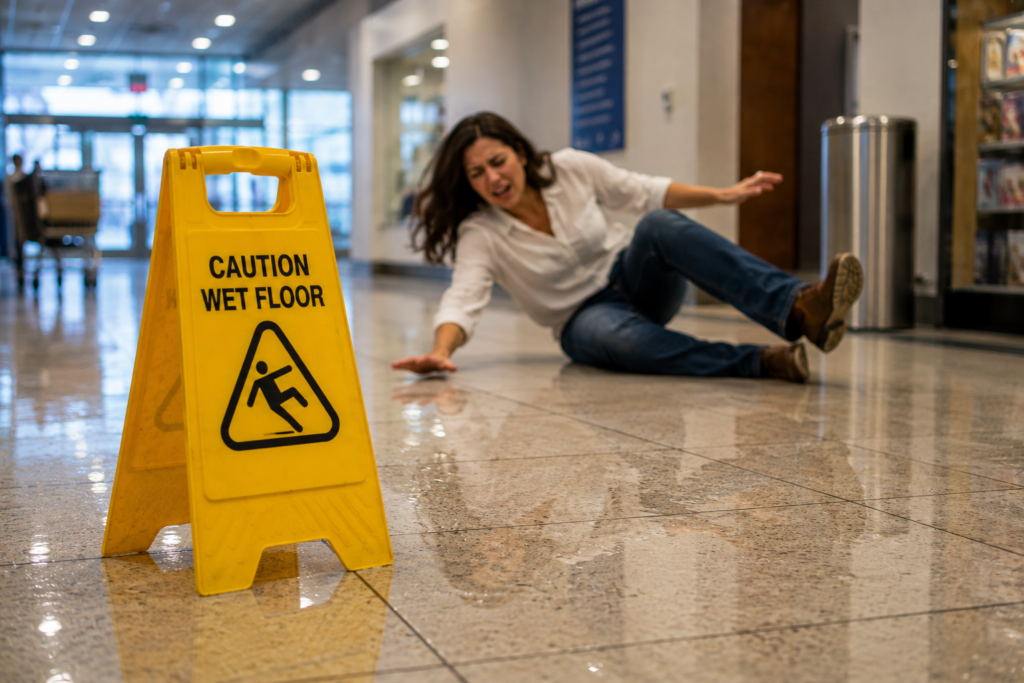
Wet floors and other unsafe walking surfaces can cause serious slip and fall injuries in Sterling Heights businesses and public properties.