


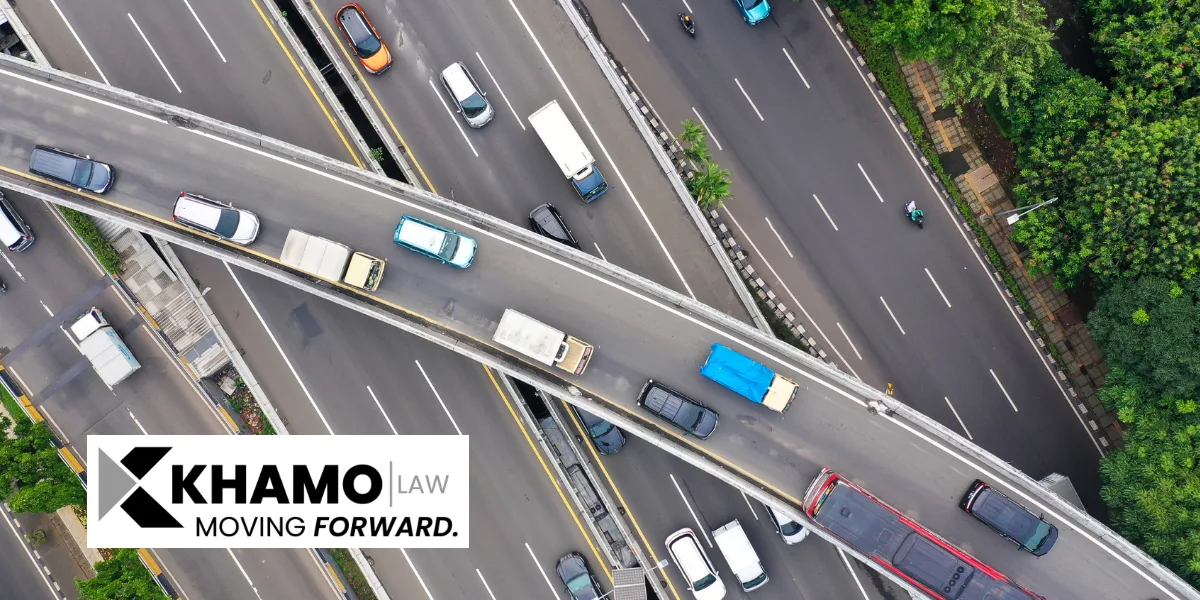
Troy is crossed by major roads including Big Beaver Road, Rochester Road, Crooks Road, Maple Road, Livernois Road, Long Lake Road, Coolidge Highway, Dequindre Road, and I-75. The combination of freeway traffic, busy intersections, commercial driveways, shopping areas, offices, and daily commuter traffic creates many different situations in which collisions can occur.
Understanding the type of crash and where it happened can be important after an accident. Intersection design, traffic signals, turning movements, vehicle speeds, witnesses, nearby businesses, and available video evidence can all affect how fault is investigated.
If you were injured in a collision, Khamo Law’s Troy car accident lawyers can investigate the crash, evaluate available insurance coverage, and explain your rights under Michigan law.
What Types of Car Accidents Commonly Occur in Troy?
No two crashes are identical, but several collision patterns regularly arise on busy suburban roads and freeways.
These include:
- Rear-end collisions
- Left-turn accidents
- Intersection crashes
- Side-impact collisions
- Lane-change accidents
- Freeway and merging crashes
- Multi-vehicle collisions
- Distracted-driving crashes
- Hit-and-run accidents
- Pedestrian and bicycle collisions
The type of collision can provide clues about what evidence may be important, but it does not automatically determine who was legally at fault.
Rear-End Accidents
Rear-end collisions frequently occur when traffic slows suddenly or a driver does not leave enough space to stop safely.
In Troy, this type of crash can occur in:
- Congested traffic
- Approaches to traffic signals
- Freeway backups
- Construction zones
- Commercial corridors
- Stop-and-go traffic near freeway ramps
Although the rear driver may often be suspected of causing the collision, liability should still be evaluated based on the specific circumstances.
Vehicle damage, witness statements, photographs, video footage, and other evidence can help establish what happened.
Left-Turn Accidents
Left-turn collisions can cause significant injuries because one vehicle may strike the side of another.
These crashes may involve disputes about:
- Which vehicle had the right of way
- Whether a protected turn arrow was displayed
- Vehicle speed
- Whether the turning driver could safely complete the turn
- Whether another driver entered the intersection after the signal changed
When drivers give conflicting accounts, independent evidence becomes particularly valuable.
Intersection Accidents in Troy
Troy has numerous multi-lane intersections where vehicles may be traveling straight, turning, changing lanes, or entering from nearby commercial properties.
Intersection crashes can involve:
- Red-light disputes
- Failure to yield
- Left turns
- Right turns
- Rear-end impacts
- Side-impact collisions
- Pedestrian crossings
- Multiple vehicles
After an intersection collision, document the exact location rather than simply writing down the nearest road.
The direction each vehicle was traveling, lane position, traffic-control devices, and location of impact can all matter.
Troy Roads Where Crash Evidence May Be Especially Important
Busy Troy corridors include:
- Big Beaver Road
- Rochester Road
- Crooks Road
- Maple Road
- Livernois Road
- Long Lake Road
- Coolidge Highway
- Dequindre Road
- I-75
These roads contain different traffic environments.
Big Beaver, for example, combines major intersections with commercial properties, restaurants, offices, hotels, shopping destinations, and access to I-75.
I-75 involves higher-speed freeway traffic, merging, lane changes, commercial trucks, entrance and exit ramps, and the possibility of chain-reaction crashes.
Our guide to car accidents on Big Beaver Road and I-75 in Troy takes a closer look at evidence and insurance issues that can arise in that specific corridor.
I-75 and Freeway Accidents
Freeway collisions often involve different dynamics from surface-street accidents.
Potential causes and contributing factors include:
- Following too closely
- Unsafe lane changes
- Improper merging
- Sudden traffic slowdowns
- Distracted driving
- Speed
- Work zones
- Commercial vehicles
- Road conditions
- Multiple impacts
A crash involving three or more vehicles can make liability particularly complicated.
The driver who ultimately strikes your vehicle may not necessarily have caused the initial collision.
Determining the sequence may require photographs, witness statements, dashcam footage, vehicle damage, police documentation, or other evidence.
Lane-Change and Merging Accidents
Troy drivers frequently encounter merging and lane changes around I-75 and major multi-lane roads.
These crashes can involve disputes over:
- Blind spots
- Turn-signal use
- Lane position
- Speed
- Whether enough space existed to merge
- Which vehicle entered the other’s lane
When the drivers disagree about what occurred, physical and video evidence may become especially important.
Distracted-Driving Accidents
Driver distraction can take many forms.
Examples include:
- Texting
- Looking at a cellphone
- Using navigation
- Adjusting vehicle controls
- Eating
- Interacting with passengers
- Looking away from traffic
Michigan law restricts certain uses of mobile electronic devices while driving.
However, proving distraction in an individual injury case requires evidence. It should not simply be assumed because a collision occurred.
Hit-and-Run Accidents
A driver who leaves the scene creates an immediate challenge: identifying the vehicle and preserving evidence.
After a Troy hit-and-run, useful information may include:
- Full or partial license plate
- Vehicle make and model
- Color
- Direction of travel
- Visible damage
- Witness information
- Dashcam footage
- Nearby surveillance footage
If the driver cannot be identified, insurance issues such as Personal Injury Protection and potentially uninsured motorist coverage may become important.
Our guide explains what to do after a hit-and-run accident in Troy, Michigan and the evidence you should consider preserving.
Can Troy Businesses Have Video of a Car Accident?
Potentially.
Troy contains extensive commercial development, particularly along corridors such as Big Beaver Road.
Depending on the exact crash location, potential video sources could include:
- Storefront surveillance cameras
- Gas-station cameras
- Office-building security systems
- Parking-lot cameras
- Hotel cameras
- Residential security cameras
- Doorbell cameras
- Dashcams from other motorists
Not every camera captures the roadway, and retention periods vary.
Identifying possible video sources soon after a collision can therefore be important.
Why Dashcam Footage Can Matter
Dashcam video may show:
- Traffic signals
- Vehicle positions
- Lane changes
- Sudden braking
- A fleeing vehicle
- Road conditions
- Events immediately before impact
If you have dashcam footage, preserve the original recording and avoid editing or overwriting it.
Read our guide to preserving dashcam footage after a Michigan car accident for additional information.
Weather-Related Car Accidents in Troy
Michigan weather can change driving conditions quickly.
Snow, ice, rain, reduced visibility, and freezing temperatures can make stopping and maneuvering more difficult.
Bad weather does not automatically eliminate driver responsibility.
Motorists still have a duty to operate their vehicles with reasonable care under the circumstances.
Evidence after a weather-related collision may include:
- Photographs of the roadway
- Weather conditions
- Vehicle damage
- Witness statements
- Video
- Police documentation
- Road-treatment or maintenance information when relevant
Construction-Zone Accidents
Road and freeway construction can change familiar traffic patterns.
Temporary lane shifts, reduced lanes, merging traffic, construction vehicles, barriers, and congestion may contribute to collisions.
If a crash occurs in a construction zone, photographs of the roadway layout can be especially valuable because the configuration may later change.
What Should You Do After a Troy Car Accident?
After a collision, prioritize safety and medical needs.
When circumstances allow:
- Move away from immediate danger.
- Report the crash when required and request emergency assistance when necessary.
- Seek appropriate medical attention.
- Photograph the vehicles and accident scene.
- Obtain witness contact information.
- Preserve dashcam or other video.
- Identify nearby businesses or properties that may have surveillance footage.
- Keep insurance, medical, repair, and employment records related to the crash.
Do not put yourself in danger attempting to collect evidence on an active roadway.
How Is Fault Determined After a Troy Car Accident?
Fault depends on the facts of the individual collision.
Evidence may include:
- Police reports
- Driver statements
- Witness testimony
- Photographs
- Dashcam footage
- Surveillance video
- Vehicle damage
- Traffic signals and signs
- Electronic vehicle information
- Accident reconstruction evidence
Michigan’s comparative-fault rules can also affect certain damages.
An insurance company’s initial fault determination does not necessarily resolve the legal issue.
What If an Insurance Adjuster Contacts You?
Insurance adjusters may contact drivers soon after a collision.
Before providing detailed statements or signing documents, determine which insurance company the adjuster represents and what type of claim is being investigated.
Your obligations to your own insurer may differ from your relationship with another driver’s liability insurer.
Read our guide to handling insurance adjusters after a Troy car accident for a more detailed explanation.
Who Pays Medical Bills After a Troy Car Accident?
Michigan’s No-Fault system provides Personal Injury Protection benefits for qualifying motor-vehicle injuries.
Depending on the applicable insurance policy, statutory rules, and coverage selected, PIP benefits may include qualifying medical expenses, work-loss benefits, replacement services, and other allowable benefits.
The appropriate insurer depends on Michigan’s statutory priority rules and the circumstances.
Our Michigan No-Fault insurance lawyer resource explains these benefits in greater detail.
Can You Recover Compensation Beyond No-Fault Benefits?
Potentially.
Michigan distinguishes PIP benefits from liability claims against an at-fault driver.
Depending on the circumstances, damages in a liability claim may include qualifying economic losses and noneconomic damages such as pain and suffering.
Michigan law imposes specific requirements for recovering noneconomic damages after a motor-vehicle accident.
For a complete overview of car accident claims, insurance issues, damages, and Michigan law, visit our Troy car accident lawyer page.
How Long Do You Have to Bring a Claim?
Different deadlines can apply to different parts of a Michigan car accident case.
For example, the limitations period for a personal injury lawsuit is not necessarily the same as deadlines or notice requirements involving PIP benefits or contractual uninsured motorist coverage.
Waiting can also create a practical problem even before a legal deadline expires because witnesses become harder to locate and video or other evidence may disappear.
Car accidents make up only one part of Khamo Law’s injury practice in Troy. The firm also represents people injured in truck and motorcycle collisions, pedestrian and bicycle crashes, unsafe-property incidents, dog attacks, and other accidents caused by negligence. Our Troy personal injury lawyers explain the broader types of claims available to injured people and how damages, insurance, and evidence can differ depending on the accident.
Frequently Asked Questions About Troy Car Accidents
What are some of the busiest roads in Troy?
Major Troy corridors include Big Beaver Road, Rochester Road, Crooks Road, Maple Road, Livernois Road, Long Lake Road, Coolidge Highway, Dequindre Road, and I-75.
Are rear-end drivers always at fault in Michigan?
Liability should be evaluated based on the facts and applicable Michigan law. A rear-end collision may create important legal issues regarding the conduct of the following driver, but it is better to examine the evidence than assume every crash is identical.
What if both drivers say they had a green light?
Independent evidence becomes particularly important in disputed intersection crashes. Witnesses, video, photographs, vehicle damage, and other information may help establish what occurred.
Can surveillance footage prove who caused my accident?
It can potentially provide valuable evidence, but usefulness depends on what the camera captured and the quality of the recording.
What if my crash involved several vehicles?
Multi-vehicle collisions may require determining the sequence of impacts and whether more than one driver contributed to the crash.
Does Michigan No-Fault mean nobody is considered at fault?
No. Michigan No-Fault provides certain first-party benefits without requiring proof that another driver caused the collision, but fault can still be important for liability claims and other issues.
What if the other driver leaves?
Report the hit-and-run, preserve identifying information and evidence, and review applicable insurance coverage. Uninsured motorist coverage may become important depending on the policy.
Talk With a Troy Car Accident Lawyer
The type and location of a Troy collision can affect the evidence available, the insurance issues involved, and how liability is investigated.
Khamo Law Accident & Injury Lawyers maintains an office at 1120 E. Long Lake Road, Suite 250, Troy, MI 48085. Our attorneys bring more than 40 years of combined legal experience to personal injury matters and have recovered more than $40 million for clients.
If you were injured in a car accident in Troy, contact Khamo Law for a free consultation.
Call 248-466-0606 or learn more about how our Troy car accident lawyers can help.