






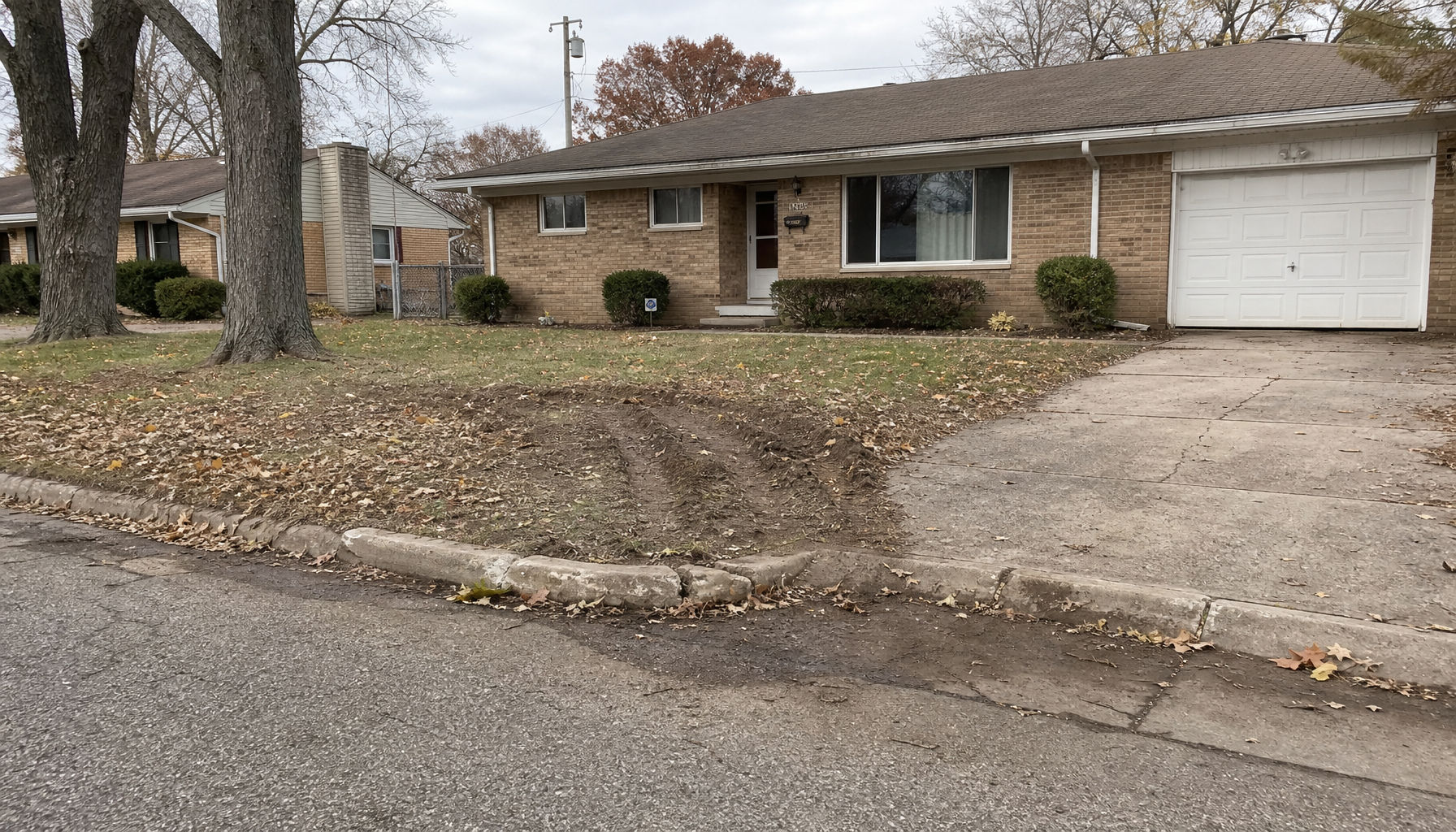
When a car crashes into a home, the damage doesn’t stop at the wall. As reported by NewsBreak, a car smashed into a Warren home just hours before a scheduled real estate closing — leaving the buyers in legal and financial limbo. If you’re in a similar situation, your first step is filing a car accident property damage claim against the at-fault driver’s auto liability insurance. But when a home sale is in the middle of it, the picture gets more complicated fast.
Our Warren car accident attorney team at Khamo Law, PLLC has handled vehicle-into-structure cases in Macomb County, and we know how quickly these situations spiral — especially when real estate contracts, home insurance policies, and auto liability coverage are all pointing at each other. If you need a broader overview of how Michigan handles these claims, our Michigan car accident attorney page covers the full picture.
Here’s who is responsible, what insurance actually applies, and what you should do right now.
Who Is Liable When a Car Crashes Into a Home?
The at-fault driver is liable. That’s the starting point. When a vehicle leaves the road and hits a structure, the driver’s bodily injury and property damage liability coverage — required under Michigan law — is what pays for repairs to the building. This is true whether the property is a rental, a home for sale, or a home that just closed an hour earlier.
Michigan requires drivers to carry a minimum of $10,000 in property damage liability coverage under MCL 257.520. In practice, that limit is dangerously low. A car driving through a living room wall can easily cause $30,000, $50,000, or more in structural damage. If the driver’s policy limit doesn’t cover the full repair cost, the injured party may need to pursue the driver personally — or turn to other coverage sources.
That’s where it gets complicated for buyers and sellers.
What Happens to the Real Estate Sale?
In a typical purchase agreement, risk of loss before closing sits with the seller. Michigan follows that general rule: if the property is damaged before the deed transfers, the seller usually bears that risk unless the contract says otherwise. So when a car hit that Warren home hours before closing, the seller — not the buyers — was holding the bag at the moment of impact.
But here’s the practical problem. The buyers had likely already arranged financing, scheduled a move, and given notice at their current address. The sale freezing doesn’t make their lives freeze with it.
Depending on the purchase contract’s specific language, the buyers may have the right to:
- Cancel the contract and recover their earnest money
- Delay closing until repairs are completed
- Negotiate a price reduction that reflects the damage and the uncertainty
None of these options are automatic. They depend on what the contract actually says and what both parties agree to. A real estate attorney should review the contract — and an auto accident attorney should be involved if you’re the one filing the car accident property damage claim to recover repair costs.
Which Insurance Policy Actually Pays?
This is where people get confused, and insurance companies count on that confusion.
Three policies could potentially be in play:
- The at-fault driver’s liability insurance — this is the primary source for property damage. It covers physical damage to the home caused by the crash.
- The homeowner’s insurance (seller’s policy) — if the seller has a homeowners policy, they may file a claim there and let their insurer pursue the driver’s insurer through subrogation. This can speed up repairs while the liability fight plays out in the background.
- The buyer’s homeowners policy — generally, the buyer’s policy doesn’t attach until they own the property. If the deed hasn’t transferred, their policy almost certainly doesn’t apply.
According to the Insurance Information Institute, when a vehicle strikes a home, the driver’s auto liability coverage is the correct first source — not the homeowner’s policy. Filing on your homeowner’s policy when someone else caused the damage can affect your rates unnecessarily.
The Car Accident Property Damage Claim Process
Filing a car accident property damage claim for a vehicle-into-structure incident follows a similar path to any auto accident claim, with a few extra steps.
- Call the police — a police report documents the incident, identifies the driver, and establishes the basic facts. Get the report number.
- Photograph everything — the damage, the vehicle’s final resting position, the tire tracks, the point of entry. Do this before any cleanup.
- Get the driver’s insurance information — name, insurer, policy number. If the driver fled, hit-and-run situations in Warren trigger different coverage rules.
- Notify both insurance carriers — the driver’s insurer and the homeowner’s insurer. You don’t have to commit to one path yet.
- Get a structural inspection — not just a contractor estimate. A structural engineer may be needed if the vehicle hit a load-bearing wall.
- Don’t accept a quick settlement — adjusters often make fast, low offers before the full scope of damage is clear. Structural repairs can reveal problems that weren’t visible on day one.
Michigan’s statute of limitations for property damage claims is three years under MCL 600.5805. You have time to do this right. Don’t let an insurer pressure you into signing a release before the dust has settled — literally.
What About the Buyers’ Losses?
The buyers in the Warren case weren’t hurt physically, but they absorbed real costs: time off work, moving truck reservations, potential lease penalties at their current place, and the emotional toll of watching a major purchase fall apart overnight.
Some of those costs may be recoverable. Others won’t be. It depends on:
- Whether the purchase contract entitles them to damages if the seller can’t deliver the property as agreed
- Whether the at-fault driver’s liability policy covers consequential losses beyond the bricks and drywall
- Whether anyone — seller, driver, insurer — acted in bad faith during the claims process
These aren’t questions you can answer by reading your contract alone. If you were a buyer whose closing collapsed because of someone else’s crash, talking to an attorney costs you nothing at Khamo Law, PLLC — and it may be the only way to know what you’re actually owed.
For a broader look at your rights after a car crash in Warren, including how Michigan’s no-fault rules interact with property damage, that post is worth reading alongside this one.
Why Warren Sees These Crashes More Than You’d Think
Warren’s residential streets sit close to high-traffic corridors. Mound Road, Van Dyke, and 8 Mile see heavy commercial and residential traffic mixing — and when a driver loses control, momentum carries a vehicle far. The intersection area around 11 Mile and Van Dyke is one that our team knows well from cases. Homes near corner lots or close to those corridors are particularly exposed.
According to NHTSA crash data, fixed-object crashes — which include buildings — account for roughly 18% of all fatal motor vehicle crashes nationally. The vast majority of vehicle-into-structure incidents aren’t fatal, but they cause significant structural and financial damage that can take months to fully assess.
What Distracted Driving Has to Do With It
Many vehicle-into-structure crashes trace back to a driver who was on their phone, adjusting something, or simply not watching the road. Michigan’s distracted driving laws impose real penalties and, more relevant to civil cases, establish negligence almost automatically when a driver was texting or using a handheld device. Our post on distracted driving and Michigan personal injury cases explains how that evidence gets used.
If the driver in your case was on their phone, that fact strengthens your car accident property damage claim and may open the door to additional damages.
If You’re Approached by an Insurance Adjuster
Adjusters are professionals. Their job is to close claims efficiently — which usually means settling for less than the full value. Before you sign anything, read this post about speaking to an attorney before signing. It was written with Arabic-speaking and Chaldean clients in mind, but the advice applies to everyone: do not release your claims until you know what they’re worth.
Frequently Asked Questions
Can I file a car accident property damage claim if I wasn’t hurt — only my property was damaged?
Yes. Property damage and personal injury are separate claims. You don’t need to be physically injured to pursue a car accident property damage claim against the at-fault driver’s liability insurance. Michigan requires drivers to carry property damage liability coverage specifically for situations like this.
What if the driver who hit the house didn’t have insurance?
If the driver was uninsured, your options shift. The homeowner’s policy may provide coverage under a catch-all provision, and Michigan has an assigned claims process through the Michigan Assigned Claims Plan for certain uninsured situations. An attorney can identify every available source of recovery.
Does the seller have to fix the home before closing, or can they sell it as-is after a crash?
This depends entirely on the purchase agreement. Most standard Michigan purchase contracts give the buyer the right to cancel if the property is materially damaged before closing. The seller can’t simply hand over a damaged home and demand the buyer close at the original price without the buyer’s agreement.
How long do I have to file a property damage claim in Michigan?
Three years from the date of the crash, under MCL 600.5805. That said, waiting costs you. Evidence disappears, witnesses forget details, and insurance companies become harder to deal with as time passes. Start the process as soon as the immediate situation is stable.
The insurance adjuster already called me with a settlement offer. Should I take it?
Not without getting an independent estimate first. Early offers are almost always based on surface-level damage assessments. Structural damage from a vehicle strike can be significantly worse than it looks in the first 48 hours. Once you sign a release, you can’t go back for more.
What if the crash also injured someone inside the home?
Personal injury and property damage follow different tracks in Michigan. Injury claims go through the at-fault driver’s bodily injury liability coverage, and Michigan’s no-fault threshold under MCL 500.3135 determines whether the injured person can sue for non-economic damages like pain and suffering. A car accident property damage claim for the building itself is handled separately. If both happened, you need an attorney sorting out both tracks simultaneously.
If a car crashed into your home — or a home you were about to buy — talk to us before you sign anything. Khamo Law, PLLC offers a free consultation with no obligation. Call 248-466-0606 or reach out through our contact form. We serve Warren, Sterling Heights, Troy, Detroit, and communities throughout Macomb and Wayne counties. نتكلم العربي والكلداني — إذا كنت تفضل التحدث بالعربية أو الكلدانية، فريقنا جاهز لمساعدتك.