






When a drunk driver causes a fatal crash in Michigan, the surviving family has two separate legal paths: a criminal case handled by the state, and a civil wrongful death claim they file themselves. These run at the same time and serve different purposes. The criminal case punishes the driver. The civil case seeks compensation for the family. You don’t have to wait for a conviction to pursue one.
A man was killed and a woman seriously injured in a rollover crash in Sterling Heights, with alcohol suspected as a factor, according to CBS News. This is the kind of crash that leaves families with immediate, urgent questions — and very little guidance on where to turn. If you or someone you love was affected, a Sterling Heights car accident attorney can walk you through what happens next under Michigan law.
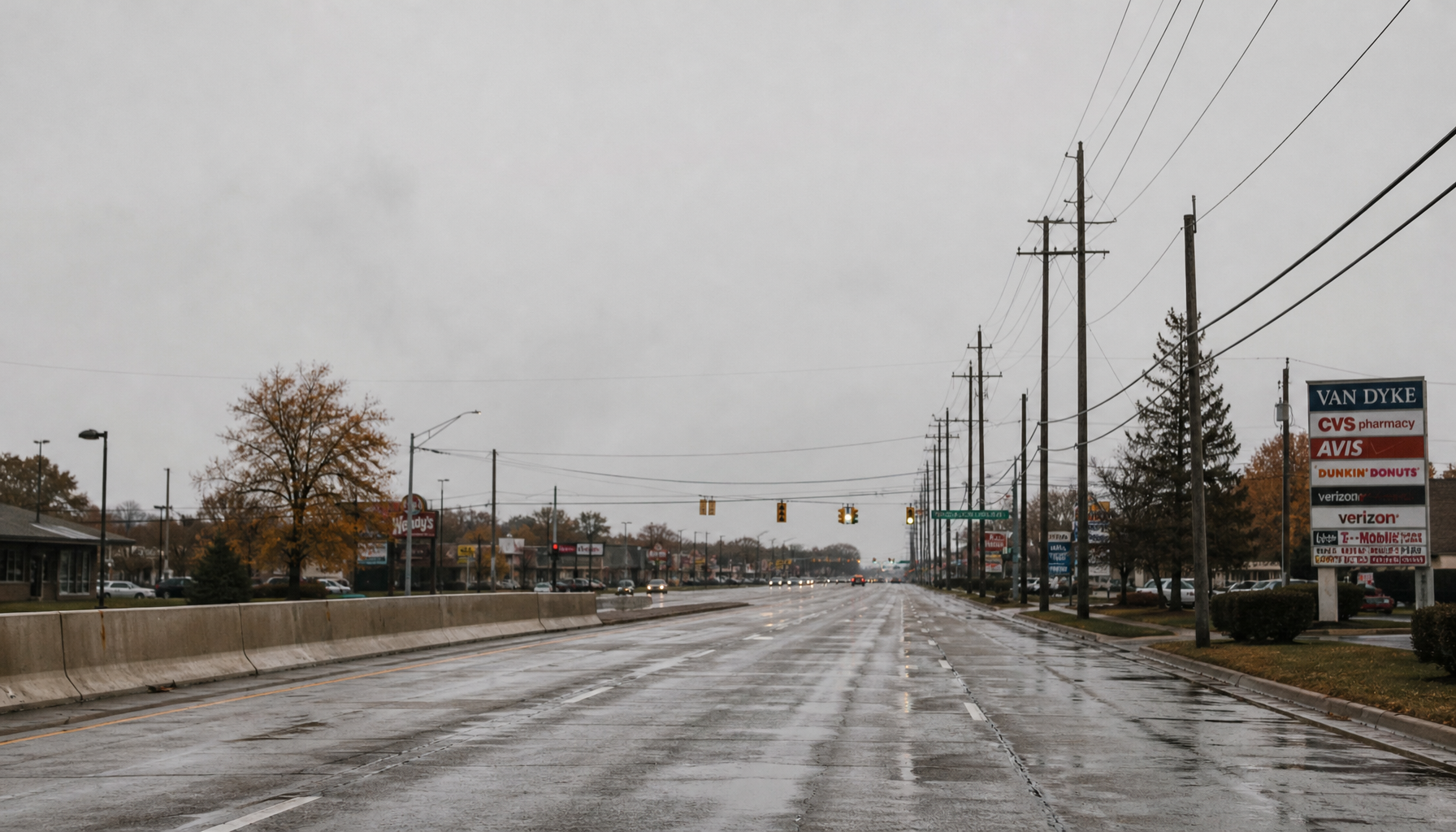
Sterling Heights sits at the heart of Macomb County, where Schoenherr Road, Van Dyke Avenue, and M-59 carry heavy traffic day and night. Alcohol-involved crashes on these corridors happen more often than most residents realize. The Michigan Car Accident Attorney page at Khamo Law has broader context on Michigan auto claims, but this post focuses specifically on what the law says when alcohol is involved and someone dies.
What Happens After a Drunk Driving Accident in Michigan
The moments after a fatal rollover crash are chaotic. Police arrive, witnesses scatter, and the family of the person who died is left trying to understand what just happened. Here’s how the legal picture usually takes shape.
The Criminal Side: OWI Charges
Michigan’s drunk driving statute, MCL 257.625, covers Operating While Intoxicated (OWI). If the driver’s blood alcohol content (BAC) was 0.08 or above — or if drugs impaired their driving — they can be charged. When someone dies, the charge escalates to Operating While Intoxicated Causing Death, a felony that carries up to 15 years in prison under Michigan law.
Police will typically obtain a blood draw at the scene or hospital. That result becomes a central piece of evidence in both the criminal and civil cases.
The Civil Side: Wrongful Death and Injury Claims
A criminal conviction is not required before a family can file a civil claim. The burden of proof in civil court is lower — a preponderance of the evidence, meaning it’s more likely than not that the driver was at fault. Even if a prosecutor declines to charge, or a jury acquits, a family can still win a wrongful death case.
Under Michigan’s Wrongful Death Act (MCL 600.2922), the personal representative of the deceased’s estate files the claim on behalf of surviving family members. Recoverable damages can include:
- Medical expenses incurred before death
- Funeral and burial costs
- Loss of financial support the deceased would have provided
- Loss of companionship and society
- The pain and suffering the deceased experienced between injury and death
For the woman who was injured in this crash, she has her own separate claim for her injuries, medical bills, and any lasting physical harm.
Michigan’s No-Fault Law and Drunk Driving Crashes
Michigan is a no-fault state. That means your own auto insurance pays your medical bills and lost wages first, regardless of who caused the crash. This coverage is called Personal Injury Protection, or PIP, defined under MCL 500.3107.
But no-fault has limits. To step outside the no-fault system and sue the drunk driver directly for pain and suffering, you must meet the threshold under MCL 500.3135. That threshold requires the injury to be serious — a death always qualifies, as do permanent serious disfigurement and serious impairment of a body function.
A fatal drunk driving accident in Michigan almost always clears that threshold. That means the surviving family is not stuck with just PIP benefits. They can pursue the drunk driver directly for the full scope of damages.
What About the Driver’s Insurance?
If the drunk driver was insured, their liability coverage is the first source of civil recovery. If their policy limits aren’t enough — and in serious fatal crashes, they often aren’t — the injured parties may be able to access their own uninsured or underinsured motorist (UM/UIM) coverage.
This is one reason to contact an attorney before you talk to any insurance company. Adjusters move quickly after fatal crashes. Statements made in the first 48 hours can be used to limit what the family recovers later. You do not have to speak with the other driver’s insurer without representation.
The Three-Year Clock — and Why It Starts Now
Michigan gives personal injury plaintiffs three years to file suit, under MCL 600.5805(2). For wrongful death claims under MCL 600.5852, the personal representative generally has three years from the date of death.
Three years sounds like a long time. It isn’t. Evidence disappears. Witnesses move. Surveillance footage gets overwritten — often within 30 days. Toxicology reports need to be preserved and challenged if they’re contested. An attorney can send preservation letters immediately, before any of that is lost.
According to NHTSA crash data, 37 people die every day in the United States in drunk-driving crashes — one every 39 minutes. These crashes are among the most preventable on American roads, and the families left behind have real legal rights.
What the Injured Woman’s Claim Looks Like
The woman hurt in this Sterling Heights rollover has her own path. Her PIP benefits through her own insurer cover medical bills and a portion of lost wages. But if her injuries are serious — fractures, surgery, long-term rehabilitation, permanent limitation — she can also file a third-party claim against the drunk driver for pain, suffering, and the full extent of her economic losses.
She should avoid settling quickly. Initial offers from insurance companies rarely account for the full cost of a serious injury. Medical treatment for crash injuries often unfolds over months, and settling before that picture is complete locks in a number that may fall far short of what’s actually needed. Our post on recovering after a car crash in Michigan covers that process in more detail.
Common Questions Families Ask After an Alcohol-Related Fatal Crash
Families in these situations often come to us with the same handful of questions. Here are honest answers.
Can we sue even if the drunk driver isn’t convicted?
Yes. The civil case and the criminal case are legally separate. A drunk driver can be acquitted in criminal court and still lose a civil lawsuit. The standard of proof is different. We’ve seen it happen.
What if the driver was uninsured?
Michigan law requires drivers to carry auto insurance. Many don’t. If the at-fault driver had no insurance, your own uninsured motorist coverage may cover your damages — if you have it. There may also be claims against other parties, depending on the facts of the crash. This is worth a detailed conversation with an attorney.
Does it matter if the deceased was also drinking?
Michigan uses a comparative fault system. If the person who died shared some responsibility for the crash, their damages may be reduced by their percentage of fault. But this rarely eliminates a wrongful death claim entirely. The specific facts matter a great deal here.
How long does a wrongful death case take?
There’s no single answer. Some cases settle within a year. Others take two or three years, especially if the defendant contests liability or if the insurance coverage dispute is complicated. What matters most at this stage is that the claim is filed and evidence is preserved.
Who can file a wrongful death claim in Michigan?
The personal representative of the deceased’s estate files the claim. The compensation, once recovered, is distributed to qualifying family members — typically a spouse, children, or parents — under MCL 600.2922. An attorney can help the family identify who qualifies and what each person’s loss looks like.
What does it cost to hire a lawyer for this kind of case?
Khamo Law handles wrongful death and serious injury cases on a contingency fee basis. That means there’s no upfront cost. The firm only gets paid if you recover. A free consultation costs you nothing and gives you a clearer picture of what your case is actually worth.
Frequently Asked Questions
Is a drunk driving crash automatically considered wrongful death in Michigan?
Not automatically — but a fatal crash where the driver was intoxicated typically satisfies the elements of a wrongful death claim. The family’s attorney still needs to prove the driver’s intoxication caused the crash, and that damages resulted. In alcohol-involved fatalities, that proof usually exists in the police report, toxicology results, and witness accounts.
Can the family recover punitive damages against a drunk driver in Michigan?
Michigan generally doesn’t allow traditional punitive damages in civil cases. However, a drunk driver’s conduct can be considered in determining the overall damages award, and the full scope of economic and non-economic losses can be substantial on their own.
What should I do first if a family member was just killed in a drunk driving crash?
Call an attorney before you speak with any insurance company. Request copies of the police report as soon as it’s available. Don’t post about the crash on social media. Preserve any voicemails, texts, or other communications the deceased had before the crash. The early steps matter more than most families realize.
Does Michigan law allow a claim against a bar that served the drunk driver?
Sometimes. Michigan’s Dram Shop Act (MCL 436.1801) allows civil claims against a licensed liquor establishment that served alcohol to a visibly intoxicated person who then caused injury or death. These cases are fact-specific and have their own requirements and deadlines, but they can add a significant layer of recovery when the facts support them.
What is the difference between OWI and DUI in Michigan?
Michigan uses the term OWI — Operating While Intoxicated — rather than DUI. The substance is the same: driving with a BAC of 0.08 or higher, or while impaired by drugs. “DUI” is used colloquially and is widely understood, but on official Michigan documents and criminal charges, you’ll see OWI.
How does comparative fault affect a drunk driving wrongful death claim?
If evidence suggests the deceased was partially at fault — for example, they were also impaired, or they ran a red light — Michigan’s comparative fault rules allow a jury to assign percentages of fault to each party. The family’s recovery is reduced by the deceased’s percentage. But even at 30% or 40% comparative fault, a wrongful death recovery from a drunk driver can still be significant.
If someone you love was killed or seriously hurt in a drunk driving crash in Sterling Heights or anywhere in Macomb County, talk to us before you sign anything. Khamo Law, PLLC offers a free consultation — call 248-466-0606 or reach us through the contact form on our site. We serve Sterling Heights, Warren, Troy, Detroit, and the surrounding communities. نتحدث العربية والكلدانية — إذا كنت تفضل التحدث بلغتك، فنحن هنا.