






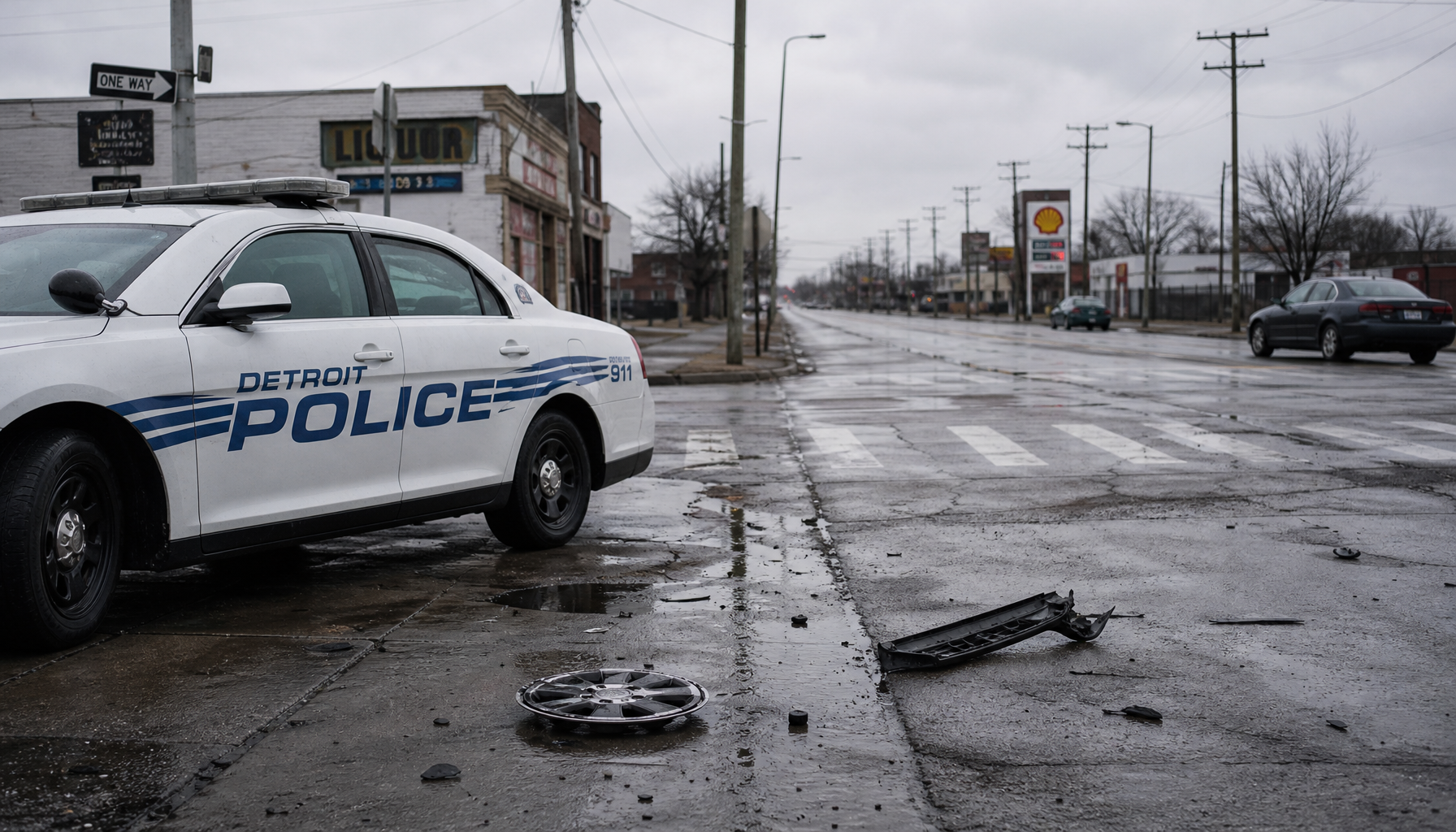
A Detroit police car collided with a minivan Tuesday morning in what witnesses described as a serious crash. If you or someone you love was in that minivan — or in a similar crash involving a city vehicle — you have legal rights, and they work differently than a standard accident claim. The short answer: yes, you can sue a Detroit police department vehicle, but the path is narrower and the deadlines are shorter than most people realize.
As reported by ClickOnDetroit / WDIV Local 4, the collision happened Tuesday morning and left those in the minivan with serious injuries. Crashes like this happen more often than the city acknowledges — and when a police cruiser is at fault, the city’s legal team gets involved fast. You need someone in your corner just as quickly.
If you’re dealing with injuries from a government-vehicle crash, a Detroit car accident lawyer who knows Michigan’s notice requirements can make the difference between a valid claim and a dismissed one. And if this is your first time looking at what Michigan law actually covers, the Michigan car accident attorney overview is a good place to start.
What Makes a Police Car Crash Different From a Regular Accident
When a private driver rear-ends you on I-94, you file a claim against their insurance and potentially sue them in civil court. When a Detroit Police Department cruiser hits your minivan, you’re dealing with a government entity — and that changes the rules in two significant ways.
Governmental Immunity
Michigan’s governmental immunity law, MCL 691.1407, generally protects government agencies from lawsuits. But it has exceptions. One of the most important: the motor vehicle exception under MCL 691.1405. That provision says a governmental agency is liable for bodily injury caused by the negligent operation of a government-owned motor vehicle. In plain language: if the officer was driving carelessly — running a red light, speeding without lights or sirens active, failing to yield — the city can be held responsible.
The key question your attorney will ask is whether the officer was operating the vehicle within the scope of an emergency or routine patrol. An officer responding to an active emergency with lights and sirens on gets more legal protection than one cruising to a coffee stop. The facts of Tuesday’s crash will matter enormously here.
The Notice of Claim Deadline
This is the part that catches people off guard. Before you can sue the City of Detroit for a vehicle crash, Michigan law requires you to file a formal notice of intent to sue within 60 days of the incident. That’s under the Michigan Court of Claims Act. Miss that window and you may lose your right to bring a claim entirely — no matter how serious your injuries are.
Sixty days sounds like a lot. It isn’t, especially when you’re recovering from a crash, dealing with hospital bills, and handling the logistics of a damaged vehicle. Don’t wait.
Michigan No-Fault Insurance Still Applies
Even when a city vehicle is involved, Michigan’s no-fault system still kicks in first. Under MCL 500.3107, your own Personal Injury Protection (PIP) benefits cover your medical expenses, a portion of lost wages, and replacement services — regardless of who caused the crash. That’s the basic structure of Michigan no-fault: your insurer pays your medical bills first.
But PIP has limits. Lost wages are capped. Non-economic damages — pain, suffering, the ways your life has genuinely changed — require clearing the threshold under MCL 500.3135. That threshold requires proving your injury is serious: death, permanent serious disfigurement, or a serious impairment of a body function. A broken arm that heals cleanly may not meet it. A spinal injury that changes how you work and sleep very likely does.
For a crash as severe as the one reported Tuesday, the threshold question is one your attorney needs to assess quickly, because it determines whether you can pursue the city for non-economic damages beyond what PIP covers.
Steps to Take Right Now If You Were in the Minivan
If you or a family member was hurt in this crash — or any crash involving a Detroit city vehicle — here’s what matters in the next few days:
- Get medical care and document everything. Even if you felt okay at the scene, soft-tissue injuries and concussions often don’t peak until 24–72 hours later. A medical record created the day of the crash is far more useful than one created a week later.
- Do not give a recorded statement to the city or its insurer. The City of Detroit’s risk management office will likely contact you. You are not required to give a statement, and anything you say can be used to minimize your claim.
- Preserve evidence. Photograph your injuries, the vehicle damage, and the scene if you can. Ask witnesses for contact information. Traffic cameras near the intersection may have footage — that footage gets overwritten quickly.
- Contact a Detroit car accident lawyer before the 60-day notice window closes. An attorney can file the required governmental notice, identify whether the motor vehicle exception applies, and deal with the city’s legal team on your behalf.
- Track every expense. Prescriptions, co-pays, mileage to appointments, days of work missed — keep a record. These details support your PIP claim and any civil action.
According to NHTSA crash data, police vehicle crashes result in hundreds of civilian injuries across the country each year. Michigan is not exempt from that pattern, and Detroit’s dense urban streets — with their mix of pedestrian traffic and fast-moving emergency vehicles — create real risk.
What Compensation Can You Recover
The categories of recovery in a claim against the City of Detroit for a police vehicle crash generally include:
- Medical expenses — past and future, above what PIP covers
- Lost wages — above the PIP cap, if your injuries kept you from working
- Pain and suffering — only if you clear the serious-impairment threshold under MCL 500.3135
- Replacement services — help with household tasks you can no longer perform
- Wrongful death damages — if the crash was fatal, under MCL 600.2922
The statute of limitations for personal injury actions in Michigan is three years under MCL 600.5805(2). But for government claims, the 60-day notice requirement is a hard condition that comes long before that three-year clock matters.
How a Car Accident Lawyer in Detroit MI Can Help
Government-vehicle claims involve layers most personal injury cases don’t: Freedom of Information Act requests for the officer’s dash-cam footage and disciplinary history, accident reconstruction against a city that controls its own records, and negotiating with a municipal risk management office that handles these cases professionally.
An experienced car accident lawyer in Detroit, MI knows where to look, what to request, and how to build a case that withstands a governmental immunity defense. The common causes of vehicle collisions in Detroit — distracted driving, failure to yield, speeding — apply to police officers too, and documenting them is the core of liability.
If you’ve been dealing with insurance companies after a Detroit car accident before, you know they don’t make it easy. The city’s risk management office operates the same way, with more resources.
Frequently Asked Questions
Can I sue the City of Detroit if a police car hit me?
Yes, in most cases. Michigan’s motor vehicle exception to governmental immunity (MCL 691.1405) allows victims to bring a claim when a government vehicle is operated negligently. You’ll need to file a formal notice of intent to sue within 60 days of the crash, and you’ll need to show the officer was driving carelessly under the circumstances.
Does Michigan no-fault insurance cover accidents with city vehicles?
Yes. Your own PIP coverage applies regardless of who caused the crash. PIP covers medical bills, a portion of lost wages, and replacement services. A claim against the city comes on top of that — it compensates for losses that exceed what PIP provides, including pain and suffering if your injury meets the legal threshold.
What is the 60-day notice rule?
Before filing a lawsuit against a Michigan governmental entity, you must give written notice of your intent to sue within 60 days of the incident. This is a strict procedural requirement. Missing it typically bars your claim entirely, even if your injuries are severe and the city was clearly at fault.
What if the officer was responding to an emergency?
Officers responding to genuine emergencies with lights and sirens active have a higher legal shield under Michigan law, but it’s not absolute. If the officer drove recklessly even during an emergency response — blowing through a red light at high speed in heavy traffic without yielding — liability arguments still exist. The facts of the specific situation determine how strong those arguments are.
What counts as a “serious impairment” under Michigan law?
Under MCL 500.3135, a serious impairment of a body function means an objectively manifested impairment of an important body function that affects the person’s general ability to lead their normal life. Courts look at things like whether you can return to work, whether you can care for your children, and whether daily activities have been genuinely limited. It’s a fact-specific analysis, not a bright-line rule.
How long do I have to file a lawsuit?
The general personal injury statute of limitations in Michigan is three years from the date of injury under MCL 600.5805(2). But for claims against the City of Detroit, the 60-day governmental notice requirement must be met first. The three-year clock is only relevant if you’ve already cleared that initial hurdle.
If you or someone in your family was hurt in Tuesday’s crash — or in any collision involving a Detroit police vehicle — talk to us before you sign anything or give any statement. Khamo Law, PLLC offers a free consultation. Call 248-466-0606 or reach out through our contact form. We serve Detroit and the surrounding metro area, and our team includes Arabic-speaking attorneys ready to help.