










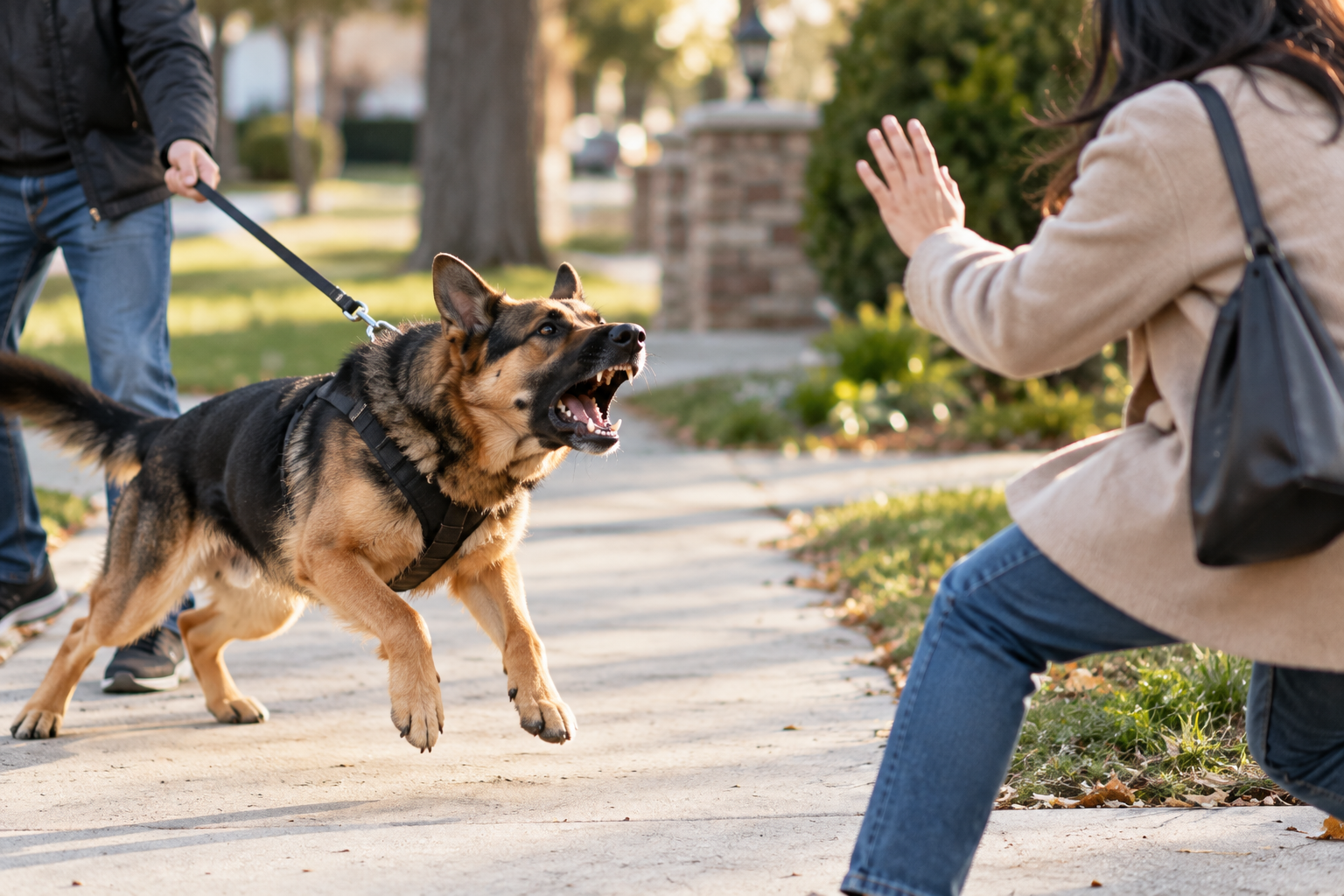
A dog bite can happen in seconds, but the physical and emotional effects may last much longer. Serious attacks can leave victims facing puncture wounds, infections, permanent scarring, nerve damage, medical expenses, and anxiety around animals.
If you or your child was injured by a dog in Madison Heights, Michigan, Khamo Law Accident & Injury Lawyers can review what happened, identify the dog’s owner, examine potential insurance coverage, and explain your rights under Michigan law.
Our Michigan dog bite lawyers help injured people understand the state’s strict-liability laws. Our Madison Heights personal injury lawyers provide guidance for local injury claims throughout Madison Heights and Oakland County.
Call Khamo Law at 248-466-0606 or contact us online for a free consultation.
How Can a Madison Heights Dog Bite Lawyer Help?
Michigan has a specific law governing injuries caused by dog bites. Although that law can make it easier to establish liability than in an ordinary negligence case, disputes can still arise about ownership, provocation, whether the victim was lawfully present, the extent of the injuries, and available insurance.
A Madison Heights dog bite attorney can help by:
- Identifying the dog’s legal owner and anyone else whose conduct may create a separate claim.
- Obtaining animal control reports and relevant incident records.
- Gathering photographs, witness statements, and available surveillance footage.
- Investigating allegations that the victim provoked the dog.
- Reviewing homeowner’s, renter’s, or other potentially applicable liability insurance.
- Collecting medical records, photographs of healing wounds, and evidence of permanent scarring.
- Evaluating lost income, future treatment, reconstructive procedures, and other recoverable damages.
- Negotiating with insurers and filing a lawsuit when warranted.
Not every bite leads to a viable lawsuit. The circumstances, available evidence, damages, and applicable law must be reviewed.
Michigan Dog Bite Law: Are Dog Owners Strictly Liable?
Under Michigan Compiled Laws Section 287.351, a dog owner is generally liable when the dog bites someone without provocation while that person is on public property or lawfully on private property.
The law can apply even if the dog has never bitten anyone before and the owner had no previous knowledge that the dog might be dangerous.
This is known as strict liability. For a qualifying claim, the injured person generally does not need to prove that the owner was careless about controlling the dog.
The major statutory issues include whether:
- The defendant was the dog’s owner.
- The dog actually bit the injured person.
- The bite was unprovoked under Michigan law.
- The victim was on public property or lawfully on private property.
- The bite caused compensable injuries.
Read the Michigan Dog Bite Liability Statute, MCL 287.351.
Does Michigan Have a One-Bite Rule?
No. Michigan’s statutory dog-bite rule does not generally require proof of an earlier bite or attack.
A dog owner may be liable for a first bite when the statutory requirements are satisfied.
Does a Dog Have to Be Classified as Dangerous?
No. The dog does not have to be officially designated dangerous for statutory liability to apply.
A dog’s prior behavior might still become relevant to a separate negligence theory or an insurance dispute, but a history of aggressive behavior is not a requirement for a qualifying statutory dog-bite claim.
Where Do Dog Bite Accidents Happen in Madison Heights?
Dog bites can occur wherever people and dogs interact, including residential neighborhoods, sidewalks, apartment complexes, parks, and private homes.
Madison Heights includes residential streets and commercial corridors around John R Road, Dequindre Road, 12 Mile Road, and 13 Mile Road. Injuries in these settings may involve different witnesses, property-access questions, and sources of evidence.
Examples include:
- A visitor bitten at a friend’s home.
- A child bitten while visiting another family.
- A pedestrian attacked by a dog that escapes a yard.
- A delivery worker bitten while lawfully approaching a residence.
- A person bitten by a dog in an apartment complex’s common area.
- A dog owner or walker losing control of an animal on a public sidewalk.
These are possible scenarios, not claims that any particular Madison Heights neighborhood or road has an unusually high dog-bite rate.
Example: A Dog Escapes a Yard
Imagine a Madison Heights resident walking along a public sidewalk when a dog escapes through an open gate and bites their leg.
The investigation may focus on establishing ownership, how the attack unfolded, whether any alleged provocation occurred, the bite injuries, and available insurance.
The fact that the owner did not intend for the dog to escape does not by itself eliminate liability under Michigan’s qualifying dog-bite statute.
This example is hypothetical and does not describe an actual Khamo Law case.
What Counts as Provocation Under Michigan Dog Bite Law?
Provocation is one of the most important issues in Michigan dog-bite cases.
An owner may argue that the injured person provoked the dog. However, simply claiming provocation does not establish that the defense applies.
Michigan courts evaluate the nature of the person’s conduct and whether it could reasonably cause an ordinary dog in similar circumstances to respond as the dog did.
Can Accidental Actions Count as Provocation?
Yes, in some circumstances.
In Brans v. Extrom, the Michigan Court of Appeals recognized that an unintentional act can constitute provocation. The case involved a woman who accidentally stepped on a dog.
The legal question is not limited to whether a person meant to upset the animal.
Read Brans v. Extrom.
What If You Were Defending Yourself?
Defending yourself or someone else from an already aggressive dog does not automatically amount to legally sufficient provocation.
In Koivisto v. Davis, the Michigan Court of Appeals explained why a person’s response to dogs already engaged in aggressive behavior did not constitute provocation under the facts of that case.
Read Koivisto v. Davis.
Can a Child Provoke a Dog?
A child’s age, conduct, and the circumstances of the interaction deserve careful analysis. A child is not automatically protected from every possible provocation argument, nor does a dog’s owner automatically establish provocation by claiming the child touched or startled the animal.
The facts matter, and an attorney should examine exactly what happened before accepting any defense.
Dog Bite Injuries Involving Children
Dog attacks involving children can be particularly concerning because young children may suffer significant injuries to the face, head, hands, and other vulnerable areas.
A child may require emergency treatment, stitches, reconstructive procedures, or follow-up treatment for scarring.
Possible long-term consequences include:
- Facial scars or changes in appearance.
- Nerve damage or loss of sensation.
- Infection and wound complications.
- Additional procedures as the child grows.
- Anxiety, nightmares, or fear of dogs.
- Missed school or interruptions to normal activities.
The full impact of a childhood injury may not be apparent immediately after the incident.
Can Parents Bring a Dog Bite Claim for Their Child?
Parents or legal guardians can generally take steps to pursue a child’s injury claim through the appropriate legal procedures.
The child’s damages and any separate legally recognized claims for expenses should be carefully evaluated. Settlement approval and protection of a minor’s recovery may involve additional requirements.
A claim involving a child may also raise different timing issues, so families should not rely on the ordinary adult filing deadline without obtaining legal advice.
What If a Dog Attacked You Without Actually Biting?
Michigan’s statutory dog-bite strict-liability provision specifically addresses bites.
If a dog jumps on someone, knocks them down, or causes injuries without biting, the case may involve other legal theories rather than automatic liability under MCL 287.351.
For example, Michigan recognizes negligence claims in certain circumstances when an animal is not reasonably controlled despite a foreseeable risk of injury.
Some incidents may also support a common-law claim involving known abnormal dangerous propensities.
The Michigan Supreme Court discussed these principles in Trager v. Thor.
Example: A Large Dog Knocks Someone Down
Imagine a dog jumping on an elderly visitor, causing the visitor to fall and fracture a hip.
If the dog did not bite the visitor, Michigan’s statutory dog-bite rule would not automatically govern the injury.
The investigation would instead examine the applicable duty of care, what the responsible person knew about the dog’s behavior, how the animal was controlled, and whether the conduct legally caused the injury.
This is a hypothetical example.
Who Can Be Held Responsible for a Dog Bite?
Under Michigan’s dog-bite statute, the dog owner is the central potentially liable party.
Identifying the owner may involve examining animal licensing records, veterinary information, witness statements, ownership documents, and other reliable evidence.
Depending on the facts, separate negligence claims may also require evaluating the conduct of someone other than the legal owner.
Can a Landlord Be Liable for a Tenant’s Dog?
A landlord is not automatically responsible simply because a tenant owns a dog.
A potential claim against a landlord, property manager, or another person requires a separate analysis of legal duties, control, knowledge, and the circumstances of the injury. Our Madison Heights premises liability lawyers explain the separate rules governing unsafe property conditions.
The existence of a dog on rented property does not establish landlord liability by itself.
What If Someone Else Was Watching the Dog?
A temporary caretaker is not automatically the dog’s legal owner for purposes of the statute.
However, a person’s own negligent conduct in controlling an animal may raise a separate claim when Michigan law recognizes a relevant duty and the evidence establishes a breach.
Can You Sue if a Dog Bites You on Private Property?
Yes, potentially. Michigan’s dog-bite law expressly includes people lawfully present on private property, including the dog’s owner’s property.
A person invited into a home, a delivery worker lawfully performing job duties, or someone otherwise permitted to be on the property may fall within the statute.
The law also distinguishes lawful entry from certain entries made for unlawful or criminal purposes.
What If the Dog Bit You Inside Someone’s House?
Being inside the owner’s house does not automatically prevent a claim.
If you were lawfully visiting and the dog bit you without provocation, the statutory requirements may be satisfied.
What If the Dog Bit a Delivery Driver?
A delivery worker who is lawfully present in the course of performing authorized duties may be protected under the statute.
The investigation should still evaluate the worker’s location, the circumstances of the bite, the dog’s owner, and any provocation allegation.
What Compensation Can You Recover After a Dog Bite?
Depending on the injury, available coverage, and applicable law, compensation may include:
- Emergency medical treatment and hospital expenses.
- Wound care, surgery, medications, and rehabilitation.
- Follow-up treatment for infection.
- Plastic surgery or other treatment for disfiguring scars.
- Lost wages and supported future earning-capacity losses.
- Physical pain and suffering.
- Emotional distress related to the attack.
- Permanent disfigurement, nerve damage, or functional limitations.
Not every loss is recoverable in every case. Medical evidence and the applicable legal theory determine what damages may be supported.
What Is the Average Dog Bite Settlement in Michigan?
There is no reliable settlement amount that applies to every Michigan dog-bite case.
A minor wound that heals without complications is different from a facial injury requiring surgery or a hand injury that causes permanent loss of function.
An attorney may evaluate factors such as the severity and location of the injuries, whether scarring is permanent, medical expenses, lost earnings, lasting psychological effects, and available insurance.
An advertised settlement from another case is not a guarantee of the outcome in your case.
What Injuries Can Result From a Dog Attack?
Dog bites are sometimes more medically complicated than they initially appear.
A bite can damage skin and deeper tissue, including muscles, tendons, blood vessels, and nerves. Depending on the location and force of the bite, injuries can include:
- Deep puncture wounds and lacerations.
- Serious bacterial infections.
- Torn muscles or tendons.
- Nerve injury and persistent numbness.
- Facial wounds requiring reconstructive treatment.
- Permanent scars.
- Hand injuries that affect grip strength or dexterity.
- Falls and orthopedic injuries associated with the attack.
- Anxiety or other psychological symptoms after a traumatic event.
Some people need additional treatment after the initial wound heals. Medical follow-up can help identify complications and document recovery.
Why Are Hand and Facial Bites Especially Concerning?
The hands contain closely arranged tendons, nerves, and other important structures. An injury can interfere with work, dressing, writing, and other daily activities.
Facial bites may involve both functional concerns and the possibility of visible, long-term scarring.
An individual’s medical evaluation determines whether specialist treatment is necessary.
Who Pays Medical Bills After a Dog Bite in Michigan?
A dog owner’s homeowner’s or renter’s liability insurance may be relevant to a qualifying claim. Some other liability policies may also apply, depending on the circumstances.
However, not every policy covers dog-bite injuries. Insurers may dispute coverage or rely on exclusions, limits, or other contract terms.
The availability of insurance should be established by reviewing the actual policies rather than assumed.
Will the Dog Owner Have to Pay Personally?
That depends on liability, the terms of applicable coverage, and the defendant’s financial circumstances.
An attorney can help determine whether an insurer may defend or pay a covered claim. A legally valid claim does not necessarily guarantee that every awarded dollar can be collected.
Does Michigan No-Fault Insurance Cover Dog Bites?
Michigan automobile No-Fault insurance generally does not apply simply because someone was bitten by a dog.
An ordinary dog-bite injury is different from a qualifying motor-vehicle accident. A separate assessment would be necessary if a bite occurred as part of an incident involving a motor vehicle.
Reporting a Dog Bite in Madison Heights and Oakland County
Reporting an animal bite can be important for public health, identifying the animal, and creating a contemporaneous record.
Oakland County’s Health Division works with Animal Control agencies to evaluate potential rabies exposure following animal bites.
According to Oakland County’s Animal Bites guidance, the Health Division can be contacted during regular business hours at 248-858-1286. For immediate after-hours public-health assistance concerning a bite or exposure, the county lists 248-858-0931.
People with serious injuries should seek medical care immediately rather than delay treatment to complete a report.
What If You Do Not Know Whether the Dog Was Vaccinated?
Tell your healthcare provider and the appropriate public-health authorities what you know about the dog and how to locate its owner.
Oakland County explains that healthcare providers and public-health personnel evaluate rabies exposure and determine whether further treatment or animal observation is appropriate.
What If the Dog Runs Away?
Try to record the dog’s description, the location and time of the attack, and any information from witnesses. Do not put yourself in danger attempting to capture an unfamiliar animal.
Inform the appropriate authorities that the animal could not be located.
What Evidence Helps Prove a Dog Bite Claim?
A strong claim depends on documenting both the incident and its consequences.
Useful evidence may include:
- Photographs of the injuries immediately after the bite and throughout healing.
- Medical records showing the wounds, diagnosis, treatment, and follow-up care.
- Animal Control or public-health reports.
- The dog’s ownership and identifying information.
- Names and contact information for witnesses.
- Surveillance, doorbell-camera, or other available video.
- Photographs of the location, fence, gate, or other relevant surroundings.
- Messages from the owner and communications with an insurer.
- Records showing missed work and other financial losses.
- Documentation of continuing scarring, pain, or functional limitations.
How Do You Prove a Dog Bite Caused Permanent Scarring?
Medical records, photographs over time, specialist evaluations, and information about treatment or reconstructive options may help establish scarring and its effects.
The lasting impact may include both appearance and function. A medical professional is best positioned to evaluate healing and future treatment.
How Long Do You Have to File a Dog Bite Lawsuit in Michigan?
Michigan generally provides a three-year limitations period for many personal injury claims, under MCL 600.5805.
However, exceptions and different rules can apply, particularly in claims involving minors or unusual circumstances.
The applicable deadline should be confirmed based on the exact claim, date of injury, and parties involved.
Waiting can also make evidence harder to preserve, even when a filing deadline has not yet expired.
What Should You Do Immediately After a Dog Bite?
Your health and immediate safety should come first.
- Move to safety. Avoid further contact with the animal and call for emergency help if needed.
- Clean the wound. Oakland County recommends promptly washing the affected area with soap and water.
- Seek medical attention. A healthcare professional can assess infection risk, wound care, tetanus protection, and whether rabies follow-up is necessary.
- Identify the dog and owner. If safe, obtain their contact information and any available vaccination information.
- Report the bite. Contact the appropriate local animal-control or public-health authority.
- Photograph the injuries. Continue documenting healing and any scarring.
- Collect witness details. Record names and relevant camera locations.
- Preserve records. Save medical bills, receipts, lost-wage documentation, and correspondence.
- Consider legal advice. A timely review can help identify the owner, insurance coverage, evidence, and deadlines.
Do not assume that a small puncture wound cannot cause complications. Follow the recommendations of a qualified healthcare professional.
Frequently Asked Questions About Madison Heights Dog Bite Claims
Can I sue if the dog has never bitten anyone before?
Yes, potentially. Michigan’s qualifying statutory dog-bite claim does not require proof that the dog previously attacked someone.
Does Michigan have strict liability for dog bites?
Yes. MCL 287.351 generally imposes strict liability on a dog’s owner when the dog bites a person without provocation while that person is on public property or lawfully on private property.
Can I sue if I was visiting the dog’s owner’s house?
Potentially. Lawful visitors can be covered by Michigan’s statute. The specific facts, including any provocation allegation, still matter.
What if I accidentally stepped on a dog?
An unintentional action can sometimes constitute provocation under Michigan case law. The precise conduct and a normal dog’s reasonably expected response must be evaluated.
Can I sue if a dog knocked me down but never bit me?
Possibly, under a different legal theory. Michigan’s statutory dog-bite rule specifically addresses bites, while negligence or certain common-law liability theories may apply to other injuries caused by dogs.
Can parents recover compensation for a child bitten by a dog?
A child may have a claim pursued through appropriate legal procedures. Medical expenses, scarring, psychological effects, and future treatment needs may be relevant.
What if the dog’s owner says I provoked it?
That assertion does not automatically defeat a claim. Michigan courts examine whether the conduct legally constituted provocation based on the circumstances.
Will the dog’s owner’s homeowner’s insurance cover my injuries?
It may, depending on the policy and circumstances. Exclusions, limits, and coverage disputes can affect recovery.
How much is my dog bite case worth?
It depends on the injuries, medical treatment, scarring, future limitations, available coverage, and other legally relevant factors. No amount can be guaranteed.
Do I have to report a dog bite?
Reporting is important for public-health follow-up and documentation. Oakland County provides animal-bite reporting guidance and contact information through its Health Division.
What if the dog that bit me was not on a leash?
Whether the dog was properly controlled may be relevant, particularly to a separate negligence claim. A leash violation does not automatically establish every element of a civil claim, and the statutory bite claim has its own requirements.
How much does it cost to speak with Khamo Law?
Khamo Law offers free initial consultations. Ask about the fee agreement and how case expenses are handled before retaining an attorney.
Why Choose Khamo Law for a Madison Heights Dog Bite Claim?
Khamo Law Accident & Injury Lawyers helps injured people throughout Michigan understand their legal options and pursue appropriate personal injury claims.
Dog-bite cases can involve complex questions about strict liability, provocation, insurance coverage, lasting injuries, and medical costs.
Our approach begins with reviewing the circumstances of the incident, identifying available evidence, and explaining what Michigan law may allow.
Learn more about attorney Koro E. Khamo and our firm’s personal injury practice.
Speak With a Madison Heights Dog Bite Lawyer
If you or your child suffered a dog bite in Madison Heights or elsewhere in Oakland County, Khamo Law can review the circumstances and explain your potential next steps.
Call 248-466-0606 or contact Khamo Law online to request a free consultation.
We can help you understand Michigan’s dog-bite law and the evidence needed to evaluate a claim.