





An injury on someone else’s property can leave you facing unexpected medical bills, time away from work, and questions about who was responsible for the dangerous condition. When a business, landlord, property manager, or other party fails to meet an applicable legal duty, Michigan law may allow an injured person to seek compensation.
A Madison Heights premises liability lawyer at Khamo Law Accident & Injury Lawyers can investigate how the injury occurred, identify the party responsible for the property, preserve relevant evidence, and explain your options under Michigan law.
Our Michigan premises liability laws guide explains the statewide legal framework, while our Madison Heights personal injury lawyers help injured people evaluate local property-related claims throughout Madison Heights and Oakland County.
Whether an incident involves a dangerous stairway, deteriorating walkway, falling merchandise, unsafe building conditions, or another property hazard, determining responsibility requires examining the specific facts.
Call Khamo Law at 248-466-0606 or contact us online for a free consultation.
How Can a Madison Heights Premises Liability Lawyer Help?
Property injury cases often depend on evidence that is difficult to obtain after an accident. A dangerous condition may be repaired, a business may clean the area, surveillance video may be overwritten, or an important witness may become difficult to locate.
A premises liability attorney can help by:
- Investigating the property condition that caused the injury.
- Identifying who owned, possessed, operated, or controlled the area.
- Examining the visitor’s legal status under Michigan law.
- Reviewing whether the responsible party knew or should have known about the hazard.
- Obtaining photographs, incident reports, maintenance logs, inspection records, and relevant video.
- Identifying witnesses and prior complaints involving the condition.
- Reviewing contracts involving landlords, property managers, tenants, or maintenance companies.
- Evaluating the injured person’s medical treatment, lost wages, and future needs.
- Investigating applicable commercial liability or other insurance coverage.
- Negotiating with insurers and considering litigation when justified.
The fact that an injury happened on another person’s property does not automatically establish liability.
A claim generally requires evidence of a legally recognized duty, breach, causation, and recoverable damages.
What Is Premises Liability Under Michigan Law?
Premises liability is an area of personal injury law involving harm caused by dangerous conditions on property.
Michigan law evaluates whether the person possessing or controlling the property owed a duty to the injured visitor and whether that duty was breached.
Claims may involve business properties, apartment buildings, parking areas, private residences, stairways, commercial entrances, or other premises.
What Must Be Proven in a Premises Liability Case?
A negligence-based premises liability claim generally requires evidence of four elements:
- Duty: The defendant owed the injured person a legally recognized duty of care.
- Breach: The defendant failed to meet that duty.
- Causation: The breach caused the accident and resulting injuries.
- Damages: The injured person suffered legally recoverable losses.
The extent of the duty depends partly on why the person was on the property and the applicable Michigan legal rules.
Does Every Property Injury Qualify as Premises Liability?
No.
An injury caused by a dangerous condition of the premises may involve premises liability.
An injury caused primarily by someone’s active conduct may instead raise ordinary negligence or another legal theory.
For example, merchandise falling because of a hazardous shelving condition may present different legal issues from merchandise dropped directly by an employee.
The proper claim depends on what actually caused the injury.
Who Is Responsible for Unsafe Property Conditions in Madison Heights?
Identifying the responsible party is an important part of a premises liability investigation.
The legal defendant may not always be the person whose name appears on the property’s deed.
Depending on the circumstances, relevant parties may include a business operator, landlord, commercial tenant, property management company, or another party controlling the dangerous area.
Can a Property Owner Be Liable?
Potentially.
A land possessor who owes a legal duty to a visitor may face liability when evidence establishes that the duty was breached and the breach caused an injury.
However, ownership alone does not determine every premises liability claim. Actual possession, control, and the relevant legal relationship must be examined.
Can a Business Be Held Responsible for an Injury?
Potentially.
A business inviting customers onto its premises generally has a duty to exercise reasonable care concerning unreasonable risks caused by dangerous property conditions.
The analysis may involve whether employees created the condition, knew about it, should reasonably have discovered it, or took appropriate steps to address it.
Can a Landlord Be Responsible?
Sometimes.
A landlord’s responsibilities may depend on the lease, statutory requirements, whether the area was under the landlord’s control, and the particular dangerous condition.
A defect in an apartment building’s common stairwell may raise different questions from a condition inside a tenant-controlled unit.
What About a Maintenance Contractor?
A maintenance or repair contractor may be relevant when its actions contributed to an injury.
However, a contract to maintain property does not automatically establish that the contractor owes every visitor a legally enforceable duty.
An attorney should review the work performed, contracts, and applicable legal theories.
Where Do Premises Liability Accidents Happen in Madison Heights?
Madison Heights includes retail centers, restaurants, apartment communities, commercial buildings, residential properties, and public areas.
Premises injuries may occur at:
- Grocery stores and retail businesses.
- Shopping-center entrances.
- Restaurants and other commercial establishments.
- Apartment buildings.
- Parking lots and parking structures.
- Office buildings.
- Residential properties.
- Stairwells and shared hallways.
- Loading or service areas.
- Walkways serving businesses and residential communities.
Madison Heights commercial and residential corridors include John R Road, 12 Mile Road, 13 Mile Road, Dequindre Road, and access routes near I-75.
These locations provide local context. They are not claims that particular properties or streets have a verified history of unsafe conditions.
Example: An Unsafe Apartment Stairway
Imagine a visitor using an apartment building’s common stairwell when a damaged stair tread gives way and causes a serious fall.
The investigation may examine who controlled the stairway, whether maintenance requests existed, when the defect developed, and whether the condition could reasonably have been discovered.
The claim may involve maintenance records, photographs, the lease, and witness testimony.
This is a hypothetical example, not an actual Khamo Law case.
Example: Falling Merchandise in a Retail Store
Imagine a customer being struck by merchandise falling from an unstable display.
An attorney may investigate how the products were stored, whether a dangerous shelving condition existed, whether employees were actively handling the items, and whether there were prior reports of instability.
The appropriate legal theory may depend on whether the incident arose from the condition of the premises or a person’s conduct.
This example is hypothetical.
Common Types of Premises Liability Accidents
Dangerous-property incidents may involve a variety of hazards.
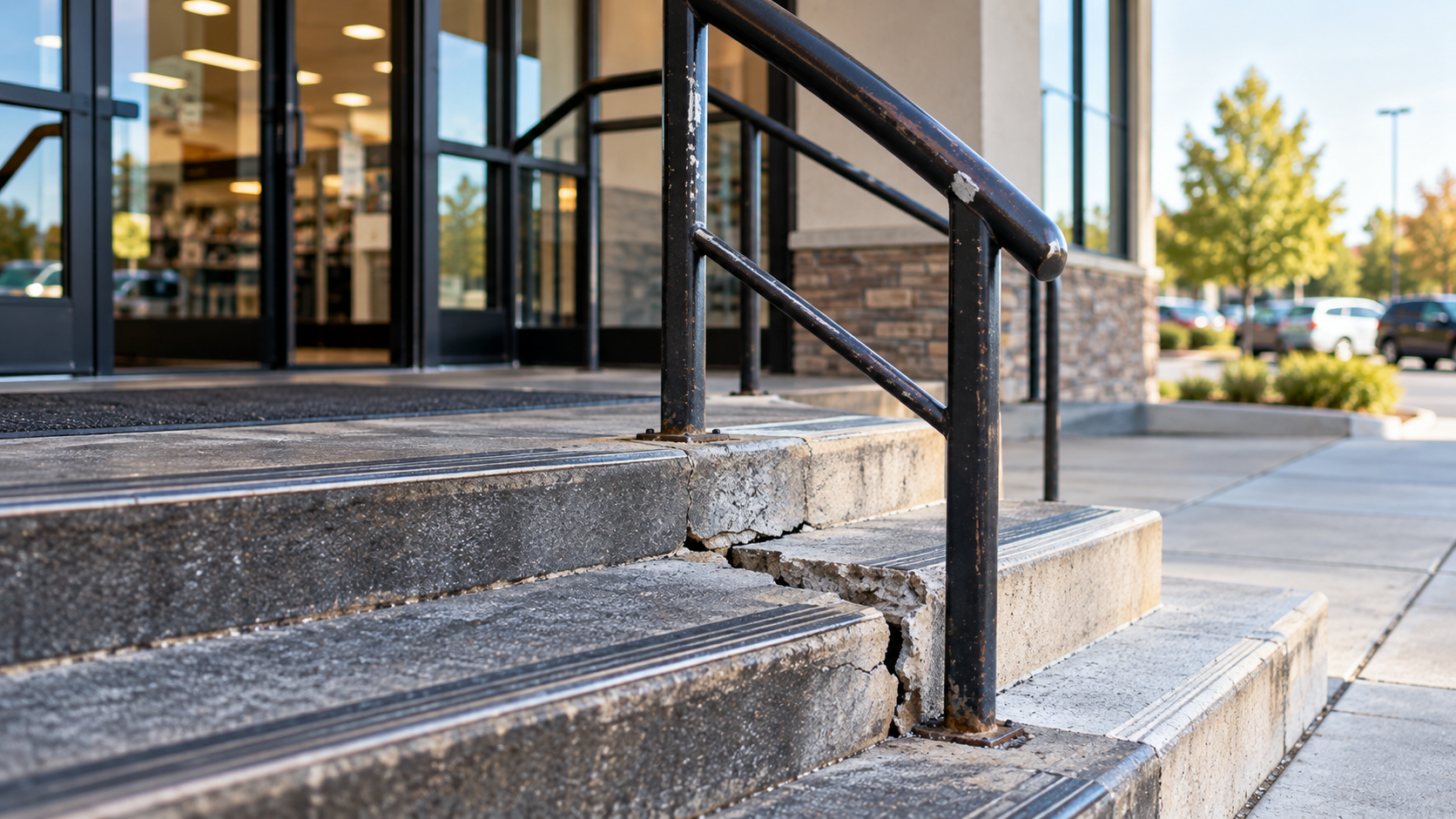
Defective Stairs and Handrails
Loose railings, damaged stair treads, unexpected changes in height, or poor illumination may create an unreasonable risk of injury.
The investigation may require maintenance records, photographs, measurements, and witness accounts.
Unsafe Walkways and Entrances
Broken pavement, uneven surfaces, and dangerous transitions can cause falls or other injuries.
Our Madison Heights slip and fall lawyers page discusses these specific accidents in greater detail.
Falling Objects and Unstable Displays
Improperly stored or secured objects may cause head injuries, fractures, or other trauma.
Liability depends on what caused the object to fall and whether the applicable legal duty was breached.
Dangerous Building Conditions
Some cases involve damaged flooring, unsafe structural elements, unguarded openings, or other defects.
The specific condition, whether it was known, and the ability to repair or warn may matter.
Snow and Ice Hazards
Snow and ice may create dangerous walking conditions outside businesses, apartment complexes, and other properties.
Michigan law requires a fact-specific assessment of the applicable duty and whether reasonable care was used.
For a more focused discussion, see our Michigan slip and fall lawyers resource.
Injuries Associated With Third-Party Conduct
Some incidents involve conduct by another person rather than a dangerous physical condition.
Claims involving criminal acts, negligent security, or intentional conduct require special attention to Michigan law. A property operator is not automatically liable because someone committed a crime there.
What Duties Do Michigan Property Owners Owe Visitors?
Michigan premises liability law generally recognizes three visitor categories: invitees, licensees, and trespassers.
The applicable duty may vary based on the person’s legal status.
Invitees
An invitee generally enters property for a purpose connected to the possessor’s commercial or other qualifying interests.
Customers at a business commonly fall into this category.
Michigan law generally requires land possessors to exercise reasonable care to protect invitees against unreasonable risks caused by dangerous conditions of the property.
Licensees
A licensee generally enters property with permission but without the same type of business-related invitation.
Social guests are commonly analyzed as licensees.
The applicable duty differs from the invitee standard and generally involves warning about certain known hidden dangers.
Trespassers
A trespasser enters property without the relevant legal permission.
Duties to trespassers are generally more limited, although circumstances and statutory exceptions can affect the analysis.
Why Does Visitor Status Matter?
The law does not necessarily impose the same obligations toward every person who enters a property.
Determining the visitor’s status is therefore an important early step in evaluating an injury claim.
What Is Michigan’s Open and Obvious Hazard Rule?
A visible hazard does not automatically defeat every Michigan premises liability claim.
In July 2023, the Michigan Supreme Court issued its decision in Kandil-Elsayed v. F & E Oil, Inc., together with Pinsky v. Kroger Co. of Michigan.
The Court changed how the open-and-obvious doctrine applies in invitee premises liability cases.
Previously, an obviously dangerous condition was often treated as eliminating the land possessor’s duty unless particular exceptions applied.
The Court held that the open-and-obvious nature of a condition instead belongs in the analysis of breach of duty and comparative fault, not whether the land possessor owed the underlying invitee duty.
Does That Mean Property Owners Are Responsible for Every Visible Hazard?
No.
The decision did not make property possessors insurers of everyone’s safety.
A claimant must still establish negligence, causation, and damages.
The visibility of the hazard remains relevant when determining whether reasonable care was exercised and whether the injured visitor bears some responsibility.
What If a Person Had No Choice But to Encounter the Hazard?
Whether the land possessor should reasonably have anticipated the injury despite the condition being obvious may be relevant under the legal framework established by the Michigan Supreme Court.
The analysis requires specific facts about the condition, available alternatives, and reasonable precautions.
Read the Michigan Supreme Court’s Kandil-Elsayed decision.
How Do You Prove a Business Knew About a Dangerous Condition?
A key issue in many premises liability cases is notice.
The injured person may need to establish that the responsible party created the dangerous condition, actually knew about it, or reasonably should have discovered it.
The last situation is commonly called constructive notice.
What Is Actual Notice?
Actual notice may involve evidence that a property representative received a complaint, observed the hazard, or otherwise knew it existed.
For example, a maintenance request documenting a damaged step may be relevant to whether a property manager had notice.
What Is Constructive Notice?
Constructive notice can involve a hazard that existed long enough or had characteristics such that reasonable inspection should have revealed it.
Relevant evidence may include inspection routines, the condition’s appearance, its duration, maintenance records, and witness statements.
What if a Dangerous Condition Appeared Only Moments Before the Injury?
The timing may matter.
A condition that arose seconds before the incident may present different notice questions from one that remained unaddressed for a substantial period.
The Michigan Supreme Court discussed the importance of evidence of notice in Lowrey v. LMPS & LMPJ, Inc.
Read the Lowrey decision.
Can You Sue an Apartment Complex or Landlord in Michigan?
Potentially.
Apartment-related injuries can involve defective stairs, unsafe common areas, deteriorated walkways, broken railings, or other dangerous conditions.
The legal assessment may consider:
- Whether the injured person was a tenant, guest, or other visitor.
- Who controlled the location.
- Whether the lease or another agreement addressed maintenance.
- Whether the landlord knew or should have known about the condition.
- Whether a repair was requested.
- Whether the condition caused the injury.
- Whether the injury resulted in legally recoverable losses.
What If the Landlord Ignored Repair Requests?
Prior written requests can provide useful evidence about notice.
However, the existence of a complaint does not establish every necessary element of liability. The relevant duty, actual defect, causation, and injuries still require proof.
What If the Accident Happened in a Common Area?
A landlord or property manager’s control of a common stairway, hallway, or other shared area may be important.
The legal duty may differ from that associated with an area exclusively possessed by a tenant.
Can a Business Be Liable for an Assault or Inadequate Security?
Claims involving third-party criminal conduct are legally different from ordinary cases involving broken stairs or dangerous floors.
A business does not automatically become responsible whenever a criminal act occurs on its premises.
In MacDonald v. PKT, Inc., the Michigan Supreme Court explained that merchants generally do not have a broad duty to anticipate and prevent criminal conduct by third parties.
The Court recognized a limited duty to respond reasonably when a specific situation on the premises creates an imminent and foreseeable threat to an identifiable invitee. In that context, the merchant’s duty generally involves reasonably expediting police involvement rather than providing security guards or intervening personally.
Does a Business Have to Hire Security Guards?
Not automatically.
The existence of prior crime or an allegation that security should have been better does not, by itself, establish liability under Michigan law.
What Evidence Is Important After an Assault?
Relevant information may include the sequence of events, when a threat became known, available video, police records, witness testimony, and the actions of the parties involved.
Read the Michigan Supreme Court’s MacDonald decision.
Claims involving violent crime require an individual legal evaluation, and Khamo Law should confirm whether the particular matter is within its accepted practice.
What If Someone Was Injured by a Dog on the Property?
Michigan has a separate dog-bite statute that may impose strict liability on dog owners for qualifying unprovoked bites.
That legal framework differs from an ordinary claim involving a dangerous condition of the property.
A landlord or property owner is not automatically liable simply because a tenant’s dog injured someone.
The dog’s legal owner, any separate negligence claim, and other circumstances require review.
Our Madison Heights dog bite lawyers page explains the dog-bite rules in more detail.
What Compensation Is Available in a Premises Liability Claim?
When negligence, causation, and damages are established, an injured person may seek compensation for legally recoverable losses.
Depending on the case, those losses may include:
- Emergency medical treatment.
- Hospitalization and surgery.
- Rehabilitation and therapy.
- Past lost wages.
- Reduced future earning capacity.
- Physical pain and suffering.
- Disability and loss of function.
- Permanent scarring or disfigurement.
- Future medically necessary treatment.
- Other supported losses related to the injury.
The available damages depend on the governing legal claim and the evidence.
How Much Is a Michigan Premises Liability Case Worth?
There is no reliable average settlement amount that predicts a specific person’s claim.
A minor injury that heals quickly may involve different damages from a serious fracture requiring surgery or a brain injury causing long-term limitations.
Liability disputes, the injured person’s comparative fault, medical expenses, recovery, future treatment, and insurance coverage can all affect the outcome.
No amount can be guaranteed.
Can You Recover for Long-Term Disability?
Potentially.
When supported by medical and other evidence, lasting functional limitations may be relevant to legally recoverable damages.
Future losses should be established through credible information rather than speculation.
Who Pays Medical Bills After an Injury on Someone Else’s Property?
The answer depends on the incident and available insurance.
Potentially relevant coverage may include health insurance, commercial general liability insurance, homeowners’ coverage, or a medical-payments provision.
A property insurer does not automatically pay every medical bill simply because the injury happened at an insured location.
Some liability coverage may require establishing the insured party’s legal responsibility.
Does Michigan No-Fault Insurance Cover Premises Liability Injuries?
Michigan automobile No-Fault PIP generally does not apply to an ordinary injury caused solely by an unsafe property condition.
A slip on a store floor or fall caused by a broken stairway is different from a qualifying motor-vehicle accident.
If a vehicle was involved, separate questions may arise about the relationship between the vehicle and the injury. The applicable law and facts must be reviewed.
What If You Do Not Have Health Insurance?
A lack of health insurance does not automatically prevent a premises liability claim.
However, pursuing a civil case does not guarantee immediate payment of medical expenses. Discuss billing and treatment options with medical providers and seek appropriate insurance or legal guidance.
What Serious Injuries Can Dangerous Property Conditions Cause?
Premises accidents can result in severe injuries depending on the nature of the hazard and how the accident occurred.
Examples include:
- Broken hips, wrists, ankles, and shoulders.
- Knee and ligament injuries.
- Neck and back injuries.
- Serious lacerations.
- Facial injuries.
- Traumatic brain injuries.
- Spinal cord injuries.
- Permanent scarring.
- Long-term mobility problems.
Traumatic Brain Injuries
A serious fall or impact involving an unsafe property condition can cause head trauma.
Symptoms may include headaches, cognitive difficulties, dizziness, and other neurological concerns requiring professional evaluation.
Our Madison Heights brain injury lawyers resource explains accident-related traumatic brain injuries.
Spinal Cord Injuries
An accident involving a fall from height or severe structural hazard can cause spinal trauma.
Certain injuries may require extensive rehabilitation, mobility equipment, and ongoing care.
Learn more from our Madison Heights spinal cord injury lawyers resource.
What if a Property Accident Causes a Death?
When legally actionable negligence causes a fatal injury, Michigan’s Wrongful Death Act may provide a civil remedy through the deceased person’s estate.
See our Madison Heights wrongful death lawyers page for the separate legal procedures involved.
Can Comparative Fault Reduce Premises Liability Compensation?
Yes.
Michigan follows comparative-fault rules that can affect the amount recoverable in negligence cases.
An insurer may argue that an injured visitor was distracted, failed to observe a warning, or otherwise contributed to the accident.
However, those allegations must be supported by evidence.
Under MCL 600.2959, fault allocation may reduce damages. In applicable cases, a person’s comparative fault exceeding the statutory threshold can also limit noneconomic recovery.
What If the Property Owner Says the Hazard Was Obvious?
That does not automatically end an invitee’s case under the Michigan Supreme Court’s 2023 ruling.
The hazard’s visibility remains relevant to whether the property possessor breached the duty of care and whether the visitor was comparatively at fault.
What If I Was Looking at My Phone?
Distraction may be relevant to fault, but it does not automatically prove the property possessor acted reasonably.
The dangerous condition, the visitor’s conduct, and the circumstances must all be evaluated.
What Evidence Helps Prove a Premises Liability Claim?
Evidence preservation is especially important in property-related injury cases because dangerous conditions may change rapidly.
Useful evidence can include:
- Photographs of the exact hazard and surrounding area.
- Video showing the incident or condition before it occurred.
- A property incident report.
- Witness names and contact information.
- Inspection and cleaning records.
- Maintenance logs and prior repair requests.
- Building-management communications.
- Relevant lease provisions or maintenance contracts.
- Medical records and photographs of injuries.
- Pay records and documentation of lost income.
- Information about previous complaints involving the same condition.
- Records of subsequent repairs, where legally obtainable and relevant.
What if the Business Refuses to Give You Surveillance Video?
A business may not voluntarily release all requested footage.
A lawyer may be able to submit a preservation request and later seek legally obtainable records through appropriate procedures.
The important first step is identifying the camera, date, time, and location before footage may be overwritten.
Why Are Maintenance Records Important?
Maintenance records may help establish when a hazard was discovered, whether repairs were requested, and what the responsible party did about the condition.
However, they must be evaluated in context rather than treated as automatic proof of negligence.
How Long Do You Have to File a Premises Liability Lawsuit in Michigan?
Under MCL 600.5805, many Michigan personal injury negligence lawsuits are generally subject to a three-year limitations period.
However, not every claim follows the same deadline.
Different requirements may apply to minors, particular defendants, government-related incidents, or other circumstances.
What If the Injury Happened on Government Property?
Governmental entities have special legal protections, and claims may be subject to governmental immunity, statutory exceptions, and shorter notice periods.
It is important to identify who actually owned or controlled the accident location before assuming an ordinary negligence claim is available.
Can You Wait Until Just Before the Deadline?
Waiting can harm an otherwise supportable case.
Video may disappear, defects may be repaired, and witnesses may no longer remember important details.
Have the applicable deadlines and evidence-preservation needs reviewed promptly.
What Should You Do After an Injury on Dangerous Property?
Your first priority should be safety and appropriate medical care.
- Seek medical attention. Call 911 for emergencies or serious injuries.
- Report the incident. Notify the property manager, business representative, or appropriate person.
- Photograph the hazard. If safe, capture the exact condition and surrounding area.
- Identify witnesses. Preserve contact information from anyone who observed the incident or hazard.
- Ask about an incident report. Request a copy if one is available.
- Identify cameras. Note any surveillance systems that may have recorded the incident.
- Preserve relevant items. Keep clothing, shoes, and other potentially important evidence.
- Document medical treatment. Save records, bills, and medical restrictions.
- Record missed work and other expenses. Keep supporting financial documentation.
- Consider legal advice. An attorney can help determine the responsible party, applicable insurance, and filing deadlines.
Do not assume a property manager’s explanation conclusively establishes what happened.
Frequently Asked Questions About Madison Heights Premises Liability
What does a premises liability lawyer do?
A premises liability lawyer investigates injuries connected to dangerous property conditions, evaluates legal duties and fault, preserves evidence, and pursues supported compensation claims.
Can I sue a business if I was injured on its property?
Potentially. You generally must establish the applicable duty, breach, causation, and damages. Being injured at a business is not by itself sufficient.
Can I sue my landlord for unsafe stairs in Michigan?
Possibly. Liability depends on the dangerous condition, possession or control of the area, applicable duties, notice, causation, and other facts.
Are Michigan property owners responsible for open and obvious hazards?
A hazard’s obviousness does not automatically remove the duty owed to an invitee. It remains relevant to breach and comparative fault under Kandil-Elsayed.
What if there was no warning sign?
The lack of a warning may be relevant, but it does not automatically establish negligence. Whether a warning, repair, or other action was reasonably required depends on the circumstances.
Can a maintenance company be sued?
Potentially, under an appropriate legal theory supported by the facts. A maintenance contract alone does not automatically create liability to every visitor.
What if merchandise fell on me in a store?
The claim may involve a dangerous display or shelving condition, negligent conduct, or another recognized legal theory. The evidence must establish the actual cause of the injury.
Can I sue for being assaulted at a business?
Not automatically. Michigan law places significant limits on merchants’ duties regarding third-party criminal conduct. The precise circumstances and legal theory require careful review.
Is a dog bite considered premises liability?
A dog bite may involve Michigan’s separate statutory dog-owner liability rules. A claim against a property owner or landlord requires a separate evaluation.
Does Michigan No-Fault insurance pay for a store injury?
Not ordinarily when the injury arises solely from a dangerous property condition rather than a qualifying motor-vehicle accident.
How much is a premises liability settlement worth?
There is no reliable average for every case. Fault, injury severity, medical treatment, future limitations, legally recoverable damages, and insurance coverage all matter.
Are premises liability cases hard to prove?
Some are challenging because notice, property control, causation, or the condition itself may be disputed. Strong contemporaneous evidence can be important.
How long do I have to file a claim in Michigan?
Many negligence injury lawsuits have a general three-year limitations period, but exceptions and special notice rules may apply. Seek case-specific advice promptly.
Can I recover if I was partly responsible?
Potentially. Michigan comparative-fault rules may reduce recovery or restrict certain damages, depending on the facts and legal requirements.
What if the property owner fixed the hazard afterward?
A repair does not automatically establish the owner’s prior negligence. The condition at the time of injury, notice, causation, and the admissibility of evidence require legal review.
How much does Khamo Law charge for a consultation?
Khamo Law offers free initial consultations. Ask about the written fee agreement and how expenses are handled before retaining counsel.
Why Choose Khamo Law for a Madison Heights Premises Liability Claim?
Khamo Law Accident & Injury Lawyers helps people injured in serious accidents throughout Michigan understand their rights and pursue legally supported personal injury claims.
Premises liability cases can require careful investigation of property control, maintenance responsibilities, inspection records, legal duties, and the circumstances of an injury.
Our team can evaluate the dangerous condition, identify potentially responsible parties, review available insurance, and document the financial and personal consequences of the accident.
We recognize that a serious injury may interfere with mobility, employment, independence, and family responsibilities long after the initial incident.
Learn more about attorney Koro E. Khamo and our firm’s personal injury practice.
Speak With a Madison Heights Premises Liability Lawyer
If you or a loved one was injured because of a dangerous property condition at a business, apartment complex, commercial building, or other location in Madison Heights, Khamo Law can review the circumstances and explain potential legal options.
Call 248-466-0606 or contact Khamo Law online to request a free consultation.
Our team can help you understand Michigan premises liability law, available evidence, insurance questions, and the deadlines that may apply to your claim.