










Injured in a semi-truck or commercial vehicle accident in Madison Heights? The trucking company may control some of the most important evidence about what happened. Protecting that evidence can be critical to your case.
A serious truck collision can leave you facing medical treatment, missed work, long-term physical limitations, and complicated insurance questions. Unlike an ordinary passenger-car crash, a truck accident may involve a commercial driver, the trucking company, vehicle maintenance records, electronic driving data, and several potentially responsible parties.
At Khamo Law Accident & Injury Lawyers, our Michigan truck accident lawyers represent people injured in collisions involving semi-trucks, tractor-trailers, 18-wheelers, delivery vehicles, and other commercial trucks. With more than 40 years of combined legal experience and over $40 million recovered for clients across the firm’s practice, our team investigates serious accidents, identifies available insurance coverage, preserves evidence, and pursues claims supported by Michigan law.
As part of our Madison Heights personal injury practice, we help injured drivers, passengers, and families understand their options after truck crashes on I-75, near John R Road, along 11 Mile Road, and elsewhere in the Madison Heights area.
Call (248) 466-0606 for a free consultation. Qualifying personal injury cases are handled on a contingency-fee basis.
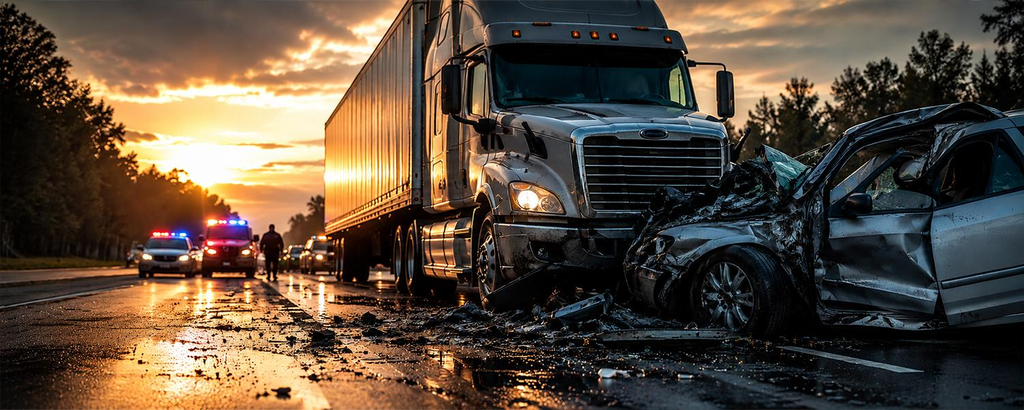
Truck accident investigations may involve commercial drivers, motor carriers, vehicle records, electronic evidence, and multiple insurance policies.
Truck Accidents in Madison Heights: Local Roads and Crash Data
Madison Heights is in Oakland County near I-75 and I-696, with major local roads including John R Road, 11 Mile Road, 12 Mile Road, 13 Mile Road, and Dequindre Road.
A collision involving a commercial truck may occur on an interstate, near a freeway interchange, or on a local street where delivery vehicles and passenger traffic share the roadway.
According to the official 2025 Michigan Traffic Crash Facts report, Madison Heights recorded:
- 1,102 reported traffic crashes
- 220 personal-injury crashes
- 2 fatal crashes
- 344 people injured
These figures represent all reported traffic crashes in Madison Heights. They are not truck-specific crash totals, and they do not establish that a particular road or driver was responsible for any accident.
Statewide, the Michigan State Police reported 128 fatalities in crashes involving commercial motor vehicles in 2025, compared with 110 in 2024. These are statewide commercial-motor-vehicle-involved fatalities, not deaths attributed exclusively to truck-driver negligence.
How Local Road Conditions Can Affect a Truck Accident Investigation
The City of Madison Heights’ 2026 road-project information identifies work affecting portions of 11 Mile Road and John R Road.
When a truck accident occurs near a construction area, investigators may need to examine the lane layout, temporary signs, traffic controls, visibility, and actual conditions at the time of the crash.
Road construction does not automatically establish negligence. The important question is whether a driver’s actions, a vehicle condition, or another legally relevant factor contributed to the collision.
Why Are Truck Accidents Different From Car Accidents?
Truck accident cases frequently require an investigation that goes beyond the police report and damage to the vehicles.
A passenger-car collision may primarily involve the actions of two drivers. A commercial truck crash can involve additional questions:
- Who employed or contracted with the truck driver?
- Which company operated the truck?
- Who owned the tractor and trailer?
- Was the truck properly inspected and maintained?
- Was the driver complying with applicable hours-of-service rules?
- Was the cargo properly loaded and secured?
- Are there electronic records showing the truck’s operation before the collision?
- Which insurance policies may apply?
For example, a semi-truck that strikes a passenger vehicle while merging near I-75 may require examination of the truck’s blind spots, lane position, signals, driver communications, electronic vehicle information, and nearby footage.
The same crash may also raise questions about company training, dispatch practices, or vehicle maintenance.
The trucking company’s name on the trailer does not necessarily identify every legally responsible party. Each company’s role must be evaluated using the evidence.
For collisions involving ordinary passenger vehicles, visit our Madison Heights car accident lawyer page.
Common Causes of Commercial Truck Accidents
The cause of a truck collision must be determined through an investigation. Potential contributing factors include:
Driver Fatigue
Long driving schedules, inadequate rest, or violations of applicable driving-time limits may affect alertness and reaction time.
Electronic logs, trip records, dispatch communications, and other documents may help determine whether fatigue contributed to the accident.
Distracted or Inattentive Driving
A commercial driver may fail to notice slowing traffic, a lane change, a nearby vehicle, or a traffic signal because of distraction or inattention.
Speeding and Following Too Closely
Large trucks require additional stopping distance under many conditions. Speed, vehicle weight, braking performance, roadway conditions, and following distance can all be relevant after a rear-end crash.
Unsafe Lane Changes and Blind-Spot Errors
A driver may fail to identify a vehicle traveling alongside a tractor-trailer. Side-impact damage, dashcam footage, witnesses, and vehicle positioning may help reconstruct the collision.
Inadequate Maintenance
Defective brakes, worn tires, lighting problems, and steering issues may contribute to a collision. Inspection and repair records can help establish whether a problem existed and whether it should have been addressed.
Improper Cargo Loading
Cargo that is overloaded, unbalanced, or improperly secured may affect a truck’s handling or stability.
Depending on the circumstances, the investigation may involve the business responsible for loading or securing the cargo.
Impaired Driving
Alcohol, drugs, or other substances that impair driving can create serious risks. Police findings and applicable testing records may be important.
A finding that a safety rule was violated does not, by itself, resolve every issue of civil liability. The violation must be evaluated in relation to the crash and resulting injuries.
Types of Truck Accident Cases We Handle
Khamo Law evaluates serious collisions involving commercial vehicles, including:
- Semi-truck and tractor-trailer accidents: Crashes involving large freight vehicles and trailers.
- 18-wheeler collisions: Highway and roadway accidents involving combination trucks.
- Jackknife accidents: Situations where a tractor and trailer fold toward one another.
- Truck rollover accidents: Crashes potentially involving speed, steering, road conditions, or cargo distribution.
- Rear-end truck collisions: Accidents involving stopping distance, braking, distraction, or following too closely.
- Blind-spot and sideswipe crashes: Collisions during lane changes, turns, or merging.
- Underride accidents: Crashes where a smaller vehicle travels beneath part of a trailer.
- Delivery truck and box truck accidents: Collisions involving commercial delivery or business vehicles.
- Dump truck and construction truck accidents: Crashes involving vehicles used for construction or material transportation.
- Multi-vehicle truck accidents: Chain-reaction crashes in which several drivers or vehicles may have contributed.
The type of truck matters because not every commercial vehicle is subject to identical regulations, insurance requirements, or evidence-retention practices.
Common Injuries After a Truck Accident
The size and weight differences between a commercial truck and a passenger vehicle can contribute to severe injuries.
A truck accident may result in:
- Traumatic brain injuries
- Spinal cord injuries
- Neck and back injuries
- Herniated discs
- Broken bones
- Crush injuries
- Internal injuries
- Burns
- Nerve damage
- Amputations
- Permanent physical limitations
- Fatal injuries
Some people require emergency surgery, lengthy rehabilitation, assistive equipment, or treatment by multiple specialists.
In a serious case, the long-term impact may include reduced earning capacity, chronic pain, changes in mobility, or the need for assistance with ordinary daily activities.
Medical records, diagnostic imaging, specialist evaluations, therapy notes, and documentation of the injured person’s day-to-day limitations can all become important.
Who May Be Liable for a Madison Heights Truck Accident?
The truck driver is not automatically the only person or business that may be responsible for a commercial vehicle collision.
Depending on the facts and applicable law, potentially responsible parties may include:
The Truck Driver
A driver may be liable when negligent conduct, such as unsafe driving, distraction, impairment, or failure to yield, causes injury.
The Trucking Company or Motor Carrier
A trucking company may face liability based on an applicable legal relationship with the driver or its own conduct.
Potential issues may include negligent hiring, training, supervision, dispatch practices, or failure to address known safety problems.
The Truck or Trailer Owner
The vehicle owner may be different from the company operating the truck. Ownership, consent, contractual relationships, and applicable Michigan law may affect responsibility.
Maintenance and Repair Companies
When a mechanical defect contributed to a collision, the investigation may include maintenance contractors and repair businesses.
Cargo Loading or Transportation Companies
Improper loading or cargo securement may lead to an investigation of businesses involved in preparing or transporting the load.
Other Drivers or Parties
Some truck crashes involve multiple vehicles, defective equipment, or other conduct that contributes to the accident.
A Madison Heights truck accident lawyer can help determine which parties should be investigated, what evidence supports each potential claim, and which insurance policies may respond.
For more detail on the statewide legal framework, visit our Michigan truck accident lawyer resource.
What Evidence Matters Most in a Truck Accident Case?
Truck accident claims may involve records that are not ordinarily available after a passenger-car crash.
Potentially important evidence includes:
- Police crash reports and collision diagrams
- Scene photographs and vehicle damage
- Dashcam and surveillance recordings
- Witness statements
- Electronic logging device records
- Driver hours-of-service records
- Dispatch and trip documents
- GPS and fleet-management records
- Bills of lading and cargo documents
- Vehicle inspection and maintenance records
- Driver qualification and training records
- Electronic vehicle or engine data, when available
- Insurance policies and coverage documents
- Medical records and wage-loss evidence
Why Is Trucking Evidence Preservation So Important?
Some records may be deleted or overwritten under normal business practices.
For example, the Federal Motor Carrier Safety Administration explains that covered motor carriers generally must retain records of duty status and supporting documents for six months.
Six months is not a universal retention period for every type of trucking evidence. Other records may have different requirements, and some electronic or video evidence may become unavailable sooner.
A truck may also be repaired, returned to service, or moved before an independent inspection occurs.
Depending on the case, an attorney may seek preservation of available records, identify relevant companies, and evaluate whether a formal preservation request is appropriate.
What Federal and Michigan Trucking Laws May Apply?
Commercial trucking cases may involve federal motor-carrier safety regulations and applicable Michigan requirements.
The relevant rules depend on the truck, the driver, the type of operation, and the circumstances of the collision.
Potential issues include:
- Driver qualifications and licensing
- Hours-of-service compliance
- Electronic logging requirements
- Vehicle inspections and maintenance
- Cargo securement
- Safe operation of commercial vehicles
- Drug and alcohol testing requirements
For example, under the FMCSA’s general hours-of-service rules, covered property-carrying drivers generally may drive up to 11 hours after 10 consecutive hours off duty and may not drive beyond the applicable 14-hour driving window. Exceptions and special rules can apply.
Whether a regulation was violated, and whether that violation contributed to the crash, requires review of the particular evidence.
Our statewide guide to Michigan trucking laws and regulations explains the broader regulatory framework.
Does Michigan No-Fault Insurance Cover Truck Accident Injuries?
A truck accident can involve both a Michigan Personal Injury Protection (PIP) claim and a separate claim against a negligent driver or trucking company. These are different claims.
Personal Injury Protection (PIP) Benefits
Michigan’s No-Fault system may provide qualifying benefits after a motor vehicle collision without first requiring the injured person to prove that a truck driver was negligent.
Depending on eligibility, applicable insurance coverage, and statutory limits, benefits may include:
- Accident-related medical treatment
- Rehabilitation expenses
- Certain wage-loss benefits
- Replacement services
- Other qualifying benefits under Michigan law
The responsible PIP insurer is determined through statutory priority rules and the available coverage. It is not automatically the trucking company’s insurer.
Third-Party Injury Claims
A separate claim may be available against a negligent truck driver, motor carrier, or another legally responsible party.
Under MCL 500.3135, claims for noneconomic damages arising from motor vehicle use generally require death, serious impairment of body function, or permanent serious disfigurement.
Other potentially recoverable losses depend on the particular claim and applicable law.
Can Both Claims Exist After the Same Truck Accident?
Yes. An injured person may pursue qualifying No-Fault benefits while also evaluating a liability claim against the at-fault parties.
The claims can involve different insurers, documentation, deadlines, and categories of loss.
Our Michigan No-Fault insurance guide explains benefits, insurance priority, and common disputes in more detail.
What Compensation May Be Available After a Truck Accident?
The compensation available depends on liability, the severity of the injuries, insurance coverage, medical evidence, and Michigan law.
Depending on the circumstances, potential benefits or damages may involve:
- Qualifying medical and rehabilitation expenses
- Lost income
- Reduced future earning capacity
- Ongoing medical care
- Physical therapy and specialist treatment
- Assistance with daily activities
- Home or vehicle modifications related to serious impairments
- Pain and suffering where permitted under Michigan law
- Other qualifying economic and noneconomic losses
Not every category is recoverable through the same claim or insurer.
How Much Is a Truck Accident Settlement Worth in Michigan?
There is no dependable average settlement that establishes the value of an individual truck accident case.
Important factors may include the extent of the injuries, the need for future care, the effect on employment, the evidence of negligence, insurance coverage, comparative fault, and applicable legal limits.
A serious collision does not automatically result in a particular settlement amount. Every case must be evaluated based on its own facts.
What Should You Do After a Truck Accident in Madison Heights?
The first priorities after a collision are safety and medical attention. When circumstances allow:
- Call 911. Request emergency assistance and report the collision.
- Get medical attention. Follow appropriate treatment recommendations and document symptoms.
- Photograph the scene if it is safe. Include vehicle damage, roadway conditions, skid marks, debris, signs, and traffic signals.
- Identify the truck and company. Record the license plate, company name, USDOT number, and tractor or trailer markings if visible.
- Collect witness information. Preserve contact details and note whether nearby cameras may have captured the crash.
- Preserve your own evidence. Save dashcam recordings, photographs, messages, and insurance documents.
- Keep treatment and wage records. Save medical bills, work restrictions, rehabilitation records, and documentation of missed income.
- Review insurance requests carefully. Understand the purpose of recorded statements, medical authorizations, and proposed releases.
- Seek timely legal advice. Commercial records and video may not remain available indefinitely.
Do not enter active traffic or put yourself at risk to collect evidence.
How to Obtain a Madison Heights Truck Accident Police Report
If the Madison Heights Police Department investigated the collision, accident reports can be requested through the city’s procedures.
The city lists a $15 fee for traffic accident reports obtained through CLEMIS or by mail.
For a mailed request, the city instructs requesters to provide a self-addressed stamped envelope, a check payable to the City of Madison Heights, and identifying information such as the report number.
Madison Heights Police Records Bureau
280 W. 13 Mile Road
Madison Heights, MI 48071
Visit the city’s official Police Report or Accident Reports page for procedures and current fees.
For a collision on I-75, I-696, or near a municipal boundary, confirm which law-enforcement agency actually investigated the incident before requesting the report.
How Long Do You Have to File a Truck Accident Claim in Michigan?
A negligence-based personal injury lawsuit is generally subject to a three-year statute of limitations under MCL 600.5805, although exceptions and different procedural rules may apply.
No-Fault benefit claims involve separate deadlines and notice requirements under MCL 500.3145.
Michigan’s one-year-back rule may also limit the recovery of certain PIP losses, subject to statutory tolling provisions and other applicable rules.
Additional deadlines may arise depending on the defendant, the type of claim, and other circumstances.
The deadline to file a lawsuit is not the same as the time available to preserve trucking evidence. Video, electronic records, or vehicle-condition evidence may become unavailable long before a lawsuit deadline approaches.
What If a Truck Accident Causes a Fatal Injury?
A fatal commercial vehicle collision can involve questions about negligence, trucking-company responsibility, estate representation, insurance coverage, and damages under Michigan’s wrongful-death law.
The proper person to bring a wrongful-death action and the losses that may be recovered are governed by Michigan law.
Investigating a fatal truck collision may require many of the same commercial records involved in a nonfatal case, including driver logs, maintenance history, electronic data, and witness evidence.
Families seeking additional information can review our Michigan wrongful death lawyer resource.
Why Choose Khamo Law for a Madison Heights Truck Accident Case?
Commercial truck accident claims can require careful investigation of business records, vehicle information, insurance coverage, and Michigan law.
Experienced Michigan Personal Injury Representation
Khamo Law’s attorneys bring more than 40 years of combined legal experience to representing injured individuals and families.
Attorney Koro E. Khamo, the firm’s Founder and Managing Attorney, represents clients in truck accident and other serious injury matters. His professional background includes recognition relating to personal injury and truck accident practice.
Proven Firmwide Case Results
Khamo Law has recovered more than $40 million for clients across its practice.
Our case results illustrate the firm’s experience pursuing compensation for injured clients.
These firmwide recoveries are not presented as Madison Heights truck accident settlements. Prior outcomes do not guarantee or predict the result of another case.
Investigation of Commercial Vehicle Claims
Depending on the facts, Khamo Law can investigate commercial drivers, motor carriers, electronic records, truck maintenance, cargo records, insurance coverage, and the circumstances of the collision.
Accessible Communication and Free Consultations
Khamo Law serves clients in English, Arabic, and Chaldean (Sureth), offers free consultations, and handles qualifying personal injury claims on a contingency-fee basis.
The specific attorney fee and responsibility for expenses are governed by the written representation agreement.
Serving Madison Heights From Our Troy Office
Khamo Law represents Madison Heights residents from our nearby Troy office:
Khamo Law Accident & Injury Lawyers
1120 E. Long Lake Road, Suite 250
Troy, MI 48085
Phone: (248) 466-0606
We serve Madison Heights but do not claim to operate a physical office in the city.
Frequently Asked Questions About Madison Heights Truck Accidents
Do I Need a Truck Accident Lawyer in Madison Heights?
Not every collision requires an attorney. However, legal guidance may be valuable when someone suffers serious injuries, a trucking company disputes responsibility, multiple insurers are involved, or important evidence is controlled by a business.
A Madison Heights truck accident lawyer can evaluate the facts, investigate potential liability, review available insurance coverage, and explain the options under Michigan law.
Can I Sue a Trucking Company After an Accident?
Potentially. A trucking company may be responsible under applicable law depending on its relationship with the driver, its own conduct, and the circumstances of the collision. The driver, vehicle owner, maintenance provider, or another party may also require investigation.
Can I Recover Pain and Suffering After a Michigan Truck Accident?
Potentially. Michigan law generally requires death, serious impairment of body function, or permanent serious disfigurement for noneconomic damages arising from a motor vehicle collision. The determination depends on the evidence and applicable law.
What if the Truck Driver Says I Caused the Accident?
The driver’s statement is not the final determination of fault. Vehicle damage, video, witness information, electronic records, road conditions, and other evidence may help establish what happened. Michigan’s comparative-fault rules may affect recoverable damages.
How Long Does a Trucking Company Keep Electronic Logs?
Under applicable federal rules, covered motor carriers generally must retain records of duty status and supporting documents for six months. Other forms of evidence may have different retention periods.
Does Michigan No-Fault Apply When a Semi-Truck Hits My Car?
It may. Qualifying PIP benefits can apply to motor vehicle collisions involving commercial trucks, depending on the injured person’s circumstances, insurance coverage, and statutory priority rules. A separate liability claim may also be available.
What if an Out-of-State Trucking Company Caused the Crash?
A trucking company being based outside Michigan does not automatically prevent a claim arising from a Michigan accident. Jurisdiction, liability, insurance, and applicable federal or state regulations must be considered.
Are Delivery Truck Accidents Different From Semi-Truck Accidents?
They can be. Both may involve commercial insurance and company-related liability, but the regulations, vehicle characteristics, and records available may differ. Not every delivery vehicle is subject to the same federal trucking requirements as a large interstate tractor-trailer.
Should I Accept the Trucking Company’s Insurance Settlement Offer?
Before accepting an offer, it is important to understand the injuries and future treatment needs, what insurance coverage is available, and which claims would be released. A proposed settlement should be evaluated against the evidence and circumstances rather than assumed to be adequate or inadequate.
How Much Does Khamo Law Charge for a Truck Accident Case?
Khamo Law offers free consultations and handles qualifying personal injury cases on a contingency-fee basis. Attorney fees depend on a recovery, subject to the written agreement, which also explains case expenses and other terms.
Speak With a Madison Heights Truck Accident Lawyer at Khamo Law
After a serious truck accident, important questions may arise about medical care, lost income, commercial insurance, evidence controlled by the trucking company, and who may be legally responsible.
Khamo Law Accident & Injury Lawyers represents injured people and families throughout Madison Heights and Metro Detroit. We can evaluate the collision, identify potentially responsible parties, investigate available evidence, and explain the legal claims that may apply.
Call (248) 466-0606 today for a free consultation.
Khamo Law Accident & Injury Lawyers
1120 E. Long Lake Road, Suite 250
Troy, MI 48085
For other injury claims in the city, visit our Madison Heights personal injury lawyer page.
Qualifying personal injury cases are handled on a contingency-fee basis, subject to the written representation agreement. Past results do not guarantee or predict future outcomes.