










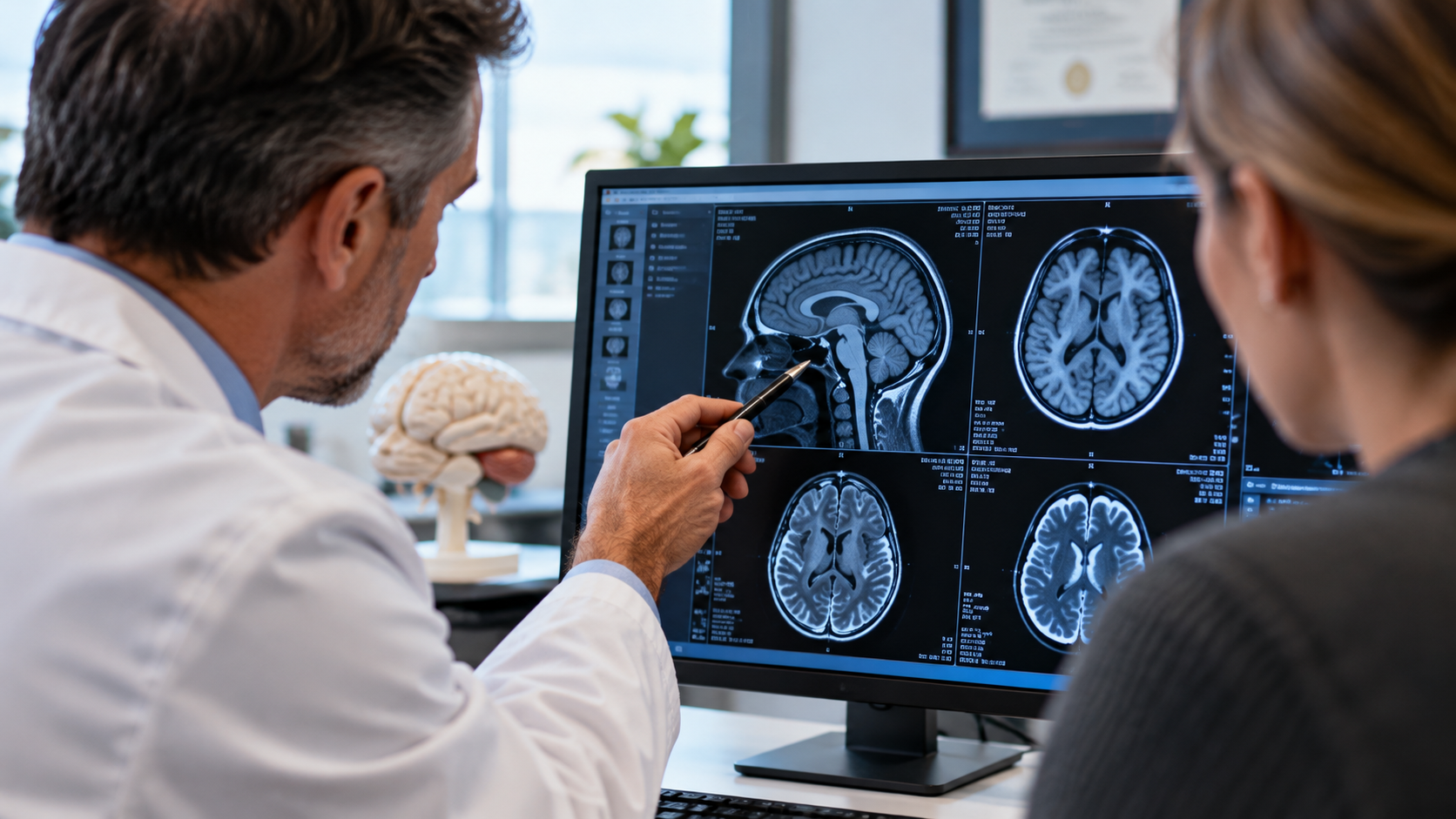
A traumatic brain injury can change a person’s life long after the accident itself. Memory problems, headaches, dizziness, difficulty concentrating, personality changes, and trouble returning to work can affect everyday activities, relationships, and independence.
If you or a loved one suffered a concussion, head injury, or traumatic brain injury because of someone else’s negligence, a Madison Heights brain injury lawyer at Khamo Law Accident & Injury Lawyers can investigate the accident, review medical evidence, identify potentially responsible parties, and help you pursue compensation under Michigan law.
Our Michigan traumatic brain injury lawyers represent people with serious brain injuries throughout the state. Our Madison Heights personal injury lawyers help injured people in Madison Heights and Oakland County understand their insurance coverage and legal options.
Call Khamo Law at 248-466-0606 or contact us online for a free consultation.
How Can a Madison Heights Brain Injury Lawyer Help?
Traumatic brain injury claims can be particularly complicated because symptoms are not always visible and the long-term effects may be difficult to predict.
A person may appear physically recovered while continuing to experience difficulties with memory, communication, balance, work performance, or emotional regulation.
A Madison Heights traumatic brain injury attorney can help by:
- Investigating the accident that caused the injury.
- Obtaining police reports, photographs, surveillance footage, and witness information.
- Reviewing emergency treatment records and subsequent neurological evaluations.
- Identifying relevant CT, MRI, and other medical findings.
- Examining neuropsychological testing when clinically appropriate.
- Documenting changes in memory, concentration, behavior, and daily functioning.
- Investigating available Michigan No-Fault insurance benefits.
- Reviewing disputes involving medical treatment or independent medical examinations.
- Evaluating lost wages, diminished earning capacity, and potential future-care expenses.
- Consulting appropriate medical, rehabilitation, or vocational professionals when necessary.
- Pursuing a supported liability claim against a responsible party.
A successful legal claim requires more than a diagnosis. It must connect the accident, the injury, the responsible party’s conduct, and the losses for which compensation is sought.
What Is a Traumatic Brain Injury?
A traumatic brain injury, often called a TBI, occurs when a bump, blow, jolt, or penetrating injury disrupts the brain’s normal functioning.
According to the Michigan Department of Health and Human Services, traumatic brain injuries range from mild to severe.
Not every blow to the head causes a TBI, and the severity of a person’s symptoms can vary considerably.
Mild Traumatic Brain Injury and Concussion
A concussion is a form of mild traumatic brain injury.
Despite the word mild, some people experience headaches, dizziness, sensitivity to light, memory difficulties, or problems concentrating after a concussion.
Many people recover within weeks, while others experience symptoms that persist and require additional medical assessment.
Moderate Traumatic Brain Injury
Moderate brain injuries may involve more substantial disruption of brain function and can require hospitalization, monitoring, rehabilitation, or extended treatment.
The resulting difficulties may affect communication, memory, physical coordination, and everyday functioning.
Severe Traumatic Brain Injury
A severe TBI may involve prolonged loss of consciousness, significant neurological injury, and serious long-term limitations.
Some people require ongoing medical care, supervision, rehabilitation services, or assistance with daily activities.
The classification and treatment of an injury must come from qualified healthcare professionals, not assumptions based on how the accident appeared.
Brain Injury Accidents in Madison Heights and Oakland County
Brain injuries may occur in many different types of accidents throughout Madison Heights.
The city includes residential neighborhoods, commercial areas, shopping centers, and major transportation corridors such as John R Road, 12 Mile Road, 13 Mile Road, Dequindre Road, and access to I-75.
A serious collision or fall in these areas may produce evidence relevant to both the injury and a potential legal claim.
Car Accidents
A collision may cause the head and body to accelerate and decelerate suddenly, potentially producing a brain injury even when there is no obvious external head wound.
Our Madison Heights car accident lawyers can investigate the traffic collision and applicable automobile insurance issues.
Commercial Truck Accidents
Collisions involving commercial trucks may cause severe injuries because of the forces involved.
Investigations sometimes require driver records, vehicle-maintenance information, fleet data, or accident reconstruction.
Learn more from our Madison Heights truck accident lawyers.
Motorcycle Accidents
Motorcycle riders may suffer head injuries during collisions with larger vehicles or after being thrown onto the roadway.
Our Madison Heights motorcycle accident lawyers address the motorcycle-specific insurance and liability rules that may apply.
Pedestrian and Bicycle Accidents
Pedestrians and bicyclists have little physical protection when struck by a moving vehicle.
A collision may involve both direct impact with the vehicle and a secondary impact with the pavement.
Our Madison Heights pedestrian accident lawyers and bicycle accident lawyers address those accident-specific issues.
Slip and Fall Accidents
A person who slips on ice, wet flooring, or uneven pavement may strike their head on the ground or another hard surface.
When a dangerous property condition caused the fall, Michigan premises-liability law may determine whether a claim exists.
See our Madison Heights slip and fall lawyers resource.
The roads and settings listed here are local context, not assertions about verified brain-injury rates at particular locations.
What Are the Symptoms of a Traumatic Brain Injury?
TBI symptoms vary according to the person and injury.
The Centers for Disease Control and Prevention identifies physical, cognitive, emotional, and sleep-related symptoms associated with mild traumatic brain injuries.
Physical Symptoms
Possible symptoms include:
- Headaches.
- Dizziness or balance problems.
- Nausea.
- Fatigue.
- Sensitivity to light or noise.
- Blurred vision or other visual disturbances.
Cognitive Symptoms
A brain injury may affect:
- Short-term memory.
- Attention and concentration.
- Processing speed.
- Problem-solving.
- Organization and planning.
- Communication.
Emotional and Behavioral Changes
Some people experience irritability, anxiety, mood changes, or increased emotional sensitivity.
Family members may notice changes that are less apparent during a brief medical appointment.
Sleep Problems
A person may sleep more or less than usual, struggle to fall asleep, or experience continuing fatigue.
Some symptoms may appear immediately, while others become more noticeable hours or days after the injury.
New or worsening symptoms should be discussed with a qualified medical professional.
Can You Have a Brain Injury if Your CT Scan or MRI Is Normal?
Yes. A normal CT scan or MRI does not automatically rule out a concussion or mild traumatic brain injury.
Standard imaging is useful for evaluating certain injuries, including bleeding or structural abnormalities, but not every clinically diagnosed concussion produces a visible finding on routine imaging.
The CDC explains that concussion evaluation may involve symptoms, physical examination, clinical history, and other appropriate assessments.
How Is a Concussion Diagnosed?
A healthcare professional may consider:
- The circumstances of the accident.
- Changes in consciousness or awareness.
- Memory problems.
- Neurological symptoms.
- Physical examination findings.
- Cognitive or balance testing.
- Appropriate imaging when indicated.
The specific testing depends on the clinical circumstances.
Does a Normal Scan Make a Legal Claim Impossible?
No.
An insurance company may question the seriousness or cause of a claimed injury when imaging is normal.
However, the legal and medical evaluation should consider the complete record, including clinical findings, symptom history, functional limitations, and other evidence.
A normal scan does not by itself prove that a TBI occurred or that it did not occur.
Can Brain Injury Symptoms Appear Days After an Accident?
Yes.
Some people notice headaches, dizziness, sleep disturbances, or cognitive changes shortly after an injury. Others recognize certain difficulties when they try to resume work, school, driving, or ordinary responsibilities.
For example, a person may initially focus on neck pain or other visible injuries, then discover that concentrating on detailed work has become unusually difficult.
What if I Didn’t Report Head Symptoms at the Emergency Room?
A missing symptom from an initial record does not automatically determine whether an injury occurred.
However, it may create a dispute over timing or causation.
Accurately describe when symptoms developed, how they changed, and what difficulties you experienced. Do not exaggerate or minimize symptoms.
What if I Never Lost Consciousness?
Loss of consciousness is not required for every traumatic brain injury diagnosis.
A qualified clinician can assess the injury using the history and appropriate medical criteria.
How Are Brain Injuries Proven in a Michigan Personal Injury Case?
A brain injury lawsuit generally requires proof of both the underlying accident and the injury’s connection to that accident.
Medical evidence may include emergency-room records, neurologist evaluations, imaging where indicated, rehabilitation records, and documented changes in function.
What Is Neuropsychological Testing?
Neuropsychological testing is a specialized clinical assessment that may evaluate memory, attention, language, processing speed, and other cognitive abilities.
When appropriate, a qualified professional may use testing results alongside medical records, history, and other findings to understand an individual’s functioning.
Not every person with a concussion needs neuropsychological testing, and no single test automatically proves that an accident caused a brain injury.
Why Are Family Observations Important?
Family members may notice changes in the person’s ability to handle responsibilities, remember conversations, complete tasks, or regulate emotions.
Those observations can help explain how an injury affects everyday life, although they should be considered alongside professional medical evidence.
What Other Evidence May Help?
Depending on the case, useful information may include:
- Prior medical and employment records.
- Post-accident treatment history.
- Cognitive and neurological assessments.
- Physician-imposed work restrictions.
- Employer records documenting changes in performance.
- Rehabilitation progress notes.
- Evidence concerning assistance with daily activities.
- Relevant accident reconstruction evidence.
The strength of the claim depends on the reliability and consistency of the evidence, not simply the number of documents collected.
Who Can Be Held Responsible for a Traumatic Brain Injury?
Legal responsibility depends on what caused the injury.
A negligent driver may be responsible for a qualifying motor-vehicle collision. A business or property possessor may face liability for an unsafe condition under Michigan premises-liability law. Other accidents may raise different legal questions.
Investigators should determine:
- What legal duty applied?
- What conduct allegedly violated that duty?
- Did that conduct cause the incident?
- Did the incident cause or aggravate the brain injury?
- What damages are legally recoverable?
A brain injury, even a severe one, does not automatically prove another person was negligent.
What if More Than One Party Contributed to the Accident?
Some cases involve several drivers, an employer, or another potentially responsible party.
The facts and applicable law determine whether more than one defendant can be held responsible.
What if I Had a Previous Concussion?
A prior concussion does not automatically prevent a new claim.
However, medical records and expert evaluation may be needed to distinguish preexisting symptoms from new injuries or a documented aggravation.
Does Michigan No-Fault Insurance Cover Traumatic Brain Injuries?
When a traumatic brain injury results from a qualifying motor-vehicle accident, Michigan Personal Injury Protection (PIP) benefits may help pay certain accident-related expenses.
Under MCL 500.3107, qualifying PIP benefits can include allowable medical expenses and certain wage-loss or replacement-service benefits.
Available benefits depend on the injured person’s eligibility, the applicable policy, Michigan’s statutory rules, and coverage limits.
What Medical Treatment May Be Covered?
Depending on coverage and medical necessity, treatment may involve:
- Hospitalization.
- Neurological evaluations.
- Rehabilitation.
- Physical therapy.
- Occupational therapy.
- Speech-language therapy.
- Appropriate cognitive rehabilitation.
- Medically necessary equipment or assistance.
Coverage disputes can arise over whether treatment is necessary, accident-related, or payable under the applicable policy.
Does PIP Cover Attendant Care After a Brain Injury?
Potentially.
A person with a serious brain injury may require assistance or supervision because of documented physical, cognitive, or safety limitations.
The available benefits depend on medical necessity, services actually provided, applicable policy coverage, and Michigan law.
Read our Michigan attendant care benefits resource for related issues.
What if I Cannot Work Because of My Brain Injury?
Qualifying PIP wage-loss benefits may be available after a covered auto accident, subject to statutory limits and requirements.
A separate liability claim may also require examining future earning-capacity losses when legally recoverable.
For more information, visit our Michigan No-Fault insurance guide.
What if the Insurance Company Disputes My Brain Injury?
Insurers sometimes question brain injury claims because symptoms are not visible, initial imaging appears normal, or a person’s cognitive difficulties are difficult to measure.
A dispute may involve the diagnosis, whether the accident caused the symptoms, the necessity of treatment, or the amount of insurance benefits owed.
Can the Insurance Company Request an Independent Medical Examination?
Michigan law permits certain mental or physical examinations in No-Fault claims under MCL 500.3151, subject to applicable statutory requirements.
The term independent medical examination is commonly used, but the examiner may have been retained by the insurer.
The examination’s scope, documentation, and resulting report should be considered carefully.
What if an Insurer Says My Symptoms Are Psychological?
Brain injuries can involve cognitive, emotional, and physical symptoms.
Medical professionals may need to evaluate different possible causes of symptoms, including psychological conditions, preexisting conditions, or effects associated with a traumatic injury.
An insurer’s characterization is not a substitute for an appropriate medical assessment.
What if My Brain Injury Treatment Is Denied?
The response depends on the reason for the denial, the insurance policy, applicable benefits, and supporting medical records.
No-Fault payment disputes have their own legal requirements and deadlines.
An attorney can review the denial and explain whether an appeal, additional documentation, or a legal action may be appropriate.
What Compensation Can a Brain Injury Victim Recover?
Depending on the cause of the injury, legal liability, insurance coverage, and evidence, recoverable losses may include:
- Emergency medical expenses.
- Neurological treatment and rehabilitation.
- Past lost income.
- Diminished future earning capacity.
- Pain and suffering when legally recoverable.
- Physical disability.
- Cognitive impairment.
- Loss of independence and normal activities.
- Future medically necessary care.
- Assistance and supervision when legally compensable.
- Other documented financial losses.
Not every damage category applies to every claim.
For injuries arising from automobile accidents, Michigan’s No-Fault rules also distinguish first-party insurance benefits from third-party liability damages.
What Is the Average Brain Injury Settlement in Michigan?
There is no dependable average that predicts the value of an individual brain injury case.
A concussion that resolves within several weeks may present a very different claim from an injury causing lasting memory impairment, inability to work, or ongoing care needs.
Liability, the severity and duration of symptoms, medical evidence, insurance coverage, future needs, and legally recoverable damages affect the outcome.
No settlement amount can be guaranteed.
How Are Future Brain Injury Expenses Calculated?
An appropriate evaluation may involve treating medical professionals, rehabilitation specialists, and vocational or economic experts.
The objective is to document foreseeable needs through credible evidence rather than speculate about every possible expense.
What Are the Long-Term Effects of a Traumatic Brain Injury?
Some people recover fully from a concussion. Others experience persistent symptoms or continuing limitations.
Moderate or severe injuries can lead to substantial long-term effects.
Possible consequences include:
- Difficulty with memory and learning.
- Trouble managing complex tasks.
- Reduced stamina or concentration.
- Communication difficulties.
- Mood or behavioral changes.
- Impaired balance or coordination.
- Changes in employment capacity.
- Increased need for assistance with everyday activities.
These effects vary significantly from person to person.
Can a Brain Injury Change Someone’s Ability to Work?
Yes.
A person who previously performed a cognitively demanding job may struggle with multitasking, remembering instructions, concentrating for long periods, or tolerating stimulation.
Another person may experience physical limitations that interfere with work.
Medical restrictions, job requirements, employment records, and vocational evidence may help document these changes.
Can Family Members Be Affected?
A serious TBI may change household responsibilities, supervision needs, transportation arrangements, and caregiving demands.
Those changes can provide important context about the injury’s effect on daily life, although legally recoverable damages depend on the specific claim and applicable law.
Michigan’s Serious Impairment Threshold in Brain Injury Cases
When a TBI results from a motor-vehicle accident, the injured person may need to establish Michigan’s serious-impairment threshold to recover noneconomic damages from a negligent party.
Under MCL 500.3135, serious impairment of body function generally involves:
- An objectively manifested impairment.
- Of an important body function.
- That affects the person’s general ability to lead their normal life.
Does Every Concussion Meet This Threshold?
No.
A diagnosis of concussion does not automatically establish the legal threshold.
The evidence must demonstrate the requirements set out in Michigan law.
Can a Brain Injury Meet the Threshold Without Paralysis?
Potentially.
Cognitive impairment, memory difficulties, or other objectively manifested functional limitations may be relevant depending on the medical and factual evidence.
The legal analysis should focus on the statutory requirements and the injury’s effect on the person’s normal life.
What if I Can Still Do Some of My Normal Activities?
The ability to perform certain activities does not automatically resolve the question.
The nature and extent of the change from the person’s pre-accident life require careful evaluation.
Comparative Fault in Michigan Brain Injury Claims
An insurance company may argue that the injured person was partly responsible for the accident.
Examples include allegations of speeding, distraction, failure to yield, or ignoring a traffic signal.
Michigan comparative-fault rules can affect recoverable damages, depending on the underlying cause of action.
However, allegations must be supported by reliable evidence.
What if the Driver Says the Crash Was My Fault?
Relevant evidence may include:
- Police reports.
- Traffic signal timing.
- Roadway photographs.
- Surveillance footage.
- Witness testimony.
- Vehicle damage.
- Available electronic vehicle information.
A fair investigation examines all relevant evidence rather than relying exclusively on the driver’s account.
Does Comparative Fault Affect PIP Benefits the Same Way?
Not necessarily.
Michigan PIP benefits and liability damages operate under different rules. Fault can affect certain liability recoveries, while PIP eligibility generally does not require proving the other driver was negligent.
Coverage exclusions and other statutory requirements may still apply.
What Evidence Should Be Preserved After an Accident Causing a Brain Injury?
Brain injury cases may require both accident evidence and detailed medical documentation.
Potentially important information includes:
- Police or incident reports.
- Accident-scene photographs.
- Witness statements.
- Available surveillance and dashcam footage.
- Hospital and emergency treatment records.
- Neurology and rehabilitation evaluations.
- Imaging and clinical test results.
- Employment records documenting changes in work capacity.
- Physician-recommended restrictions.
- Records of treatment expenses and missed work.
- Contemporaneous notes about symptoms and changes in daily functioning.
- Relevant previous medical records when necessary to evaluate causation.
Should I Keep a Brain Injury Symptom Journal?
A dated journal may help document headaches, concentration difficulties, sleep problems, activity limitations, and recovery.
Entries should be accurate and describe actual experiences without exaggeration.
A journal supplements rather than replaces professional medical documentation.
Can Surveillance Footage Help a Brain Injury Case?
Yes.
Video may establish how the accident occurred or help evaluate the force and mechanism of injury.
Because footage can be overwritten, identifying cameras and requesting preservation promptly can be useful.
How Long Do You Have to File a Brain Injury Lawsuit in Michigan?
Deadlines depend on the type of accident and legal claim.
Many negligence-based personal injury lawsuits are generally subject to a three-year limitations period under MCL 600.5805.
However, exceptions and special rules may apply.
For qualifying No-Fault benefit claims, MCL 500.3145 provides a separate one-year framework involving notice, prior benefit payments, and rules limiting the recovery of certain older losses.
What Is Michigan’s One-Year-Back Rule?
Michigan law can restrict recovery of older unpaid No-Fault benefits, even when a lawsuit is otherwise timely.
The precise outcome depends on the statutory provisions, relevant dates, and any applicable tolling rules.
What if My Symptoms Were Diagnosed Months After the Accident?
A later diagnosis does not automatically establish that a filing deadline starts on the date of diagnosis.
The relevant claim, accident date, and specific legal rules must be reviewed.
What if the Brain Injury Happened on Government Property?
Additional issues involving governmental immunity, statutory exceptions, and special notice deadlines may arise.
Those claims require prompt legal review.
What Should You Do After an Accident Involving a Possible Brain Injury?
Your health is the first priority.
- Seek medical attention. A suspected brain injury should be evaluated by an appropriate healthcare professional.
- Obtain emergency care for danger signs. Worsening severe headache, repeated vomiting, seizures, unusual behavior, increasing confusion, weakness, or difficulty waking require immediate emergency evaluation.
- Describe your symptoms accurately. Tell clinicians about headaches, dizziness, memory problems, visual changes, and other concerns.
- Follow medical recommendations. Attend follow-up visits and use prescribed treatment or rehabilitation.
- Preserve accident evidence. Keep available photos, reports, witness details, and relevant damaged property.
- Document daily limitations. Record how symptoms affect work, concentration, sleep, and ordinary activities.
- Keep financial records. Save treatment bills and documentation of missed work.
- Review insurance coverage. Determine whether No-Fault benefits or another policy may apply.
- Consider legal advice. An attorney can evaluate liability, insurance benefits, evidence, and deadlines.
Do not delay medical care while deciding whether to pursue a legal claim.
Frequently Asked Questions About Madison Heights Brain Injury Claims
Can I sue for a traumatic brain injury in Michigan?
Potentially. A claim may be available when legally actionable negligence or another recognized basis of liability caused the injury and recoverable damages. Automobile claims may also require meeting Michigan’s serious-injury threshold for noneconomic damages.
Can I have a concussion if my MRI or CT scan is normal?
Yes. A concussion may be diagnosed clinically without a visible abnormality on routine brain imaging. The medical evaluation depends on the symptoms and circumstances.
What if I didn’t lose consciousness?
Loss of consciousness is not required for every concussion or TBI diagnosis.
What if my symptoms began several days after the accident?
Some symptoms can appear or become more noticeable hours or days later. Seek appropriate medical evaluation and describe the symptom timeline accurately.
Can a brain injury affect my ability to work?
Yes. Memory, concentration, processing speed, fatigue, communication, and physical problems may affect employment. Medical restrictions and employment documentation may be important.
What if the insurance company says my symptoms are not real?
An insurer’s opinion does not establish the medical diagnosis. A thorough evaluation may include treating professionals’ findings, symptom history, appropriate testing, and functional evidence.
Can Michigan No-Fault insurance pay for brain injury rehabilitation?
Potentially, when a qualifying motor-vehicle accident and the applicable insurance policy provide PIP coverage. Medical necessity, limits, and statutory requirements must be reviewed.
Can I receive attendant care after a brain injury?
Possibly. Qualifying services may be covered when medical necessity, actual services, and insurance requirements are established.
What if I had a concussion before this accident?
A previous concussion does not automatically prevent a new claim, but distinguishing new symptoms or aggravation from preexisting conditions may require careful medical review.
Do I need neuropsychological testing for a brain injury case?
Not every claim requires it. Qualified medical professionals determine what testing is clinically appropriate, and the legal evidence depends on the circumstances.
What is the average traumatic brain injury settlement?
There is no reliable average for an individual case. Severity, recovery, medical proof, liability, insurance, and future care needs all affect potential value.
Can I recover damages for a mild traumatic brain injury?
Potentially, but a mild TBI diagnosis alone does not establish legal liability or satisfy every applicable damages threshold. The documented injury and its effects matter.
What if my loved one needs long-term supervision?
Medically necessary support and related expenses may be relevant to insurance benefits or legally recoverable damages, depending on the claim. Document the need, services, and cost carefully.
How long do I have to file a brain injury claim?
Many negligence lawsuits have a general three-year period, while No-Fault claims have distinct, often shorter deadlines. The correct deadline must be determined for the individual claim.
What if a family member dies from a brain injury?
When legally actionable conduct causes a fatal injury, a wrongful death claim may be available through the deceased person’s estate.
Learn more from our Madison Heights wrongful death lawyers.
How much does Khamo Law charge?
Khamo Law offers free consultations and handles qualifying personal injury claims on a contingency-fee basis. Ask about the written fee agreement and responsibility for expenses before retaining counsel.
Why Choose Khamo Law for a Madison Heights Brain Injury Claim?
Khamo Law Accident & Injury Lawyers represents people with serious injuries throughout Michigan.
A traumatic brain injury case may involve complex questions about the accident, medical diagnosis, insurance coverage, cognitive functioning, long-term rehabilitation, and loss of earning capacity.
Our attorneys can investigate the incident, review available medical and insurance evidence, document the consequences of the injury, and pursue claims supported by Michigan law.
We recognize that brain injuries can affect aspects of life that are not immediately visible, including concentration, family responsibilities, communication, employment, and independence.
Learn more about attorney Koro E. Khamo and our firm’s personal injury representation.
Speak With a Madison Heights Brain Injury Lawyer
If you or a loved one suffered a concussion, traumatic brain injury, or another serious head injury because of an accident in Madison Heights or elsewhere in Oakland County, Khamo Law can review the circumstances and explain potential legal options.
Call 248-466-0606 or contact Khamo Law online for a free consultation.
We can help you understand the evidence involved in a brain injury claim, Michigan No-Fault benefits, potentially responsible parties, and important deadlines.