










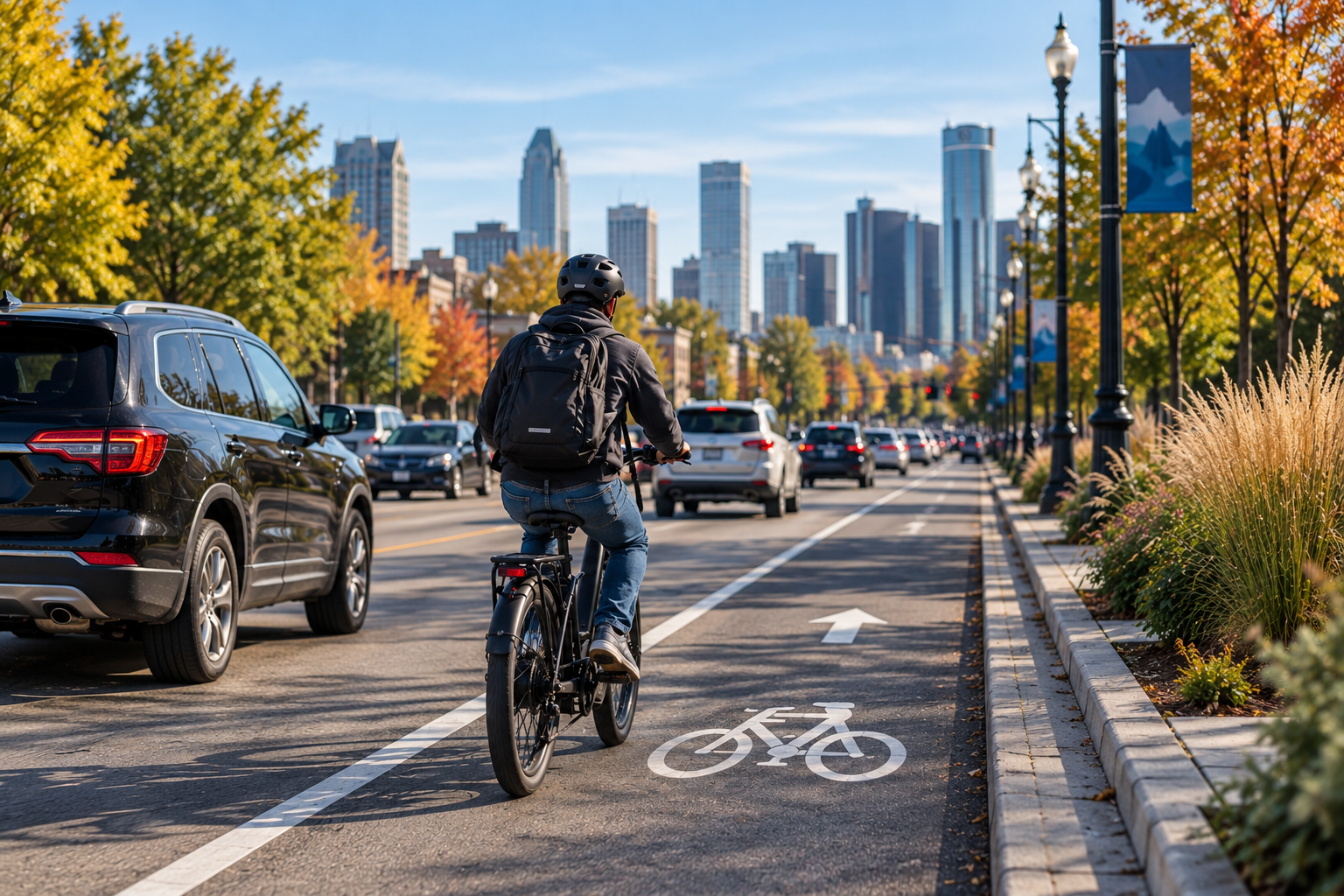
Electric bicycles and electric scooters are becoming increasingly common throughout Michigan, but accidents involving these devices can raise complicated questions about traffic laws, insurance coverage, Michigan No-Fault benefits, fault, and compensation. Khamo Law Accident & Injury Lawyers represents people injured in e-bike, electric scooter, bicycle, pedestrian, and motor vehicle accidents throughout Metro Detroit and across Michigan.
If an e-bike or scooter rider is struck by a vehicle, injured because of another person’s negligence, or involved in a serious collision, determining which laws apply can depend on the type of device involved, how it was being operated, where the accident happened, and whether a motor vehicle was involved.
Michigan does not necessarily treat every electric mobility device the same. An e-bike, electric scooter, electric skateboard, moped, motorcycle, and other powered device may fall under different legal definitions. That classification can affect where the device may be ridden, what safety rules apply, and which insurance benefits or injury claims may be available.
Call (248) 466-0606 or contact Khamo Law for a complimentary consultation.
Last updated: September 2026
What Is Considered an E-Bike in Michigan?
Michigan law specifically defines an electric bicycle. A qualifying e-bike must have a seat or saddle, fully operable pedals, and an electric motor of no more than 750 watts.
Michigan divides e-bikes into three classes:
Class 1 e-bike: The motor provides assistance only while the rider is pedaling and stops assisting when the bicycle reaches 20 mph.
Class 2 e-bike: The motor can propel the bicycle whether or not the rider is pedaling, but motor assistance is limited to 20 mph.
Class 3 e-bike: The motor provides assistance only while the rider is pedaling and stops assisting when the bicycle reaches 28 mph.
Michigan generally subjects an e-bike rider to the same requirements that apply to a traditional bicycle rider, with additional rules that apply specifically to electric bicycles. The Michigan Legislature addresses electric bicycles in MCL 257.662a. Michigan DNR also publishes current guidance regarding e-bike classes and where they may be used on state-managed lands.
Riders injured in a bicycle-related crash can also review our Michigan Bicycle Accident Lawyer resource.
How Old Do You Have to Be to Ride an E-Bike in Michigan?
Michigan does not impose a general minimum age for operating a Class 1 or Class 2 e-bike. However, a person must generally be at least 14 years old to operate a Class 3 e-bike. A person under 14 may ride as a passenger on a Class 3 e-bike that is designed to carry passengers.
Michigan also requires a person under 18 years old who operates or rides as a passenger on a Class 3 e-bike to wear a properly fitted bicycle helmet.
These requirements are established in MCL 257.662a.
Do E-Bikes Have to Be Ridden on the Sidewalk in Michigan?
No. Michigan law does not require e-bike riders to use the sidewalk. In general, an electric bicycle may be operated on any part of a Michigan highway that is open to traditional bicycles, including a designated bicycle lane and the shoulder.
Michigan generally subjects e-bike riders to the same requirements that apply to traditional bicycle riders. When a bicycle is lawfully operated on a sidewalk or pedestrian crosswalk, the rider must yield the right-of-way to pedestrians and give an audible signal before overtaking and passing a pedestrian. Bicycle use on a sidewalk or crosswalk may also be prohibited by an official traffic-control device.
Where an e-bike can legally be operated can also depend on the type of e-bike, the location, and applicable state or local rules. Michigan has separate rules for certain trails and other areas.
See MCL 257.660c and MCL 257.662a for Michigan’s bicycle and electric-bicycle rules.
How Does Michigan Treat Electric Scooters?
Electric scooters can be more complicated because the legal classification depends on the design and specifications of the device.
Michigan law defines an electric skateboard as a single-person wheeled device with a floorboard designed to be stood upon, subject to specific dimensional, power, and speed limits. Michigan’s statutory definition allows the device to have handlebars, which means some stand-up electric scooters may fall within this category depending on their design and specifications.
Other powered devices may fall within different legal classifications. For that reason, the name used by the manufacturer or rental company does not necessarily determine how the device will be treated under Michigan law.
In an injury case, the actual characteristics of the device—such as its motor power, maximum speed, pedals, seat, throttle, and design—may need to be reviewed before determining which rules apply.
Where Can E-Bikes Be Ridden in Michigan?
Michigan law generally allows qualifying electric bicycles to be operated in many of the same roadway areas where traditional bicycles are permitted, subject to restrictions based on e-bike class, location, and local rules.
Michigan DNR currently allows Class 1 e-bikes on state-managed trails where traditional bicycles are permitted, subject to certain exceptions. Class 2 e-bikes may be used on those trails by qualifying riders with a DNR mobility permit, while Class 3 e-bikes are not currently permitted on state-managed trails. All three classes may be ridden on DNR-managed roads where traditional bicycles are allowed.
Local governments and individual trail systems may have additional restrictions, so riders should check the rules that apply to the specific road, trail, park, or municipality.
Where Can Electric Scooters Be Operated?
The rules for electric scooters depend partly on how the device is legally classified.
Michigan law contains specific operating rules for devices that qualify as electric skateboards. Local governments may also regulate the operation of these devices on sidewalks, streets, highways, crosswalks, downtown areas, trails, and other public areas.
Michigan DNR separately states that unlicensed electric scooters generally are not permitted in state parks and recreation areas, including roads, parking lots, pathways, and trails, subject to limited exceptions such as qualifying mobility-device use.
Because state law and local rules can overlap, the location of an electric scooter accident may matter when evaluating fault and applicable regulations.
Who May Be Responsible for an E-Bike or Scooter Accident?
Responsibility depends on how the accident occurred. A serious e-bike or electric scooter crash may involve one or several potentially responsible parties.
These may include:
- a driver who failed to yield;
- a driver who turned across a rider’s path;
- a motorist who opened a vehicle door into a rider;
- a distracted, speeding, or impaired driver;
- a commercial driver or employer;
- another bicyclist or scooter operator;
- a property owner in an appropriate premises-liability case;
- a governmental entity when Michigan’s statutory requirements for a roadway-related claim are satisfied; or
- a manufacturer, distributor, or other responsible party when a defective product contributed to the injury.
Every case requires an individual investigation of the accident, available insurance coverage, applicable law, and evidence.
E-Bike and Scooter Accidents Involving Cars
Collisions between motor vehicles and e-bike or scooter riders can cause severe injuries because riders have little physical protection from the force of an impact.
These crashes frequently occur at intersections, driveways, crosswalks, parking lots, bicycle lanes, shoulders, and during turning or lane-changing maneuvers.
Depending on the circumstances, an injured rider may have a liability claim against a negligent driver and may also need to determine whether Michigan automobile insurance benefits apply.
Our Michigan Car Accident Lawyer resource explains Michigan motor vehicle claims in more detail.
Can Michigan No-Fault Benefits Apply After an E-Bike or Scooter Accident?
Potentially.
Michigan No-Fault coverage can become particularly complicated when a person is injured while riding an e-bike, electric scooter, bicycle, or another device and a motor vehicle is involved.
Michigan law contains specific priority rules for people who suffer accidental bodily injury while not occupying a motor vehicle. Under current MCL 500.3115, certain claims by people injured while not occupants of a motor vehicle are directed through Michigan’s Assigned Claims Plan, subject to the separate rules contained in MCL 500.3114 and other provisions of the No-Fault Act.
Whether PIP benefits are available in a particular e-bike or scooter accident can depend on the type of device, whether a motor vehicle was involved, the rider’s insurance circumstances, and other facts.
For a detailed explanation of PIP benefits and Michigan’s No-Fault system, visit our Michigan No-Fault Insurance Lawyer resource.
What If the Driver Who Hit the Rider Is Uninsured or Underinsured?
A serious e-bike or scooter accident may involve a driver who has no automobile liability insurance or does not have enough coverage to fully address the rider’s injuries and losses.
Depending on the applicable insurance policies and circumstances, uninsured motorist or underinsured motorist coverage may become important.
UM/UIM coverage is separate from Michigan PIP benefits, and whether coverage applies depends heavily on the language of the insurance policy.
Learn more in our Michigan Uninsured and Underinsured Motorist Lawyer resource.
Common Causes of Michigan E-Bike and Electric Scooter Accidents
E-bike and scooter accidents can occur for many reasons, including:
- drivers failing to yield;
- distracted driving;
- unsafe left turns;
- right-hook collisions;
- vehicles entering bicycle lanes;
- dooring accidents;
- speeding;
- impaired driving;
- unsafe intersections;
- poor visibility;
- roadway hazards;
- potholes and damaged pavement;
- defective brakes, throttles, batteries, or other equipment;
- collisions with pedestrians or other riders; and
- riders losing control while attempting to avoid a vehicle.
Determining why the accident occurred can help identify potentially responsible parties, available insurance coverage, and evidence that should be preserved.
Injuries Caused by E-Bike and Scooter Crashes
E-bike and electric scooter crashes can cause serious and sometimes permanent injuries.
Common injuries may include:
- traumatic brain injuries and concussions;
- spinal cord injuries;
- fractures;
- facial injuries;
- shoulder and arm injuries;
- knee and leg injuries;
- road rash;
- internal injuries;
- nerve damage; and
- fatal injuries.
Khamo Law provides additional information about Michigan traumatic brain injury claims and Michigan spinal cord injury claims.
Families who lose a loved one because of another party’s negligence can also review our Michigan Wrongful Death Lawyer resource.
What If an E-Bike or Scooter Rider Is Hit While Crossing the Street?
Some e-bike and scooter crashes occur in crosswalks, intersections, parking-lot entrances, or other areas where the conduct of both the rider and motorist must be evaluated.
Important evidence may include traffic signals, signs, right-of-way rules, surveillance footage, dashcam video, witness statements, roadway markings, lighting conditions, and the position and speed of the vehicles involved.
Our Michigan Pedestrian Accident Lawyer resource provides additional information about collisions involving vulnerable road users.
Do Helmet Rules Apply to Michigan E-Bikes and Electric Scooters?
Helmet requirements depend on the rider’s age and the type of device.
Michigan DNR’s current e-bike guidance states that Class 3 e-bike riders ages 14 through 18 are required to wear a helmet. Class 3 riders must generally be at least 14 years old to operate the e-bike, although younger individuals may ride as passengers when the bicycle is designed for passengers.
Different requirements may apply to devices classified as electric skateboards or other powered devices.
Whether the use or non-use of a helmet affects a particular injury claim is a separate legal question involving causation, comparative fault, the nature of the injuries, and applicable Michigan law. A rider should not assume that failing to wear a helmet automatically eliminates a personal injury claim.
What Evidence Should Be Preserved After an E-Bike or Scooter Accident?
Evidence can disappear quickly following a micromobility accident.
Potentially important evidence may include:
- photographs of the accident scene;
- photographs of injuries;
- the e-bike or electric scooter itself;
- vehicle damage;
- surveillance video;
- dashcam footage;
- police reports;
- witness names and contact information;
- medical records;
- GPS or application data;
- electronic ride records;
- rental scooter account information;
- roadway measurements;
- traffic-control information;
- insurance records; and
- maintenance or product records involving the device.
An injured rider should generally avoid disposing of, repairing, or substantially altering the e-bike or scooter before potentially important evidence has been preserved.
What Compensation May Be Available After an E-Bike or Scooter Accident?
The damages and insurance benefits available depend on the circumstances of the accident, applicable Michigan law, insurance coverage, fault, and the injuries involved.
Depending on the claim, recoverable losses or benefits may involve:
- medical expenses;
- rehabilitation and future medical care;
- wage loss;
- loss of earning capacity;
- applicable Michigan No-Fault benefits;
- pain and suffering;
- disability;
- scarring or disfigurement; and
- other legally recoverable losses.
There is no standard settlement value for a Michigan e-bike or electric scooter accident. Every claim must be evaluated individually based on the evidence, available insurance coverage, injuries, and applicable law.
How Does Comparative Fault Affect a Michigan E-Bike or Scooter Claim?
Michigan uses comparative-fault principles in personal injury cases.
An insurance company may examine the conduct of both the rider and other people involved in the accident. Issues may include where the rider was traveling, traffic signals, visibility, lighting, speed, the classification of the device, compliance with traffic rules, and the conduct of the driver.
An allegation that a rider contributed to an accident does not automatically establish fault. Photographs, video, witness statements, vehicle damage, electronic information, roadway evidence, and expert analysis may all be important when responsibility is disputed.
For broader information about Michigan injury claims, damages, fault, and legal options, visit our Michigan Personal Injury Lawyer resource.
E-Bike and Electric Scooter Laws Can Change
Electric transportation technology is evolving quickly, and Michigan law distinguishes among electric bicycles, electric skateboards, mopeds, motorcycles, motor vehicles, and other powered devices.
A device marketed to consumers as an “e-bike” or “electric scooter” may not necessarily satisfy Michigan’s legal definition for that category.
Local governments may also regulate certain devices differently depending on where they are operated, while state agencies such as the Michigan Department of Natural Resources maintain separate rules for state-managed parks, trails, and recreation areas. The DNR’s current e-bike policy, for example, distinguishes among Class 1, Class 2, and Class 3 e-bikes and was updated as recently as 2026.
For that reason, Khamo Law periodically reviews this resource for developments involving Michigan e-bike classifications, electric scooter regulations, helmet requirements, roadway and trail use, local ordinances, Michigan No-Fault law, and insurance issues affecting injured riders.
This page was last reviewed in September 2026.
What Should I Do After an E-Bike or Electric Scooter Accident in Michigan?
After a serious e-bike or scooter crash, consider:
- obtaining appropriate medical care;
- reporting the accident when required or appropriate;
- photographing the accident scene and vehicles;
- collecting witness information;
- preserving the e-bike or scooter;
- keeping records relating to medical treatment, missed work, and expenses; and
- preserving any app, GPS, rental, or electronic ride data associated with the device.
Avoid assuming that an insurance company has correctly classified the device or identified every potentially available source of insurance coverage.
Khamo Law can investigate the accident, review applicable Michigan traffic and insurance laws, preserve available evidence, communicate with insurance companies, and evaluate potential personal injury claims.
Call (248) 466-0606 or contact our Michigan personal injury attorneys for a complimentary consultation.
Michigan E-Bike and Electric Scooter Accident FAQs
How old do you have to be to ride an e-bike in Michigan?
Michigan does not have a general minimum operating age for Class 1 or Class 2 e-bikes. A person must generally be at least 14 years old to operate a Class 3 e-bike. Michigan’s current rules also require Class 3 riders ages 14 through 18 to wear a helmet. The Michigan DNR provides a current breakdown of the state’s e-bike classes, age requirements, helmet rules, and trail regulations.
Do e-bikes have to be ridden on the sidewalk in Michigan?
No. Michigan does not require e-bikes to be ridden on sidewalks. Michigan law generally gives a person operating an e-bike the same rights and responsibilities as a person riding a traditional bicycle, subject to additional rules for certain e-bike classes and locations. Michigan bicycle law also permits lawful sidewalk riding unless it is prohibited by an official traffic-control device. A rider using a sidewalk or pedestrian crosswalk must yield to pedestrians and give an audible signal before passing them. See MCL 257.660c.
Can you ride an e-bike on the road in Michigan?
Yes. Michigan e-bikes can generally be operated on roads where traditional bicycles are permitted. Riders are subject to Michigan bicycle traffic laws as well as rules specifically applicable to electric bicycles. The type of e-bike and location can affect which additional restrictions apply.
Can you ride an e-bike in a bike lane in Michigan?
Generally, yes. Michigan law generally gives e-bike riders the same roadway rights and responsibilities as traditional bicycle riders. An e-bike rider is not required to use a sidewalk simply because one is available.
Are e-bikes allowed on Michigan trails?
It depends on the e-bike class and the trail. The Michigan DNR currently permits Class 1 e-bikes on state-managed trails where traditional bicycles are permitted, with specified exceptions. Class 2 e-bikes may be used on those trails by qualifying riders with a DNR mobility permit. Class 3 e-bikes are not permitted on state-managed trails. All three classes may be used on DNR-managed roads where traditional bicycles are allowed. Michigan DNR’s current e-bike rules should be checked because trail policies can change.
What is the difference between a Class 1, Class 2, and Class 3 e-bike in Michigan?
A Class 1 e-bike provides motor assistance only while the rider is pedaling and stops providing assistance at 20 mph. A Class 2 e-bike can propel the bicycle without the rider pedaling but is also limited to 20 mph. A Class 3 e-bike provides assistance while the rider pedals and stops providing assistance at 28 mph. A qualifying Michigan e-bike must also have fully operable pedals, a seat or saddle, and an electric motor of no more than 750 watts.
Do you have to wear a helmet while riding an e-bike in Michigan?
Michigan’s helmet requirement depends on the e-bike class and rider’s age. Under current rules, a person ages 14 through 18 operating a Class 3 e-bike must wear a helmet. Michigan does not impose the same statewide helmet requirement on Class 1 and Class 2 e-bike riders. Riders should still consider helmet use regardless of whether it is legally required.
Is an electric scooter the same as an e-bike under Michigan law?
No. Michigan has a specific statutory definition for an electric bicycle. An electric scooter may fall under a different legal classification depending on its design, power, speed, handlebars, floorboard, and other characteristics. Some stand-up electric scooters may satisfy Michigan’s definition of an electric skateboard, but the particular device should be reviewed before assuming which law applies.
Can you ride an electric scooter on the sidewalk in Michigan?
It depends on the device’s legal classification and the local rules where it is being operated. Michigan law allows local governments to regulate certain electric mobility devices, including electric skateboards, on sidewalks, streets, crosswalks, trails, downtown areas, and other locations. A person operating an electric skateboard on a sidewalk must yield to pedestrians and give an audible signal before passing.
Are electric scooters allowed in Michigan state parks?
Michigan DNR currently states that unlicensed electric scooters are generally prohibited in state parks and recreation areas, including roads, parking lots, pathways, and trails. Exceptions exist for qualifying mobility-device use. E-bikes are governed by separate rules.
What happens if a car hits someone riding an e-bike in Michigan?
An injured e-bike rider may have several legal and insurance issues to evaluate, including the driver’s negligence, available liability insurance, Michigan No-Fault benefits, uninsured or underinsured motorist coverage, and the rider’s injuries and losses. The specific insurance rules depend on the circumstances of the collision. Learn more about motor vehicle injury claims from our Michigan Car Accident Lawyers and our Michigan No-Fault Insurance Lawyer resource.
Does Michigan No-Fault insurance cover an e-bike accident?
It may. Michigan No-Fault benefits can become relevant when an e-bike rider is injured in an accident involving a motor vehicle. Eligibility and the applicable priority rules depend on the circumstances of the accident, the type of device involved, and applicable insurance coverage. Visit our Michigan No-Fault Insurance Lawyer resource for more information.
What if the driver who hit an e-bike rider does not have insurance?
Other potential sources of coverage may need to be investigated. Depending on the applicable insurance policies and circumstances, uninsured or underinsured motorist coverage may be available. Learn more from our Michigan Uninsured and Underinsured Motorist Lawyer resource.
Who can be responsible for an e-bike or electric scooter accident?
Responsibility depends on how the accident happened. Potentially responsible parties may include a negligent driver, commercial vehicle operator or employer, another rider, a property owner in an appropriate premises-liability case, a governmental entity when statutory requirements are satisfied, or a manufacturer or seller when a defective product contributed to the injury.
What should I do after an e-bike or electric scooter accident in Michigan?
Seek appropriate medical attention, report the collision when required, photograph the scene and vehicles, obtain witness information, preserve the e-bike or scooter, and save any GPS, app, rental, or electronic ride data. If a motor vehicle was involved, insurance and Michigan No-Fault issues should also be evaluated promptly.
Can I recover compensation after an e-bike or electric scooter accident?
Depending on the circumstances, an injured rider may be able to pursue compensation or insurance benefits involving medical expenses, wage loss, future medical care, loss of earning capacity, pain and suffering, disability, scarring, and other legally recoverable losses. The available claims depend on fault, insurance coverage, the severity of the injuries, and Michigan law.
How long do I have to file an e-bike or scooter accident claim in Michigan?
The deadline depends on the type of claim. Different time limits can apply to negligence lawsuits, Michigan No-Fault benefits, claims involving governmental entities, insurance-contract claims, wrongful death cases, and other circumstances. Because some notice requirements and deadlines can arise well before the general personal injury limitations period, an injured rider should not assume that one deadline applies to every e-bike or scooter accident.
Do I need a lawyer after an e-bike or electric scooter accident?
Not every accident requires an attorney. Legal representation may be particularly useful when the injuries are serious, fault is disputed, a motor vehicle was involved, insurance coverage is contested, the device’s legal classification is unclear, or multiple parties may be responsible. Khamo Law Accident & Injury Lawyers represents injured people throughout Metro Detroit and across Michigan.
Speak With a Michigan E-Bike and Electric Scooter Accident Lawyer
E-bike and electric scooter accidents can involve overlapping questions of Michigan traffic law, insurance coverage, device classification, and personal injury law.
Khamo Law Accident & Injury Lawyers represents injured people throughout Metro Detroit and across Michigan. Our attorneys can evaluate the circumstances of an e-bike or scooter accident, identify potentially applicable insurance coverage, investigate fault, and explain available legal options.
Call (248) 466-0606 or contact Khamo Law for a complimentary consultation.
Legally reviewed by Attorney Koro E. Khamo
Founder & Managing Attorney, Khamo Law, PLLC
Michigan Bar No. P80994