










If you were injured in an Uber, Lyft, or other rideshare accident, determining which insurance company is responsible can be more complicated than in a typical car crash. A Michigan Uber & Lyft accident lawyer can investigate the driver’s app status, identify the policies that may apply, and help protect your rights.
At Khamo Law, we help injured people navigate Michigan rideshare accident claims and pursue compensation after serious crashes. We represent passengers, drivers, pedestrians, cyclists, and occupants of other vehicles injured in accidents involving rideshare vehicles.
Our consultations are free, and you pay no attorney fees unless we recover compensation for you. Services are available in English, Arabic, and Chaldean.
Call Khamo Law at (248) 466-0606 or contact us online for a free case evaluation.
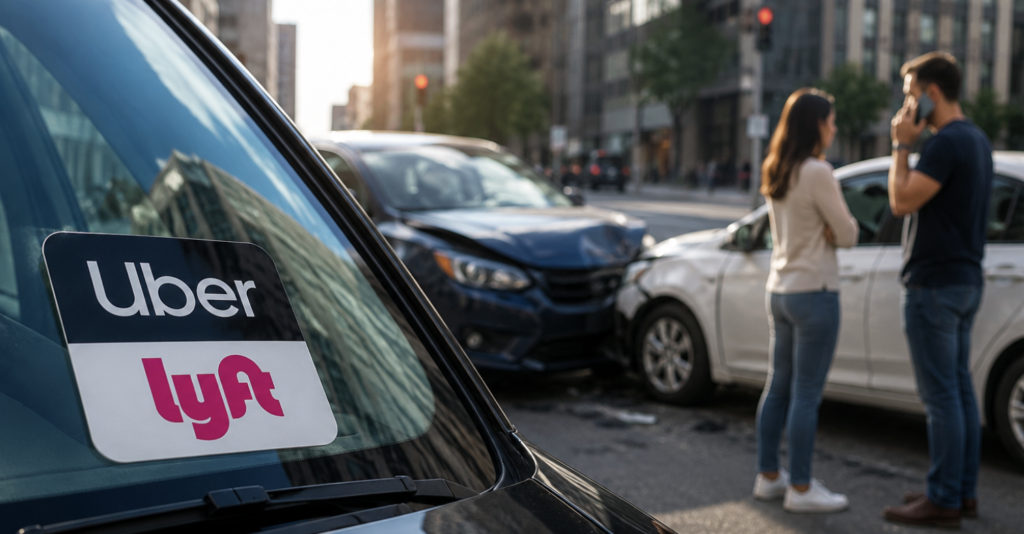
Rideshare accident involving an Uber and Lyft driver in a busy city in Michigan.
Why Uber and Lyft Accidents Are Different
A rideshare accident can involve more insurance issues than an ordinary collision because coverage may change depending on what the Uber or Lyft driver was doing when the crash occurred.
Important questions can include:
- Was the rideshare app turned off?
- Was the driver logged in and waiting for a request?
- Had the driver accepted a ride?
- Was the driver traveling to pick up a passenger?
- Was a passenger already in the vehicle?
- Did another driver cause the collision?
- Which personal or rideshare insurance policies were in effect?
Michigan law requires different insurance coverage depending on the rideshare driver’s status. Determining that status is therefore one of the first issues that may need to be investigated after a crash.
If you were injured in another type of motor vehicle collision, learn more about how our Michigan car accident attorneys handle serious injury claims.
How Michigan Rideshare Insurance Works
Michigan law requires transportation network company drivers, or the rideshare company on their behalf, to maintain insurance that recognizes the vehicle is being used for rideshare activity while the driver is logged into the company’s digital network or engaged in a prearranged ride.
The required coverage changes depending on the driver’s status.
When the Rideshare App Is Off
When the driver is not logged into the rideshare platform, the accident generally does not fall within the statutory rideshare insurance periods described under Michigan’s transportation network company law.
The driver’s ordinary personal automobile policy may instead be relevant, subject to that policy’s terms and exclusions.
When the App Is On but No Ride Has Been Accepted
When a rideshare driver is logged into the platform and available to receive requests but is not yet engaged in a prearranged ride, Michigan law requires at least:
- $50,000 in bodily injury or death liability coverage per person
- $100,000 per incident for bodily injury or death
- $25,000 in property damage coverage
- Required personal protection and property protection insurance
These requirements are established by Michigan statute.
During Pickup and While Transporting a Passenger
Once the driver is engaged in a prearranged ride, Michigan requires substantially higher liability coverage.
The required residual third-party automobile liability coverage must have a minimum combined single limit of $1 million for bodily injury and property damage. Required personal protection and property protection coverage also applies.
That difference makes the driver’s exact app status especially important after an accident.
Personal Auto Insurance May Exclude Rideshare Activity
A rideshare driver’s personal automobile insurance policy may not provide coverage while the driver is logged into the Uber or Lyft network or providing a prearranged ride.
Michigan law expressly permits personal auto insurers to exclude several types of coverage for losses occurring during rideshare activity, depending on the policy. These exclusions can include liability, personal protection insurance, property protection insurance, and uninsured or underinsured motorist coverage.
This is one reason rideshare claims should not be treated exactly like ordinary automobile claims.
A lawyer can obtain the relevant policies and determine which coverage was actually available when the collision occurred.
Who Can Be Injured in an Uber or Lyft Accident?
Khamo Law can evaluate rideshare accidents involving many different types of injured people, including:
- Uber or Lyft passengers
- Rideshare drivers
- Drivers of other vehicles
- Passengers in other vehicles
- Pedestrians
- Bicyclists
- Motorcyclists
- Family members pursuing a wrongful death claim after a fatal crash
If a rideshare vehicle struck you while you were walking, see our Michigan pedestrian accident attorney page.
If you were riding a bicycle, learn more from our Michigan bicycle accident lawyer page.
Common Causes of Michigan Uber and Lyft Accidents
Rideshare drivers face many of the same risks as other drivers, but the nature of rideshare work can create additional distractions and pressures.
Common causes may include:
- Distracted driving
- Looking at the rideshare app while driving
- GPS and navigation distractions
- Speeding
- Unsafe lane changes
- Failure to yield
- Following too closely
- Running traffic signals
- Driver fatigue
- Driving in unfamiliar areas
- Unsafe passenger pickup or drop-off
- Poor weather conditions
- Drunk or impaired driving
The cause of the crash can affect which parties and insurance policies may be responsible.
Who May Be Liable After a Rideshare Accident?
Liability depends on how the accident happened.
Potentially responsible parties can include:
- The Uber or Lyft driver
- Another negligent driver
- The rideshare driver’s insurer
- A rideshare insurance carrier
- The insurer of another involved vehicle
- A vehicle owner
- Other parties whose negligence contributed to the collision
The rideshare company’s role must be evaluated carefully. A claim involving available rideshare insurance is not necessarily the same thing as establishing direct liability against Uber or Lyft itself.
An attorney can investigate the crash and determine which parties and insurance policies should be pursued.
PIP Benefits After a Michigan Rideshare Accident
Michigan’s no-fault system may provide Personal Injury Protection, commonly called PIP benefits, after a rideshare crash.
However, the insurer responsible for those benefits can depend on several factors, including whether the injured person was:
- A rideshare passenger
- The rideshare driver
- A pedestrian
- A cyclist
- The driver of another vehicle
- A passenger in another vehicle
Available insurance policies and applicable priority rules can also matter.
PIP benefits may include covered accident-related losses such as medical expenses and wage loss, depending on the circumstances and applicable coverage.
If an insurer is refusing to pay benefits, see our guide to denied PIP benefits in Michigan.
Can You Recover Pain and Suffering After a Rideshare Crash?
Michigan law allows certain injured people to pursue noneconomic damages after motor vehicle accidents when the statutory threshold is met.
The law permits tort liability for noneconomic loss when an injured person suffers death, serious impairment of body function, or permanent serious disfigurement.
These claims may include compensation for losses such as:
- Physical pain
- Emotional suffering
- Disability
- Loss of enjoyment of life
- Permanent impairment
- Other noneconomic consequences of the injury
Whether the threshold is satisfied depends on the specific injuries and their effects.
Compensation After a Michigan Uber or Lyft Accident
Depending on the circumstances, compensation may be available from no-fault benefits, a liability claim, or other insurance coverage.
Potential damages may include:
- Medical expenses
- Future medical care
- Lost wages
- Reduced earning capacity
- Pain and suffering
- Disability
- Permanent disfigurement
- Rehabilitation expenses
- Other accident-related economic and noneconomic losses
The value of a case depends on the facts, available insurance, fault, medical evidence, and the long-term impact of the injuries.
Evidence in a Rideshare Accident Case
Evidence can be especially important because rideshare cases involve digital records that do not exist in most ordinary crashes.
An investigation may include:
- Police reports
- Crash-scene photographs
- Vehicle damage
- Witness statements
- Medical records
- Traffic-camera footage
- Surveillance footage
- Driver phone records when legally obtainable
- Uber or Lyft trip records
- App login and logout information
- GPS information
- Insurance policies
- Communications between the driver and rideshare platform
Michigan law requires rideshare companies and insurers to cooperate in exchanging relevant coverage information during certain investigations, including the driver’s login and logout times surrounding an accident.
That information can help establish which insurance period applied.
What To Do After an Uber or Lyft Accident
The steps you take after a rideshare crash can affect both your health and your ability to document what happened.
Consider the following:
- Seek medical attention. Some injuries may not be immediately obvious.
- Report the crash to police.
- Get the rideshare driver’s information, including name, vehicle, plate number, and insurance information.
- Document the ride in the app. Take screenshots showing your driver, trip, pickup, destination, or receipt when applicable.
- Take photographs of the vehicles, road, injuries, and crash scene.
- Get witness contact information.
- Preserve messages and trip records from Uber or Lyft.
- Notify the appropriate insurance company, but be cautious about giving detailed recorded statements before understanding your rights.
- Keep records of medical treatment, expenses, and missed work.
- Speak with an attorney if there are questions about insurance coverage or serious injuries.
For additional guidance, see our Michigan personal injury attorneys page.
What If the Uber or Lyft Driver Was Not at Fault?
Being injured in a rideshare vehicle does not mean the rideshare driver had to cause the crash.
Another motorist may be responsible.
For example, an Uber passenger could be injured when another driver:
- Runs a red light
- Rear-ends the rideshare vehicle
- Makes an unsafe turn
- Drifts into the rideshare driver’s lane
- Drives while distracted
- Causes a multi-vehicle collision
In that situation, claims may involve the at-fault driver’s liability coverage in addition to applicable no-fault or other insurance benefits.
A rideshare attorney can determine which claims apply based on the facts.
What If You Were a Pedestrian or Cyclist Hit by a Rideshare Driver?
Uber and Lyft accidents do not only injure people inside vehicles.
A pedestrian or cyclist may be seriously injured when a rideshare driver is distracted by a navigation system, searching for a passenger, making a sudden pickup or drop-off, or failing to yield.
The driver’s app status can still be important because it may affect the insurance available for the accident.
Pedestrian and bicycle crashes often involve significant injuries, including fractures, head injuries, spinal injuries, and other serious trauma.
Fatal Uber and Lyft Accidents
Some rideshare crashes result in fatal injuries.
When negligence causes a death, surviving family members may have rights under Michigan’s wrongful death laws.
A wrongful death claim may involve issues such as funeral expenses, loss of financial support, loss of companionship, and other damages permitted by Michigan law.
Learn more from our Michigan wrongful death attorneys.
Why Choose Khamo Law for a Michigan Rideshare Accident Case?
Rideshare claims can involve multiple insurers, digital records, no-fault benefits, liability claims, and disputed coverage.
Khamo Law can help by:
- Investigating how the crash happened
- Determining the rideshare driver’s app status
- Identifying all potentially applicable insurance policies
- Preserving digital and physical evidence
- Reviewing available PIP benefits
- Handling communications with insurers
- Evaluating liability claims against negligent drivers
- Documenting the full impact of serious injuries
- Negotiating for a fair resolution
- Preparing the case for litigation when necessary
We offer free consultations and handle personal injury cases on a contingency fee basis.
Frequently Asked Questions About Michigan Uber and Lyft Accidents
Who pays if I was a passenger in an Uber or Lyft that crashed?
It depends on the circumstances. The rideshare driver’s app status, who caused the collision, applicable no-fault rules, and the available insurance policies can all affect which insurer is responsible.
Does Uber or Lyft provide $1 million in insurance for every accident?
Not necessarily. Michigan requires a minimum $1 million combined liability limit while a rideshare driver is engaged in a prearranged ride. Lower statutory liability limits apply when the driver is logged into the app and waiting for a request but has not yet begun a prearranged ride.
What if the Uber or Lyft driver was not at fault?
You may still have a claim against the driver who caused the crash, and other insurance benefits may also be available. An attorney can identify the relevant policies and determine the appropriate claims.
Can I sue Uber or Lyft directly?
That depends on the legal basis of the claim and the facts. The existence of rideshare insurance does not automatically mean Uber or Lyft is directly liable for the driver’s conduct. An attorney should evaluate the relationship between the driver, company, and accident before determining whom to pursue.
What if I was hit by an Uber or Lyft driver while walking or riding a bicycle?
You may still have a claim. The rideshare driver’s app status can affect available coverage even when the injured person was outside the rideshare vehicle.
What if the driver’s personal insurance denies coverage?
Michigan law permits personal automobile insurers to exclude certain coverage while a driver is engaged in rideshare activity. The rideshare-specific policies and statutory requirements must then be evaluated to determine what coverage applies.
How long do I have to make a claim?
Different claims and insurance benefits can have different deadlines and notice requirements. Because rideshare cases may involve multiple insurers and types of claims, it is safer to determine the applicable deadlines based on the specific circumstances rather than relying on one general deadline.
How much is an Uber or Lyft accident case worth?
There is no standard settlement amount. Case value can depend on the severity of the injuries, available insurance, fault, medical treatment, lost income, future losses, and whether the injured person qualifies to pursue noneconomic damages.
How much does it cost to hire Khamo Law?
Khamo Law handles personal injury cases on a contingency fee basis. You do not pay attorney fees unless compensation is recovered for you.
Michigan Uber & Lyft Accident Lawyers Serving Injured People Across the State
Khamo Law represents people injured in rideshare and motor vehicle accidents throughout Michigan.
Our broader practice includes Michigan car accident claims, pedestrian accidents, bicycle accidents, and other serious personal injury cases.
Khamo Law represents people injured in rideshare crashes throughout Metro Detroit and Michigan, including those in Troy, Sterling Heights, Warren, Detroit, and Clinton Township.
Contact a Michigan Uber & Lyft Accident Lawyer
If you were injured as an Uber or Lyft passenger, struck by a rideshare vehicle, or hurt in another accident involving a rideshare driver, Khamo Law can evaluate the accident and available insurance coverage.
We can investigate the driver’s rideshare status, identify potentially responsible parties, preserve important evidence, and pursue compensation when supported by the facts and law.
Call Khamo Law today at (248) 466-0606 or contact us online for a free consultation.
Legally reviewed by Attorney Koro E. Khamo
Attorney at Khamo Law, PLLC