










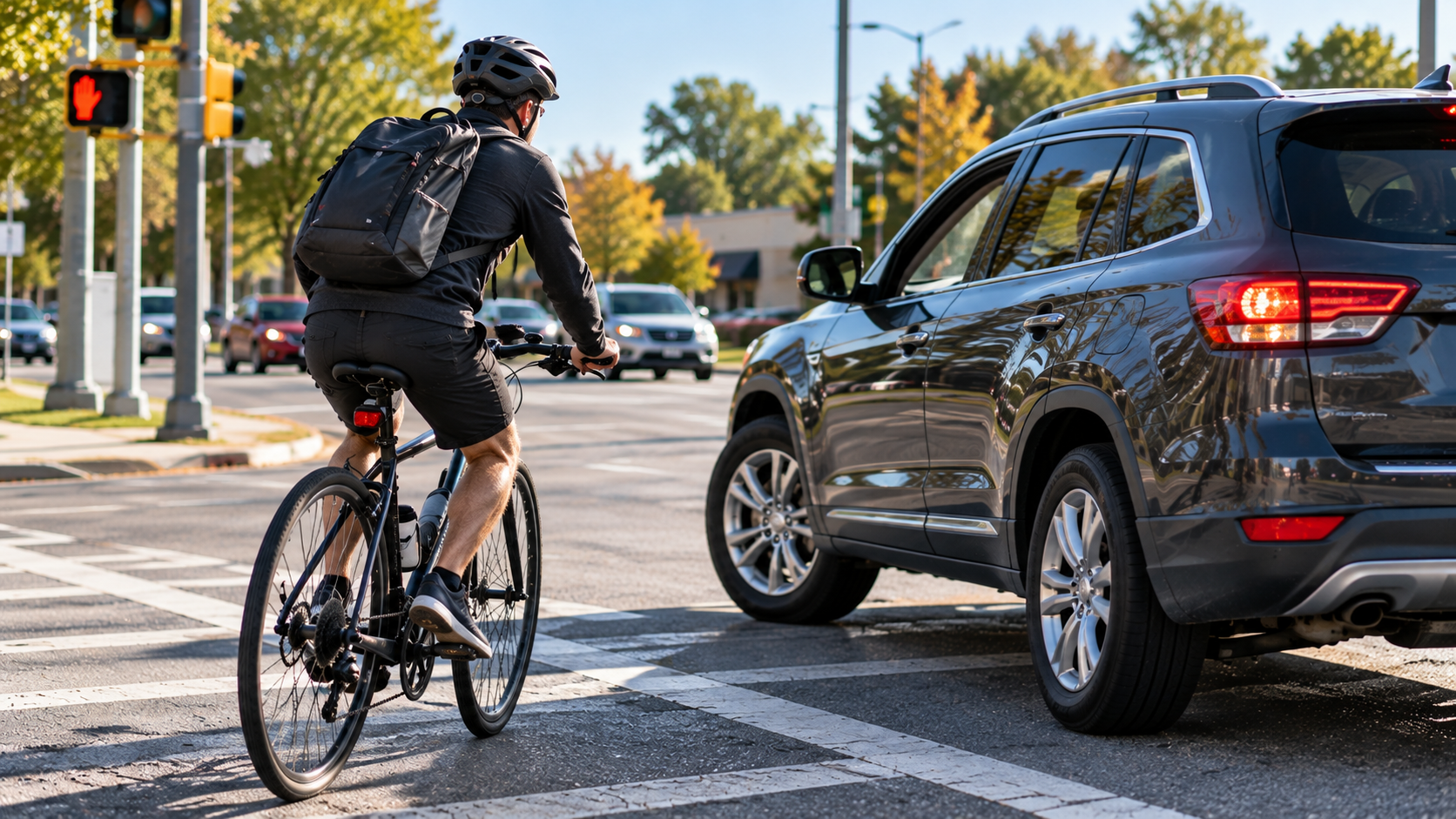
A bicycle accident can cause serious injuries even when a motor vehicle is traveling at a relatively low speed. Unlike occupants of passenger vehicles, bicyclists have little physical protection from the impact of a collision. A crash can leave an injured rider facing emergency medical treatment, rehabilitation, lost income, and questions about insurance coverage.
If you were injured while riding a bicycle in Madison Heights, Michigan, a Madison Heights bicycle accident lawyer at Khamo Law Accident & Injury Lawyers can investigate the collision, evaluate driver negligence, review Michigan No-Fault insurance coverage, and help you pursue compensation when supported by the law and evidence.
Our Michigan bicycle accident lawyers help injured cyclists throughout the state understand their legal rights. Our Madison Heights personal injury lawyers provide local guidance for people injured in bicycle crashes and other accidents in Madison Heights and Oakland County.
Call Khamo Law at 248-466-0606 or contact us online for a free consultation.
How Can a Madison Heights Bicycle Accident Lawyer Help?
Bicycle accidents often involve disagreements about right-of-way, visibility, traffic signals, lane position, or whether the driver left enough space when passing.
An experienced bicycle accident attorney can investigate the circumstances rather than accept the insurance company’s initial explanation.
Khamo Law can assist by:
- Obtaining police crash reports and available photographs.
- Reviewing vehicle damage, bicycle damage, and roadway evidence.
- Identifying witnesses and requesting available surveillance or dashcam footage.
- Investigating distracted driving, unsafe turns, speeding, and failure to yield.
- Evaluating whether a driver violated Michigan’s bicycle passing-distance law.
- Determining which insurer may owe Personal Injury Protection benefits.
- Reviewing eligibility for the Michigan Assigned Claims Plan.
- Documenting medical treatment, lost wages, future expenses, and permanent injuries.
- Addressing allegations that the bicyclist caused or contributed to the accident.
- Negotiating with insurers and pursuing litigation when warranted.
Early investigation can be particularly important because bicycle damage may be repaired or discarded, witness memories can fade, and video footage may be overwritten.
Bicycle Accidents in Madison Heights and Oakland County
Madison Heights contains residential neighborhoods, shopping areas, commercial driveways, parking lots, and major roads where bicycles and motor vehicles may interact.
Accidents may occur along or near:
- John R Road
- 12 Mile Road
- 13 Mile Road
- Dequindre Road
- Residential streets and neighborhood intersections
- Shopping-center entrances and commercial driveways
- Sidewalks and marked crossings
- Roads connecting to the I-75 corridor
These locations identify local settings where traffic conditions may matter. They are not claims that any particular Madison Heights road or intersection has a verified high rate of bicycle accidents.
A local investigation should examine the actual roadway, applicable traffic controls, sight lines, lighting, and available camera footage.
Example: A Driver Turns Across a Cyclist’s Path
Imagine a bicyclist traveling along a Madison Heights roadway when a driver turns right into a commercial driveway across the cyclist’s path.
The investigation may consider whether the motorist checked mirrors, used a turn signal, observed the bicycle, and complied with applicable traffic laws.
The cyclist’s position, the presence of a designated lane, and the traffic conditions may also matter.
This example is hypothetical and does not describe an actual Khamo Law case.
What Are Michigan’s Bicycle Laws?
Michigan law generally gives people riding bicycles on the roadway the same rights and responsibilities as motorists, with exceptions for rules that do not reasonably apply to bicycles.
Under MCL 257.657, bicyclists must comply with applicable traffic rules, including traffic signals and right-of-way requirements.
However, drivers also have legal responsibilities when sharing the roadway with cyclists.
Michigan’s Three-Foot Bicycle Passing Law
Under MCL 257.636, a motorist overtaking a bicycle in the same direction generally must pass at a safe distance of at least three feet.
If passing with three feet of clearance is impracticable, the statute requires a safe distance and safe speed.
The law also allows a driver to pass a bicyclist in a no-passing zone under certain circumstances when doing so is safe.
A violation may be relevant evidence in an accident investigation, but the circumstances must still establish legal responsibility for the injuries.
Do Bicyclists Have to Ride on the Right Side of the Road?
Generally, cyclists traveling slower than surrounding traffic must ride as close to the right side as practicable. However, MCL 257.660a recognizes important exceptions.
A cyclist may move away from the right edge when conditions make it unsafe, including roadway debris, parked vehicles, drain openings, an uneven road surface, or a lane too narrow for a vehicle to pass safely.
Additional exceptions apply when preparing to turn left, overtaking, or traveling straight through a right-turn lane.
A driver cannot automatically assume that a bicyclist was negligent simply because the rider was not at the extreme right edge of the roadway.
Can You Ride a Bicycle on a Sidewalk in Michigan?
Michigan generally allows bicycle riding on sidewalks unless prohibited by an official traffic-control device.
Under MCL 257.660c, bicyclists riding on sidewalks or crosswalks must yield to pedestrians and give an audible signal when overtaking them.
A cyclist lawfully using a sidewalk or crosswalk generally has the rights and responsibilities of a pedestrian in that setting. Our Madison Heights pedestrian accident lawyers discuss related right-of-way rules and injuries involving people on foot.
Local restrictions and the specific crossing conditions should also be reviewed.
Who Can Be Held Responsible for a Bicycle Accident?
A driver may be legally responsible when negligent conduct causes a cyclist’s injuries.
Examples can include:
- Failing to yield when turning.
- Passing too closely.
- Driving while distracted.
- Running a stop sign or red light.
- Entering a roadway without checking for cyclists.
- Following a bicycle too closely.
- Opening a vehicle door into a cyclist’s path.
- Driving while impaired.
- Failing to maintain a proper lookout.
Some accidents may involve additional responsible parties, such as an employer when a commercial driver was acting within the scope of employment.
Other incidents may raise questions about defective components or dangerous roadway conditions, although these require different legal standards and supporting evidence.
Our Madison Heights car accident lawyers handle related claims involving negligent motorists.
Common Causes of Bicycle Accidents in Madison Heights
Right-Hook Bicycle Accidents
A right-hook accident occurs when a driver turns right across the path of a bicyclist traveling in the same general direction.
The investigation may examine turn signals, the cyclist’s position, traffic controls, and whether the driver checked the relevant area before turning.
Left-Turn Bicycle Accidents
A left-turn collision can occur when a driver crosses the path of an approaching bicycle.
Evidence may include signal timing, witness statements, video, vehicle damage, and visibility.
Unsafe Passing Accidents
A driver who passes too closely may strike a bicycle or force its rider into another hazard.
Michigan’s passing-distance requirements may be relevant, along with vehicle speed, lane width, and roadway conditions.
Dooring Accidents
A dooring accident occurs when someone opens a vehicle door into the path of a cyclist.
These crashes may result in direct impact with the door or cause the rider to fall into another part of the roadway.
The legal investigation may include whether the vehicle occupant checked for approaching traffic and whether opening the door was negligent under the circumstances.
Distracted Driving
A motorist looking at a phone or navigation display may fail to notice a bicycle.
Driver attention, surrounding visibility, and the available evidence determine whether distracted driving contributed to the collision.
Hit-and-Run Bicycle Accidents
A driver may leave the scene after hitting a bicyclist.
These cases can require prompt efforts to identify the vehicle through witnesses, surveillance footage, dashcams, and physical evidence.
Even when the driver is not immediately identified, possible insurance benefits should be investigated.
Who Pays Medical Bills After a Michigan Bicycle Accident?
A bicyclist injured in a qualifying accident involving a motor vehicle may be eligible for Michigan Personal Injury Protection (PIP) benefits.
The correct insurer depends on Michigan’s statutory priority rules and the injured cyclist’s insurance situation.
Under MCL 500.3114(1), an applicable automobile No-Fault policy may cover a named insured, spouse, or qualifying relative domiciled in the same household.
When that coverage is not available, MCL 500.3115 generally directs an eligible person injured while not occupying a motor vehicle to the Michigan Assigned Claims Plan.
The driver who hit the bicycle is not automatically the insurer responsible for paying the cyclist’s PIP benefits.
What Can PIP Benefits Cover?
Depending on eligibility and available coverage, qualifying benefits may include:
- Accident-related medical treatment.
- Rehabilitation and therapy.
- Certain wage-loss benefits.
- Replacement services.
- Qualifying attendant care.
- Other benefits recognized by Michigan’s No-Fault law.
Coverage amounts, eligibility, and applicable limitations must be evaluated individually.
Learn more through our Michigan No-Fault insurance guide.
What If the Cyclist Doesn’t Own a Car?
A cyclist who does not own a vehicle may still have potential coverage through an applicable spouse or qualifying household policy.
When no such coverage exists, the Assigned Claims Plan may become relevant.
Not owning a car does not automatically mean an injured bicyclist is ineligible for benefits.
Does No-Fault Cover a Bicycle-Only Accident?
Not automatically.
If a cyclist loses control and falls without a qualifying motor-vehicle accident, the automobile No-Fault analysis differs from a bicycle-versus-car collision.
Health insurance or other coverage may be relevant.
Whether a motor vehicle was sufficiently involved in a particular incident may require legal analysis.
What Is the Michigan Assigned Claims Plan for Bicycle Accidents?
The Michigan Assigned Claims Plan is a statutory process for certain injured people who may be eligible for PIP benefits but lack an applicable higher-priority insurance policy.
For example, a cyclist struck by a car may need an assigned-claims application if no applicable automobile No-Fault household policy is available.
Eligibility is not automatic.
The application must establish the qualifying incident and comply with the relevant requirements.
What If the Driver Who Hit Me Was Uninsured?
The driver’s uninsured status does not automatically eliminate potential PIP benefits.
The cyclist’s own or qualifying household coverage must be considered first where applicable, followed by the statutory assigned-claims process if appropriate.
Separate uninsured-motorist coverage may depend on the language of an applicable policy.
How Long Do You Have to Apply to the MACP?
Under MCL 500.3174, a person claiming through the Assigned Claims Plan generally must notify the Michigan Automobile Insurance Placement Facility within one year after the accident.
Other claim and litigation deadlines may apply.
Because missing a deadline may affect available benefits, the appropriate insurance source should be investigated promptly.
Can a Bicyclist Sue the Driver Who Hit Them?
Potentially.
A cyclist may have a separate personal injury claim against a driver whose negligence caused the collision.
That claim is different from a claim for first-party No-Fault benefits.
Under MCL 500.3135, recovery for noneconomic damages arising from the use of a motor vehicle generally requires one of the recognized injury thresholds:
- Serious impairment of body function.
- Permanent serious disfigurement.
- Death.
The available evidence must establish that the relevant legal standard is satisfied.
What Is Serious Impairment of Body Function?
Michigan law considers whether an injury involves an objectively manifested impairment of an important body function that affects the injured person’s general ability to lead their normal life.
A serious bicycle crash may affect mobility, employment, concentration, independence, or everyday activities.
An injury diagnosis is important, but the effect of the injury on the person’s life is also relevant.
Can You Sue for Damage to Your Bicycle?
Potentially.
A claim for bicycle repair or replacement may involve liability and applicable property-damage coverage. The legal treatment of bicycle damage is separate from the rules governing bodily-injury PIP benefits.
Keep photographs, purchase information, repair estimates, and the damaged bicycle until the claim has been evaluated.
What Compensation Can Bicycle Accident Victims Recover?
Depending on the evidence, applicable insurance coverage, and Michigan law, recoverable losses may include:
- Qualifying medical expenses.
- Rehabilitation and therapy.
- Lost wages.
- Reduced future earning capacity.
- Pain and suffering when the statutory requirements are met.
- Permanent scarring or disfigurement.
- Disability and loss of mobility.
- Continuing care or assistance.
- Bicycle and equipment damage when legally recoverable.
Not all categories are available in every case, and a loss potentially covered by No-Fault benefits may be subject to different rules from a liability claim.
How Much Is a Bicycle Accident Case Worth in Michigan?
There is no universal settlement value.
A bicycle accident causing temporary bruising differs from one resulting in a traumatic brain injury, permanent impairment, or multiple fractures.
Potential value depends on negligence evidence, comparative fault, treatment, prognosis, insurance limits, recoverable damages, and the cyclist’s long-term limitations.
No law firm can guarantee a particular outcome.
What If the Driver Says the Bicyclist Was at Fault?
An insurance company may claim that a rider ignored a traffic signal, moved unpredictably, rode too far from the curb, or failed to use appropriate lighting.
Those allegations must be evaluated against the actual law and available evidence.
Michigan recognizes comparative fault in motor-vehicle injury claims, which can affect recoverable damages.
Can a Cyclist Be at Fault for Not Riding at the Road’s Edge?
Not automatically.
MCL 257.660a recognizes circumstances when riding near the right-hand edge is unsafe or impracticable.
A cyclist avoiding parked cars, debris, or an unsafe lane may have a legally relevant explanation for their position.
What If I Wasn’t Wearing a Bicycle Helmet?
Helmet use and fault for causing the collision are distinct questions.
Not wearing a helmet does not automatically establish that a cyclist caused an accident or eliminate every potential claim.
Any effect on an injury claim requires analysis of the relevant facts, the injury, causation, and applicable law.
What If I Was Riding Through a Crosswalk?
A cyclist lawfully riding in a crosswalk has rights and responsibilities under Michigan law, including the provisions of MCL 257.660c.
Whether a motorist failed to yield or the cyclist violated a traffic rule depends on the particular circumstances.
What Injuries Can Bicycle Accidents Cause?
Cyclists may experience direct impact from a vehicle, fall onto pavement, or strike other objects during a collision.
Potential injuries include:
- Concussions and traumatic brain injuries.
- Skull and facial injuries.
- Spinal cord injuries.
- Broken wrists, arms, shoulders, legs, or hips.
- Neck and back injuries.
- Internal injuries.
- Road rash and permanent scarring.
- Torn ligaments and joint injuries.
- Dental injuries.
- Nerve damage and long-term pain.
Some people require surgery, specialist treatment, physical therapy, or extended rehabilitation.
Traumatic Brain Injuries
A traumatic brain injury may affect memory, concentration, balance, sleep, and the ability to work.
Symptoms and recovery vary significantly. Appropriate medical evaluations and documentation are important.
Spinal Cord Injuries
A serious bicycle collision may cause spinal injuries affecting movement, strength, or sensation.
Severe cases can involve long-term mobility restrictions, assistive equipment, or continuing care needs.
What If a Bicycle Accident Causes a Fatal Injury?
A fatal collision may raise a potential wrongful death claim if legally actionable negligence caused the death.
Michigan requires particular estate procedures and recognizes specific categories of family damages.
Read our Michigan wrongful death lawyer guide.
What Evidence Can Help Prove a Bicycle Accident Claim?
Bicycle accidents can involve disputes about the cyclist’s position, driver visibility, the direction of travel, speed, and right-of-way.
Relevant evidence may include:
- Police crash reports.
- Photographs of the bicycle, vehicle, and roadway.
- Crosswalk markings, traffic signs, and signals.
- Witness names and statements.
- Nearby business surveillance and dashcam footage.
- Bicycle damage and vehicle impact points.
- Helmet, clothing, and equipment damage.
- Medical records and treatment timelines.
- Available electronic or vehicle data.
- Insurance correspondence and financial documentation.
Should You Keep Your Damaged Bicycle?
Yes, when reasonably possible.
The bicycle may provide useful evidence regarding impact location, damage patterns, and the severity of the collision.
Do not repair or discard relevant equipment before considering whether it needs to be preserved.
Can Business Cameras Help?
Potentially.
Video from a business or nearby property may show a turning vehicle, passing distance, traffic signal, or other important details.
Because recordings may be overwritten, timely preservation requests can be important.
How Long Do You Have to File a Bicycle Accident Claim in Michigan?
Different legal claims may have different deadlines.
Under MCL 600.5805, many Michigan personal injury negligence lawsuits generally have a three-year limitations period.
However, No-Fault benefit claims have different timing requirements.
Under MCL 500.3145, actions for PIP benefits are governed by a one-year framework with provisions concerning notice, prior payments, tolling, and recovery of older losses.
Assigned-claims applications have their own requirements under MCL 500.3174.
What Is Michigan’s One-Year-Back Rule?
Michigan’s No-Fault law can limit the recovery of certain older unpaid benefits even when a claim or lawsuit remains otherwise timely.
The precise application depends on the applicable statute, circumstances, and any relevant tolling provisions.
Are the Deadlines Different for Children?
Potentially.
Claims involving minors may have different limitations and procedural rules. Parents should not assume an ordinary adult deadline applies in precisely the same way.
What If a Government-Owned Vehicle Was Involved?
Claims involving a governmental entity may raise governmental immunity and special notice or procedural issues.
Those requirements can differ from an ordinary claim against a private driver.
Early legal review is important.
What Should You Do After a Bicycle Accident in Madison Heights?
The first priority is personal safety and appropriate medical treatment.
- Call 911. Report the collision and request emergency assistance when needed.
- Seek medical attention. Some head, neck, and internal injuries may not be immediately apparent.
- Obtain driver information. Record available vehicle, contact, and insurance details.
- Photograph the scene. Capture road markings, signs, signals, vehicle damage, and bicycle position.
- Identify witnesses. Preserve contact information.
- Keep your bicycle and helmet. Avoid altering potentially important evidence.
- Document nearby cameras. Identify businesses or vehicles that may have recorded the crash.
- Save financial and medical records. Keep bills, pay records, prescriptions, and treatment documentation.
- Determine applicable insurance. Review available PIP coverage and whether assigned claims may be necessary.
- Seek legal advice if appropriate. A lawyer can explain the separate insurance and liability issues.
Avoid making assumptions about fault before the evidence has been reviewed.
Frequently Asked Questions About Madison Heights Bicycle Accidents
Who is at fault if a car hits a bicycle in Michigan?
Fault depends on the applicable traffic laws and evidence. A driver may be negligent for failing to yield, making an unsafe turn, or passing too closely, while a cyclist’s actions can also be relevant.
Do bicycles have the same rights as cars in Michigan?
Generally, cyclists riding on roadways have the rights and duties of vehicle drivers under MCL 257.657, subject to special bicycle provisions and rules that do not apply to bicycles.
How much space must drivers give bicyclists?
Michigan law generally requires at least three feet of safe passing clearance, with an exception when that distance is impracticable and the driver passes at a safe distance and speed.
Can I receive Michigan No-Fault benefits after being hit by a car while cycling?
Potentially. An applicable automobile policy covering you or a qualifying household member may provide PIP benefits. If no such policy applies, the Michigan Assigned Claims Plan may be relevant.
What if I don’t have auto insurance?
Not having your own policy does not automatically eliminate potential PIP eligibility. Household coverage and assigned-claims rules require review.
Can I sue if I wasn’t wearing a helmet?
Potentially. Helmet use does not automatically determine collision fault or whether a claim is available.
What if I was biking on the sidewalk?
Michigan generally permits sidewalk cycling where it is not prohibited by an official traffic-control device, subject to applicable duties toward pedestrians and other rules.
What if I was hit by an SUV turning right?
The investigation may involve whether the driver checked for cyclists, used an appropriate signal, complied with traffic laws, and exercised reasonable care.
Can I sue if the driver hit me and fled?
Potentially. A hit-and-run can complicate the liability case, but applicable PIP coverage and other insurance provisions may still be relevant.
Does No-Fault cover a bicycle crash with no car involved?
An ordinary bicycle-only fall does not automatically qualify for automobile PIP benefits. Other insurance may be relevant, and unusual circumstances require individual review.
Can I recover for a broken bicycle?
Potentially, if property-damage liability or available insurance supports it. Keep proof of the bicycle’s condition and value.
How long do I have to file a bicycle accident lawsuit?
Many negligence lawsuits have a general three-year period, while No-Fault claims and assigned-claims applications involve separate timing requirements. Confirm the deadlines promptly.
What if a commercial truck hit me?
The accident may involve additional evidence, insurance, and potentially responsible parties. Our Madison Heights truck accident lawyers discuss commercial-vehicle accident issues.
What if I was riding an electric bicycle?
Electric bicycle rules may depend on the type and class of the device. See our Michigan e-bike and electric scooter accident lawyer guide for related issues. The legal classification and insurance consequences should be reviewed rather than assumed to be identical to every traditional bicycle accident.
How much does Khamo Law charge for a consultation?
Khamo Law offers free initial consultations. Ask about the applicable fee agreement and handling of case expenses before retaining a lawyer.
Why Choose Khamo Law for a Madison Heights Bicycle Accident?
Khamo Law Accident & Injury Lawyers represents people injured in serious accidents throughout Michigan.
Bicycle injury claims often involve multiple questions: how the collision occurred, whether the driver obeyed traffic laws, how the cyclist was positioned, which insurer may owe benefits, and how the injuries affect everyday life.
Our attorneys can investigate the available evidence, evaluate insurance coverage, document medical and financial losses, and pursue legally supported claims.
We understand that a bicycle accident can interfere with work, mobility, recreation, independence, and family responsibilities.
Learn more about attorney Koro E. Khamo and our firm’s injury representation.
Speak With a Madison Heights Bicycle Accident Lawyer
If you or a loved one was injured while riding a bicycle in Madison Heights or elsewhere in Oakland County, Khamo Law can review the accident and explain potential legal and insurance options.
Call 248-466-0606 or contact Khamo Law online for a free consultation.
Our team can help you understand Michigan bicycle laws, No-Fault insurance benefits, driver liability, and the evidence needed to evaluate your claim.