










Injured in a slip and fall in Madison Heights, Michigan? A wet floor, icy entrance, broken stair, or uneven walkway can lead to fractures, head trauma, painful recovery, and missed work. Our Madison Heights slip and fall lawyers at Khamo Law Accident & Injury Lawyers can examine what caused the fall, who controlled the dangerous area, what a property possessor knew or should have known, and whether Michigan law provides a basis for compensation.
Our Michigan slip and fall lawyers resource explains the statewide legal rules. Here, we focus on falls in Madison Heights, local evidence preservation, and practical questions after an injury. You can also visit our Madison Heights personal injury lawyers hub for other injury claims. Call 248-466-0606 or request a free consultation.
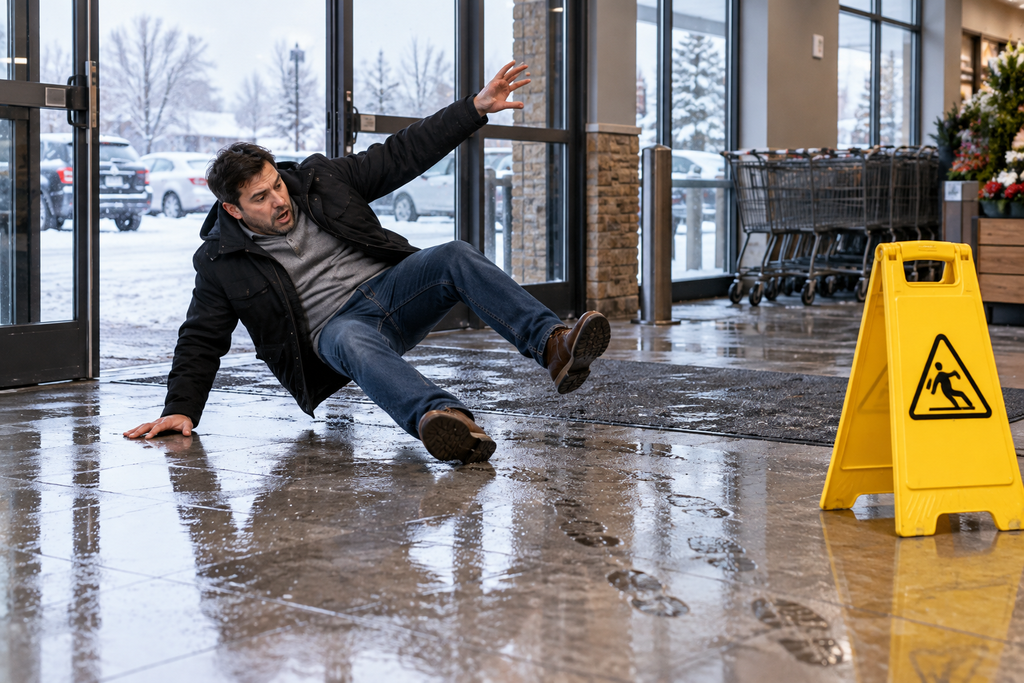
Khamo Law helps people injured in slip-and-fall accidents in Madison Heights, MI, understand their rights under Michigan premises liability law.
How Can a Madison Heights Slip and Fall Lawyer Help?
The goal is to establish more than the fact that someone fell. Property-condition claims require evidence about the dangerous surface, the legal duties of the person controlling the property, the steps taken or not taken to protect visitors, and the connection between the condition and the injury.
- Identify the exact location, condition, date, and circumstances of the fall.
- Determine which business, landlord, tenant, or property manager controlled the area.
- Seek surveillance footage, incident reports, maintenance logs, cleaning records, or snow-removal records before they disappear.
- Interview witnesses and document warning signs, lighting, floor transitions, and other relevant details.
- Evaluate actual or constructive notice of the hazard under Michigan law.
- Address allegations that the injured visitor was distracted or should have noticed the condition.
- Gather medical evidence, income records, and information about ongoing limitations.
- Present an appropriate claim, evaluate settlement proposals, and consider filing suit within applicable deadlines.
An attorney cannot promise a recovery just because an accident happened on another person’s property. The evidence must support a recognized claim.
Where Do Slip and Fall Accidents Happen in Madison Heights?
Falls can occur at grocery and retail stores, restaurants, office buildings, apartment communities, parking lots, sidewalks, building entrances, and stairwells. Madison Heights includes commercial corridors around John R Road, 12 Mile Road, 13 Mile Road, Dequindre Road, and access routes to I-75. These names identify local settings; they are not claims that particular intersections or businesses have a verified history of unsafe premises.
A fall at a store entrance may involve tracked-in water and inspection routines. An apartment stairwell may present questions about worn treads, a loose handrail, or illumination. An icy parking lot calls for different evidence, such as weather conditions, maintenance records, and the timing of snow removal.
Example: Wet Entrance at a Local Store
Imagine a shopper slipping on rainwater beyond an entrance mat. Important questions might include whether employees noticed the water, how frequently the floor was inspected, how long the water had been there, and whether warning signs or mats were reasonably used. This is a hypothetical example, not a reported case.
Example: Ice Outside an Apartment Building
A resident slips after a thaw-and-freeze cycle. The lease, weather reports, photos, maintenance logs, complaints, and the role of any snow contractor may matter. The mere presence of ice does not automatically prove or disprove liability.
How Does Michigan Slip and Fall Law Work?
Most claims for injuries caused by dangerous property conditions fall under premises liability. Michigan distinguishes among people invited onto property for business or other purposes, certain permitted visitors, and trespassers. The visitor’s status can affect the property possessor’s duty.
A business generally owes an invitee a duty to exercise reasonable care to protect against unreasonable risks of harm caused by dangerous conditions on its premises. In a typical claim, the injured person must establish a duty, breach, causation, and damages. This is why the condition, its history, and the possessor’s response are central to the investigation.
Our Madison Heights premises liability lawyer companion page addresses broader dangerous-property issues; this page concentrates on falls from wet or uneven surfaces, stairs, snow, ice, and trip hazards. See also premises liability laws in Michigan.
Is the Open and Obvious Rule Still a Defense in Michigan?
A condition being visible does not automatically eliminate an invitee’s Michigan premises-liability case. The Michigan Supreme Court’s 2023 decision in Kandil-Elsayed v. F & E Oil, Inc., considered together with Pinsky v. Kroger Co. of Michigan, changed the treatment of the open-and-obvious doctrine.
Rather than treating obviousness as an automatic reason the land possessor owes no duty, the Court placed it within the analysis of whether the possessor breached the duty of reasonable care and within comparative fault, where applicable. A court may still consider whether the possessor reasonably should have anticipated harm despite a visible condition.
That decision does not mean every open-and-obvious hazard creates liability. The claimant must still prove negligence, causation, and damages. The visitor’s own actions can affect recovery. Read the Michigan Supreme Court’s Kandil-Elsayed decision.
Can I Have a Case If I Saw the Ice Before Falling?
Possibly. Visibility matters, but so do whether the area was reasonably maintained, whether an alternate route was realistic, the weather, available warnings, and whether the possessor should have anticipated injury. An individualized assessment is needed.
Who May Be Liable for a Dangerous Property Condition?
Responsibility often turns on possession and control, not simply ownership. The potentially relevant parties may include a store operator, commercial tenant, landlord, property-management company, or another person with responsibility for the location. Contracts with cleaning or snow-removal providers can be relevant but do not automatically make every contractor liable to an injured visitor.
Questions worth investigating include who inspected the floor, who received complaints, whether a repair request was submitted, whether the hazard was created during cleaning, and who had the authority to correct it. A residential lease and a commercial maintenance agreement may produce different legal issues.
What If I Fell While Working?
Workers’ compensation may be relevant when an employee is injured during work. A separate claim against a non-employer third party sometimes raises different questions. An ordinary premises-liability lawsuit against an employer should not be assumed available without reviewing workers’ compensation and other applicable laws.
How Do You Prove the Property Owner Had Notice?
In many slip-and-fall cases, the injured person must show the responsible party caused the hazard, actually knew about it, or should reasonably have discovered it. The last concept is often described as constructive notice. Proof can involve the length of time a hazard existed, reports from other visitors, a recurring condition, employee observations, or evidence of reasonable inspection practices.
Consider a spill that appears only seconds before a customer slips compared with a puddle that remains for a substantial time while employees repeatedly walk nearby. The injuries could be identical, but the question of reasonable notice and response is different.
The Michigan Supreme Court discussed evidence of notice in Lowrey v. LMPS & LMPJ, Inc.. Read the Lowrey decision. Useful proof may include time-stamped video, incident reports, inspection routines, maintenance communications, and witness accounts.
Common Slip and Fall Hazards in Madison Heights
- Wet store floors: Spills, cleaning residue, leaks, or tracked-in rain and snow.
- Snow and ice: Refreezing at entrances, parking areas, sidewalks, and stairs.
- Damaged flooring: Broken tiles, torn carpeting, loose boards, or abrupt changes in level.
- Uneven pavement: Cracked walkways, raised edges, and deteriorated concrete.
- Stairway defects: Damaged treads, unstable handrails, or poor lighting.
- Mats and rugs: Curled corners, sliding entrance mats, or misplaced coverings.
- Obstructions: Cords, merchandise, and objects placed in normal walking paths.
These are examples, not automatic grounds for a claim. A property possessor’s legally required conduct depends on the specific condition, visitor status, and surrounding facts.
Can You Sue for Slipping on Snow or Ice in Michigan?
Sometimes. A fall involving snow or ice can support a premises-liability claim if the evidence establishes a breach of the applicable duty of care and resulting injury. Michigan winters create foreseeable weather hazards, but property possessors are not insurers against every fall.
What matters may include when the snow or freezing rain began, how long the condition existed, whether employees or contractors inspected and treated the surface, whether drainage caused repeated freezing, and what alternatives or warnings were available. Photos, snowfall records, temperature history, and dated salting or plowing records can help reconstruct the scene.
What If the Ice Was Black Ice?
The fact that ice was hard to see does not establish negligence by itself. Investigators still examine control of the property, notice, maintenance, causation, and the surrounding weather. Falls on public property can raise additional legal defenses or special deadlines.
Does a Parking Lot Owner Have to Salt Every Time It Snows?
There is no simple automatic rule covering every property and weather event. Whether the possessor exercised reasonable care is a fact-specific legal question involving timing, conditions, responsibilities, and available precautions.
How Does Comparative Fault Affect a Slip and Fall Claim?
Property owners and insurers sometimes argue that an injured person was distracted, wore unsafe footwear, failed to use a handrail, or disregarded a warning. Under Michigan comparative-fault principles, a person’s own negligence can affect the damages recoverable. In some negligence claims, comparative fault greater than 50% can also bar noneconomic damages.
Michigan’s MCL 600.2959 is among the relevant statutes. Fault must be evaluated based on evidence, not speculation or an adjuster’s immediate conclusion.
Can I Still Recover If I Was Looking at My Phone?
It depends. Distraction may be relevant, but it does not automatically resolve whether a dangerous condition existed or whether another party was negligent. The extent of comparative responsibility is case-specific.
What Compensation Can You Seek After a Slip and Fall?
When liability and causation are established, legally recoverable losses may include emergency treatment, diagnostic testing, surgery, rehabilitation, lost wages, reduced earning capacity, pain and suffering, disability, and other supported expenses or limitations. Future costs require credible medical and financial evidence.
Cases vary greatly. A sprained ankle that heals promptly, a fractured hip requiring surgery, and a serious brain injury with continuing cognitive deficits cannot reasonably be assigned the same value. Any estimate requires reviewing liability, records, prognosis, insurance issues, and comparative fault. No result is guaranteed.
Who Pays Medical Bills After a Store or Sidewalk Fall?
Health insurance, potential medical-payments coverage, and eventually a supported liability claim may all be relevant. Michigan auto No-Fault PIP is not automatically available for an ordinary premises slip-and-fall injury. The exact insurance situation depends on the incident and policies. Do not postpone medically necessary care while liability is being investigated.
What Injuries Can a Slip and Fall Cause?
A fall can cause wrist fractures when a person reaches out to break the impact, hip or ankle fractures, knee and shoulder injuries, ligament damage, back and neck injuries, and serious head trauma. Some people experience persistent difficulty standing, walking, lifting, or returning to their normal work.
Traumatic brain injuries can affect memory, concentration, mood, and balance. Spinal cord injuries can lead to lasting weakness, loss of sensation, or major care needs. Our companion Madison Heights brain injury lawyer and spinal cord injury lawyer pages address those injury types in detail. Those companion pages must be published before readers can follow the links.
Medical records should accurately capture the symptoms, treatment, diagnosis, changes over time, and the way an injury affects everyday activities. Follow the advice of your treating professionals.
What Evidence Should You Preserve After Falling?
A wet floor may be cleaned within minutes. Ice can melt within hours, and some surveillance systems overwrite video quickly. When safe to do so, the most useful immediate steps may be:
- Take pictures showing the exact hazard, the surrounding area, signs, mats, stairs, and lighting.
- Report the fall to a manager or other representative and request that an incident report be completed.
- Note the precise date and time and identify any cameras that may have recorded the area.
- Obtain names and contact details from people who saw the fall or dangerous condition.
- Keep your shoes and clothing rather than discarding or altering them.
- Save receipts, medical documents, diagnostic reports, treatment instructions, and missed-work information.
- Preserve texts, emails, photos, and earlier complaints documenting the same hazard.
How Can Store Surveillance Video Be Preserved?
Document which business controlled the cameras and request preservation promptly. An attorney may submit a formal request identifying the time and location. Video may not be immediately available for disclosure, and preservation cannot be guaranteed, but delay can make the evidence harder to obtain.
How Long Do You Have to File a Slip and Fall Claim in Michigan?
For many Michigan negligence-based personal injury lawsuits, the general filing period is three years under MCL 600.5805. However, exceptions can apply and a claim against a governmental entity may involve special immunity rules and shorter notice requirements.
Do not use the general period as a substitute for determining the actual deadline. Even if a lawsuit is not immediately necessary, essential evidence may be lost quickly through cleaning, repairs, weather, camera overwriting, or fading memories.
What Should You Do Right After a Slip and Fall?
- Get appropriate medical care. Head symptoms, inability to bear weight, severe pain, or other concerning injuries warrant prompt medical attention.
- Report the accident. Give the property manager accurate facts and ask about an incident report.
- Photograph the area if safe. Focus on the hazard and how the scene looked at the time.
- Collect witness details. Get contact information without pressuring witnesses to adopt any account.
- Preserve shoes and records. Keep relevant clothing, receipts, messages, and records of medical treatment.
- Track expenses and work restrictions. Keep bills, pay information, and documentation of time away.
- Be cautious about releases. Understand documents or recorded statements requested by an insurer before signing.
- Review responsibility and deadlines. Ask a qualified lawyer whether evidence supports a potential claim.
Frequently Asked Questions About Madison Heights Slip and Fall Accidents
Can I sue a grocery store if I slip on a wet floor?
Possibly. A claim generally requires evidence of a hazardous condition, the business’s duty and breach, a connection to the injury, and damages. Whether the store created, knew of, or reasonably should have discovered the condition may be important.
Can a property owner avoid liability because the ice was obvious?
Not automatically. Michigan’s 2023 Kandil-Elsayed decision places obviousness in the breach and comparative-fault analysis for invitee claims; the property possessor still owes the relevant duty.
How much is the average slip and fall settlement in Michigan?
There is no dependable average for a particular person’s case. Liability evidence, medical prognosis, comparative fault, and recoverable damages all matter.
What if the store says no employee knew about the spill?
The inquiry may include whether the store reasonably should have discovered it through inspection or whether the condition existed long enough to be noticed. Actual notice is not the only possible issue.
What if I fell outside an apartment building?
The lease, who controlled the walkway or stairs, maintenance obligations, weather conditions, and visitor status may affect liability.
Is an incident report required to bring a claim?
Not necessarily. A report can help document what happened, but other evidence may establish the event and dangerous condition. Reporting promptly is still useful when possible.
Can I bring a claim after falling on black ice?
Potentially. The analysis depends on the property possessor’s duty, reasonable maintenance, notice, causation, and comparative fault. Ice being difficult to see is not an automatic answer.
Can I recover if I was partly responsible for the fall?
Sometimes. Michigan comparative-fault rules may reduce recovery, and particular thresholds may restrict certain damages. The facts must be evaluated.
Will Michigan No-Fault insurance pay for my injuries?
Ordinary slips and falls on premises generally are not covered simply because Michigan has No-Fault auto insurance. Other coverage may apply depending on the incident and policies.
What if I didn’t seek treatment until the next day?
Delay does not necessarily bar a claim, but it can lead to disputes about causation and injury severity. Get appropriate care and explain when symptoms developed.
How long will the case take?
Timing depends on evidence, medical recovery, insurer response, negotiation, and whether litigation is needed. No time frame can be promised.
Does Khamo Law offer a free consultation?
Yes. You can discuss the accident during a free initial consultation. Ask about fee arrangements and expenses before retaining counsel.
Why Choose Khamo Law for a Madison Heights Slip and Fall Injury?
Khamo Law Accident & Injury Lawyers assists injured people across Michigan. We recognize the importance of preserving temporary hazard evidence, identifying the responsible possessor, examining notice, and understanding how an injury affects the client’s health, income, and daily life. We can review the facts and explain options without promising a specific outcome. Learn more about attorney Koro E. Khamo.
Speak With a Madison Heights Slip and Fall Lawyer
If you were injured by an unsafe floor, sidewalk, stair, or icy entrance in Madison Heights, call 248-466-0606 or contact Khamo Law online to request a free consultation. All legal content should be reviewed by a Michigan attorney before publication.